Best Spoon Size for Washington Steelhead
Choosing the perfect spoon size for steelhead in Washington rivers can feel like trying to hit a moving target while blindfolded. Anglers are often overwhelmed by the sheer variety of lures available, and the frustration of not knowing if you're using the right size for the conditions is all too real. You want to present something natural and enticing, but also something that gets down to the fish and draws their attention. This comprehensive guide will help demystify the art of selecting the best spoon size for Washington steelhead, breaking down the critical factors and offering practical advice to boost your success on the water.
Understanding the Factors That Influence Spoon Size Choice
It’s easy to get lost in the tackle shop aisle, staring at dozens of shiny spoons. But the truth is, picking the right size isn't just about what "looks good." It's a strategic decision influenced by several key environmental and fish-specific factors that, once understood, can dramatically improve your chances of hooking into that chrome bright steelhead.
Water Conditions: Clarity and Flow
The visibility and speed of the river water are arguably the most crucial elements in determining your spoon size. Think about it: a steelhead's ability to see and react to your lure changes dramatically from a gin-clear summer river to a churning, chocolate milk winter torrent.
In low, clear water, especially during a sunny summer afternoon, steelhead can be incredibly spooky and discerning. Here, smaller, more subtle presentations are often the ticket. A tiny 1/4 ounce spoon that mimics a juvenile baitfish or a struggling insect can be far more effective than a large, clunky offering. When the water is crystal clear, steelhead have ample time to inspect your lure, and anything that looks unnatural or too aggressive might send them darting away. This is where attention to detail, like your Leader Length for Clear Water Steelhead in Washington becomes paramount. You're trying to fool a wary fish, so subtlety in size, color, and action is key. Many anglers will find a good selection of these smaller, lighter spoons on Amazon, perfect for building out a clear-water arsenal.
Conversely, when rivers are high and turbid, perhaps after a significant rain event or during the peak of a winter run, visibility is severely limited. In these conditions, you need a spoon that creates a strong visual presence and enough vibration to be detected by the lateral line of a steelhead. This is when sizing up becomes essential. A 1/2 ounce, 5/8 ounce, or even 3/4 ounce spoon can be the difference-maker. The larger profile and increased wobble of a bigger spoon help it stand out in the murky water, giving the fish a better chance to see and strike it. Think about the big, powerful push of the Washington's Skagit River and Its Winter Steelhead Run – a tiny spoon would be completely lost in that environment.
Target Steelhead Size and Aggression
The average size of the steelhead you're pursuing and their general mood can also guide your spoon selection. Not all steelhead are created equal, and their appetite and willingness to strike can vary significantly.
If you're fishing a river known for smaller "half-pounders" – those younger, often more abundant steelhead that haven't spent as much time in the ocean – a smaller spoon might be more appropriate. These fish have smaller mouths and are often more inclined to strike at something that represents their typical forage size. Similarly, if the fish are known to be less aggressive, perhaps in colder water or during a post-spawn lull, a smaller, more subtly presented spoon might coax a strike when a larger, more imposing lure would be ignored. You want to offer them an easy meal, not an intimidating challenge.
However, when you're targeting those robust, ocean-run winter steelhead, especially those legendary bruisers from rivers like the Hoh or the Fishing the Cowlitz River for Steelhead and Salmon in Washington, larger spoons can be incredibly effective. These fish are often more aggressive, accustomed to preying on larger baitfish in the ocean, and their sheer size allows them to easily engulf a bigger lure. A substantial spoon not only appeals to their predatory instinct but also has enough weight to get down to their holding lies in the often-deep and fast-moving runs these magnificent Steelhead: Washington's Ocean-Run Rainbow Trout prefer.
River Depth and Current Speed
Getting your lure into the strike zone is paramount, and river depth and current speed play a huge role in how effectively your spoon performs. A spoon that's too light for a deep, fast run will simply "blow out" and be swept downstream without ever reaching the fish. Conversely, a spoon that's too heavy for a shallow, slow pool will dig into the bottom and snag repeatedly.
For deep, fast-moving sections of rivers – the kind of places where big winter steelhead often hold – you'll need a heavier spoon, generally in the 5/8 to 3/4 ounce range. The added weight helps the spoon sink quickly through the water column, allowing it to maintain its depth and flutter enticingly in the strike zone. This is especially true when Drift Fishing for Steelhead in Washington Rivers, where you need your lure to stay near the bottom as it travels downstream. These heavier spoons also offer better casting distance, which is a significant advantage when you need to cover large sections of water or reach across wide runs.
In contrast, when you're fishing shallower riffles, slower pools, or calmer eddies, lighter spoons (1/4 to 3/8 ounce) are often the better choice. Their reduced weight prevents them from sinking too quickly and snagging on the bottom. You want the spoon to have a natural, subtle flutter that mimics a wounded baitfish, not to be dragging along the riverbed. Finding the right balance between weight and current speed is a skill developed over time, and it often requires carrying a range of spoon sizes to adapt to changing conditions throughout your fishing day.
Popular Spoon Sizes and Their Applications in Washington
Armed with an understanding of the factors influencing spoon choice, let's dive into some common spoon sizes that Washington steelhead anglers swear by and how to best deploy them. Remember, these are general guidelines, and experimentation is always your best friend.
The "Go-To" 3/8 to 1/2 Ounce Spoons
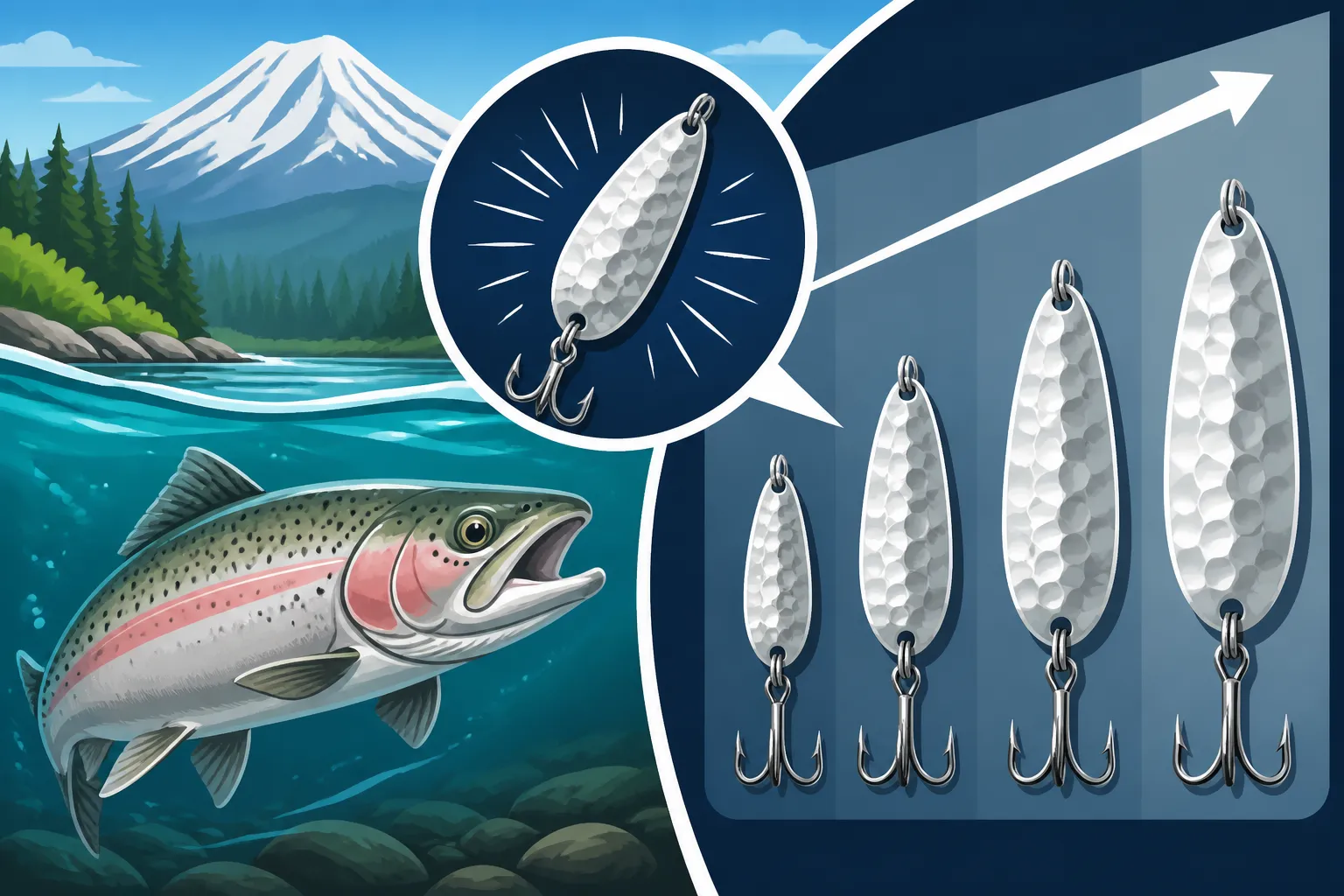
If you were to pick one "all-around" size for Washington steelhead fishing, the 3/8 to 1/2 ounce category would likely be it. These spoons strike a fantastic balance, offering enough weight to cast well and get down in most moderate currents, while still providing a natural presentation that isn't overly aggressive.
Brands like the venerable Little Cleo (often found in 1/3 oz or 2/5 oz sizes) or the classic Pixee Spoon (available in 1/4 oz and 3/8 oz options, with some heavier variations) are staples in many anglers' tackle boxes, and you'll find a wide array of them on Amazon. They are incredibly versatile for a variety of conditions you might encounter on a typical fishing day. Imagine yourself on a mid-sized river like the Kalama, where the water has a slight tint and the current is moderate. A 3/8 ounce spoon is often just right – it sinks at a good rate, has a noticeable wobble, and can be retrieved effectively without blowing out or snagging.
These mid-range spoons are also excellent when the exact water conditions are a bit ambiguous, serving as a solid starting point. If the fish aren't biting, you can then decide if you need to size up or down based on the feedback you're getting from the river. They are truly the workhorses of steelhead spoon fishing, bridging the gap between delicate and heavy presentations.
When to Size Up: 5/8 to 3/4 Ounce Spoons
There are times when bigger is definitely better, and that's where the 5/8 to 3/4 ounce spoons shine. These heavier, often larger profile spoons are specifically designed for more challenging conditions where you need maximum penetration and visibility.
Consider fishing a mighty river like the Columbia during a strong freshet, or battling the deep, fast runs of the lower Skagit or Hoh after heavy rains. In these scenarios, a smaller spoon would be utterly useless, failing to reach the fish-holding depths. A 5/8 or 3/4 ounce spoon, like a larger Steelie Spoon or similar heavy-bodied options, cuts through the current with authority. Its increased weight allows for significantly longer casts, which can be critical for reaching distant seams or covering vast stretches of water from the bank. The larger profile also displaces more water, creating a stronger vibration and a more pronounced flash that can capture the attention of steelhead even in very murky conditions.
These larger spoons are particularly effective for aggressive winter steelhead, which are often bigger and more willing to strike at a substantial meal. They are also a good choice if you suspect fish are holding in particularly deep holes or slots that lighter lures simply can't reach effectively. When you need to get down fast and stay down, these heavier spoons are your best friends.
When to Size Down: 1/4 Ounce and Smaller Spoons
While the allure of big lures for big fish is strong, sometimes a subtle approach is the most effective. This is where 1/4 ounce spoons and even smaller varieties come into play, particularly for finesse presentations.
Picture a gin-clear summer river, low and slow, or a river during a cold snap where steelhead are lethargic and easily spooked. In these conditions, a large, aggressive spoon would likely scare fish away. A tiny 1/4 ounce spoon, or even lighter, provides a delicate, natural presentation that mimics smaller forage. This can be crucial for enticing strikes from highly selective fish or those "half-pounders" that prefer a more modest meal.
Smaller spoons are also excellent for light-tackle setups, allowing you to enjoy the fight even more. They pair well with lighter lines and can be particularly effective when you're trying to achieve a more natural drift in slower water, almost mirroring the action you'd want when Casting Spoons and Spinners for Washington Steelhead in clear conditions. These smaller options are especially useful for selective summer steelhead in rivers like the Yakima, where How Water Clarity Affects Steelhead Fishing dictates a more refined presentation. Many anglers find it beneficial to stock up on various ultra-light spoon options from reputable retailers or easily accessible online stores like Amazon, ensuring they're prepared for those challenging, clear-water days.
Spoon Shape, Color, and Retrieve – Beyond Just Size
While size is a critical component, it's really just one part of the equation. A spoon's shape, color, and how you retrieve it work in tandem with its size to create the ultimate presentation for steelhead. Ignoring these aspects means you're only fishing with half the information.
The Importance of Profile and Action
Every spoon has a unique profile and action in the water, which dictates how it moves, flashes, and displaces water. These characteristics can be just as important as the spoon's weight.
- Narrower Spoons: Spoons with a narrower profile tend to have a tighter, faster wobble. They often sink quicker and are excellent in faster currents where you want to cut through the water efficiently. Their sleek design can imitate slender baitfish and often provoke strikes from steelhead that are reacting to speed and flash.
- Wider Spoons: Wider-bodied spoons, on the other hand, typically have a broader, slower wobble. This action creates more vibration and a larger visual profile in the water, making them ideal for slower currents or turbid water where maximum visibility is desired. They might imitate a fatter, injured baitfish or simply present a more substantial target.
Understanding these subtle differences allows you to match the spoon's action to the current speed and the type of forage you believe the steelhead are keying in on. Sometimes, a subtle flutter is needed; other times, a big, aggressive wobble is the ticket. This adaptability is what separates successful anglers from those who just blindly cast.
Color Considerations for Washington Steelhead
Color choice is another layer of complexity, and it's heavily influenced by water clarity and light conditions. There's an old saying: "Bright day, bright lure; dark day, dark lure." While not always universally true, it's a good starting point.
- Turbid Water / Low Light: When the water is murky, or during dawn, dusk, or heavily overcast days, bright and contrasting colors are usually more effective. Chartreuse, hot orange, fluorescent green, and combinations with black or white create a stark silhouette and are easily seen. Patterns like "fire tiger" or those with glow-in-the-dark paint can be excellent in these conditions, especially if you're fishing deeper holes where light penetration is minimal.
- Clear Water / Bright Light: In clear water and bright sunshine, more natural and subdued colors tend to perform best. Silver, brass, copper, and black-and-white combinations (like a "Zebra" pattern) often mimic the natural iridescence of baitfish or blend in more subtly. Some anglers swear by dark colors, like black or blue, in very clear water on bright days, believing they offer a strong silhouette without being overly flashy. When browsing for spoons on Amazon, you'll find an incredible variety of color patterns, making it easy to experiment.
It's also worth considering unique patterns that incorporate multiple colors or holographic finishes. These can catch and reflect light in various ways, adding another dimension of attraction. The key is to experiment and see what the fish are reacting to on any given day.
Matching Your Spoon to River Conditions and Species
Ultimately, choosing the best spoon means harmonizing its size, shape, and color with the prevailing river conditions and the specific type of Steelhead: Washington's Ocean-Run Rainbow Trout you're targeting. This holistic approach significantly increases your chances of success.
For instance, on a big, high, and slightly off-color Fishing the Cowlitz River for Steelhead and Salmon in Washington in the middle of winter, a 5/8 oz spoon with a wide wobble in a chartreuse or orange color might be deadly. The weight gets it down, the wobble creates vibration, and the bright color stands out in the murky water.
Conversely, on a low, clear The Green River Near Auburn, Washington for Steelhead in late summer, a 1/4 oz silver spoon with a tight flutter might be the ticket. The lighter weight allows for a delicate presentation, and the natural silver is less alarming to spooky fish in clear water.
Your retrieve speed also needs to match the spoon's action and the current. A heavier spoon in fast water might require a slower retrieve to allow it to sink and wobble naturally. A lighter spoon in slower water might need a faster retrieve to give it the necessary action. This dynamic adjustment is part of Reading Water for Bank-Fishing Salmon and perfecting your Casting Spoons and Spinners for Washington Steelhead technique. Don't be afraid to vary your retrieve within a single cast – a pause, a twitch, a sudden burst of speed – to trigger a reaction strike. The Washington Fishing Seasons: A Month-by-Month Guide can also offer insights into typical water conditions and fish behavior to help narrow down your choices.
Practical Tips for Spoon Fishing Steelhead
Even with all the theoretical knowledge, putting it into practice on the river requires a bit of savvy and preparation. Here are some actionable tips to help you maximize your success when spoon fishing for Washington steelhead.
Carrying a Variety
One of the biggest mistakes an angler can make is showing up to the river with only one or two spoon options. Washington's rivers are dynamic; conditions can change by the hour, especially during volatile winter weather. The water level can drop, the clarity can improve, or the fish might become more or less aggressive.
That's why it's absolutely crucial to carry a variety of spoon sizes, shapes, and colors. Think of your tackle box as a toolbox, and each spoon as a specialized tool for a specific job. You might start the day throwing a 1/2 ounce spoon in a run, but if the water drops and clears, you might need to switch to a 1/4 ounce. If a cloudburst turns the river into chocolate milk, you'll be thankful for that 5/8 ounce chartreuse spoon you tucked away. Building a versatile selection from a reliable source like Amazon ensures you have options for almost any scenario. A small, organized tackle box or a compact lure wallet dedicated to spoons can make on-the-water changes quick and efficient.
Practice and Observation
Like any fishing technique, spoon fishing for steelhead improves with practice and keen observation. You can read all the guides in the world, but nothing beats actual time on the water.
Pay attention to how your spoon behaves in different currents. Does it flutter correctly? Is it getting down deep enough? Is it snagging too much? Each cast is an opportunity to learn. Don't be afraid to experiment with different retrieve speeds, rod tip angles, and casting distances.
Also, be a student of your surroundings. Watch what other successful anglers are doing, but don't just copy them blindly. Ask questions (respectfully, of course). Look for clues in the water: where are the seams, the current breaks, the deeper holes? Reading Water for Bank-Fishing Salmon is a skill that directly translates to steelhead. The more you observe and experiment, the more intuitive your spoon selection and presentation will become.
Gear Compatibility
Finally, ensure that your fishing rod, reel, and line are compatible with the spoons you're planning to use. Attempting to cast a heavy 3/4 ounce spoon with a flimsy ultralight trout rod is not only ineffective but can also lead to gear damage.
For most Washington steelhead fishing, a medium-heavy spinning or casting rod, 8.5 to 10.5 feet in length, is ideal. This length allows for long casts and better line control. Match it with a reliable reel spooled with 10-20 lb braided main line and a fluorocarbon leader of 8-15 lb test. This setup provides the backbone to cast heavier spoons and the sensitivity to detect subtle takes. When considering Rod and Reel You Need for Washington Puget Sound Salmon, many of those same principles apply to river-run steelhead, often with slightly heavier action for the current.
The general rule is to match your gear to the heaviest spoon you anticipate using, ensuring you have the power to cast and control it properly. Remember, the best spoon in the world won't catch fish if your rod and reel aren't up to the task of presenting it effectively.
Spoon Size Recommendations for Washington Steelhead
| Spoon Size (Ounces) | Typical Length (Inches) | Best Use Case | River Conditions | Examples of Washington Rivers |
|---|---|---|---|---|
| 1/8 – 1/4 oz | 1.0 – 2.0 | Finesse, highly selective fish, smaller forage | Very low, clear, slow current; summer steelhead | Upper Yakima, Olympic Peninsula streams (low flow) |
| 3/8 – 1/2 oz | 2.0 – 3.0 | All-around versatile, good starting point | Moderate flow, slight tint, average depth; mixed conditions | Kalama, Skykomish, Cowlitz (average conditions), Green River |
| 5/8 – 3/4 oz | 3.0 – 4.0+ | High flow, deep holding water, aggressive fish | High, murky, fast current, deep holes; winter steelhead | Columbia River tributaries (in high water), Skagit (high water), Hoh |
Disclaimer
Fishing regulations in Washington State can change frequently, often with little notice, due to in-season adjustments by the Washington Department of Fish and Wildlife (WDFW). Always consult the most current WDFW regulations pamphlet, emergency rule changes, and local signage before heading out on any fishing trip. The information provided in this guide is for general educational purposes only and should not be considered a substitute for official regulations.