How to Identify a Fish You’ve Never Caught Before
There’s nothing quite like the thrill of feeling a strong tug on your line, the bend in your rod, and the splash of a fish breaking the surface. But then it happens: you reel it in, and as you hold it up, a wave of confusion washes over you. What is this fish? Is it a keeper? Is it something rare? What are the rules for it? This guide is here to walk you through the essential steps to confidently identify a fish you’ve never caught before in Washington State, ensuring you're compliant with regulations and keeping both yourself and the fish safe.
The Initial Reaction: What to Do (and Not Do!) When You Hook Something New
When that mystery fish lands in your net or on the bank, the first instinct is often to stare, maybe snap a quick photo. But before anything else, let’s think about its well-being and your safety. A quick, thoughtful approach here is key to a positive outcome.
Prioritizing the Fish's Safety and Your Own
You’ve got a live, possibly unfamiliar creature in your hands. This isn't the time to poke and prod or spend ten minutes flipping through a soggy field guide while it struggles. Your immediate priority should be the fish’s health. If you plan to release it, minimizing its time out of water is crucial. Wet your hands before touching it to protect its slime coat, and handle it gently. If it’s a species known for sharp spines or teeth, be extra cautious. Lingcod, for example, have a mouth full of impressive choppers that can surprise an unsuspecting angler. Bottomfish can also have venomous spines, so careful handling with gloves or a lip gripper might be in order. Don’t try to identify it by sticking your fingers in its gills or mouth; observe from a safe distance first. Always have your pliers or dehooker ready to quickly remove the hook.
Quick Observations Before Release (or Retention)
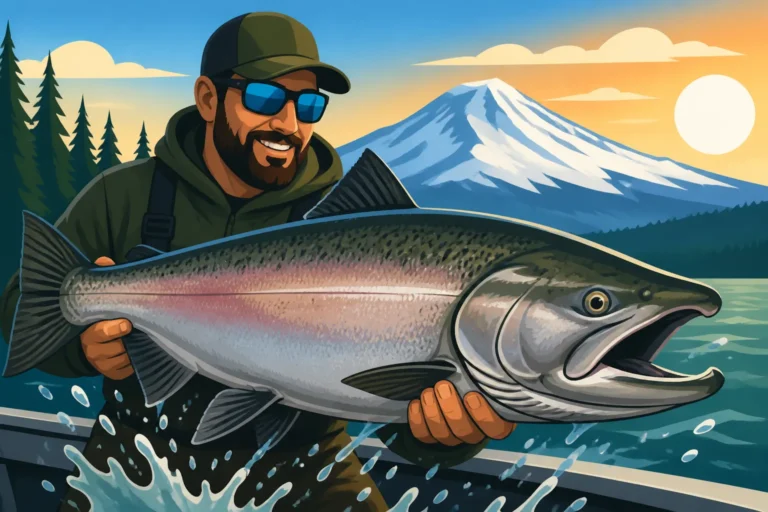
Before you decide whether to keep or release, take a mental snapshot – or better yet, a quick photo. These initial observations are often the most valuable. Note the overall shape, any dominant colors, the size relative to your hand or tackle, and how it’s behaving. Is it flapping wildly, or relatively calm? Is it stout and torpedo-shaped like a Chinook Salmon: Washington's King of Fish, or more flattened like a bottomfish? Does it have prominent spots, stripes, or a distinct fin? These immediate details, even if you can’t name the fish on the spot, will be incredibly helpful later when you consult your resources. Sometimes, a quick glance at its mouth can tell you if it's a predatory fish with sharp teeth or a bottom feeder with small, crushing plates.
Key Physical Features: Your Field Guide to Fish ID
Think of yourself as a fish detective. Every scale, every fin, every mark is a clue. Learning to systematically observe these features will turn you into an identification pro in no time.
Shape, Size, and Overall Body Plan
The general body shape is often the first and most obvious clue. Is it long and slender, like a trout or eel-like lamprey? Is it deep-bodied and compressed, like many sunfish or a large bass? Or is it more round and robust, like some types of rockfish? The size matters too. Is it panfish-sized, or does it push the limits of your landing net?
Consider these common shapes you might encounter in Washington waters:
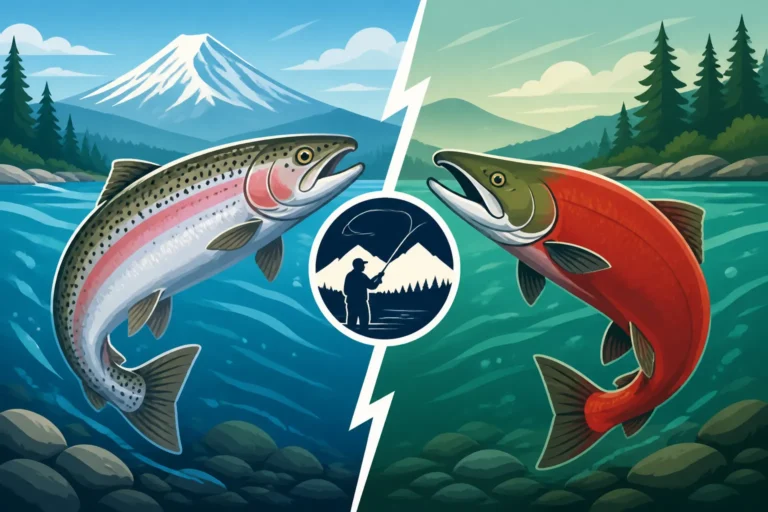
- Torpedo-shaped: Often indicative of fast-swimming, open-water predators like salmon, steelhead, or larger trout. Think about the classic profile of a Steelhead: Washington's Ocean-Run Rainbow Trout or Coho Salmon Fishing in Washington.
- Deep-bodied/Compressed: Common for species that live in structure, like bass, or for many saltwater rockfish.
- Flattened (Dorsoventrally): Bottom-dwellers like halibut or flounder will have eyes on one side and a very flat body, perfect for blending into the seabed. Our amazing Pacific Halibut Fishing on the Washington Coast is a prime example.
- Elongated/Eel-like: Less common in sport fishing, but some bottom-dwelling species or lampreys fit this description.
Fin Details: Placement, Spines, and Rays
Fins are like a fish's fingerprints. Pay close attention to them:
- Adipose Fin: This small, fleshy fin on the back between the dorsal fin and the tail is a huge identifier. If it's present, you're likely looking at a salmon, trout, or whitefish. If it's absent and there's a healed scar, you’ve likely caught a hatchery-reared fish with a "clipped adipose fin." This distinction is critical in Washington, as wild fish (with an adipose fin) often have different regulations than hatchery fish. Understanding What a Clipped Adipose Fin Means is vital for any angler here.
- Dorsal Fin(s): How many are there? Are they spiny (like a bass) or soft-rayed (like a trout)? Are they continuous or separated? Some fish have two distinct dorsal fins, others one long one.
- Caudal Fin (Tail): Is it forked (salmon, tuna), square (some trout), or rounded (some bottomfish)? The shape of the tail tells you a lot about how a fish moves through water.
- Pectoral and Pelvic Fins: Note their size and placement. Are the pelvic fins directly under the pectorals (like a cod) or set farther back on the belly (like a salmon)?
- Anal Fin: Located on the underside, behind the vent. Count the rays or look for any distinguishing features.
Coloration, Patterns, and Unique Markings
While colors can change based on habitat, diet, and even stress levels, general patterns and distinct markings are excellent clues.
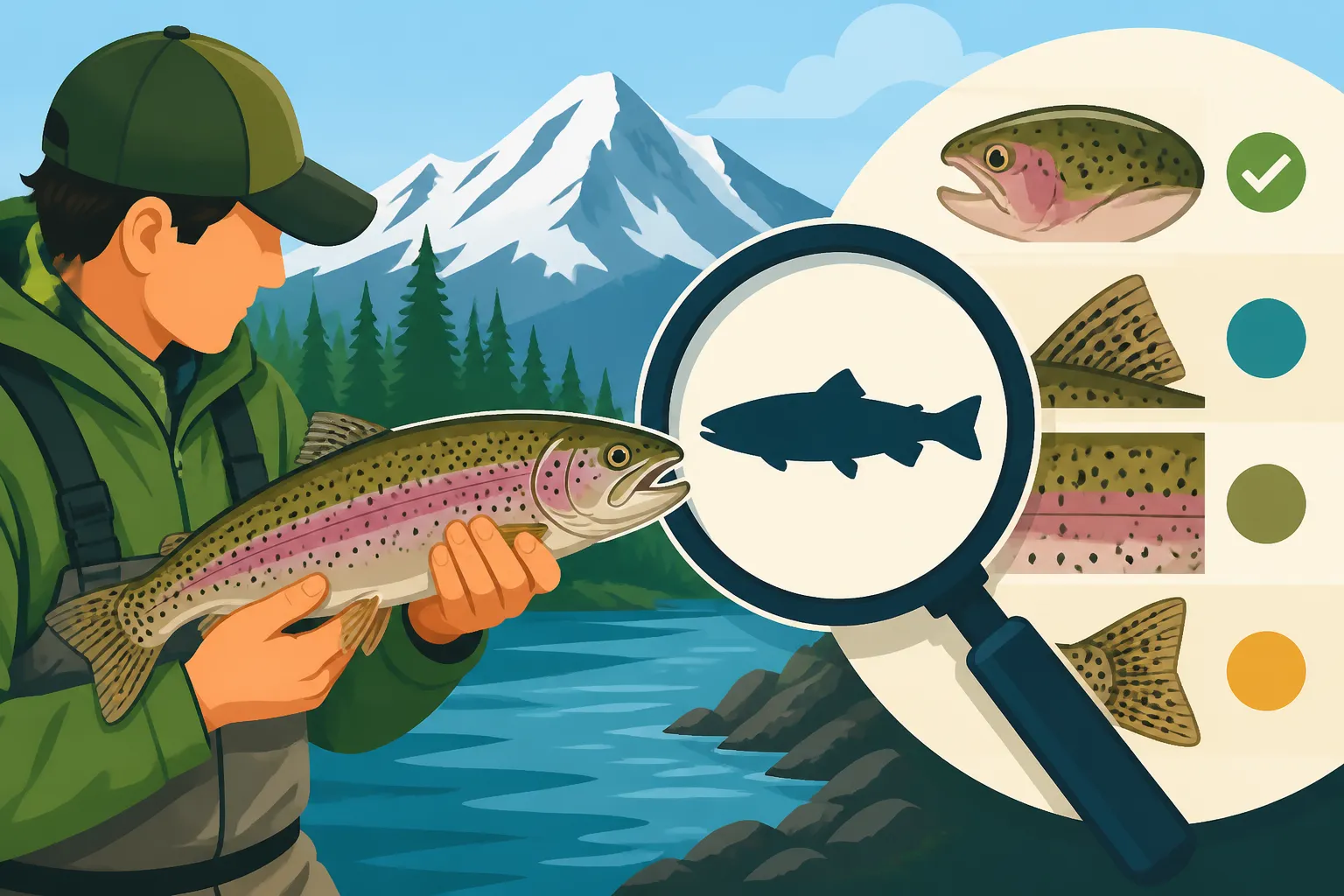
- Spots: Are they large or small? Dark or light? Are they concentrated on the back, sides, or fins? Many trout species are identified by their unique spot patterns. A Rainbow Trout Fishing in Washington often has small, dark spots, while a cutthroat might have more irregular spots and a distinct red slash under its jaw.
- Bars or Stripes: Does the fish have vertical bars (like a bass) or horizontal stripes?
- Lateral Line: This sensory line running along the side of the fish is usually visible. Is it straight, or does it curve up or down?
- Slime Coat/Skin: Is the fish slimy (like many freshwater species), or does it have rough, sandpaper-like skin (like a shark)?
- Mouth, Teeth, and Jaw Structure
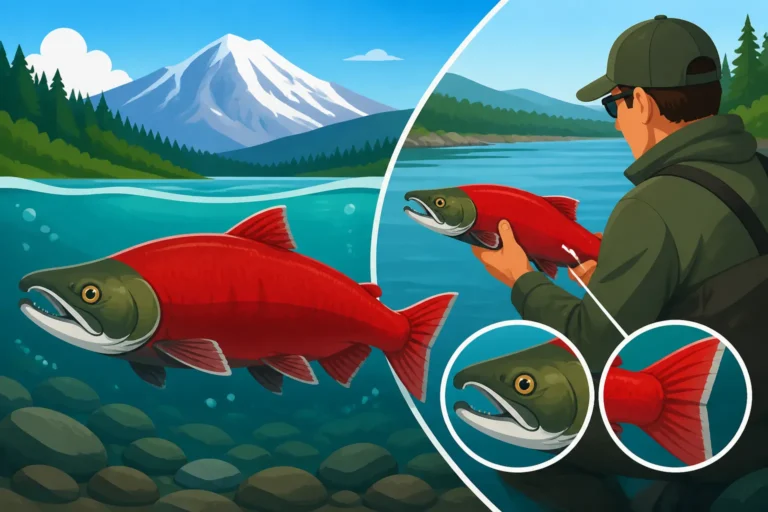
The mouth tells you a lot about how a fish feeds. - Upper vs. Lower Jaw: Does the upper jaw extend past the lower (often seen in predatory species like northern pikeminnow) or vice versa? For salmon, this can be a key identifier; for instance, the gumline of a Chinook has black pigmentation, while a Coho's is white. How to Tell a Chinook From a Coho involves looking at these subtle mouth differences.
- Teeth: Are they sharp and conical (for grasping prey), or small and crushing (for eating invertebrates)? Some species, like Lingcod: Washington's Toothy Bottomfish, have very distinctive, sharp teeth that practically ensure you won't mistake them for a trout!
- Mouth Size: Is the mouth small and upturned (for surface feeding), or large and gaping (for swallowing larger prey)?
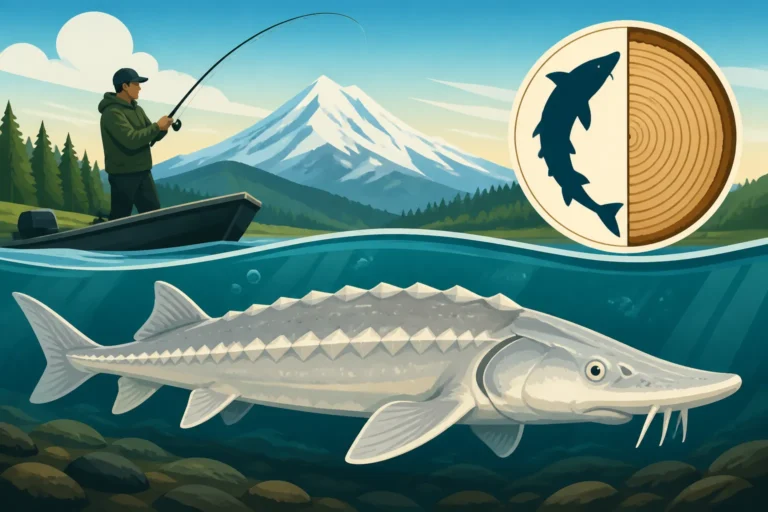
- Barbels: These whisker-like protrusions around the mouth are found on some bottom-dwelling fish, like sturgeon, and help them feel for food in murky water.
Habitat and Behavior: Context Clues for Identification
Knowing where and how you caught the fish provides critical context that can help narrow down your identification significantly. A fish caught in a mountain lake is likely a trout or kokanee, not a halibut.
Where Did You Catch It? (Freshwater, Saltwater, Specific Area)
This is perhaps the biggest clue. Was your fishing trip in a river, a lake, or out in Puget Sound? Washington has incredibly diverse fishing opportunities, and different species inhabit different environments.
- Freshwater Rivers: If you’re fishing a river like the Yakima, you might encounter Rainbow Trout Fishing in Washington or Whitefish in Washington's Mountain Rivers. If you're on the Cowlitz or Skagit, it could be a salmon or steelhead. Knowing the specific river and its typical runs is invaluable.
- Freshwater Lakes: Lakes often hold trout, kokanee (landlocked sockeye), bass, or panfish. Lake Roosevelt, for example, is famous for its kokanee and walleye. Is Lake Washington Good for Shore Fishing? for bass and kokanee might yield different species than a high mountain lake for brook trout.
- Saltwater (Puget Sound, Coast): Here, you’re looking at salmon (Chinook, Coho, Chum), lingcod, rockfish, halibut, or cabezon. Marine areas have specific regulations, and knowing which zone you're in helps. For instance, Lingcod Identification and Where They Hide is going to be relevant if you're pulling up a hefty bottomfish from Puget Sound. The Puget Sound Salmon Closures: What Washington Anglers Need to Know article emphasizes the importance of knowing your location.
How Did It Fight? (Power, Jumps, Runs)
The way a fish fights can be a strong indicator of its species.
- Hard Runs: Salmon and steelhead are famous for their powerful, sustained runs, often stripping line off your reel. A fresh Chinook can feel like hooking a freight train.
- Jumps and Aerial Displays: Many trout, especially rainbow and steelhead, will leap clear of the water, shaking their heads violently to throw the hook. Coho salmon are also known for their acrobatic jumps.
- Deep Dives and Head Shakes: Lingcod and other bottomfish tend to hug the bottom, often doing powerful head shakes to try and dislodge the hook. Bass also typically make strong, short runs and aggressive head shakes.
- Relatively Lethargic: Some slower-moving species or those that are tired from a long journey (like a spawning salmon nearing the end of its life cycle) might offer less resistance.
What Was It Doing? (Feeding, Schooling, Hiding)
While harder to observe when a fish is on the hook, if you noticed its behavior before the strike, that can also help.
- Schooling: Were you catching fish in a tight school? This is common for kokanee, herring, or smaller baitfish, and often for salmon moving upriver.
- Holding Structure: Was the fish tucked into a log jam, a rock pile, or a kelp bed? This suggests a species that prefers ambush points or shelter, like bass, lingcod, or rockfish. Lingcod Identification and Where They Hide specifically talks about their preference for rocky reefs and pinnacles.
- Feeding Habits: Did you see it chasing bait on the surface, or did you catch it on a bait meant for bottom feeders? This can provide clues to its diet and, by extension, its species.
Tools and Resources for Positive Identification
Even the most seasoned angler occasionally pulls up a head-scratcher. Luckily, we live in an age where there are tons of resources at our fingertips to help.
Your Washington Fishing Regulations Pamphlet
This little booklet is your best friend on the water. It contains illustrations and descriptions of common sport fish, along with all the critical information about seasons, bag limits, and size restrictions for each species and location. Always have a copy with you, whether it’s the physical pamphlet or downloaded onto your phone. The section titled "Identifying Salmon & Steelhead" or "Common Game Fish" often has side-by-side comparisons that are incredibly useful. Reading Washington Fishing Regulations Every Angler Should Know and Reading the Washington Sport Fishing Regulations Pamphlet will highlight just how essential this resource is.
Field Guides and Online Databases
For more in-depth identification, a dedicated field guide for Pacific Northwest fish is an invaluable asset. These books typically have detailed illustrations or photos, anatomical diagrams, and information on distinguishing features, habitat, and even diet. You can find excellent regional field guides on sites like Amazon, often with waterproof pages perfect for your tackle box or boat bag. Online databases, like those from state fish and wildlife agencies or university ichthyology departments, can also be fantastic. They often have comprehensive species profiles and interactive keys that walk you through identification steps.
Leveraging Technology: Apps and Online Communities
Technology has made fish identification easier than ever.
- Fishing Apps: Many apps allow you to upload a photo of your catch and use image recognition to suggest possible species. The official "Fish Washington" app from WDFW is designed to help with regulations and reporting, but taking a good photo with your phone is the first step.
- Online Fishing Forums and Social Media Groups: These communities are a treasure trove of local knowledge. Snap a clear photo of your mystery fish (both sides, fins spread if possible, clear view of the head and tail), provide details about where and how you caught it, and post it to a Washington fishing forum or Facebook group. Experienced local anglers can often identify it in minutes. Just be sure to mention you’re looking for identification, not just bragging! Many anglers also invest in a quality camera or waterproof phone case, readily available on Amazon, to capture clear photos for later identification.
Here's a quick reference table to help you distinguish some common Washington fish based on their key features:
| Feature/Species | Salmon (Chinook, Coho) | Steelhead/Rainbow Trout | Lingcod | Walleye | Smallmouth Bass |
|---|---|---|---|---|---|
| Body Shape | Torpedo, stout | Torpedo, slender | Elongated, large head | Torpedo, slender | Deep-bodied, compressed |
| Adipose Fin | Yes | Yes | No | No | No |
| Mouth/Teeth | Moderate, sharp teeth (varies by species), often dark gum line (Chinook) | Moderate, small teeth | Very large, numerous sharp teeth | Large, canine-like teeth | Large, strong jaw, small teeth |
| Color/Pattern | Silver, spots on back/tail | Silver-pink stripe, spots | Mottled brown/green, camouflaged | Olive/gold, darker saddles | Brown/gold, vertical bars |
| Dorsal Fin | One soft-rayed, sometimes small second | One soft-rayed | Two (one spiny, one soft) | Two (one spiny, one soft) | Two (one spiny, one soft), connected |
| Tail Shape | Forked (Chinook, Coho) | Slightly forked/square | Rounded | Forked | Slightly forked |
| Habitat | Saltwater & Freshwater rivers | Freshwater rivers & lakes | Saltwater (rocky bottoms) | Freshwater (Columbia, lakes) | Freshwater (rivers, lakes) |
By combining careful observation with the right resources, you'll be able to identify your catches confidently, ensuring you're fishing legally and responsibly. Remember, a picture truly is worth a thousand words when it comes to fish identification, so always be ready to snap a good one! And having a small, waterproof notebook to jot down observations, which you can easily find on Amazon, can also be a game-changer.
Disclaimer
This article is for general informational purposes only and does not constitute professional advice. Laws, prices and regulations vary by location and change over time. Consult a qualified professional for guidance on your specific situation.