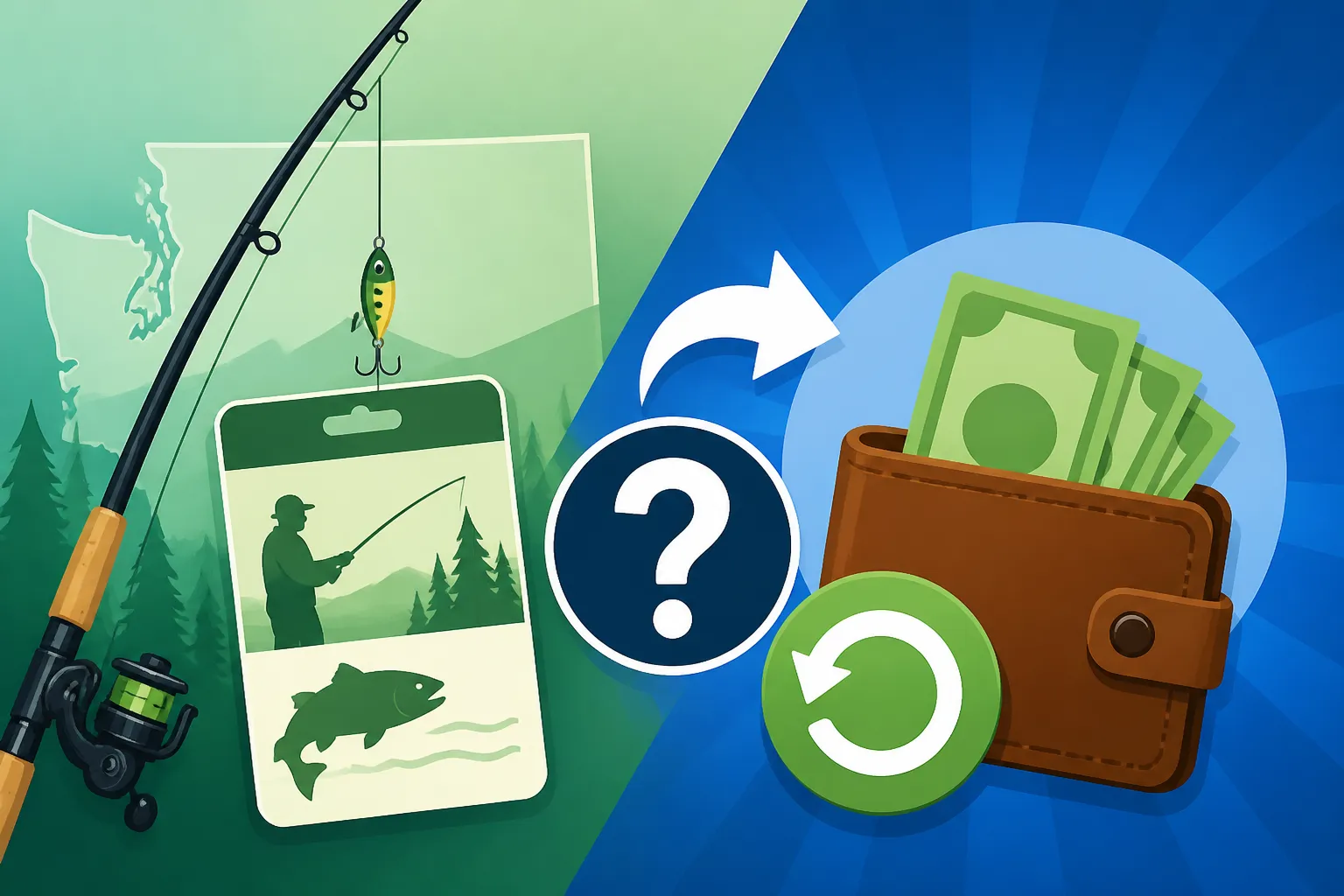
Can You Get a Refund on a Washington Fishing License?
It's incredibly frustrating when your fishing plans fall through, or you realize you might have purchased the wrong license. Perhaps a sudden change in weather, an unexpected family event, or even an emergency rule change by WDFW has thrown a wrench into your highly anticipated trip. Many anglers find themselves wondering if they can simply get their money back on a Washington fishing license that won't be used. This comprehensive guide will delve deep into the Washington Department of Fish and Wildlife's (WDFW) policy on license refunds, exploring the common scenarios that lead to these questions and offering practical advice on what to do when a refund isn't an option.
The Official Stance: WDFW's Refund Policy
Let's get straight to it: the Washington Department of Fish and Wildlife generally does not offer refunds on purchased fishing licenses, endorsements, or permits. This can be a tough pill to swallow, especially when life throws you a curveball, but it's a consistent policy across most state wildlife agencies. When you buy a license, you're not just paying for the right to fish; you're contributing to a much larger system that supports Washington's precious fish and wildlife resources.
Why WDFW Does Not Offer Refunds
Understanding the "why" behind this policy can help manage expectations. Unlike buying a product from a retail store, a fishing license isn't a tangible item that can be restocked or resold. The funds generated from license sales are immediately earmarked and allocated to critical conservation efforts, operational costs, and the management of fisheries and wildlife populations across the state.
Think about it this way: your license fees directly fund vital programs such as fish hatchery operations, which stock millions of trout and salmon each year; enforcement of regulations by game wardens; scientific research that helps manage fish runs and habitat; and habitat restoration projects that ensure future generations have places to fish. These funds are put to work the moment your purchase is completed, making it challenging, if not impossible, for WDFW to simply "undo" that transaction and reclaim those allocated resources. It's a system designed to support the natural environment we all cherish, rather than operate as a commercial retail entity.
The Finality of Your License Purchase
Once you've completed the purchase of your Washington fishing license, whether it's an annual, short-term, or combination license, that transaction is considered final. This applies whether you bought it online through the WDFW website, at a local license dealer like a sporting goods store, or via the MyWDFW App. The system instantly registers your license and assigns it to you, making it valid for the specified period. This immediate activation and allocation of funds means there isn't a "cooling-off" period or a mechanism for returns in the same way you might find with consumer goods. It's crucial to be absolutely sure of your purchase details – from the type of license to the correct duration – before you hit that "buy" button.
Common Scenarios Leading to Refund Questions
It's completely normal to feel a pang of disappointment, and even a bit of financial pinch, when a purchased license goes unused. Life happens, and circumstances often change unexpectedly. Let's explore some of the most common reasons anglers inquire about refunds and how WDFW's policy applies to each.
Trip Cancellations Due to Weather or Personal Emergencies
This is perhaps the most common scenario. You've planned a fantastic weekend trip to Fishing the Columbia River in Washington: A Complete Overview or a dream steelhead adventure on the Olympic Peninsula. You bought your license, perhaps even your Washington's Columbia River Salmon and Steelhead Endorsement, Explained, and then bam! A major storm rolls in, flooding the rivers and making conditions unsafe or unfishable. Or maybe a sudden illness, a family emergency, or an unforeseen work commitment forces you to cancel.
In these situations, the "no refund" policy still stands. WDFW cannot control the weather or personal circumstances, and as explained earlier, the funds are already dedicated to conservation efforts. While it's incredibly frustrating to lose out on a fishing opportunity and the cost of the license, it's considered part of the risk inherent in planning outdoor activities. This is why it's always a good idea to check forecasts and river conditions right up until your planned departure, and perhaps consider a short-term license if your plans are uncertain, such as a One-Day Washington Fishing License Cost.
Purchasing the Wrong License or Misunderstanding Regulations
Another frequent issue arises when anglers accidentally purchase the wrong type of license or misinterpret complex fishing regulations. You might have intended to buy a freshwater license but mistakenly clicked on a saltwater option, or perhaps you bought a resident license thinking you qualified as a Washington resident, only to later find out you don't meet the What Counts as a Washington Resident for Licensing criteria. Sometimes, anglers even forget to add a necessary endorsement, like the Washington's Two-Pole Endorsement and Who Needs One, and realize it too late.
Unfortunately, even in cases of genuine error, WDFW typically does not issue refunds or allow exchanges. It's considered the responsibility of the angler to understand the regulations and select the correct license type before completing the purchase. This is why resources like Reading the Washington Sport Fishing Regulations Pamphlet are so important. Taking the time to carefully review the various Washington's Annual, Short-Term and Combination License Options and double-check your selection before finalizing your purchase can save you a lot of headache and potential lost money. If you're truly unsure, it's always best to call WDFW directly or ask a local license dealer for clarification.
Deciding Not to Fish or Moving Out of State
Sometimes, life simply takes you in a different direction. You might buy an annual license with the best intentions, only to find that your interest wanes, or new hobbies take precedence. Or, perhaps you've purchased a license and then a job opportunity or personal circumstances lead you to move out of Washington state entirely, making your Washington license useless.
These situations, while understandable, also fall under the non-refundable policy. The license is tied to your individual fishing privileges within Washington for the specified period. WDFW's mandate is to manage the state's natural resources, and its funding structure is based on the expectation that license sales contribute directly to that mission. Your decision not to fish, or your change of residence, doesn't alter the fact that the funds from your purchase have already been allocated. This is why considering your long-term plans and commitment to fishing in Washington before opting for an annual license versus a shorter-term option is a wise approach.
Alternative Solutions When a Refund Isn't Possible
While the strict "no refund" policy can be disappointing, it doesn't mean all hope is lost for making the most of your investment. There are several proactive steps and alternative perspectives you can take, even if your original fishing plans have changed.
Re-evaluating Your Fishing Opportunities
If your primary target species or location is affected by closures or conditions, don't despair! Washington offers an incredible diversity of fishing opportunities. For example, if your favorite salmon river is experiencing Emergency Rule Changes: Why Washington's Rules Shift Mid-Season or is closed, you might be able to pivot to trout fishing in a local lake, or even try for warmwater species like bass in areas like Lake Washington or Lake Sammamish. Many areas remain open even when specific fisheries are closed.
A valid fishing license often covers a wide range of species and waters. Take some time to study the current regulations and explore other available fisheries. Perhaps you've always wanted to try for kokanee in Lake Chelan or walleye in the Columbia. Your existing license might just be your ticket to a new adventure you hadn't considered before. You can also consult resources like Washington Fishing Seasons: A Month-by-Month Guide to discover what's biting elsewhere at different times of the year.
Utilizing Your License for Later Trips
An annual license, for instance, remains valid for a full 365 days from the date of purchase (unless otherwise specified, such as expiring on December 31st, which is common for annual licenses bought at the beginning of the year). Even if your immediate plans are dashed, you still have ample time to use it. Don't think of it as a single-trip purchase; it's a year-long pass to Washington's waters.
Keep an eye on the weather and WDFW updates. Rivers often clear up after a storm, and new fishing seasons open throughout the year. Your unused license might be perfect for a spontaneous weekend trip a few months down the line or even for some casual evening fishing after work. Consider your Washington Annual Fishing License Validity Period and plan accordingly. This flexibility is one of the hidden benefits of an annual pass, even if your initial plans didn't pan out.
The Intangible Value of Your Contribution
While it might not put money back in your pocket, remember the significant positive impact your license purchase has on Washington's natural resources. Every dollar contributes to the health of the very ecosystems that make fishing in our state so incredible. You've supported fish hatchery programs, habitat restoration, and vital research that ensures the longevity of salmon runs, steelhead populations, and healthy lakes for trout.
Even if you don't cast a line with that particular license, you've played a part in preserving and enhancing fishing opportunities for everyone, including yourself, in the future. It's an investment in conservation. Many anglers find solace in knowing their money went to a good cause, even if they couldn't personally benefit from the immediate fishing opportunity. Think of it as a donation to a worthy cause – the future of Washington fishing.
| Reason for Refund Request | WDFW Policy Outcome | Explanation |
|---|---|---|
| Trip Cancellation (Weather) | No Refund | License fees are allocated to conservation; WDFW cannot control weather. |
| Trip Cancellation (Personal) | No Refund | Personal circumstances do not alter the finality of the purchase and fund allocation. |
| Purchased Wrong License | No Refund | Angler responsibility to verify license type. Funds are immediately allocated. |
| Misunderstood Regulations | No Refund | Angler responsibility to understand rules. Funds are immediately allocated. |
| Moved Out of State | No Refund | License is valid for Washington; change of residence doesn't warrant a refund. |
| Decided Not to Fish | No Refund | Purchase is final upon completion; funds are dedicated to conservation regardless of usage. |
| Emergency Rule Change | No Refund | While frustrating, WDFW must adapt to resource needs; licenses remain non-refundable. |
Avoiding the Need for a Refund in the First Place
The best way to deal with WDFW's "no refund" policy is to avoid needing one. A little extra planning and careful consideration before your purchase can save you a lot of grief and ensure your investment is well-placed.
Thoroughly Research Regulations and Seasons
Before you even think about buying a license, immerse yourself in the current regulations. This is paramount! The Washington Department of Fish and Wildlife website is an excellent, up-to-date resource, and you should always check the most recent Washington Sport Fishing Seasons and Emergency Closures. Pay close attention to the specific species you plan to target, the marine area or river section you'll be fishing, and any special restrictions like bait bans or barbless hook requirements.
For instance, understanding Washington Fishing Regulations Every Angler Should Know will clarify general rules, while checking specific sections like Puget Sound Salmon Closures: What Washington Anglers Need to Know is crucial for marine anglers. Regulations can be complex and change frequently, especially with Emergency Rule Changes: Why Washington's Rules Shift Mid-Season, so it pays to be diligent. A simple oversight in research can lead to buying the wrong license or fishing illegally, which has far worse consequences than just a lost license fee.
Choose the Right License for Your Trip
Washington offers a variety of license options, including annual, short-term, freshwater, saltwater, and combination licenses. Think carefully about your fishing habits and plans for the year.
- Annual Licenses: If you're a dedicated angler who plans to fish multiple times throughout the year, an annual license is often the most cost-effective choice. It gives you maximum flexibility.
- Short-Term Licenses: If you're only planning a single trip or two, or if your plans are uncertain, a one-day or three-day license is a safer bet. For example, knowing the Three-Day Washington Fishing License Cost versus an annual one can help you decide. These are perfect for visitors or those testing the waters.
- Combination Licenses: If you plan to fish both freshwater rivers and the saltwater Puget Sound, a combination license offers the best value and convenience. Consider your specific needs regarding Freshwater vs Saltwater vs Combination Licenses in Washington.
Don't rush this decision. Carefully consider your schedule, how often you realistically expect to fish, and which waters you'll be targeting. It's often better to start with a short-term license and upgrade to an annual one later if you find yourself fishing more often than anticipated, rather than buying an annual license that goes unused.
Verify Residency and Endorsement Requirements
Residency status can significantly impact the cost and availability of certain licenses. If you're new to the state or are unsure, make sure you meet the WDFW criteria for a Washington resident. There's a clear definition of What Counts as a Washington Resident for Licensing, and falsely claiming residency can lead to penalties.
Beyond the basic license, many fisheries require specific endorsements. Are you planning to fish for salmon or steelhead in the Columbia River? You'll need the Washington's Columbia River Salmon and Steelhead Endorsement, Explained. Do you want to use two fishing rods? That requires The Two-Pole Endorsement in Washington, Explained. These endorsements are not always automatically included with your base license and must be purchased separately. Double-check all requirements for your specific fishing plans to ensure you're fully covered before you head out. A quick check of the WDFW website or even searching for related gear on Amazon might remind you of an endorsement you'd forgotten!
Proactive Trip Planning and Flexibility
Finally, embrace flexibility in your fishing plans. Washington's dynamic environment means conditions can change rapidly. Rivers can blow out, marine areas can close for conservation reasons, and fish runs can be unpredictable. When planning a big trip, have a backup plan or at least an open mind to alternative locations or species.
Before purchasing any license, especially if it's for a specific, time-sensitive event like a salmon opener, check the long-range weather forecast, river levels, and the WDFW's emergency rules page. If things look dicey, consider holding off on your purchase until closer to your trip date, or opt for a short-term license. Packing the right gear, from rain jackets to layers, which you can often find on Amazon, can also help you adapt to changing conditions and still make the most of your day, even if it's not exactly what you planned. Remember, the goal is to enjoy your time on the water, and sometimes that means being adaptable.
Disclaimer
Please note: The information provided in this article is intended for general guidance and informational purposes only. Washington fishing regulations, seasons, and license requirements are subject to change by the Washington Department of Fish and Wildlife (WDFW). While we strive to provide accurate and up-to-date information, it is the sole responsibility of the angler to consult the official WDFW regulations pamphlet, website, or contact WDFW directly before engaging in any fishing activities. Compliance with all current state and local laws and regulations is mandatory.