Tipping Etiquette for Washington Fishing Guides
One of the most common unspoken anxieties when you're wrapping up a fantastic day of fishing in Washington, whether it's battling Chinook in Puget Sound or chasing steelhead on a remote Olympic Peninsula river, often isn't about the fish count. It's about that moment when you pull into the dock or step off the drift boat and wonder: How much do I tip the guide? It can feel like navigating a hidden minefield of social etiquette, and this guide is here to shed light on that often-confusing aspect of hiring a fishing guide.
Why Tipping Fishing Guides is a Valued Tradition in Washington
Let's be honest, fishing guides are more than just folks who drive a boat or point you to a good spot. They are often highly skilled professionals who invest heavily in their gear, their knowledge, and their ability to provide a memorable experience. Tipping isn't just a bonus; it's a significant, expected part of their income, reflecting the service industry norms, especially in places like Washington where outdoor recreation is such a vital part of the culture.
Understanding the Guide's Income Structure
Many anglers assume that the fee they pay for a guided trip fully compensates the guide for their time and expertise. While a portion of that fee does go directly to the guide, it's crucial to remember that a substantial amount covers operational costs. Think about it: boat maintenance, fuel (which can be incredibly expensive for a full day on the water!), insurance, licensing, tackle, bait, and even the cost of booking services like FishingBooker. Often, a guide's "take-home" from the base trip fee isn't as high as you might imagine. Tips help bridge that gap, ensuring they can continue to offer high-quality trips year after year. It's a way for clients to directly contribute to the guide's livelihood and acknowledge the personal effort they put in.
Beyond the boat's direct costs, there's the depreciation of expensive rods and reels, the constant need to replenish leaders and hooks, and the endless hours spent scouting new spots or following Washington Sport Fishing Seasons and Emergency Closures to stay on top of ever-changing regulations. These aren't minor expenses; they're significant investments in their business. A guide might run 150-200 trips a year, and each trip chips away at their equipment, requiring continuous replacement and upkeep.
Acknowledging Their Hard Work Beyond the Boat
The actual fishing trip is just the tip of the iceberg when it comes to a guide's work. Long before you even step foot on their vessel or into their drift boat, they've been busy. This includes hours of checking water conditions, studying weather forecasts, analyzing tide charts, and sometimes even running out to buy fresh bait or special tackle they know will work best for your specific trip. After you've left with your catch and your memories, the guide still has a lot to do. They need to clean the boat, organize and maintain all the gear, often drive long distances to return home or prepare for the next day's trip, and meticulously Do Charters Clean and Package Your Fish?. This behind-the-scenes labor is often unseen but is absolutely essential to the smooth operation and success of your outing.
Think about the physical demands, too. Many guides are up before dawn and don't finish until after dark, often in challenging weather conditions, whether it's pouring rain on a winter steelhead river or battling choppy seas in Puget Sound. They are constantly maneuvering boats, netting fish, re-tying lines, and working hard to ensure everyone on board is safe, comfortable, and having a good time. Tipping is a tangible way to say "thank you" for these efforts, recognizing that their service extends far beyond just the hours you're actively fishing. It's about appreciating their dedication to their craft and the experience they provide.
The Standard Tipping Range: What's Typical in Washington?
Navigating the financial currents of a guided fishing trip can be tricky, especially when it comes to the etiquette of gratuities. While there's no official rulebook, a general understanding of the standard tipping range in Washington fishing circles can make the process much less daunting for both you and your guide.
Percentage-Based Tipping: The Most Common Approach
In Washington, just like in many other service industries, tipping your fishing guide is typically done as a percentage of the total trip cost. The widely accepted range falls between 15% and 20% of the charter or guide fee. For a really exceptional experience that goes above and beyond, some clients opt to tip 25% or even more, but 15-20% is considered the solid, respectful baseline.
Let's say you've booked a guided salmon trip out of Westport, and the trip fee for your group was, for example, a few hundred dollars. A 15% tip would be a certain amount, and a 20% tip would be a bit more. This percentage approach ensures that the tip scales with the overall cost of the trip and, by extension, often the level of service, equipment, and duration involved. It's a straightforward way to calculate a fair gratuity that acknowledges the guide's professionalism and effort. Remember, this percentage is usually calculated on the total fee paid for the service, not necessarily per person if it's a shared charter fee. It’s a good idea to clarify What a Washington Guided Fishing Trip Costs before you go, so you can factor in the tip.
Factors That Influence Tipping Higher or Lower
While the 15-20% range is standard, there are several factors that can and should influence whether you lean towards the higher or lower end, or even go beyond it. This isn't just about how many fish you caught, but the overall experience the guide provided.
Consider the guide's professionalism: Were they punctual, knowledgeable, and safety-conscious? Did they patiently explain techniques, help with tangled lines, and offer insights into the local fishery? A guide who prioritizes safety and education, especially for beginners or families, often deserves a higher tip. Their patience with kids on a family outing or their willingness to teach complex fly-fishing techniques on the Yakima River can greatly enhance the trip.
Another factor is their effort. Did the guide work tirelessly to put you on fish, even when conditions were tough? Did they move to multiple spots, try different tactics, and adapt to the circumstances? Did they provide high-quality gear, fresh bait, and a comfortable, clean boat? Sometimes, a guide's relentless effort in challenging conditions is more deserving of a generous tip than a simple "easy limits" day where the fish were practically jumping into the boat. Conversely, a guide who seems disengaged, unprepared, or cuts the trip short without good reason might warrant a tip on the lower end of the spectrum. This is where personal judgment comes in, based on the totality of the experience.
Here's a quick table to help summarize these considerations:
| Factor | Justification for Higher Tip | Justification for Standard/Lower Tip |
|---|---|---|
| Effort | Guide worked tirelessly, moved spots, tried different methods, stayed late. | Guide seemed disengaged, didn't adapt to conditions, cut trip short. |
| Professionalism | Punctual, knowledgeable, safety-focused, patient, good communication. | Lacked clear communication, seemed unprepared, safety concerns. |
| Equipment & Prep | High-quality, well-maintained gear, fresh bait, clean boat. | Gear was old/broken, no fresh bait, messy boat. |
| Client Experience | Made effort to teach, accommodating, friendly, helped with fish. | Not helpful with tangles, impatient, poor attitude. |
| Catch Success | High catch rate (a bonus, not the sole factor). | Low catch rate (if guide still put in maximum effort). |
| Challenging Cond. | Guide excelled despite poor weather, slow bite, or difficult water. | Guide seemed to give up in tough conditions. |
| Extra Services | Provided drinks/snacks, took photos, processed fish meticulously. | Only basic fishing service provided. |
When to Adjust Your Tip: Going Beyond the Standard
While the 15-20% range is a solid guideline, there are definitely times when you should feel encouraged to go above and beyond, and even rare instances when a lower tip might be appropriate. Tipping is ultimately a personal reflection of your satisfaction and appreciation.
Exceptional Service and Extra Effort
You know those trips where everything just clicks? Where the guide isn't just a captain, but a storyteller, a patient teacher, and a genuinely good person to spend a day with? These are the moments when a tip on the higher end of the spectrum – say, 20-25% – is absolutely warranted, and deeply appreciated. Perhaps they took extra time to explain How to Fill Out a Washington Catch Record Card or showed you the best way to rig a herring.
Exceptional service might manifest in many ways:
- Going the Extra Mile: Maybe the bite was slow, but your guide kept a positive attitude, stayed out an hour longer, or drove to a distant spot to give you the best possible chance. This kind of dedication, especially when they're burning extra fuel and time, truly stands out.
- Outstanding Hospitality: Did they provide unexpected amenities, like hot coffee on a chilly morning, delicious snacks, or even a shore lunch on a river trip? Were they attentive to everyone's comfort and needs throughout the day?
- Educational Value: For newer anglers or kids, a guide who takes the time to teach casting techniques, identify fish species, or explain the local ecosystem adds immense value beyond just trying to catch fish. Their patience and willingness to share knowledge can transform a simple fishing trip into a truly enriching experience.
- Memorable Moments: Sometimes, it's not just about the fish, but the overall experience. A guide who shares local history, points out wildlife, or simply has a great sense of humor can make the day unforgettable. These are the kinds of guides you'll remember and want to book again, perhaps through a platform like FishingBooker that allows you to easily rebook with trusted professionals.
These are the guides who are truly passionate about their work, and their efforts deserve to be recognized with a generous tip. It signals that you valued their hard work, not just the number of fish in the cooler.
Challenging Conditions or Difficult Clients
This is where a little empathy goes a long way. Imagine your guide showing up to a river that's blown out and muddy from heavy rain, or a marine area battered by unexpected high winds. They might have called you in advance to reschedule, but if you opted to tough it out, and they still put in maximum effort to make the best of a bad situation, that deserves recognition. Even if the fishing was tough due to circumstances beyond their control, their dedication to trying to make it happen for you should be appreciated.
Similarly, sometimes clients themselves can be challenging. Whether it's unrealistic expectations, constant complaints, or even disruptive behavior, guides often handle these situations with grace and professionalism. If your guide maintained a calm, positive, and accommodating demeanor despite difficulties, that speaks volumes about their character and commitment to their job. A higher tip in such scenarios isn't just about the fishing; it's about acknowledging their resilience and professionalism in the face of adversity. This shows you understand the demanding nature of their work and respect their ability to perform under pressure.
The Less-Than-Stellar Trip: When a Lower Tip Might Be Justified
Now, for the tougher conversation. While tipping 15-20% is standard, there are rare occasions when a lower tip, or even no tip, might be justified. This should only be considered if the guide's performance or conduct was genuinely subpar, not simply because the fish weren't biting. Remember, a guide can't control the fish, but they can control their effort, professionalism, and attitude.
Reasons for a lower tip (or no tip) could include:
- Lack of Effort: The guide seemed uninterested, didn't move the boat to different spots when the bite was slow, or spent more time on their phone than focused on the trip.
- Unsafe Practices: Any deliberate disregard for safety rules, unsafe boat operation, or improper handling of gear that put clients at risk is a serious issue.
- Poor Preparation: The guide showed up late, was missing essential gear, had broken equipment, or seemed generally unprepared for the trip.
- Negative Attitude: A consistently grumpy, impatient, or rude demeanor can sour an entire day, regardless of the fishing success. This is a reflection of poor customer service.
- Cutting the Trip Short: If the guide arbitrarily ended the trip significantly earlier than agreed upon without a valid reason (like extreme weather or a mechanical breakdown), and without offering any compensation or extension.
Before deciding on a lower tip, ask yourself honestly if the issues were genuinely within the guide's control. If the river was unfishable or the ocean too rough, that's not their fault. But if it was a clear lack of effort, professionalism, or even basic respect, then adjusting your tip downward is a legitimate, albeit difficult, decision. It serves as feedback, even if unspoken, that the service provided did not meet expectations.
How to Deliver Your Tip Gracefully
You've had a great day on the water, you've decided on an appropriate tip, but now what? The actual act of handing over the tip can sometimes feel a bit awkward, but it doesn't have to be. A graceful exchange shows respect and appreciation.
Cash is Still King
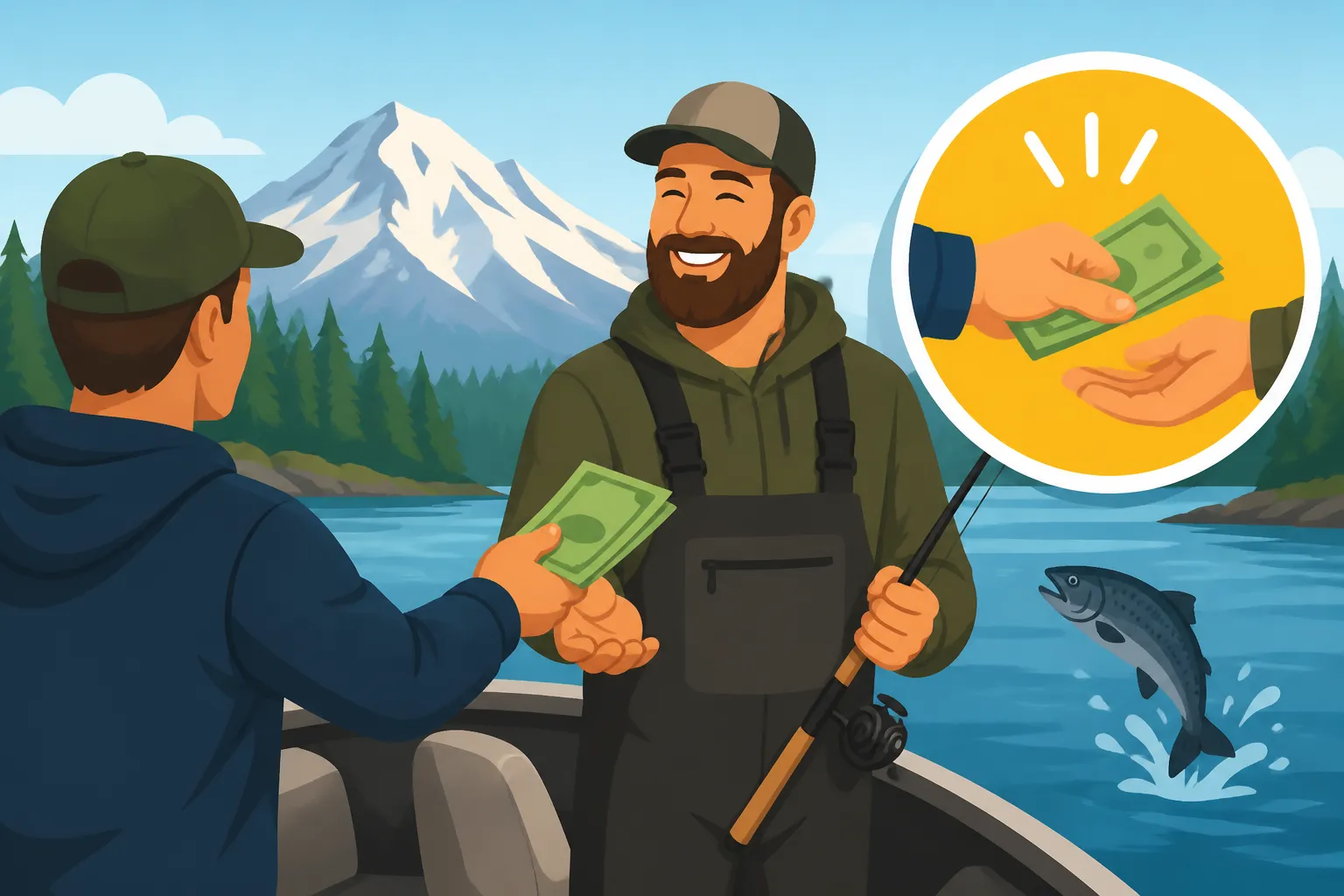
Without a doubt, cash is the preferred method for tipping fishing guides in Washington, and pretty much everywhere else in the industry. Why? For several reasons. Firstly, it's immediate. Guides often incur expenses throughout the day – gas, bait, last-minute tackle – and cash helps them cover these costs right away. Secondly, it avoids credit card processing fees, which can eat into a guide's hard-earned gratuity. Thirdly, it's discreet. While tipping is an expected part of the job, a quiet, hand-to-hand exchange is often more comfortable for both parties than a public transaction.
It's a good practice to have your tip money prepared and ready in an envelope or folded neatly in your wallet before the trip ends. This avoids fumbling around at the dock and makes the exchange smooth and quick. Present it to the guide personally, perhaps with a sincere "Thank you for a great day on the water, I really appreciate your hard work." This simple gesture goes a long way in acknowledging their efforts. Don't be shy about it – they work hard for it!
Tipping the Deckhand (if applicable)
If you're on a larger charter boat, especially one for salmon or halibut on the Washington Coast out of places like Westport or Ilwaco, there might be a deckhand in addition to the captain. These hardworking individuals are often the unsung heroes of the trip. They run the lines, net the fish, help untangle snags, provide assistance with bait, and work tirelessly to keep the boat clean and orderly. Their dedication is crucial to the smooth operation of the trip and your overall experience.
In such cases, it's customary to tip the deckhand separately. A good rule of thumb is to give the deckhand half the percentage of what you tip the captain, or a flat amount per person. For example, if you're tipping the captain 20% of the trip cost, you might give the deckhand 10%. Or, if you prefer a flat rate, $20-$50 per person is a common range for a full-day trip, depending on the length and intensity of the charter. Again, cash is best for the deckhand too, and handing it directly to them at the end of the trip is the most respectful approach. Remember, a Washington Fishing License Guide for Nonresidents is always a good read before heading out on such a trip!
Other Forms of Gratitude: Reviews and Referrals
While cash tips are essential, your gratitude doesn't have to end there. In today's digital world, online reviews and referrals are incredibly valuable currency for fishing guides. A glowing five-star review on platforms like Google, Yelp, or dedicated booking sites like FishingBooker can significantly boost a guide's visibility and future bookings. Taking a few minutes to write about your positive experience – highlighting their professionalism, effort, and the great time you had – is a huge compliment and helps them build their business.
Word-of-mouth referrals are equally powerful. If you had a fantastic trip, tell your friends, family, and fellow anglers about your guide. Post your photos on social media and tag them if they have a presence there. Rebooking with the same guide for future trips is also a strong statement of satisfaction and can often lead to an even better experience, as they get to know your preferences. These non-monetary forms of appreciation take very little effort but can provide lasting benefits for your guide, cementing a positive relationship and helping them thrive in a competitive industry. This is also why many guides prioritize customer satisfaction – a good review can often translate to more bookings than almost anything else.
Common Misconceptions About Tipping a Fishing Guide
There are a few persistent myths surrounding tipping fishing guides that can lead to awkward situations or misunderstandings. Let's clear the waters on these common misconceptions.
Assuming the Charter Fee Covers Everything
This is perhaps the biggest misconception out there, and one that often leaves guides feeling unappreciated. As we touched on earlier, the upfront fee you pay for a Washington fishing charter or guided trip typically covers the operational costs and a base wage for the guide, but it is not intended to be their full compensation. Think of it like dining at a restaurant: you pay for the food and the restaurant's overhead, but the waiter's primary income often comes from tips. The guide industry operates similarly.
The trip fee accounts for expensive boat insurance, fuel, boat maintenance, the cost of specialized tackle, bait, licenses, and potentially booking commissions. After all these expenses are deducted, the guide's personal earnings from the base fee might be surprisingly modest. Tips are an essential supplement to their income, allowing them to make a sustainable living from their passion. When you assume the fee covers everything, you're inadvertently devaluing their professional service and the significant investment they've made in their business. Being informed about Do Charters Provide Rods and Tackle? can also help you understand some of these underlying costs a guide faces.
Tipping Based Solely on Catch Success
This is another huge point of contention and a widespread misunderstanding. While catching a limit of salmon or a trophy steelhead is undoubtedly the highlight of any fishing trip, your tip should never be solely dependent on the number or size of fish caught. A fishing guide's job is to use their knowledge, skill, and effort to put you in the best possible position to catch fish, but they cannot control the behavior of wild animals or unpredictable environmental factors.
There are days when the fish simply aren't biting, no matter how skilled the guide, how perfect the tackle, or how prime the location. Weather changes, water conditions shift, and fish can be finicky. A truly professional guide will still work tirelessly to find fish, change tactics, teach you new techniques, and ensure you have a safe and enjoyable experience, even on a slow day. If your guide put in maximum effort, was knowledgeable, patient, and made the day enjoyable despite slow fishing, they absolutely deserve a full, generous tip. A guide who tries everything and still strikes out deserves appreciation for their effort; a guide who gives up easily or seems uninterested does not. Focusing purely on the fish count misses the entire point of hiring a professional guide, which is about the guided experience itself.
Tipping for Different Types of Washington Fishing Trips
Washington offers an incredible diversity of fishing experiences, from calm lake trips to rugged ocean adventures. While the general tipping principles remain the same, it's worth considering how the type of trip might subtly influence your approach to gratuity.
River Drift Trips vs. Puget Sound Charters
The experience and effort involved can vary between a river drift trip and a saltwater Puget Sound charter, and this might be something to consider when calculating your tip.
River Drift Trips: Often conducted on rivers like the Cowlitz, Kalama, or Olympic Peninsula steelhead rivers, these trips typically involve one or two anglers in a drift boat. The guide is usually rowing or motoring, navigating tricky currents, spotting fish, and constantly adjusting the drift. They are intimately involved in every aspect of your fishing, from rigging lines to netting fish in often fast-moving water. This can be incredibly physically demanding and requires immense skill in boat handling and river reading. For these highly personalized and intensive trips, a tip at the higher end of the 15-20% range, or even slightly above for exceptional service, is often given and well-deserved. If you're Booking a Guide for the Cowlitz River in Washington, remember the intimate setting often means more personalized effort.
Puget Sound Charters: These trips, often targeting salmon or bottomfish in Marine Area 9 or similar zones, usually involve larger boats and potentially more anglers, perhaps 4-6 people. The captain is focused on navigating, locating fish using electronics, and maintaining proper trolling speeds or drifts. While the captain's expertise is paramount, the individual attention might be spread across more people, or there might be a dedicated deckhand doing much of the hands-on work. If there's a deckhand, remember to tip them separately. For these trips, 15-20% of the total charter fee is still the standard, often split among the clients. The value here comes from the captain's deep knowledge of marine areas, fish patterns, and safe vessel operation. Understanding Puget Sound Salmon Closures: What Washington Anglers Need to Know is part of their daily routine.
Multi-Day Trips and Group Bookings
Multi-day trips and large group bookings introduce slightly different dynamics to the tipping conversation.
Multi-Day Trips: If you're embarking on a multi-day fishing adventure with the same guide, perhaps exploring different rivers or marine areas over several days, the total cost can be significant. It's still appropriate to tip based on a percentage of the total trip cost (15-20%). You might choose to give a lump sum at the end of the final day, or if you prefer, you could tip a smaller amount each day. The advantage of a single lump sum is that it allows you to reflect on the entire experience, from beginning to end, and offer a comprehensive gratuity. These trips often involve even greater logistical effort from the guide, including lodging coordination or extended hours away from home. Being aware of Booking a Multi-Day Washington Fishing Trip means thinking about the total experience.
Group Bookings: When a group of friends or family book a charter together, the tip should still be calculated as a percentage of the total trip cost, and then that total tip amount is usually split among the clients. For example, if the trip costs $1000 and you decide on a 20% tip, that's $200. If there are four people in your group, each person would contribute $50. It’s important to discuss this beforehand within your group to avoid any awkwardness or misunderstandings at the end of the trip. Ensure everyone is on the same page about how much to tip and who will collect the funds to present to the guide. Remember, whether it's Shared vs Private Fishing Charters in Washington, the guide's effort for the trip remains consistent.
Disclaimer
This article is for general informational purposes only and does not constitute professional advice. Laws, prices and regulations vary by location and change over time. Consult a qualified professional for guidance on your specific situation.