How to Tell a Steelhead From a Rainbow Trout
It’s a tale as old as time for Washington anglers: you’ve got a beautiful, silvery fish on your line, and you’re staring at it, scratching your head. Is it a magnificent steelhead, a prized ocean-run rainbow, or a feisty resident rainbow trout? This confusion is incredibly common, and honestly, the lines can feel pretty blurry sometimes. Knowing the difference isn't just about bragging rights; it's absolutely critical for following regulations, contributing to conservation, and making sure you’re fishing ethically. This guide will help you understand the subtle yet important distinctions between these two iconic Washington fish, so you can make confident identifications out on the water.
The Deep Dive: What Exactly Separates a Steelhead from a Rainbow Trout?
At their core, steelhead and rainbow trout are the same species, Oncorhynchus mykiss. Think of it like a human family: you have siblings who stay close to home and others who travel the world. The fundamental difference lies in their life history, specifically whether they embark on a journey to the ocean.
Anadromy Defined: The Ocean's Call
The term "anadromous" is what truly sets steelhead apart. It means they hatch in freshwater, migrate to the ocean to feed and grow for one to several years, and then return to freshwater to spawn. This incredible journey shapes everything about them, from their physical appearance to their behavior. They spend a significant portion of their lives in a vastly different environment, facing different predators, finding different food sources, and adapting to saltwater conditions. This marine phase is critical to their size, strength, and the unique challenges they present to anglers. When you’re targeting these fish, you’re often dealing with a creature that has traveled hundreds, if not thousands, of miles.
Resident rainbow trout, on the other hand, complete their entire life cycle in freshwater. They might live in a small mountain stream, a vast reservoir, or a local lake. Their world is confined to the rivers and lakes where they were born, and their survival strategies are tailored to those specific habitats. They don't experience the salt, the vastness of the ocean, or the immense growth potential that ocean-feeding provides.
The Genetic Link and Environmental Influence
Despite their different life histories, steelhead and rainbow trout share the same genetic blueprint. It's truly fascinating. The decision to migrate to the ocean or stay in freshwater is often influenced by a complex interplay of genetics and environmental cues. Some populations are predisposed to anadromy, while others are geared to stay put. Even within the same river system, you might have both forms coexisting, with some fish heading out to sea and others becoming resident. This genetic predisposition can be incredibly strong, but factors like food availability, water temperature, and river conditions can also play a role in nudging a young fish one way or the other. It's a prime example of nature's adaptability, and why it can sometimes be so tricky to tell them apart without a close look. For a deeper understanding of these incredible fish, a good field guide you can find on Amazon can be an invaluable resource.
Visual Clues: Spotting the Key Differences in the Water
While they are the same species, their different life journeys lead to some distinct physical characteristics. Knowing what to look for can make all the difference.
Size and Shape: The Ocean's Growth Spurt
One of the most immediate and striking differences you'll notice is their size. Steelhead, having spent time gorging on rich marine prey, tend to be significantly larger than most resident rainbow trout of the same age. A typical adult steelhead returning to spawn can range from 20 to 35 inches, often pushing into double-digit weights. They develop a sleek, torpedo-like body built for powerful swimming and long migrations, often appearing more elongated and streamlined than their freshwater cousins. Their bodies are typically deep through the shoulders, tapering gracefully to a strong caudal (tail) fin, which is also generally larger and more robust. Learning to identify these powerful swimmers is key to distinguishing them. Steelhead: Washington's Ocean-Run Rainbow Trout provides more detail on these majestic fish.
Resident rainbow trout, while still beautiful and strong, rarely achieve the sheer mass of a steelhead. In many rivers and lakes, a 15- to 20-inch rainbow is considered a good-sized fish, with anything larger being quite exceptional. Their bodies tend to be a bit chunkier or more "trout-shaped," reflecting their life in often smaller, less turbulent freshwater environments. They might have a slightly deeper body relative to their length, without the same super-sleek, ocean-ready profile. Of course, there are exceptions – some large lake-dwelling rainbows can grow quite big, but they still typically lack the distinctive, silvery sheen of an ocean-fresh steelhead. If you're wondering How Big Washington Rainbow Trout Get in Lakes, it's generally smaller than their anadromous relatives.
Coloration: Silver Bright vs. Ruby Sides
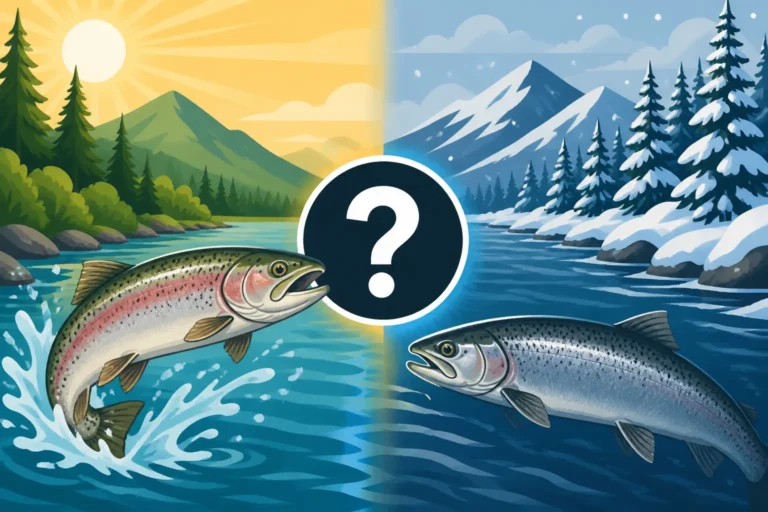
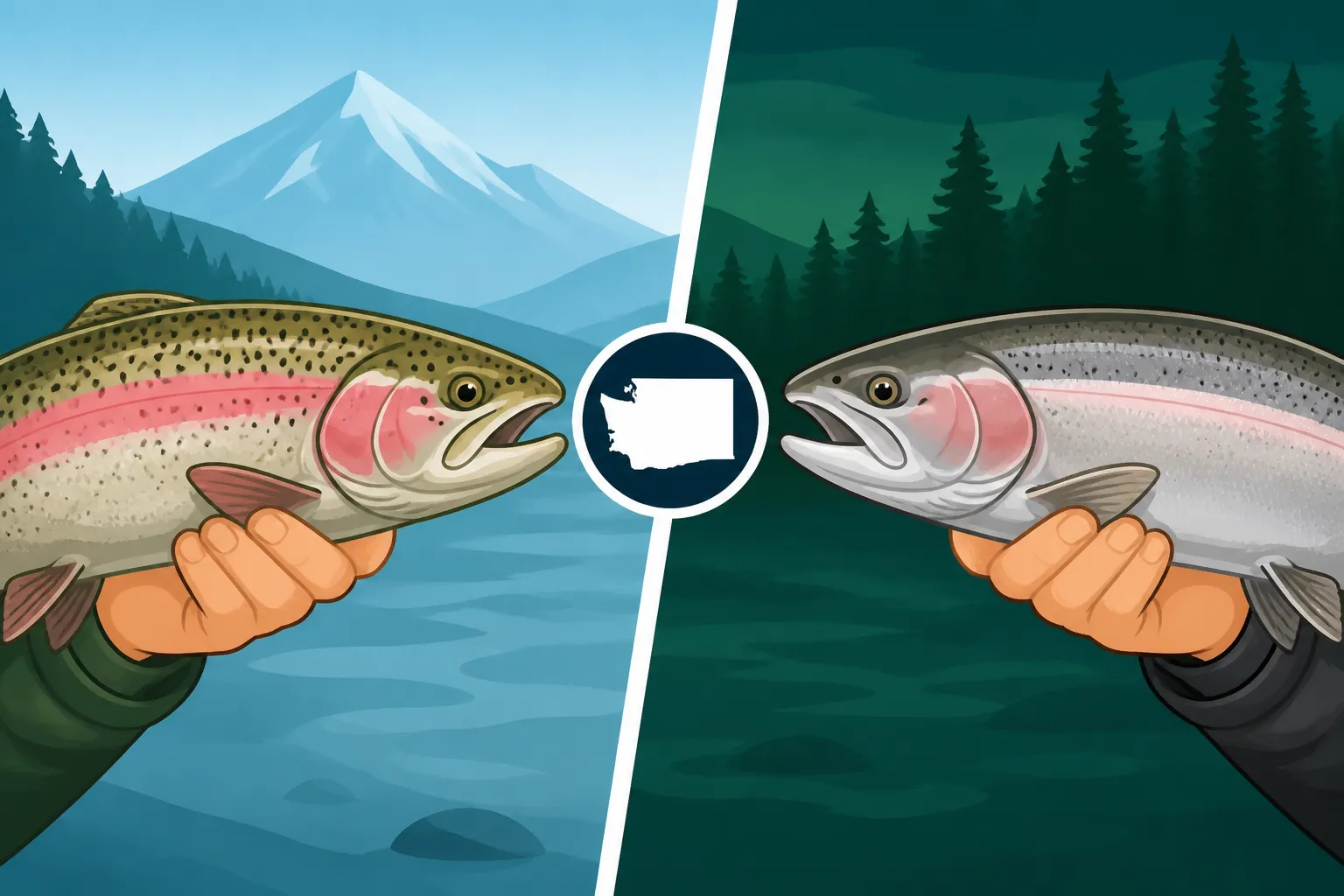
This is often the most telling visual cue. Fresh from the ocean, steelhead are typically a stunning, bright silver, almost chrome-like, with a faint olive or bluish tint on their backs. Their sides are usually devoid of the prominent red or pink stripe that gives rainbow trout their name. Their spots are also less defined, often appearing as small, dark speckles scattered across their back and tail, sometimes even fading into their silvery sides. This "chrome" appearance is an adaptation to life in the open ocean, providing camouflage from predators below and above.
Resident rainbow trout, particularly those living in clear, nutrient-rich rivers or lakes, will usually display the vibrant, iridescent pink or red stripe along their lateral line that runs from their gill plate to their tail. This stripe can vary in intensity, sometimes being a faint blush and other times a vivid ruby red. Their backs are typically olive green or brownish, fading into lighter sides. The spots on a resident rainbow are often much more pronounced, darker, and spread across their back, dorsal fin, and caudal fin. These colors help them blend into the varied freshwater environments, from rocky bottoms to vegetated banks.
Fin Characteristics: The Adipose Fin and Fin Erosion
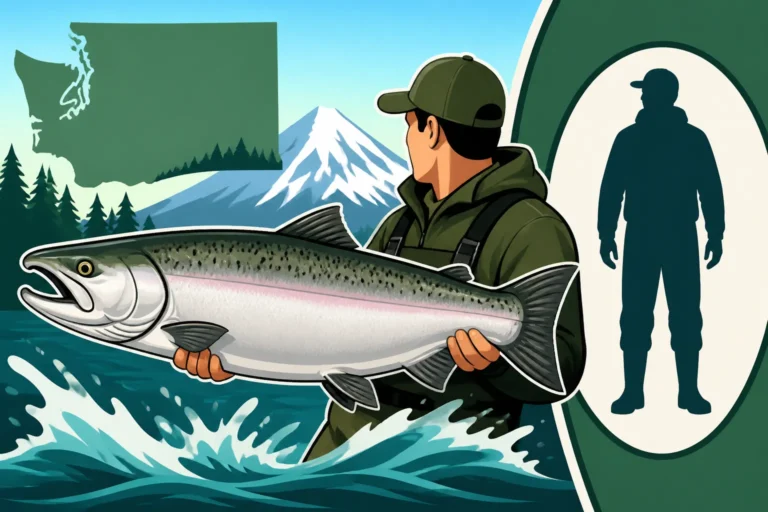
Both steelhead and rainbow trout possess an adipose fin – a small, fleshy fin located between the dorsal fin and the caudal fin. This fin is often the first place wildlife agencies look for identification. Hatchery-raised steelhead in Washington are often "adipose fin clipped" before release, meaning this small, fleshy fin is removed. This serves as a clear, unmistakable visual indicator that the fish is of hatchery origin. The purpose is two-fold: to distinguish them from wild steelhead, which are often protected, and to signify that these hatchery fish can typically be harvested by anglers within specific regulations. What a Clipped Adipose Fin Means is crucial knowledge for any angler in Washington.
Wild steelhead and most resident rainbow trout, unless they’ve had an unfortunate accident, will have an intact adipose fin. Beyond the adipose fin, look at the other fins. Hatchery fish, whether steelhead or rainbow, sometimes exhibit more "worn" or "eroded" fins due to their time in crowded hatchery raceways. Wild fish, living in natural environments, tend to have more perfectly formed, sharp-edged fins. While not a definitive marker on its own, fin condition can offer additional clues when combined with other observations.
A Comparative Table: Steelhead vs. Rainbow Trout
To help consolidate these visual cues, here's a quick comparison:
| Feature | Steelhead (Ocean-Run Rainbow) | Resident Rainbow Trout |
|---|---|---|
| Life History | Anadromous: ocean migration for growth | Potamodromous: entire life in freshwater |
| Typical Size | Large (20-35+ inches, 10+ lbs common) | Smaller (10-20 inches, rarely over 5 lbs) |
| Body Shape | Sleek, torpedo-like, deep through shoulders | More "trout-shaped," sometimes chunkier |
| Body Color | Silvery, chrome-like, faint olive/blue back | Olive/brown back, lighter sides |
| Lateral Stripe | Absent or very faint, if any | Prominent pink/red stripe (often vibrant) |
| Spots | Small, scattered, often faded, mostly on back/tail | Dark, distinct, spread on back, dorsal, caudal fins |
| Adipose Fin | Often clipped (hatchery); intact (wild) | Intact (most); occasionally clipped (hatchery) |
| Fin Condition | Generally pristine (wild); sometimes worn (hatchery) | Generally pristine (wild); sometimes worn (hatchery) |
Beyond Sight: Habitat, Behavior, and Fishing Implications
Visual identification is key, but understanding where and how these fish live can also strongly hint at what you've hooked. Their different life cycles dictate distinct behaviors and preferred habitats.
Habitat Preferences: Where the Journey Takes Them
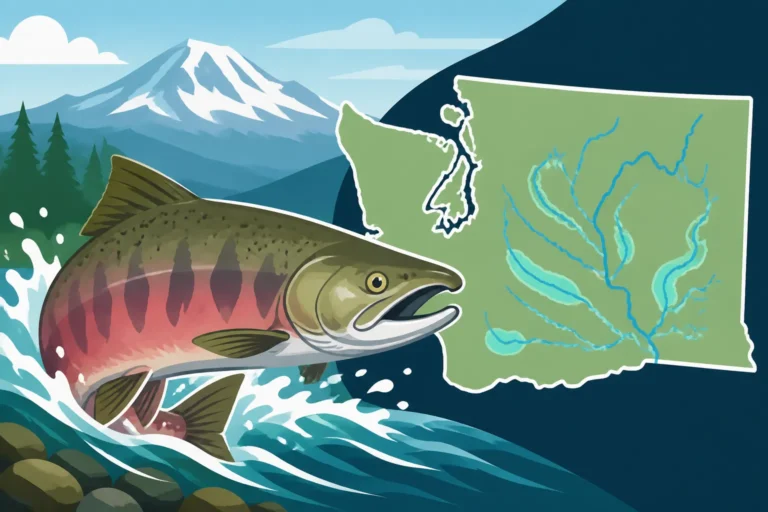
Steelhead are, by definition, fish of the ocean and the rivers that connect to it. You'll find them primarily in coastal rivers and larger tributaries throughout Washington, particularly those with good access to the Pacific Ocean or Puget Sound. They spend their juvenile years in freshwater, then migrate out, spending one to several years feeding in the vastness of the sea. When they return, they travel upriver, sometimes hundreds of miles, to reach their natal spawning grounds. This means if you're fishing in the lower to middle stretches of a river system known for steelhead runs, especially during the appropriate Winter vs Summer Steelhead Runs in Washington, Explained seasons, the chances of encountering a steelhead are much higher. Their habitat is fundamentally tied to migration corridors.
Resident rainbow trout, however, are far more widespread. You can find them in virtually any freshwater body in Washington – from high mountain lakes and small, pristine streams to large, bustling reservoirs and even urban ponds. They are incredibly adaptable. If you're fishing a landlocked lake, a high-elevation stream, or a river that doesn't have direct, unobstructed access to the ocean, you can be almost certain you're targeting resident rainbow trout. Their world is self-contained within these freshwater ecosystems. This difference in habitat can be a strong indicator even before you see the fish.
Behavior on the Line: The Fight of a Lifetime
When you hook a steelhead, be prepared for a fight. Their time in the ocean, feeding and growing robustly, means they return to freshwater as incredibly powerful, acrobatic fish. They often make long, sustained runs, peeling line off your reel with impressive speed. Many will leap clear of the water, shaking their heads violently in an attempt to throw the hook. The sheer strength and endurance of an ocean-run steelhead are legendary among anglers. They are an experience. Their behavior on the line reflects their incredible physical conditioning and migratory instincts.
Resident rainbow trout, especially those from smaller streams or lakes, tend to offer a spirited but generally less prolonged fight. While they can jump and make short, powerful runs, they typically don't have the same brute strength or stamina as a steelhead. Larger lake-dwelling rainbows can certainly put up an admirable battle, but even then, their fight often feels different – perhaps more bulldog-like or with shorter bursts of energy, rather than the relentless, explosive power of a chrome bright steelhead.
Fishing Implications: Tackle and Tactics
Because of their differing sizes, strengths, and behaviors, the tackle and tactics for steelhead and resident rainbow trout often vary considerably. For steelhead, anglers typically use heavier rods and reels, often with stronger mainlines and leaders, to handle their powerful runs and large size. Techniques like drift fishing with bait or artificials, float fishing, and spey casting are popular for intercepting them on their upriver migrations. Anglers targeting steelhead are also often highly mobile, covering a lot of water to find fish moving through the system. You might pick up specialized steelhead gear from a wide selection on Amazon.
For resident rainbow trout, especially in smaller streams or lakes, lighter tackle is generally the norm. Ultralight spinning gear, fly rods, and smaller lures, baits, or flies are commonly employed. Techniques range from casting spinners and spoons to fly fishing with nymphs and dry flies, or simply still fishing with bait under a bobber. The approach is often more focused on specific holes, seams, or structures where trout hold, rather than intercepting migrating fish. These different approaches highlight the distinct nature of the two fish, even though they are technically the same species. When planning your trip, always check Washington Fishing Regulations Every Angler Should Know to ensure your gear and methods are appropriate for the target species and location.
Why It All Matters: Conservation, Regulations, and Ethical Angling
Understanding the difference between a steelhead and a rainbow trout isn't just an academic exercise; it has very real, and often legally binding, implications for anglers in Washington. Wildlife agencies invest heavily in managing these populations, and your ability to identify them correctly is a cornerstone of responsible fishing.
Regulatory Complexity: Wild vs. Hatchery Distinctions
Washington State's fishing regulations are designed to protect wild fish populations while allowing for harvest opportunities of hatchery-produced fish. This is particularly true for steelhead. Wild steelhead populations, especially those on the Olympic Peninsula and other critical watersheds, are often listed as threatened or endangered. This means that retention of wild steelhead is usually prohibited, and any wild fish caught must be immediately and carefully released. This is where the adipose fin clip becomes critically important. An intact adipose fin often signifies a wild steelhead, and anglers must release it, sometimes with specific handling rules. Can You Keep a Wild Steelhead in Washington? is a question with very strict answers.
Resident rainbow trout, while also subject to size and bag limits, generally face less stringent conservation measures than wild steelhead. Many lakes and rivers are regularly stocked with hatchery-raised rainbow trout to provide abundant fishing opportunities. These stocked rainbows often have an intact adipose fin, unlike many hatchery steelhead, adding another layer of potential confusion for the unprepared angler. It’s absolutely vital to consult the latest Washington Sport Fishing Regulations pamphlet for the specific river, lake, or marine area you plan to fish, as rules can change frequently and vary dramatically by location and time of year. Ignoring these details can lead to significant fines. Always confirm Understanding Washington's Daily Bag Limits by Species for your target area.
Conservation Efforts: Protecting Vulnerable Populations
The strict regulations around wild steelhead are a direct response to their declining numbers in many areas. Habitat loss, damming of rivers, and past overfishing have taken a toll on these magnificent fish. When anglers correctly identify and release wild steelhead, they directly contribute to the survival and recovery of these genetically valuable populations. This practice ensures that these fish have the opportunity to spawn and perpetuate their species, helping to secure the future of steelhead fishing for generations to come. Washington Sport Fishing Seasons and Emergency Closures can sometimes be enacted specifically to protect vulnerable runs.
For resident rainbow trout, conservation efforts often focus on habitat restoration, water quality improvement, and sustainable stocking programs. While not facing the same critical threats as many wild steelhead stocks, maintaining healthy resident trout populations is important for ecosystem balance and recreational angling opportunities. Your understanding of fish identification helps ensure that you are fishing responsibly and supporting these broader conservation goals. Whether you’re fishing for resident trout or migrating steelhead, remember to check What to Check Before Every Washington Fishing Trip before heading out.
Ethical Angling: Beyond the Law
Beyond the legal requirements, ethical angling practices are paramount when dealing with both steelhead and rainbow trout, particularly when catch-and-release is mandated or chosen. This includes using appropriate gear to minimize harm, handling fish gently with wet hands, and releasing them quickly to maximize their survival chances. For steelhead, using barbless hooks is often required or strongly encouraged, as it makes release much easier and less damaging. It’s also crucial to avoid fishing in ways that could accidentally foul-hook fish, which is often illegal and unethical. Even if you're practicing Do You Need a License for Catch-and-Release Only?, ethical practices remain the same.
In summary, while steelhead and rainbow trout are two forms of the same species, their life histories create distinct differences that anglers must recognize. From their silvery ocean-bright appearance to their powerful fights and the strict regulations surrounding them, steelhead demand a unique understanding. By honing your identification skills, you not only comply with the law but also become a more responsible and effective steward of Washington's incredible fisheries.
Disclaimer
This article is for general informational purposes only and does not constitute professional advice. Laws, prices and regulations vary by location and change over time. Consult a qualified professional for guidance on your specific situation.