Why Is Sturgeon Fishing Catch-and-Release in Washington?
It's a common dream for anglers in Washington to hook into a truly massive white sturgeon, feeling that incredible power on the end of the line. But for many, the joy of the fight is often tempered by the reality that, even after a monumental battle, almost all sturgeon fishing in our state is strictly catch-and-release. This can be a real bummer when you're dreaming of a unique meal or a photo with a true river monster, only to know it has to go back in the water. This guide will dive deep into why these rules are in place, what they mean for you as an angler, and how you can still enjoy this incredible fishery responsibly.
The Critical Need for Sturgeon Conservation
The primary reason sturgeon fishing in Washington is overwhelmingly catch-and-release boils down to their extremely vulnerable population status. These ancient fish, true living dinosaurs, have faced immense pressures over the last century, and current regulations are a direct response to ensure their survival and hopefully, a thriving future.
Historic Decline and Overfishing Pressure
Sturgeon populations in the Pacific Northwest, particularly the majestic white sturgeon of the Columbia River, once numbered in the hundreds of thousands. Early settlers and commercial fisheries, however, didn't fully understand the delicate balance required to sustain these long-lived species. Overharvesting for their meat and especially their roe (caviar) in the late 19th and early 20th centuries led to drastic declines. Fishing methods were often unregulated and incredibly efficient, taking a heavy toll on slow-growing populations that simply couldn't reproduce fast enough to recover. Imagine literally boatloads of sturgeon being hauled in; it’s a stark contrast to today’s carefully managed, often single-digit catch limits for other species. This historical overexploitation serves as a powerful reminder of how quickly seemingly abundant resources can be depleted.
The legacy of this intense pressure is still felt today, making current management highly conservative. It's not just about what happened decades ago; it's about the inherent fragility of a species that takes a long time to mature and reproduce, which we'll get into next. Without strict catch-and-release policies, the risk of repeating past mistakes would be far too high, potentially pushing these incredible fish to the brink of collapse once more.
Slow Growth and Late Maturity Cycles
One of the biggest factors making sturgeon so susceptible to overfishing and why catch-and-release is so vital is their incredibly slow life cycle. Unlike salmon or trout that mature in a few years, white sturgeon can live for over 100 years and don't typically reach sexual maturity until they are 10 to 20 years old, sometimes even older for the largest females. This means it takes a very long time for a sturgeon to contribute to the next generation. If too many sexually mature fish are removed from the population, there simply aren't enough adults left to spawn effectively.
Think of it this way: if a species only starts having children when they're teenagers, and you take most of them away before they even get to that age, the population is going to shrink quickly. This biological reality means that any fish removed from the system, especially larger, older females (the prime egg producers), represents a significant loss to future spawning potential. Catch-and-release minimizes this impact, allowing these magnificent fish to continue their life cycle, grow, and reproduce, which is absolutely essential for long-term recovery.
Habitat Challenges and Environmental Factors
Beyond historical overfishing, sturgeon face a myriad of ongoing environmental challenges that further complicate their recovery and necessitate robust conservation measures. The damming of rivers like the Columbia, while providing power and irrigation, fragmented sturgeon habitats, blocked migration routes, and altered water flow and temperature regimes. These changes disrupted their natural spawning and rearing grounds, making it harder for juvenile sturgeon to survive and thrive.
Pollution from industrial and agricultural runoff, as well as urbanization, also impacts water quality, which can directly affect sturgeon health and reproduction. Furthermore, fluctuating water levels, sometimes due to dam operations or drought conditions, can expose spawning beds or reduce vital feeding areas. The delicate balance of their ecosystem is constantly under threat, and these environmental pressures add another layer of vulnerability. When a species is already struggling with habitat degradation and fragmentation, the ability to control angling pressure through strict Why Is Sturgeon Fishing Catch-and-Release in Washington? regulations becomes even more paramount. It's one of the few variables that wildlife managers can directly influence to give sturgeon the best possible chance at overcoming these broader environmental hurdles.
Washington's Sturgeon Regulations: What You Need to Know
Understanding the specific regulations is key to responsible sturgeon fishing in Washington. While the general rule is catch-and-release, there are nuances, especially concerning different species and unique river systems. Knowing these details helps you fish legally and contribute to conservation.
White Sturgeon vs. Green Sturgeon: A Crucial Distinction
In Washington waters, anglers primarily encounter two types of sturgeon: white sturgeon and green sturgeon. The vast majority of recreational sturgeon fishing targets white sturgeon, which are the larger and more widely distributed species in the Columbia River system and some Puget Sound tributaries. For these magnificent fish, recreational retention is generally closed across Washington state. There might be very rare, highly specific, and short-lived openings in certain areas (like a brief window on the lower Columbia River or specific reservoirs in Idaho bordering Washington), but these are exceptions to the rule and require constant vigilance of WDFW emergency regulations. The prevailing and consistent regulation for white sturgeon in Washington is catch-and-release.
Green sturgeon, on the other hand, are federally protected under the Endangered Species Act and are significantly less common in recreational fisheries. They are typically found in saltwater and brackish estuaries. It is illegal to target or retain green sturgeon in Washington. If you accidentally catch one, it must be released immediately with the least harm possible. Distinguishing between these two can be crucial, though white sturgeon are generally larger and have different scute (bony plate) patterns. Always familiarize yourself with species identification before heading out.
| Feature | White Sturgeon | Green Sturgeon |
|---|---|---|
| Typical Size | Up to 20 feet, commonly 6-12 feet | Up to 7 feet, commonly 3-5 feet |
| Coloration | Grayish-brown to olive-green above, white belly | Olive-green to dark green above, greenish-white belly |
| Dorsal Scutes | Single row of large scutes along the back | Double rows of scutes along the back (often 5 rows total) |
| Scutes Between Dorsal Fin & Tail | Generally 1-2 small scutes | Generally 3-4 small scutes |
| Snout Shape | Relatively blunt, V-shaped mouth | More pointed, U-shaped mouth |
| Habitat | Primarily freshwater rivers, estuaries | Coastal marine waters, estuaries, lower rivers |
| Conservation Status | Varies by population; most in WA are protected C&R only | Federally Protected (Endangered Species Act) |
The Columbia River and its Unique Management Challenges
The Columbia River is the undisputed heart of sturgeon fishing in Washington, yet it presents some of the most complex management challenges due to its shared border with Oregon and the sheer size and diversity of its sturgeon populations. The management of Columbia River sturgeon is a cooperative effort between Washington and Oregon, often involving joint decisions and mirroring regulations to ensure consistency and effectiveness. For the most part, the Columbia River white sturgeon fishery is managed as a catch-and-release opportunity.
This is largely due to concerns over overall population health, particularly for the "upriver bright" stocks that spawn above Bonneville Dam, which have faced severe declines. Even the populations in the lower river, while more robust, are carefully managed to prevent any backsliding. While there have been very limited, short recreational retention seasons in the past on specific sections of the lower Columbia, these are rare and typically last only a few days, requiring immediate closure once catch quotas are met. Anglers hoping for a retention opportunity must check the How to Check for Emergency Rule Changes in Washington daily, as these openings are often announced with very little lead time and can close just as quickly. Without explicit and current notice, assume all Columbia River sturgeon fishing is catch-and-release.
Slot Limits and What They (Typically Don't) Mean for Sturgeon
For many fish species, a "slot limit" is a conservation tool designed to protect the most reproductively valuable fish (the very large ones) and the very young ones, while allowing harvest of fish within a specific "slot" of sizes. For example, you might be allowed to keep a salmon that is between 20 and 30 inches, but not smaller or larger. This is a common and effective management strategy for many fisheries in Washington, helping to ensure a healthy breeding stock while still providing recreational opportunity.
However, when it comes to sturgeon in Washington, the concept of a retention slot limit is largely theoretical, or only applies to those exceedingly rare, highly restricted, and brief retention fisheries mentioned earlier. For the vast majority of sturgeon fishing in Washington, there is no legal retention slot. Instead, the regulation is simpler and more absolute: catch-and-release only. This stark difference underscores the severe conservation status of sturgeon. While a slot limit works for a healthy, reproducing population that can withstand some harvest, sturgeon populations are often considered to be at a point where any recreational harvest, even within a specific slot, is deemed too risky. The management goal isn't to allow some harvest, but to protect every fish so they can grow, mature, and contribute to population recovery. So, while you might hear about slot limits for other fish, don't assume they apply to sturgeon in Washington; the rule is almost always to let them go.
The Angler's Essential Role in Sturgeon Conservation
Even though most sturgeon fishing in Washington is catch-and-release, anglers play an incredibly vital role in the species' recovery. Your actions on the water directly impact the survival rates of the fish you encounter, and your participation in reporting helps biologists make informed management decisions.
Best Practices for Catch-and-Release
Practicing proper catch-and-release techniques is absolutely paramount for sturgeon, given their long lives and vulnerability. A poorly handled release can negate the entire conservation effort. Here’s how to do it right:
- Use Appropriate Gear: Heavy tackle is a must. You want to land the fish as quickly as possible to minimize stress and exhaustion. A strong rod, a reel with a smooth drag, and heavy line (at least 50 lb test, often more) are essential.
- Barbless Hooks are Non-Negotiable: Many regulations specifically require barbless hooks for sturgeon, and even where not mandated, they are highly recommended. Barbless hooks greatly reduce tissue damage and make hook removal much easier and faster. You can find excellent barbless sturgeon hooks or pliers to crimp down barbs on your regular hooks readily available through retailers like Amazon.
- Minimize Fight Time: While thrilling, a prolonged fight exhausts the fish, making it less likely to recover after release. Use gear heavy enough to subdue the fish efficiently.
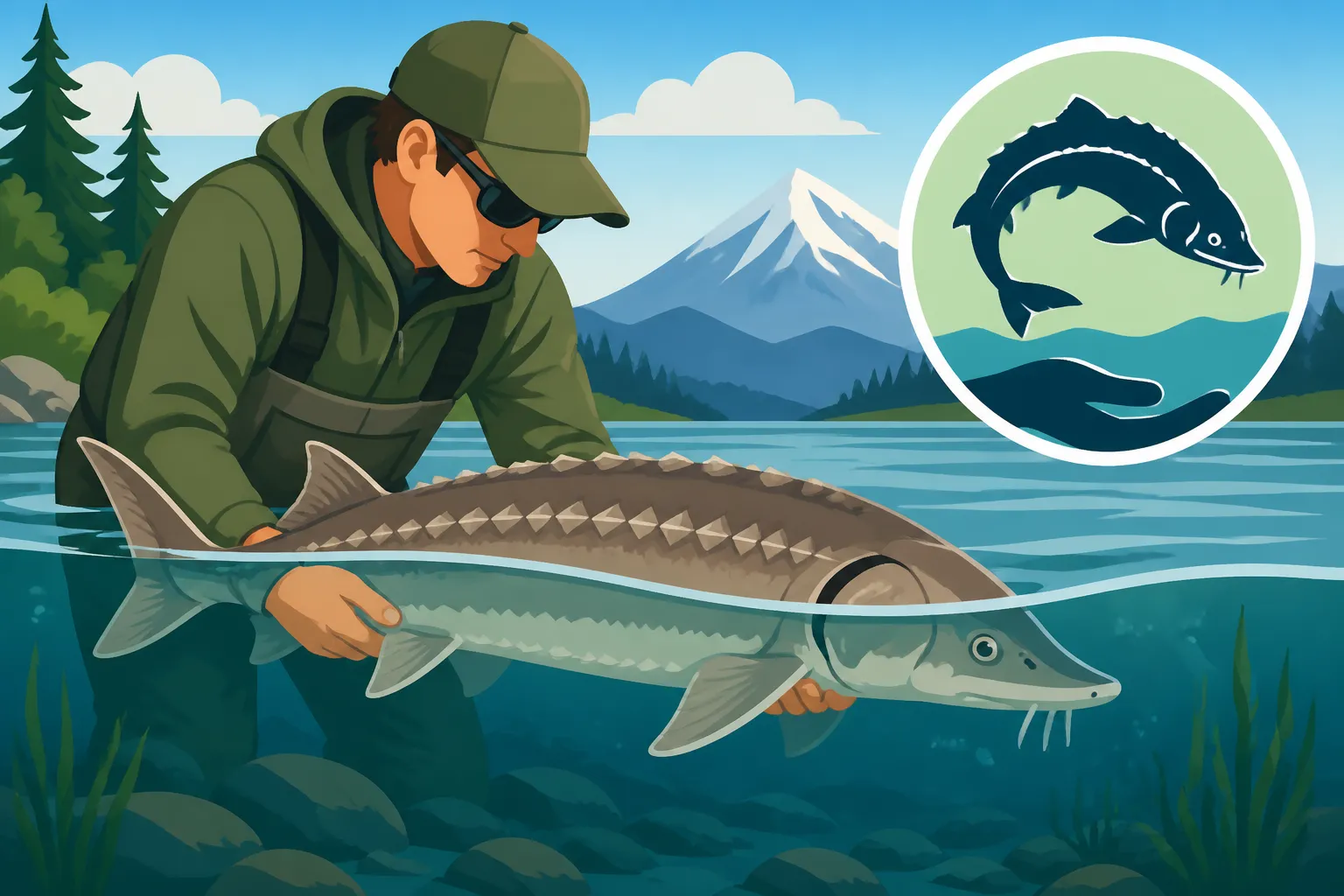
- Keep the Fish in the Water: This is the golden rule for sturgeon. Their internal organs are not designed to support their immense weight out of water. Lifting even medium-sized sturgeon by the tail or head can cause internal injuries. If you absolutely need a photo, try to keep the fish partially submerged, supporting its belly fully, and quickly get your shot. For larger fish, it's often best to admire them boat-side or bank-side in the water.
- Proper Handling: If the fish is smaller and needs to be briefly brought to the boat for hook removal, support its entire body. Avoid dragging it onto sharp surfaces. Use specialized tools like long-nosed pliers or de-hookers to remove hooks quickly and gently.
- Revive the Fish: If the sturgeon appears lethargic, hold it upright in the current (or gently move it back and forth in still water) until it regains strength and swims away on its own. Don't just toss it back if it's struggling.
Adhering to these practices not only ensures you're fishing ethically but also maximizes the chance that the magnificent sturgeon you caught will live to spawn another day. Remember, every released sturgeon is a victory for conservation.
Reporting and Data Collection: Your Eyes on the Water
Even though you're releasing sturgeon, your fishing activity is incredibly valuable to wildlife managers. In Washington, a When a Catch Record Card Is Required in Washington is often required for sturgeon, even for catch-and-release fisheries. This might seem counterintuitive since you're not keeping anything, but recording your efforts and releases provides critical data.
When you fill out your The Washington Catch Record Card and What It Requires, you're often asked to mark down the number of sturgeon you caught and released, and sometimes even estimated sizes or locations. This information helps the Washington Department of Fish and Wildlife (WDFW) biologists:
- Estimate Angler Effort: How many people are fishing for sturgeon and where?
- Assess Catch Rates: Are more or fewer sturgeon being caught per angler hour? This can indicate population trends.
- Identify Hotspots: Where are sturgeon concentrating, and does this change over time?
- Monitor Illegal Activities: By comparing reported catches to observed effort, WDFW can better understand and deter illegal retention or practices like Snagging and Foul-Hooking: What's Illegal in Washington.
Think of yourself as a citizen scientist. Every time you accurately fill out and return your catch record card, you're contributing to a larger dataset that informs management decisions. This data is crucial for ensuring that future generations can also experience the thrill of tangling with these ancient fish. Without angler participation in this data collection, managers would have a much harder time understanding the health and distribution of sturgeon populations.
Supporting Broader Conservation Efforts
Beyond your actions on the water, there are other ways to support sturgeon conservation efforts in Washington. These efforts often go hand-in-hand with ensuring the future of fishing.
- Stay Informed: Regularly check the WDFW website for regulation updates and current status reports on sturgeon populations. The more you know, the better you can advocate for and adhere to conservation needs.
- Support Conservation Organizations: Many non-profit groups are dedicated to habitat restoration, research, and advocacy for anadromous fish, including sturgeon. Organizations focused on the Columbia River ecosystem or native fish species are excellent choices. Your support, whether financial or through volunteering, can make a real difference in large-scale projects.
- Report Violations: If you witness illegal fishing activity, such as anglers retaining sturgeon in a closed area or using illegal gear, report it immediately to the WDFW enforcement hotline. Protecting these vulnerable fish sometimes means being vigilant against those who disregard the rules. Unfortunately, Fines and Penalties for Common Fishing Violations can be severe for sturgeon-related offenses, underscoring the serious nature of these protections.
- Advocate for Habitat Protection: Supporting policies that protect and restore riverine habitats, improve water quality, and manage dam operations with fish passage in mind will benefit sturgeon and countless other species. A healthy ecosystem is the foundation for healthy fish populations.
Navigating Washington's Sturgeon Fisheries
Even with catch-and-release rules, targeting sturgeon in Washington remains an incredibly popular and rewarding experience. Knowing where to go and what gear to have will enhance your chances of success and ensure a responsible trip.
Where You Can Still Target Sturgeon
The vast majority of sturgeon fishing in Washington occurs on the Columbia River. This massive waterway is home to significant white sturgeon populations, particularly in its lower reaches. Anglers flock to stretches from Astoria upriver past Vancouver, often concentrating in areas known for deeper holes and current breaks. Places like the waters around the Cowlitz and Kalama river mouths, or sections near Longview and Woodland, are popular spots for targeting these bottom dwellers.
While the Columbia is the main event, sturgeon can also be found in some of its larger tributaries for portions of the year, though these opportunities are generally more limited and even more strictly regulated. Always refer to the current WDFW fishing regulations pamphlet for specific sections of rivers, as rules can vary even within short distances. Exploring the Fishing the Columbia River in Washington: A Complete Overview article can provide deeper insights into specific zones and conditions. It's rare, but sometimes sturgeon might even be found in other large river systems or estuaries, so a thorough check of the regulations for your chosen body of water is always paramount.
Essential Gear for Safe Release
Having the right gear isn't just about catching sturgeon; it's crucially about ensuring their safe release. These are powerful, heavy fish, and without the proper tools, you risk injuring yourself or the fish.
- Heavy-Duty Rod and Reel: As mentioned, a stout salmon/steelhead or even a light halibut rod, paired with a large baitcasting or conventional reel spooled with strong braided line (65 lb minimum, often 80-100 lb) is necessary. The goal is to land the fish quickly.
- Strong Leaders and Swivels: Use heavy mono or fluorocarbon leaders (80-120 lb) to withstand abrasion from sturgeon mouths and gill plates. Quality swivels are also important to prevent line twist.
- Barbless Hooks: This is critical. Sizes typically range from 7/0 to 10/0, depending on bait and target fish size. Many anglers simply crimp the barb on their preferred hooks.
- Heavy Sinkers: Sturgeon are bottom feeders, and you need to get your bait to them and hold it there. Pyramidal or flat bank sinkers ranging from 8 ounces to over a pound are common, depending on current.
- Sturdy Landing Net: For smaller to medium sturgeon, a large, deep, knotless rubber or rubber-coated mesh net is ideal. This minimizes damage to their slime coat and fins. You can find excellent options on Amazon, often labeled as salmon or halibut nets.
- Long-Nose Pliers or De-Hooker: These tools are indispensable for quick and safe hook removal, especially with barbless hooks. The longer the better, to keep your hands clear of the fish's mouth.
- Measuring Tape: While you might not be keeping the fish, measuring it (while in the water if possible) can be a fun way to estimate its size and compare with friends. It also helps with the catch record card data. Many waterproof, flexible measuring tapes are available through online retailers like Amazon.
- Gloves: Heavy-duty gloves can protect your hands from rough scutes and sharp fins.
- Camera (Optional but Recommended): Capture the memory, but remember to prioritize the fish's safety by keeping it in the water or minimizing air time.
Investing in quality gear ensures a more enjoyable, effective, and ethical sturgeon fishing experience for everyone involved.
Always Check Current Regulations
Fishing regulations in Washington are dynamic, especially for sensitive species like sturgeon. What was open or allowed last year, or even last week, can change. Factors such as test fishery results, spawning escapement goals, and environmental conditions can trigger emergency rule changes.
- WDFW Website: The official Washington Department of Fish and Wildlife (WDFW) website is your absolute best source for the most up-to-date regulations. Look for the "Fishing Pamphlet" and especially the "Emergency Rules" section, which is updated frequently.
- Fish Washington App: Download the Fish Washington app from WDFW to your smartphone. This app often provides real-time access to regulations, rule changes, and even catch reporting features.
- Local Bait and Tackle Shops: The folks who run local bait and tackle shops are often incredibly knowledgeable about current conditions and local rules. They can be a great resource, but always cross-reference with official WDFW sources.
Before every single trip, make it a habit to check the current regulations for the specific body of water you plan to fish. This vigilance is part of being a responsible angler and helps ensure the future of Washington's incredible sturgeon fishery.
Disclaimer
This article is for general informational purposes only and does not constitute professional advice. Laws, prices and regulations vary by location and change over time. Consult a qualified professional for guidance on your specific situation.