Choosing Between a Guide and a DIY Trip
You have a few precious days off, a cooler waiting at home and a choice to make: hire a guide for the Olympic Peninsula, the Columbia or Westport, or load up your own gear and figure it out yourself. Pick wrong and you either overpay for a trip you could have handled, or burn a weekend learning a river the hard way. This guide breaks down the real costs, trade-offs and situations where each option makes the most sense in Washington.
Why This Decision Is Harder in Washington
In some states, the guide-or-DIY question is simple. In Washington, it is genuinely complicated, and anyone who tells you there is one right answer has probably only fished one kind of water. The state offers an enormous range of fisheries: wild winter steelhead on the coastal rivers, salmon trolling in Puget Sound, halibut and tuna far offshore from Westport and Ilwaco, sturgeon on the Columbia, trout on the Yakima and walleye on Lake Roosevelt. Each fishery has its own learning curve, its own gear demands and its own rules.
I have done both many times. I have hired guides on rivers I did not know and come home with fish and a notebook full of lessons. I have also spent long, fishless days alone on unfamiliar water, learning what not to do. Both kinds of trips have value, but they serve different purposes.
The Learning Curve Varies Enormously
Some Washington fisheries are beginner-friendly. Bank fishing for hatchery coho at a river mouth in the fall, casting for trout at a stocked lake or jigging for rockfish in a protected bay can be learned quickly. Others are notoriously difficult. Swinging flies for wild steelhead on the Sol Duc or Hoh, running a drift boat through Class II water, or navigating the bar crossing at the mouth of the Columbia take years to master.
Before deciding, think honestly about where your target fishery falls on that spectrum. A guide adds the most value on difficult, technical or dangerous fisheries. On easy fisheries, you may learn just as much by trying it yourself with some research.
Regulations Add Another Layer
Washington’s fishing regulations are complex and change frequently through emergency rules. Rules vary by river section, marine area and species, and they often change mid-season. Wild steelhead release rules, selective gear rules, catch record card requirements and closures all have to be understood.
A good guide stays on top of these rules and keeps clients legal. On a DIY trip, that responsibility falls entirely on you. If you are not comfortable reading the regulations pamphlet and checking emergency rules, a guided trip may be the safer choice, at least for your first visit to a new fishery.
Safety Is Part of the Equation
Some Washington fisheries carry real safety risks. Coastal rivers can rise rapidly during winter storms. The Columbia River bar is one of the most dangerous bar crossings in the world. Offshore halibut and tuna trips involve open ocean travel in unpredictable weather. Even Puget Sound can turn rough quickly with strong winds and tidal currents.
Guides and charter captains have the boats, equipment and experience to manage these risks. If you do not have the right boat or experience, hiring a professional is not just more productive, it is safer. For offshore trips in particular, read What to Check Before a Washington Halibut Trip Offshore before deciding.
Seasons and Timing Shape the Decision
Timing matters as much as location. Many Washington fisheries are short, intense and unpredictable. A run of coho might push into a river for only a few weeks. A halibut season might consist of a handful of fishing days. Winter steelhead fishing depends on river flows that change with every storm.
When a fishery is short and unpredictable, a guide’s day-to-day knowledge becomes especially valuable. Guides are on the water constantly, and they know when fish are moving, which stretches are fishing well and how recent rain has affected the river. A DIY angler arriving for a weekend has to piece that information together from reports and guesswork.
On the other hand, if you live close to a fishery and can go whenever conditions look good, you can afford to wait for the right moment. That flexibility is one of the biggest advantages of DIY fishing. A local angler who can drop everything when the river drops into shape often outfishes a visitor who booked months in advance.
What a Guided Trip Really Costs and Delivers
Guided trips cost money, but they also deliver a lot. Understanding what you are paying for makes it easier to decide if a guide is worth it.
The Real Cost Picture
Prices vary widely depending on the fishery, the type of trip and the size of your group. A full-day river trip for steelhead or salmon in a drift boat generally costs several hundred dollars per person, while private charters for offshore fishing can cost considerably more per boat. Shared charters, where you join other anglers on a larger boat, are often more affordable per person than private trips. For a detailed look at pricing, see What a Washington Guided Fishing Trip Costs.
Beyond the trip price, you should budget for a fishing license, any required endorsements, a catch record card, a tip for the guide or crew, travel, lodging and food. Some charters also charge for fish cleaning and packaging. Tipping is customary, and guidance on how much to tip is covered in Tipping Etiquette for Washington Fishing Guides.
Here is a breakdown of typical cost components for a guided trip.
| Cost item | Who pays it | Notes |
|---|---|---|
| Trip fee | Each angler or the group | Varies by fishery, length and private or shared |
| Fishing license and endorsements | Each angler | Required for everyone fishing |
| Catch record card | Each angler | Required for salmon, steelhead, halibut and some other species |
| Tip | Each angler or the group | Customary, often a percentage of the trip fee |
| Fish cleaning and packaging | Varies | Sometimes included, sometimes extra |
| Travel, lodging and food | You | Can be substantial for remote destinations |
| Gear | Usually provided | Bring personal items like rain gear and boots |
What You Get for Your Money
A guided trip delivers far more than a boat ride. You get the guide’s knowledge of the water, current fishing patterns, local regulations and techniques. You use professional-grade gear, including rods, reels, tackle and electronics. You fish from a boat suited to the water, whether that is a drift boat on a river or a large charter boat offshore. And you get instruction from someone who fishes the water every day.
For many anglers, the instruction is the most valuable part. A good guide can teach you how to read water, rig gear, present baits and lures, and fight and land fish. Those skills carry over to future DIY trips.
Guides also handle logistics. They know where to launch, where to take out, how to navigate the water and what to do if conditions change. On a guided trip, you can focus on fishing.
Comparing Guided Options
Washington offers many types of guided trips. Here is a comparison of the most common.
| Trip type | Typical fishery | Group size | Best for |
|---|---|---|---|
| Drift boat river trip | Steelhead, salmon, trout | 1 to 3 anglers | Learning rivers and techniques |
| Jet boat river trip | Salmon, steelhead, sturgeon | 2 to 6 anglers | Covering long stretches of big rivers |
| Puget Sound salmon charter | Chinook, coho, pinks | 2 to 6 anglers | Saltwater trolling and mooching |
| Offshore charter | Halibut, tuna, bottomfish | 6 or more anglers | Ocean fishing without your own boat |
| Walk-and-wade trip | Trout, steelhead | 1 to 2 anglers | Fly fishing and technique instruction |
| Lake guide | Walleye, bass, kokanee | 1 to 4 anglers | Learning a big lake quickly |
For more on shared versus private trips, see Shared vs Private Fishing Charters in Washington.
When a Guide Makes the Most Sense
There are situations where hiring a guide is clearly the best choice. Here are the most common.
First Trips to Technical or Remote Waters
If you are fishing a new, technical fishery for the first time, a guide can save you days or even seasons of trial and error. Olympic Peninsula steelhead rivers, for example, are complex, remote and often require a drift boat to access the best water. A guide can show you how to read the water, where fish hold at different flows and which techniques work.
Many anglers hire a guide for their first trip to a new river, then return on their own using what they learned. This approach combines the advantages of guided and DIY fishing.
Offshore and Big Water Fisheries
Offshore fishing for halibut, tuna and bottomfish requires a seaworthy boat, specialized gear, navigation equipment and experience in open ocean conditions. Few anglers have all of these. Charters from Westport, Ilwaco, Neah Bay and other ports provide access to these fisheries safely and affordably.
The Columbia River and its mouth also demand experience. Buoy 10, the famous salmon fishery near the river’s mouth, is crowded, has strong currents and can be dangerous. Many anglers fish it with guides, at least for their first trips. For more, see Is Buoy 10 Good for Beginners?.
Short Trips and Special Occasions
If you have only a day or two to fish, a guide maximizes your chances of success. Instead of spending your limited time scouting and learning, you go straight to productive water with someone who knows it.
Guided trips are also popular for special occasions, such as family vacations, corporate outings, bachelor parties and trips with kids. A guide handles the logistics and keeps everyone engaged, so you can focus on enjoying the experience.
Learning a New Technique
Sometimes the reason to hire a guide is not the water but the technique. Washington anglers often want to learn something new, such as swinging flies for steelhead, side-drifting from a drift boat, running downriggers for salmon in Puget Sound or jigging for halibut in deep water. Each of these techniques has subtleties that are hard to pick up from videos alone.
A guide who specializes in a technique can teach you the fundamentals in a single day. You will learn how to set up gear, how to present it and how to recognize a bite. Even if you fish on your own afterward, that foundation makes your DIY trips far more productive.
If learning is your main goal, say so when you book. Some guides focus on catching fish for clients, while others emphasize teaching. Both approaches are valid, but you want a guide whose style matches your goals.
When a DIY Trip Makes the Most Sense
DIY fishing has its own rewards. Here are situations where doing it yourself is often the better choice.
Accessible, Beginner-Friendly Fisheries
Many Washington fisheries are accessible and beginner-friendly. Bank fishing for salmon at popular river mouths, fishing for trout at stocked lakes, crabbing in Puget Sound and pier fishing for salmon in Seattle can all be done without a guide.
For these fisheries, a little research goes a long way. Read fishing reports, study the regulations, watch other anglers and ask questions at local tackle shops. For help choosing a beginner-friendly river, see Best Washington River for a First-Timer. For bank fishing techniques, see Bank Fishing Techniques for Washington Salmon.
Building Long-Term Skills
DIY fishing builds skills that last. When you figure out a river or lake on your own, you learn to read water, understand fish behavior and adapt to changing conditions. These skills make you a better angler over time.
If you plan to fish a particular water regularly, investing time in learning it yourself pays off. Many anglers combine one guided trip with many DIY trips, using the guided trip to jump-start their learning. For a list of fundamental skills, see Skills a Beginner Should Learn First in Washington.
Budget and Flexibility
DIY fishing is usually much cheaper than guided fishing, especially if you already own gear. You also have complete flexibility. You can fish when you want, as long as you want, and change plans on the fly.
DIY fishing does have hidden costs, including gear, boat ownership and maintenance, fuel and travel. If you need to buy a boat or specialized gear for a single trip, a guided trip may be cheaper. But if you already have the gear, DIY fishing is very affordable.
A DIY Gear Checklist
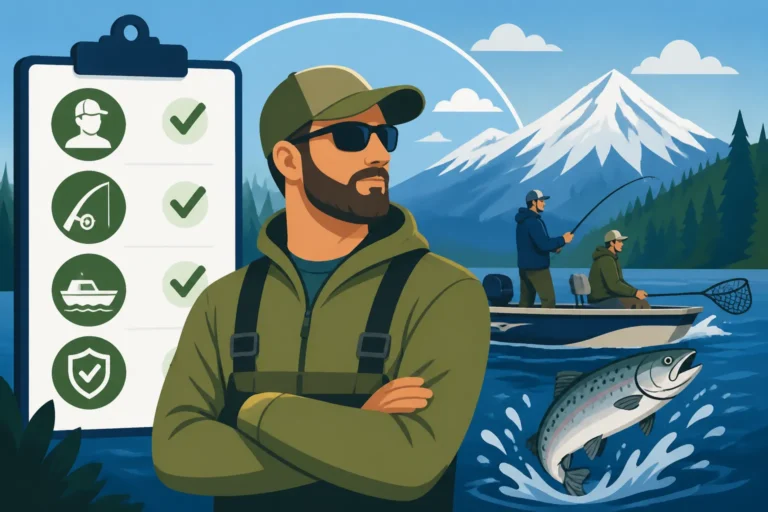
If you decide to go it alone, make sure you have the basics covered before you leave home. Washington weather and water are unforgiving of forgotten gear.
- A valid fishing license, any required endorsements and a catch record card.
- A printed or downloaded copy of the current regulations and emergency rules for your water.
- Rods, reels and tackle matched to your target species and technique.
- Waders, wading boots and a wading belt for river fishing.
- Quality rain gear, since rain is likely for much of the year in western Washington.
- A life jacket for any boat, kayak or raft.
- A net, pliers, a knife and a measuring tape.
- A cooler with ice if you plan to keep fish.
- Maps of access points, launches and parking areas.
- Food, water, a first aid kit and a way to call for help.
Having this list covered means you can focus on fishing instead of driving back to town for something you forgot.
Here is a cost and benefit comparison.
| Factor | Guided trip | DIY trip |
|---|---|---|
| Upfront cost per trip | Higher | Lower if you own gear |
| Gear required | Usually provided | You supply everything |
| Learning curve | Shortened by instruction | Longer, learned by experience |
| Success rate on a new water | Usually higher | Usually lower on first trips |
| Flexibility | Set schedule | Complete freedom |
| Safety on big water | Professional boat and crew | Depends on your boat and skills |
| Regulations | Guide keeps you informed | Your responsibility |
| Long-term skill building | Good with a teaching guide | Excellent with persistence |
How to Find and Book the Right Guide
If you decide to hire a guide, choosing the right one is critical. A good guide makes your trip memorable. A poor match can be disappointing.
Researching Guides and Charters
Start by researching guides and charters for your target fishery. Read reviews, look at photos, check websites and ask for recommendations from other anglers. Booking platforms such as FishingBooker let you compare guides and charters across Washington, read reviews from past clients and check availability. Prices, policies and what is included vary by listing, so read the details carefully and check each listing for current figures.
Look for guides who are licensed, insured and experienced on your target water. In Washington, fishing guides must be licensed by WDFW. Ask about the guide’s experience, the boat, the gear provided and what is included in the price.
Red Flags When Choosing a Guide
Most Washington guides are professional, knowledgeable and passionate about their work. But it pays to watch for warning signs when you are researching options.
Be cautious if a guide cannot confirm that they are licensed and insured, will not clearly explain what is included in the price, or is vague about cancellation policies. Reviews that mention poor communication, unsafe boat handling or disregard for regulations are serious red flags. Guarantees of fish are also a warning sign, since no honest guide can promise fish in every condition.
Good guides are upfront about what to expect, including the possibility of slow fishing. They explain the rules, prioritize safety and treat the resource with respect. If something feels wrong during the booking process, keep looking.
Questions to Ask Before Booking
Before booking, ask these questions:
- What species and techniques will we target?
- What is included in the price, such as gear, bait, fish cleaning and lunch?
- What licenses, endorsements and catch record cards do I need?
- What should I bring?
- What is the cancellation policy, including for bad weather?
- How many anglers will be on the boat?
- What is the guide’s experience on this water?
- What happens if fishing is closed or poor?
For licensing questions, see Does Everyone on a Charter Need Their Own License?. For packing advice, see What to Bring on a Washington Fishing Charter. For a step-by-step guide to booking, see How to Book a Fishing Charter in Washington.
Using Booking Platforms Wisely
Online booking platforms like FishingBooker make it easy to compare options, but use them wisely. Read multiple reviews, look for recent ones and pay attention to comments about the guide’s communication, professionalism and teaching. A guide with consistently positive reviews about instruction is a good choice if you want to learn.
Check cancellation and weather policies carefully. Washington weather is unpredictable, especially on the coast in winter and spring. Know what happens if your trip is canceled because of weather or a fishing closure. If you book through FishingBooker or any other platform, confirm the details directly with the guide before your trip.
Getting the Most From Either Approach
Whether you hire a guide or go it alone, a few strategies help you get the most from your trip.
Making a Guided Trip a Learning Experience
If you want to learn from your guided trip, tell your guide. Ask questions, take notes and pay attention to how the guide reads water, chooses gear and adjusts tactics. Many guides enjoy teaching and will share a lot if you show interest.
Ask your guide to explain why they are fishing a particular spot or using a particular technique. Take photos of rigs and tackle. After the trip, write down what you learned. These notes are valuable when you return on your own.
Preparing for a DIY Trip
DIY trips require preparation. Research the water, read fishing reports and study the regulations. Check emergency rules before your trip. Make sure your gear is ready and appropriate for the fishery.
If you are fishing a river, learn about access points, boat launches and bank fishing spots. If you are fishing from a boat, check weather, tides and currents. Have a backup plan in case conditions are poor.
For some rivers, it is possible to fish successfully without a guide, even on famous steelhead waters. For an example, see How to Fish the Sol Duc Without a Guide.
A Hybrid Approach
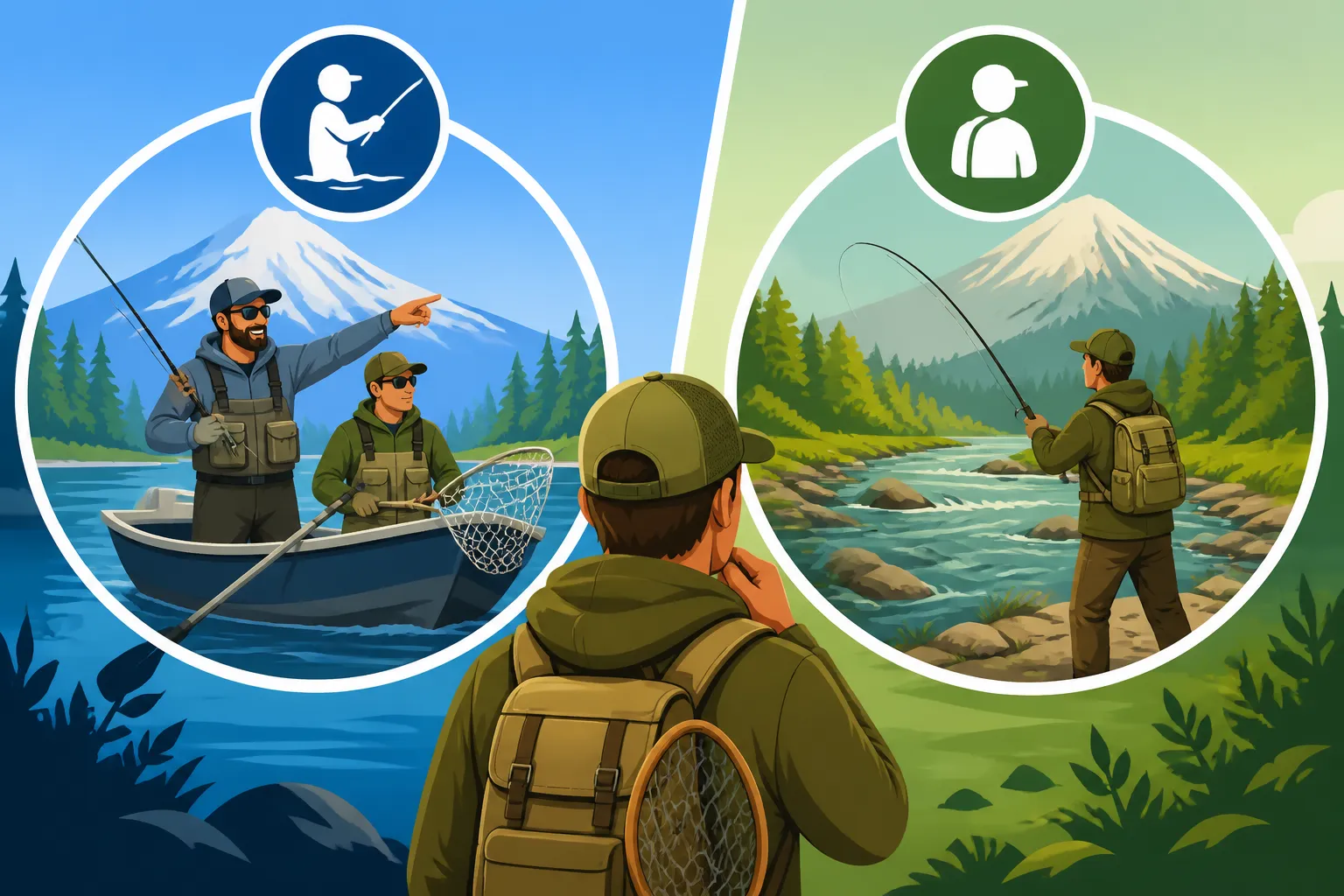
Many anglers find that a hybrid approach works best. Hire a guide for your first trip to a new fishery, then return on your own. Or hire a guide for difficult or dangerous fisheries, such as offshore halibut or the Columbia River bar, and fish easier waters yourself.
Here is a simple decision guide.
| Situation | Recommended approach |
|---|---|
| First trip to a technical river | Guide, then DIY |
| Offshore halibut or tuna | Charter |
| Bank fishing for salmon at a popular spot | DIY |
| Stocked trout lake | DIY |
| Short vacation with limited time | Guide |
| Regular fishing on a home water | DIY |
| Family trip with kids | Guide or easy DIY fishery |
| Learning fly fishing | Guide or instructor, then DIY |
Two Trips, Two Choices
Consider two examples that show how this decision plays out. The first is an angler from Spokane who wants to catch a wild winter steelhead on the Olympic Peninsula. The rivers are hours away, the fish are scarce, the rules are strict and the best water is reached by drift boat. This angler books a guide for two days through FishingBooker, spends the trip asking questions and taking notes, and lands a beautiful wild fish that is quickly released. The next winter, the same angler returns with a friend, fishes from the bank at access points the guide pointed out and hooks two more fish. The guided trip paid for itself in knowledge.
The second is a family in Tacoma who want to catch coho in the fall. They live minutes from public piers and beaches. Instead of booking a charter, they buy licenses, pick up a few lures and spend several evenings casting from a public pier during the run. They catch a handful of fish, learn a lot and spend far less than a charter would have cost. For them, DIY was clearly the right choice.
Both decisions were good ones because each matched the fishery, the anglers’ goals and their resources.
Being a Good Client
If you hire a guide, a few habits make the day better for everyone. Arrive on time, bring the gear and licenses the guide asked you to bring, and listen to safety instructions. Tell the guide honestly about your experience level so they can adjust their teaching. Follow their direction on where to cast and how to handle fish, especially wild fish that must be released.
At the end of the day, thank your guide, tip appropriately and leave a fair review. Good guides rely on word of mouth, and your feedback helps other anglers make good choices.
Final Thoughts
There is no single right answer to the guide-or-DIY question. The best choice depends on your goals, experience, budget, time and the fishery you are targeting. Guides offer knowledge, gear, safety and instruction. DIY trips offer flexibility, savings and the satisfaction of figuring it out yourself.
Most Washington anglers end up doing both. They hire guides for new, technical or dangerous fisheries and fish on their own when they are comfortable. Over time, they build the skills to tackle more fisheries on their own while still enjoying the occasional guided trip.
Whatever you choose, enjoy the experience. Washington offers some of the best fishing in the country, and every trip, guided or DIY, is a chance to learn and have fun.
Disclaimer
This article is for general informational purposes only and does not constitute professional advice. Laws, prices and regulations vary by location and change over time. Consult a qualified professional for guidance on your specific situation.