Transporting Your Catch Across State Lines Legally
There’s nothing quite like the satisfaction of a successful fishing trip in Washington, especially when you’ve landed some impressive salmon, steelhead, or a nice haul of Dungeness crab. But as you pack up your gear, a new set of questions often surfaces: how do you legally get your prized catch back home, especially if "home" is across state lines? It's a common concern, and the rules can feel like a tangled mess of federal, state, and even airline regulations. This guide is here to untangle that complexity, ensuring your delicious memories travel safely and, most importantly, legally with you.
Understanding the Legal Landscape of Interstate Fish Transport
Transporting fish isn't as simple as tossing it in a cooler and hitting the road. There's a web of regulations, from federal statutes designed to prevent poaching and illegal trade, to state-specific rules about possession and identification. Ignoring these can lead to hefty fines, confiscation of your catch, or even more serious legal trouble. It’s definitely not a risk worth taking after all that effort spent fishing!
Federal Regulations and the Lacey Act
At the highest level, the Lacey Act is the big one to know. This federal law, originally passed in 1900 and amended many times since, prohibits the trafficking of illegally harvested wildlife, fish, and plants. What does this mean for your catch? Essentially, if you harvest a fish in Washington in violation of state laws (like exceeding bag limits, fishing in a closed season, or using illegal gear), transporting that fish across state lines immediately becomes a federal offense under the Lacey Act. It's designed to stop commercial poaching operations, but it applies to individual anglers too. This is why understanding and following all Washington state fishing regulations is your absolute first line of defense. Every fish you transport must have been legally caught and possessed in the first place, or you're already in violation.
It’s crucial to realize that while you might think you're just driving your personal catch home, the moment it crosses a state border, federal jurisdiction kicks in. The burden of proof can fall on you to demonstrate that your catch was obtained legally. This isn't meant to scare you, but rather to highlight the importance of meticulous adherence to the rules.
Washington State's Role in Compliance
While the federal government sets the overarching framework, it's Washington State's Department of Fish and Wildlife (WDFW) that dictates the initial legality of your catch. Before your fish even gets close to a state border, it must comply with all local rules. This includes having a valid fishing license, adhering to specific Washington Fishing Regulations Every Angler Should Know for the body of water you're fishing, respecting open seasons, daily bag limits, and overall How Bag and Possession Limits Work in Washington.
Washington also has rules regarding how you process and transport fish within the state, especially concerning species that require a Catch Record Card, like salmon and steelhead. These state-level requirements are foundational. If your catch is legal in Washington, you've cleared the biggest hurdle for interstate transport. If it's not, you're looking at potential problems not just with WDFW, but potentially with federal authorities once you leave the Evergreen State.
Properly Documenting Your Washington Catch
Okay, so you've fished by the book and filled your cooler with a perfectly legal haul. Now, how do you prove it? This is where documentation comes in, and it's more critical than many anglers realize. Think of it as your fish's passport – it needs to be ready for inspection.
The Importance of Your Catch Record Card
For species like salmon and steelhead, Washington State mandates the use of a Catch Record Card. This isn't just a formality; it's a vital piece of documentation that tracks harvest data and, crucially, provides proof of your legal catch. When you land a salmon, for example, you're required to immediately record it on your card, including the date, species, and location. Failure to do so is a violation, and that unrecorded fish technically isn't legally possessed. You can learn more about The Washington Catch Record Card and What It Requires.
If a fish warden in another state, or a federal agent, inspects your cooler and finds salmon or steelhead, the first thing they'll likely ask for is your Washington fishing license and your completed Catch Record Card. If there's a discrepancy or a missing entry, you could face serious questions about the legality of your catch. Even if you don't keep salmon or steelhead, for other species, it's still smart to be prepared to articulate where and when you caught them, and that they fit within the established limits. Having a clear understanding of How to Fill Out a Washington Catch Record Card is a game-changer for avoiding headaches.
Proof of Legal Harvest
Beyond the Catch Record Card, what else constitutes "proof of legal harvest"? This can vary depending on the situation and species, but generally, it involves maintaining enough of the fish to allow for species and size identification, and keeping associated paperwork.
For instance, if you've caught a species with a minimum size limit or a unique marking, cutting the fish into fillets that make identification impossible can be problematic. WDFW regulations often specify how certain fish, especially salmon and steelhead, must be kept or marked until you reach your permanent residence or a processing facility. For salmon and steelhead, retaining the head or a portion of the body that includes the adipose fin (if it's a hatchery fish) until you reach your final destination is often required, or at least highly recommended, especially if crossing state lines. This allows authorities to verify if it was a legal hatchery fish or a wild fish that should have been released. Always check the current regulations pamphlet, as these rules can change annually or even mid-season.
For other species, while not as strictly regulated as salmon, it's good practice to keep a record of your catch, even if it's just a note on your phone. Take photos with a recognizable landmark or even your license in the background. If you've been on a guided trip, keeping a copy of your guide's log or receipt can also serve as supporting documentation. Remember that Records You Should Keep With Your Fish Fillets are about protecting yourself, not just obeying the law.
Packaging Your Catch for Safe and Legal Travel
Once you've ensured your fish are legally harvested and properly documented, the next step is getting them ready for the journey. This isn't just about keeping them fresh; it's also about meeting legal requirements for identification and transport. Poor packaging can lead to spoilage, but more importantly, it can raise red flags with authorities.
Preparing Fish for Transport: Fillets vs. Whole Fish
The decision to fillet your fish or transport it whole often depends on the species and the specific regulations. For many species, especially bottom fish or trout, filleting them on the water or at a cleaning station is perfectly fine, as long as you're not trying to circumvent size or species identification rules. However, for salmon and steelhead, WDFW often has rules about retaining specific identifying features.
For example, if you catch a hatchery salmon that has an adipose fin clip, you might be required to keep a portion of the fish that includes that clipped fin until you've reached your final destination. This allows enforcement officers to verify it was indeed a legal hatchery fish. Wild steelhead, which often have different regulations or mandatory release, are particularly sensitive. If you mistakenly keep a wild steelhead, the penalties can be severe, so understanding Can You Keep a Wild Steelhead in Washington? and its identification is paramount.
When filleting, ensure that each fillet is of a legal size if size limits apply to fillets, and that you haven't "filleted to misrepresent" the quantity of fish. For instance, creating several small fillets from one large fish to make it appear like you have more than the legal number of fish is illegal. It's often safer to leave at least a portion of the skin on each fillet for easier species identification, unless local regulations explicitly permit skinning.
Temperature Control and Preservation
Regardless of whether your fish is whole or filleted, maintaining proper temperature is crucial for both quality and safety. Bacteria thrive at warmer temperatures, and spoiled fish can lead to health risks. Invest in a high-quality cooler – a good roto-molded cooler like a Yeti or a Pelican can keep ice for days, making it ideal for longer journeys. For shorter trips, even a well-insulated standard cooler will work. Fill it generously with ice, making sure the fish are completely surrounded.
For an extra layer of protection, consider vacuum sealing your fillets. Not only does this extend freshness by preventing freezer burn and keeping air out, but it also contains any fishy odors, which is especially appreciated if you're flying. You can find excellent, affordable vacuum sealers on Amazon that will pay for themselves quickly. Once vacuum-sealed, place these packages in freezer bags and then into your ice-filled cooler. For frozen fish, dry ice is an excellent option, but be aware of specific airline regulations if flying with it.
Labeling and Identification Requirements
This is where many anglers slip up. Proper labeling of your catch is not just a polite courtesy; it's often a legal requirement, especially when crossing state lines. Each package of fish (whether a whole fish or a vacuum-sealed fillet package) should be clearly labeled with the following information:
- Your Name: The person who caught the fish.
- Your Address: Your permanent residence.
- Your Washington Fishing License Number: Essential for verification.
- Date of Catch: When the fish was harvested.
- Species of Fish: Clearly identify whether it's Chinook, Coho, Steelhead, Halibut, etc.
- Location of Catch (optional but recommended): The body of water or marine area where it was caught.
This information provides an immediate audit trail for any enforcement officer. Imagine being stopped and having dozens of unlabeled fillets. It would be nearly impossible to prove they all came from a legal catch. By contrast, clearly labeled packages show diligence and intent to comply. For airlines, this detailed labeling might not be explicitly required on each individual package by them, but it makes your job of proving legality much easier if a TSA or fish and wildlife official decides to inspect your cooler. Having this information readily available also helps you keep track of your Possession Limits vs Daily Limits in Washington.
Transporting by Car Across State Lines
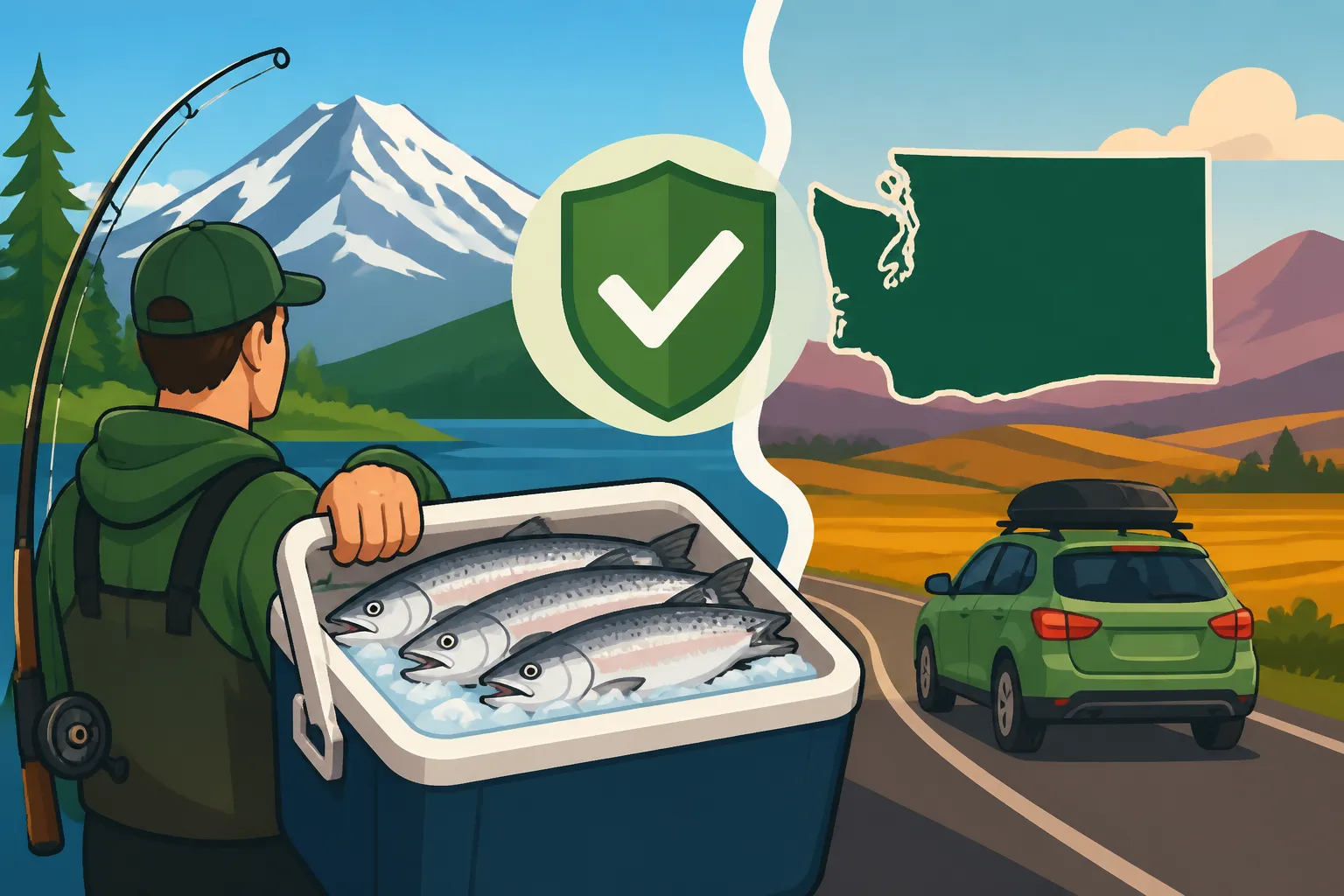
Driving your catch home is the most common method for many anglers, especially those living in neighboring states like Oregon and Idaho. While it seems straightforward, there are still specific considerations to ensure a smooth, legal journey.
Rules for Neighboring States: Oregon and Idaho
When crossing into Oregon or Idaho from Washington with your catch, remember that you are now subject to their state's possession limit laws for your state of residence, not Washington's. This means if Oregon has a stricter possession limit for salmon than Washington, and you are an Oregon resident returning home, you must not exceed Oregon's possession limit even if you caught them legally in Washington within Washington's higher limits. This is a critical point that trips up many anglers.
It's your responsibility to know the fish import regulations of your destination state. For instance, if you are a resident of Idaho and harvested a limit of salmon in Washington, you need to be aware of Idaho's rules regarding out-of-state possession. While it's generally accepted that legally caught and properly documented fish are allowed, the quantity you can possess once you cross that state line might be an issue. Always check the fishing regulations for your home state regarding out-of-state fish possession limits before your trip. For example, if your home state's Salmon Possession Limit in Washington is lower than Washington's, you might need to adjust your take.
Furthermore, some states may have additional requirements for the condition of the fish (e.g., minimum size to retain head/tail, or specific fin clips). While Washington's rules usually cover most bases, a quick check of your home state's regulations is always a wise move.
What to Expect at Checkpoints
While federal or state checkpoints specifically for fish are rare in ordinary interstate travel, they do exist, particularly in areas known for significant fishing activity or during peak seasons. You might encounter a random vehicle inspection by a WDFW officer (still in Washington) or a Department of Fish and Wildlife officer from your destination state. These officers have the authority to ask about your catch and request to inspect your cooler and documentation.
If stopped, remain polite and cooperative. Provide your fishing license, Catch Record Card (if applicable), and any other requested documentation. Have your fish clearly labeled and easily accessible for inspection. The goal of these checks is to ensure compliance and deter illegal activity. By being prepared and transparent, you're likely to have a quick and uneventful interaction. Any hesitation or lack of documentation could prolong the stop and lead to further scrutiny. Don't be surprised if they ask where you caught the fish, how many you caught, and for your license. They're just doing their job, and your preparedness makes their job easier.
Flying Your Catch Home from Washington Airports
Flying your catch home introduces a whole new layer of regulations, primarily from airlines and the Transportation Security Administration (TSA). It's entirely possible to fly with your fish, but it requires careful planning and adherence to their specific rules, which can vary. Can You Fly Home With Fish From Seattle? The answer is generally yes, but with caveats.
Airline Regulations for Seafood
Each airline has its own policies regarding perishable items, including seafood. Before you even think about packing, check with your specific airline (Delta, Alaska Airlines, United, Southwest, etc.) about their rules. Key questions to ask include:
- Cooler Requirements: Do they accept hard-sided or soft-sided coolers? Are there size and weight limits for checked baggage? Most airlines consider a cooler a standard checked bag, subject to normal baggage fees and weight restrictions.
- Ice vs. Dry Ice: Many airlines permit regular ice if it's double-bagged to prevent leaks. However, most prefer or require dry ice for frozen perishables. If using dry ice, there are strict limits on quantity (usually 5.5 lbs or 2.5 kg per passenger) and packaging requirements (it must be vented to allow gas to escape). Some airlines may even require special declaration for dry ice.
- Leak-Proof Policy: This is a big one. Airlines absolutely do not want melted ice leaking onto other luggage or into their cargo hold. Your cooler must be leak-proof. This usually means no melted ice should escape, so using gel packs or double-bagged regular ice (with as little water as possible) is critical. Some travelers opt to freeze water bottles instead of loose ice.
- Advance Notice: For large quantities or special handling, some airlines appreciate advance notice.
Failing to meet these airline-specific rules can result in your cooler being rejected at check-in, leaving you scrambling to find an alternative shipping method or, worse, having to abandon your catch.
Packaging for Air Travel and TSA Guidelines
When it comes to How to Package Fish for the Flight Home, the main goal is leak-proof and scent-proof. Here's a typical approach:
- Vacuum Seal: As mentioned earlier, vacuum sealing individual portions of fish is highly recommended. It keeps them fresh and prevents odors from escaping.
- Freeze Solid: Freeze your vacuum-sealed fish solid before packing. This will help them stay cold longer.
- Use a Hard-Sided Cooler: A sturdy, hard-sided cooler is your best bet for checked luggage. Soft-sided coolers can be more prone to damage and leaks. Ensure it meets the airline's size and weight limits.
- Lining the Cooler: Line the inside of your cooler with a heavy-duty trash bag or contractor bag as an extra precaution against leaks.
- Cooling Agent:
- Gel Packs: Excellent for keeping things cold without creating liquid. Freeze them solid.
- Frozen Water Bottles: A good alternative to loose ice, as they won't leak when they melt.
- Dry Ice: If using, follow airline quantity and venting rules. Place it on top of your frozen fish.
- Absorbent Material: Place a layer of absorbent material, like newspaper or paper towels, at the bottom of the cooler, just in case.
- Seal and Tape: Once packed, close your cooler securely. Many anglers use heavy-duty tape (like Gorilla Tape or strapping tape available on Amazon) around the seams and latches of their cooler to prevent it from accidentally opening and to further seal against leaks.
- Label Externally: Attach your contact information (name, phone, address) clearly to the outside of the cooler, in case it gets separated from your other luggage.
TSA is primarily concerned with security. They're looking for prohibited items. As long as your fish is packaged securely, properly, and doesn't pose a security risk (e.g., no suspicious wires, odd odors), it should pass through screening. However, they may open and inspect your cooler, even if it's taped shut. Be prepared for this possibility. If they do open it, they will usually reseal it, but it's good to be aware.
Costs and Logistics of Shipping Fish
If carrying your fish as checked luggage isn't feasible due to size, weight, or your itinerary, you might consider professional shipping services. Companies like FedEx and UPS offer specialized services for shipping perishables overnight or via expedited delivery.
- Cost: Shipping fish can be expensive, often costing more than your checked baggage fees. Prices depend on weight, destination, and speed of delivery. Expect to pay a premium for guaranteed overnight service.
- Packaging: These services will have their own specific packaging requirements, often recommending or requiring insulated boxes with gel packs or dry ice. They might even offer their own compliant packaging materials.
- Convenience: The major advantage is convenience. You can often drop off your package at a shipping center near the airport or your lodging, and your fish will arrive at your home address shortly after you do. This takes the stress out of managing a bulky cooler at the airport.
For anglers with a truly exceptional catch, or those who simply prefer not to deal with the hassle of airport logistics, professional shipping can be a worthwhile investment, especially if you plan to share your catch with family or friends in other states.
Avoiding Common Pitfalls and Violations
Navigating the rules for transporting your catch can feel like a minefield, but most violations stem from a few common mistakes. Being aware of these can save you a lot of grief and ensure your fishing trip ends on a high note.
Misidentifying Species or Origin
One of the most frequent errors, especially for new anglers or those targeting similar-looking fish, is misidentifying a species. This is particularly problematic in Washington with salmon and steelhead. For example, accidentally keeping a wild steelhead when only hatchery steelhead are allowed, or mistaking a protected species for a legal one, is a serious violation. Even if it's an honest mistake, ignorance of the law is no defense. WDFW officers are highly trained in fish identification.
When you're filleting fish, especially if you're mixing different species in one package, it's easy to lose track. As mentioned, regulations often require you to keep enough of the fish intact (like the head or a portion with a fin clip) to allow for species and origin identification until you reach your permanent residence. If all your fish are filleted beyond recognition, and an officer suspects you might have illegal fish, proving otherwise can be incredibly difficult. Always err on the side of caution: if you're unsure about a fish's identity, release it, or keep enough of it intact to confirm its legality later. This is also why familiarizing yourself with guides on How to Identify a Fish You've Never Caught Before can be extremely beneficial.
Exceeding Possession Limits
Understanding the difference between daily bag limits and possession limits is paramount, especially when crossing state lines. The daily bag limit is the maximum number of fish you can keep in a 24-hour period. The possession limit is the total number of fish you can have in your possession at any given time, regardless of when they were caught. This includes fish at your home, in your freezer, or in your cooler. Often, the possession limit is twice the daily limit, but this is not always the case, and it can vary by species and location.
For example, if Washington's daily limit for Coho salmon is 2, and the possession limit is 4, you could theoretically fish for two days and have 4 Coho in your freezer. However, if you then decide to transport those 4 Coho across a state line into a state where their possession limit for imported salmon is only 2, you'd be in violation once you cross that border. Always check your home state's regulations regarding the maximum quantity of legally harvested fish you can bring in from another state. This is especially relevant to Possession Limits vs Daily Limits in Washington and understanding how those apply to your final destination.
Improper Labeling and Documentation
As detailed earlier, proper labeling is your safety net. An unlabeled package of fish is a red flag. If an officer finds a cooler full of unidentified fillets without any associated paperwork, they have every reason to be suspicious. This could lead to a lengthy inspection, the assumption that the fish are illegal, and potential confiscation and fines.
Make sure your Catch Record Card is completely filled out, accurate, and with you. For any fish that doesn't require a card, having a personal log or notes about what you caught, where, and when can be very helpful. Remember the table we discussed previously:
| Requirement | Description | Key Action |
|---|---|---|
| Legal Harvest | Fish must be caught legally in Washington State (valid license, open season, within daily limits, legal gear). Violations of initial harvest rules can lead to Lacey Act issues. | Adhere strictly to WDFW regulations. |
| Catch Record Card | Required for salmon, steelhead, and sturgeon. Must be immediately and accurately filled out upon retention. Provides proof of legal catch. | Always carry your valid WDFW license and completed Catch Record Card. |
| Species/Origin ID | For some species (e.g., salmon/steelhead), specific body parts (e.g., adipose fin clip) may need to be retained until permanent residence to prove hatchery origin or legal size. | Check regulations for specific species; retain identifying features as required. |
| Possession Limits | Do not exceed the possession limits of your destination state, even if caught legally within Washington's limits. | Know your home state's import/possession limits for fish. |
| Proper Labeling | Each package of fish (fillet or whole) should be labeled with your name, address, WA license number, date of catch, and species. | Label every package clearly and completely. |
| Leak-Proof Packing | For transport, especially air travel, your cooler and its contents must be completely leak-proof to prevent contamination and damage. | Use high-quality coolers, vacuum sealers (like those found on Amazon), and double-bagged ice or gel packs. Tape securely. |
| Airline/TSA Rules | If flying, check specific airline policies on perishables, cooler size/weight, and dry ice limits. Be prepared for TSA inspection. | Confirm airline policies before packing; follow all TSA guidelines. |
By being proactive with your documentation and packaging, you're not just following the law; you're protecting your hard-earned catch and ensuring a smooth journey home. After all the effort, you want to enjoy that delicious fish, not lose it to a technicality!
Disclaimer
The information provided in this guide is for general informational purposes only and does not constitute legal advice. Fishing regulations and transportation laws are subject to change and can vary by jurisdiction, species, and specific circumstances. Always consult the most current official regulations published by the Washington Department of Fish and Wildlife (WDFW), the fish and wildlife departments of any states you are traveling through or to, and your chosen airline or shipping carrier before transporting your catch across state lines. Failure to comply with all applicable laws and regulations can result in significant penalties.