Records You Should Keep With Your Fish Fillets
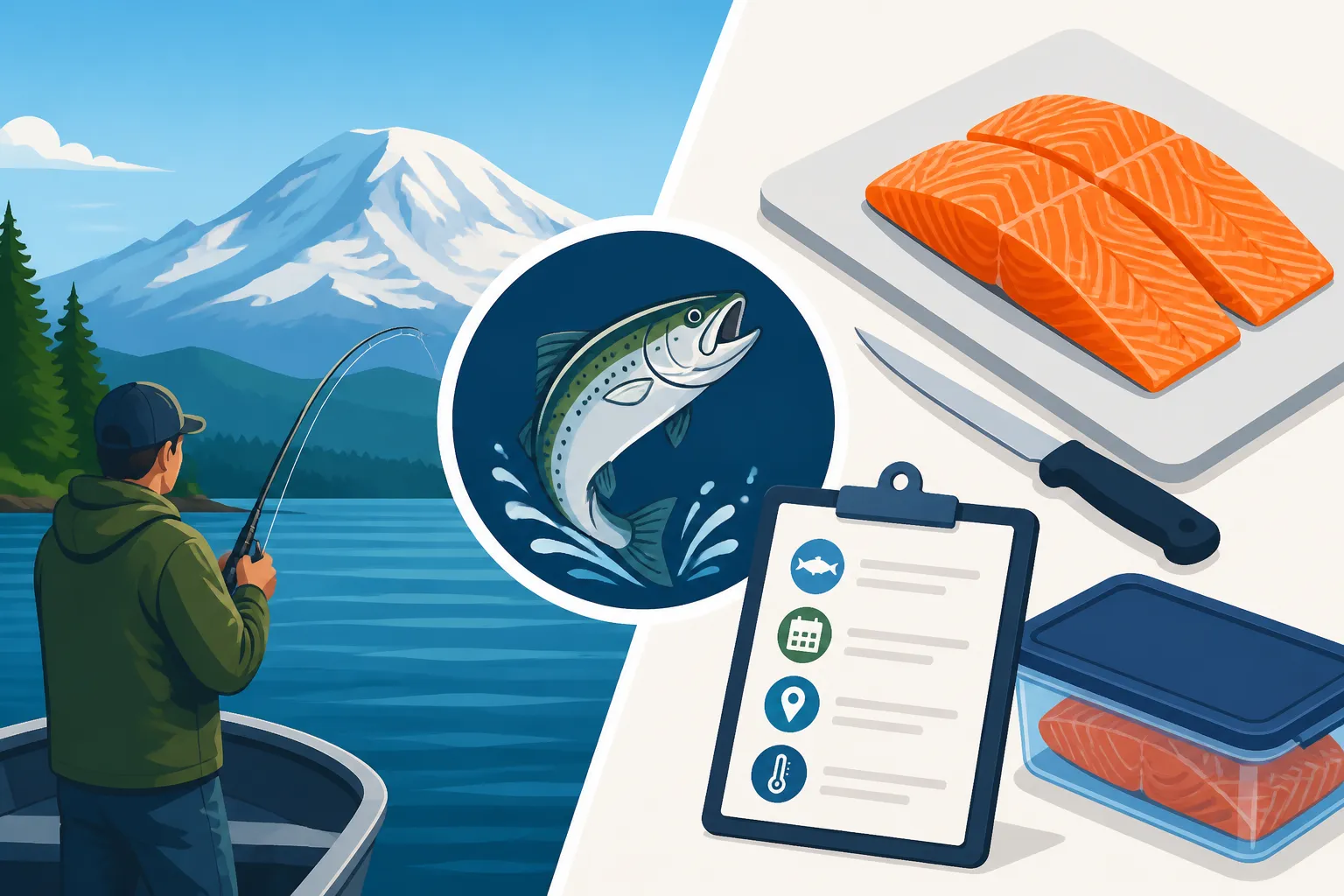
It’s a fantastic feeling to bring home a cooler full of fresh fish from Washington's abundant waters, but sometimes that excitement can be quickly overshadowed by anxiety. Many anglers, seasoned and new alike, worry about what specific records they need to keep with their fillets to stay on the right side of Washington Department of Fish and Wildlife (WDFW) regulations. This guide will walk you through the essential documentation and practices to ensure your catch is not only delicious but also legally sound from the water to your dinner plate.
Why Keeping Records Is Crucial for Washington Anglers
Fishing in Washington isn't just about reeling in the big one; it's also about respecting the resource and adhering to the rules designed to protect our fisheries. The WDFW takes proper documentation and possession very seriously, and for good reason. Without adequate records, it can be incredibly difficult to prove the legality of your catch, which can lead to unnecessary stress and even penalties.
Avoiding Legal Headaches and Fines
Let's face it, nobody wants to spend a day on the water, only to face a potential citation when they get home or are transporting their catch. Washington's fishing regulations are comprehensive, and they include specific rules about how you must document and possess certain species once you've retained them. Imagine spending a glorious morning fishing for spring Chinook on the Columbia, successfully landing your limit, and then, a week later, a WDFW enforcement officer visits your home after an anonymous tip about potential over-limits. If you can't readily provide proof of when and where those fillets were caught and that they were legally retained, you could be in a heap of trouble.
The WDFW's enforcement officers are diligent, and they have the authority to check your catch, your records, and even question the origins of your fish. If you've ever dealt with the stress of an interaction with law enforcement, you know how quickly a pleasant fishing memory can turn sour. Having your ducks in a row with proper records is your best defense against such situations. It's not just about avoiding big fines; it's about avoiding the hassle, the potential confiscation of your catch, and even the possible suspension of your fishing privileges. Understanding the detailed requirements of the WDFW, including How Bag and Possession Limits Work in Washington, is foundational to avoiding these issues.
Proving Lawful Harvest to Wardens and Beyond
Your responsibility for your catch doesn't end the moment it hits the cooler. It continues through transport, storage, and even when you share it with friends and family. This is especially true for species that require a Catch Record Card (CRC), such as salmon, steelhead, and halibut.
Think about a scenario where you've just returned from a fantastic trip to Westport, loaded up with fresh fillets of lingcod and halibut. You're driving home, and you get pulled over for a routine traffic stop. While chatting with the officer, they notice your coolers. They might inquire about your catch, and if a WDFW enforcement officer is in the vicinity or called to assist, you'll need to demonstrate that your fish were legally acquired. Having your fishing license readily available, along with a properly filled-out Catch Record Card for your halibut, is paramount. This documentation serves as undeniable proof that your fish were caught within legal seasons, limits, and areas.
Beyond wardens, there are other situations where proof of lawful harvest might be indirectly beneficial. If you share fish with friends, and they, in turn, are questioned about the origin of the fish, your meticulous records could indirectly protect them. While it might seem like overkill, in today's world of tight regulations and increased scrutiny, being overly prepared is always better than being caught off guard. This is particularly relevant when considering the rules around filleting your catch. Certain species have specific rules about retaining a portion of the carcass or skin to prove length or species identification until you reach final destination or your home. For example, some regulations state that you must keep the head or a patch of skin attached to a fillet until the fish has been prepared for final consumption at home, making identification easier for enforcement.
Essential Records to Keep with Your Fillets
The key to preventing any issues with your prized catch lies in understanding exactly what documentation is required and making it a habit to record this information diligently. It's not just about the license you bought; it's about the details of the catch itself.
The Importance of Your Catch Record Card
For specific species in Washington State, the Catch Record Card (CRC) is hands-down the most critical piece of documentation you'll need. This small paper card, often overlooked or misunderstood, is your official ledger for retained salmon, steelhead, halibut, and Puget Sound Dungeness crab.
When you retain a fish that requires a CRC, you are legally obligated to record it immediately upon retention. This isn't a suggestion; it's a hard and fast rule. "Immediately" means before you put the fish into your cooler, before you move to a new fishing spot, and certainly before you leave the water. Failing to do so can result in serious penalties, even if your catch is otherwise legal. This is why it’s so vital to understand The Washington Catch Record Card and What It Requires and specifically When a Catch Record Card Is Required in Washington.
On the Catch Record Card, you'll need to provide:
- The date of catch: This confirms you were fishing during an open season.
- The species: Clearly identify if it's a Chinook, Coho, Steelhead, Halibut, etc.
- The location: This usually refers to a specific Marine Area for saltwater fish or a particular river section for freshwater species. This helps verify you were fishing in an open area with appropriate regulations.
- The mark status: For salmon and steelhead, you must indicate if the fish was "marked" (adipose fin clipped, indicating a hatchery fish) or "unmarked" (wild fish). Many fisheries have different rules for marked vs. unmarked fish.
- Angler's signature: Your signature confirms the accuracy of the information.
If you've ever misplaced your CRC or wondered about digital options, remember that while you might use the MyWDFW app for your license, actual Catch Record Cards are typically physical documents you need to carry and fill out. While the Electronic Catch Record Cards and the Fish Washington App are emerging, the primary method for most anglers still involves the physical card.
Other Key Information for Peace of Mind
While the CRC is king for certain species, it doesn't cover everything. For all other species you retain, having supplemental information readily available can save you a lot of grief. It’s about building a clear, defensible record for every fish you keep.
Here’s a breakdown of other vital details you should consider documenting, ideally directly on the packaging of your fillets:
- Date of Catch: This should be prominently displayed. Even if it's a trout from a lake that doesn't require a CRC, knowing the date helps verify compliance with seasonal limits or special opening days.
- Location of Catch (Specific as Possible): Instead of just "Lake Chelan," write "Lake Chelan – near 25-Mile Creek." For saltwater, note the Marine Area (e.g., "Marine Area 9 – Midchannel Bank"). This context is crucial if questions arise about specific area closures or differing regulations within a larger body of water.
- Species and Size/Length (if applicable): For species with size limits, especially those where a portion of the fish must be retained for identification, having the original length noted can be very helpful. Even for species without strict size limits, noting the species (e.g., "Walleye," "Smallmouth Bass") clarifies your catch. This is particularly relevant when you've filleted the fish and its original form is no longer apparent. For instance, Lingcod: Washington's Toothy Bottomfish might have minimum size requirements.
- Your Washington Fishing License Number: While your physical license will have this, jotting it on the package along with other details creates a complete record for that specific fish.
- Details for Guided Trips: If you were on a guided trip, it’s a smart move to include the guide's name and their guide license number (if available). This provides another layer of accountability and can help corroborate your story if needed. While a guide can assist, remember that ultimately Can a Guide Fill Out Your Catch Record Card for You? often falls on the angler's shoulders.
Practical Tips for Storing and Transporting Your Catch Legally
You've done the hard work of catching and documenting. Now, it's about preserving your fish and ensuring it travels safely and legally to its final destination. Proper storage and transport are not just about food safety; they're also about regulatory compliance.
Labeling Your Fillets for Clarity and Compliance
Once you've cleaned and filleted your fish, the next critical step is to label them clearly and effectively. This isn't just for your own organization in the freezer; it's a direct requirement for maintaining legal possession, especially for species covered by the CRC.
Here's how to do it right:
- Use durable, waterproof packaging: Heavy-duty freezer bags (like Ziploc freezer bags), vacuum seal bags, or freezer paper are ideal. For long-term storage, a vacuum sealer (you can find many great options on Amazon) is a fantastic investment, removing air to prevent freezer burn and keep your fish fresh for much longer.
- Employ permanent markers: Ink from regular markers can rub off or fade, especially if exposed to moisture or cold. Invest in a good quality permanent marker to ensure your labels stay legible.
- Include all pertinent information: On each package or individual fillet bag, clearly write:
- Species: "Chinook Salmon," "Halibut," "Steelhead (Hatchery)," "Lingcod," etc.
- Date of Catch: "8/15/2024"
- Location/Area: "Columbia River – Buoy 10," "Marine Area 7 – San Juans," "Lake Chelan."
- Angler's Name and License Number: "John Doe – Lic #123456"
- Mark Status (for salmon/steelhead): If it was a clipped hatchery fish, note "Hatchery" or "Adipose Clipped."
- Keep your CRC accessible: For fish that required a CRC, make sure that physical card, properly filled out, remains with you or is stored in an easily retrievable location until you've mailed it in at the end of the year. Some anglers take a photo of their filled-out CRC pages as an extra backup, though the physical card is still the official record.
When Traveling with Your Washington Catch
Whether you're driving across the state or flying home, transporting your catch requires specific attention to detail. WDFW regulations extend beyond the immediate fishing area, and other agencies, like the TSA or state fish and game departments, might have their own requirements.
- Driving within Washington: Your properly labeled fillets and an accessible fishing license (and CRC if applicable) should suffice. Keep fish in coolers with plenty of ice to ensure freshness and keep them away from any other unlabeled fish.
- Transporting Across State Lines: This is where things get a bit more complex. Washington's regulations generally allow you to transport legally caught fish, but you also need to be aware of the receiving state's laws. Some states have rules about the form in which fish must be transported (e.g., skin on, head on for certain species) or require proof of origin. Always check the regulations of any state you plan to pass through or take fish into. This detailed process is covered more extensively in Transporting Your Catch Across State Lines Legally.
- Flying Home with Fish: Airlines have strict rules about how you can travel with perishable items. Your fish must be properly packaged to prevent leakage and usually needs to be frozen solid or packed with gel packs (dry ice may be an option, but check airline rules). A sturdy, insulated cooler is essential. For vacuum sealers, bags, and high-quality coolers perfect for travel, Amazon is a great resource. Airlines often count fish boxes as checked baggage, so be prepared for potential baggage fees. Read up on How to Package Fish for the Flight Home for all the specifics.
Remember, the goal is always to have clear, unambiguous evidence that your fish were legally caught and are being legally possessed.
Special Considerations for Guided Trips
When you book a guided trip, especially for salmon or steelhead, there's often a bit of confusion about who is responsible for filling out the Catch Record Card and maintaining records. While your guide is a licensed professional and will help you navigate the process, the ultimate responsibility for your catch records rests with you, the angler.
Your guide will typically instruct you on when and how to fill out your CRC for any salmon or steelhead you keep. They might even have a pen handy or show you exactly where to make your entry. However, don't assume they will do it for you or that they are solely responsible for its accuracy. You should always double-check your entries to ensure they are correct before signing off.
If you are fishing with a guide and decide to fillet your fish at the end of the day on the boat or at the dock, make sure to get all the necessary information for labeling your individual fillets right then and there. Ask your guide for the exact date, marine area, and mark status of each fish if you're not sure. Most reputable guides will be happy to assist you in making sure your catch is properly documented and prepared for transport.
Common Misconceptions and What to Avoid
Even with the best intentions, anglers can sometimes fall prey to common misunderstandings about fish records and regulations. Avoiding these pitfalls is just as important as knowing what to do.
The "Out of Sight, Out of Mind" Fallacy
One of the most dangerous assumptions anglers make is that once their fish are filleted, packaged, and tucked away in the freezer, they're "out of sight, out of mind" and no longer subject to WDFW scrutiny. This couldn't be further from the truth.
WDFW enforcement officers have the authority to investigate allegations of fishing violations long after the fish have left the water. If there's a reason to believe you've exceeded limits, fished in a closed area, or violated other regulations, an officer can follow up at your home, freezer, or even question recipients of your fish. The labeled packages in your freezer serve as your primary defense in such a scenario. If you have unlabeled fillets or cannot produce a corresponding, properly filled-out Catch Record Card (if required), you could still face charges for illegal possession. This is why it's so important to accurately document everything, not just for the moment of catch, but for the entire lifecycle of that fish from water to table. Remember, Fines and Penalties for Common Fishing Violations can be significant, even for seemingly minor infractions.
Filleting Rules and Identification
Washington has specific rules regarding filleting fish, particularly for species with size or bag limits, or those that require specific identification until you reach shore. The primary concern is that a filleted fish can be very difficult to identify by species or measure for length, which makes it nearly impossible for an enforcement officer to confirm its legality.
For certain species, like halibut, lingcod, and some rockfish, regulations often require you to retain a patch of skin with the meat, or even the head, until you've reached shore or are at your home. This allows WDFW personnel to verify the species and, if needed, measure the fish against minimum size requirements. Always check the specific regulations for the species you are targeting before you start filleting. For example, knowing How to Identify a Fish You've Never Caught Before before you start processing it is crucial.
- Halibut: Often, one fillet from each halibut must retain the entire skin from the head to the tail, to allow for length verification. This is covered in regulations for Pacific Halibut Fishing Techniques for the Washington Coast and Pacific Halibut Identification and Size in Washington.
- Lingcod: Similarly, lingcod regulations may require a skin patch or whole fish retention for identification purposes. Familiarize yourself with Lingcod Identification and Where They Hide to avoid errors.
- Rockfish: While some rockfish can be hard to tell apart, distinguishing between different species is critical as some are protected.
Never assume you can fillet all your fish immediately and discard the identifying features. Always consult the current WDFW Sport Fishing Regulations pamphlet or the WDFW website for the most up-to-date rules on filleting and possession for the specific waters and species you are fishing. These rules exist to prevent anglers from exceeding limits or keeping undersized fish without being detected.
| Type of Record | When Needed | Species Covered | Key Information to Include | Where to Keep It |
|---|---|---|---|---|
| Catch Record Card | Immediately upon retention | Salmon, Steelhead, Halibut, Puget Sound Dungeness Crab | Date, Species, Location, Mark Status, Signature | Physical card until mailed, copy with fillets for proof |
| Fillet Label | After filleting/packaging | All retained fish, especially those without CRC | Species, Date, Location, Angler/License # | Directly on individual packages/fillets |
| Fishing License | Always when fishing or possessing catch | All fish | Your ID and permission to fish | On person, with catch, or via MyWDFW app |
| Guide Details (Opt) | If on a guided trip | All fish | Guide name, license number | Fillet label, personal notes |
| Size/Skin Proof | For species with length/ID requirements | Halibut, Lingcod, specific Rockfish | Attached to fillet as per regulations | Attached to fillet until home/final prep |
Disclaimer
Please note: Fishing regulations in Washington State can change frequently, often with short notice due to in-season adjustments based on fisheries management needs. Always consult the official Washington Department of Fish and Wildlife (WDFW) website or the most current Sport Fishing Regulations pamphlet before heading out on any fishing trip. This article is intended for informational purposes only and should not be considered a substitute for official WDFW regulations.