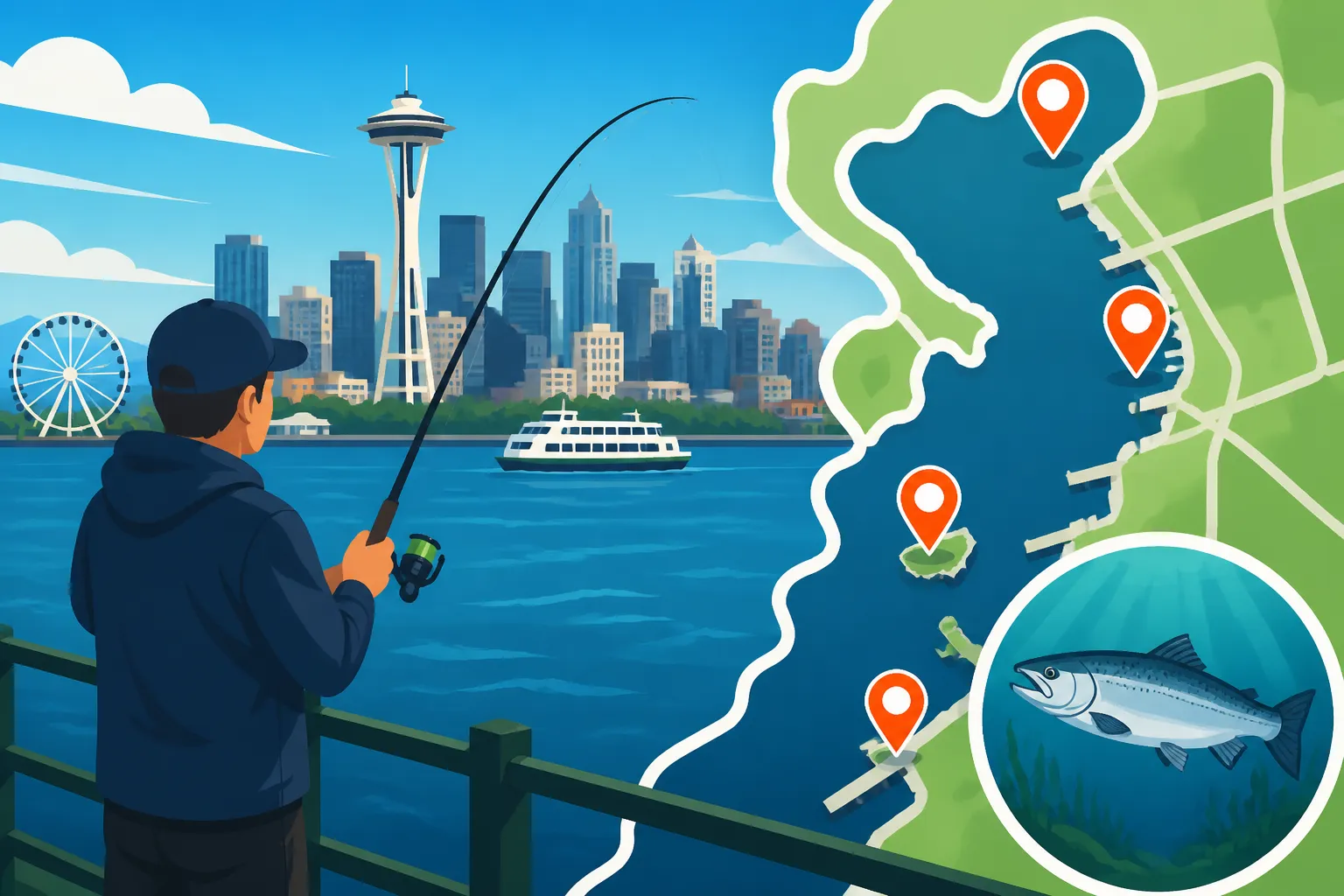
Where to Fish From Elliott Bay in Seattle
Standing on the busy Seattle waterfront, gazing out at the vast expanse of Elliott Bay, it's easy to feel overwhelmed if you're hoping to cast a line. With ferries crisscrossing, cargo ships moving in and out, and the stunning cityscape as your backdrop, finding a good fishing spot that's both accessible and productive can seem like a daunting challenge. This guide is here to cut through that confusion, offering practical, in-depth advice on exactly where and how you can successfully fish from the shore in Elliott Bay, ensuring you can enjoy the urban angling experience without the guesswork.
Understanding Elliott Bay's Unique Fishing Environment
Elliott Bay isn't your typical serene, remote fishing destination; it's a bustling urban waterway right at the heart of Seattle. This unique setting comes with its own set of advantages and challenges for the angler, and understanding them is key to a successful outing. Forget what you know about quiet rivers or secluded lakes – fishing here means embracing the city's rhythm.
What Makes Elliott Bay Different for Anglers?
First off, the sheer proximity to downtown Seattle is a major factor. You're fishing with skyscrapers and the iconic Space Needle in view, which is an experience in itself. But beyond the aesthetics, the urban environment brings deep-water access surprisingly close to shore. Unlike many coastal areas where you need a boat to reach significant depths, Elliott Bay drops off quickly, allowing shore anglers to target species that typically hold in deeper water. This also means you're dealing with significant tidal influences and strong currents, especially around piers and points. The Puget Sound's powerful tides constantly flush the bay, bringing in baitfish and creating feeding opportunities for predatory species. However, an urban environment also means you need to be mindful of water quality. While Puget Sound has made strides in environmental recovery, runoff from city streets and boat traffic can impact the immediate fishing experience, so staying informed about local conditions is always a good idea. It's a stark contrast to the pristine, wilderness fishing many envision, but offers a unique, accessible adventure.
General Regulations and Considerations for Urban Fishing
Before you even think about casting a line, understanding the fundamental rules of engagement in Washington State is paramount. The Washington Department of Fish and Wildlife (WDFW) sets the regulations, and they are rigorously enforced, even in urban areas. The first step for anyone over 15 is securing a valid Washington fishing license. Whether you're a long-time resident or just visiting, this is non-negotiable. You can learn more about securing the right permit in our comprehensive guide, "Washington Fishing License Guide for Nonresidents" or for residents, "Washington Fishing Regulations Every Angler Should Know".
Beyond the license itself, Elliott Bay falls under the broader Puget Sound marine area regulations. This means specific rules apply to salmon, bottomfish, and shellfish. For example, there are strict bag and possession limits for various species, and some areas or times of year might require barbless hooks, especially when fishing for salmon or steelhead. A crucial requirement for targeting salmon and steelhead is the Washington Catch Record Card. Every salmon, steelhead, or halibut you keep must be immediately recorded on this card. Failing to do so can result in hefty fines and penalties. Getting familiar with "The Washington Catch Record Card and What It Requires" is essential for legal compliance. Always check the latest WDFW regulations pamphlet or their website before heading out, as rules can change frequently, sometimes even mid-season, due to conservation needs.
Prime Shore-Based Fishing Locations in Elliott Bay
When you’re looking to fish Elliott Bay from shore, you’ve actually got a few fantastic options right within the city limits. These spots offer public access and a real chance to connect with some amazing fish, all while enjoying Seattle’s distinctive waterfront vibe.
Pier 86 / Centennial Park
Pier 86, located at the northern end of Elliott Bay and connected to Centennial Park, is a fantastic starting point for any shore angler in Seattle. This long pier stretches out into deeper water, providing excellent access to the bay's productive currents. From here, you’re primarily targeting salmon – think resident Coho (often called "Blackmouth" when juvenile Chinook) and sometimes larger Chinook salmon during their migratory runs. Beyond salmon, you might hook into flounder, or even a lingcod if you're lucky and the season is open. The key to success here often lies in jigging; casting heavy metal jigs or spoons and working them through the water column can be incredibly effective. Early mornings and late evenings, especially around the incoming or outgoing tides, tend to be the most productive times.
The accessibility is also a huge plus. There's ample parking (though it can get busy), and the pier itself is flat and well-maintained, making it accessible for anglers of all ages and abilities. The views of the Olympic Mountains and the city skyline are an added bonus, making it a pleasant place to spend a few hours, even if the fish aren't biting aggressively. Just be mindful of other pier users; it's a popular spot for walkers and sightseers, so give everyone ample space.
Seacrest Park (West Seattle)
Over on the west side of the bay, in West Seattle, you’ll find Seacrest Park. This spot is a local favorite, not just for its stunning panoramic views of the Seattle skyline, but for its diverse fishing opportunities. Seacrest boasts a long fishing pier that extends into productive water, much like Pier 86. Here, you’ll encounter similar salmon species – Coho and Chinook – especially during their seasonal migrations. However, Seacrest truly shines in the cooler months as a prime location for squid jigging. When the squid move into the bay, anglers line the pier with specialized squid jigs, and the action can be fast and furious. It’s also a surprisingly good spot for crabbing, especially for Dungeness crab, during open seasons.
Access to Seacrest is straightforward, whether you drive or even take the West Seattle Water Taxi from downtown. The pier is well-lit at night, making it suitable for evening or early morning outings. You'll find bait shops and amenities nearby, which is always a plus. For bottom fishing, simple bait rigs with shrimp or squid can entice flounder, while jigs might pick up other species. Be aware that the currents can be strong, so bring appropriate tackle to handle the flow.
Alki Point
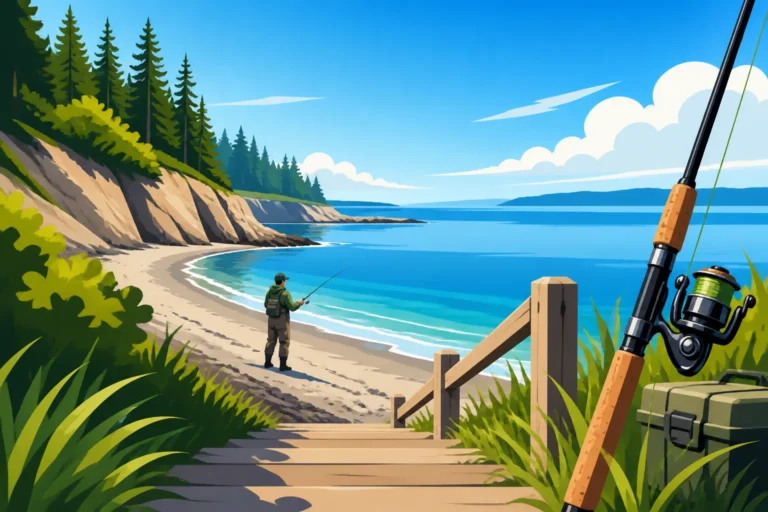
A bit further south along the West Seattle peninsula, Alki Point offers a different kind of shore fishing experience. This area is less of a pier environment and more about fishing from the beach or rocky shoreline, giving it a slightly wilder feel. Alki Point is renowned for its potential to yield salmon, particularly Chinook and Coho, as they stage before entering the rivers that feed into Puget Sound. It’s also a fantastic location for targeting sea-run cutthroat trout, especially for fly anglers or those casting small spoons and spinners.
The challenge here can be access, as you’re often fishing directly from the sand or over barnacle-covered rocks. Waders can be a huge asset for reaching slightly deeper water or better casting positions. Tides play an even more critical role at Alki, as the fish often move in with the incoming tide to feed in the shallower areas. Early morning or late evening often provide the best bites and fewer beachgoers. When considering your gear, ensure your setup can handle casting longer distances, as the fish might be a bit further out than from a pier. The beauty of Alki is the feeling of being removed from the immediate city bustle, even though you’re still within Seattle.
Other Accessible Spots & Boat Launches
While Pier 86, Seacrest Park, and Alki Point are the primary shore-based fishing locations within Elliott Bay, there are a few other spots worth noting, though they might offer more limited opportunities or require specific timing. The mouth of the Duwamish River, which empties into Elliott Bay, can provide excellent salmon fishing during strong returns, particularly for fall Chinook and Coho. Access here is often from small parks or boat ramps near the river's entry point, like Duwamish Waterway Park, but public shore access might be limited to specific points. Always check local signs for fishing restrictions or private property boundaries.
For those with small boats, kayaks, or even paddleboards, several public boat launches around Elliott Bay offer direct access to the water. These include the Don Armeni Boat Ramp in West Seattle, which is a popular spot, and various smaller access points further up the Duwamish. While this guide focuses on shore fishing, knowing these launch points exist can inform your understanding of where fish might be staging or traveling in the bay, even if you’re casting from land. Regardless of where you choose to fish, a key to success is often adapting to the urban environment and making the most of the public access points available.
What You Can Catch and How to Catch It from Shore
Elliott Bay, despite its urban setting, is teeming with various fish species throughout the year. Knowing what to target and the most effective techniques from shore will drastically improve your chances of success. It's a game of timing, presentation, and a little bit of local knowledge.
Salmon Fishing in Elliott Bay Shore-Based
Salmon are undoubtedly the superstars of Puget Sound fishing, and Elliott Bay offers opportunities to catch them right from the bank. The primary targets for shore anglers are Chinook (King) and Coho (Silver) salmon. Juvenile Chinook, often called "Blackmouth," are resident fish that feed in the bay year-round, offering a chance at salmon even outside the main migratory runs. Larger Chinook and Coho will move into the bay during their specific seasons as they migrate towards spawning rivers. "When Chinook Salmon Run in Washington's Puget Sound" and "When Coho Salmon Run in Washington" are essential reads to time your visits perfectly.
For shore-based salmon, casting and retrieving lures is the most common and effective technique. Heavy metal jigs, often referred to as "Buzz Bombs," P-Line Laser Minnows, or Gibbs Minnow Jigs, are incredibly popular. These lures are designed to cast a long distance and sink quickly, allowing you to cover more water and reach the deeper channels where salmon might be holding. The technique involves casting out, letting the jig sink, and then retrieving it with a lift-and-drop or twitching motion to mimic a wounded baitfish. Early morning and late evening tend to be the most productive times, especially on a moving tide. Anglers often swear by specific lure colors depending on water clarity and light conditions – chartreuse, white, or chrome are always good bets.
Bottomfish and Other Species
Beyond salmon, Elliott Bay offers a surprising variety of other species that can be targeted from shore. Flounder are a popular and relatively easy catch, especially for beginners or those fishing with kids. They primarily feed on the bottom, so a simple bait rig with a piece of shrimp, squid, or clam on a size 2 or 4 hook, fished on the bottom, will often do the trick. You don't need fancy gear for flounder; a basic spinning setup will suffice.
Lingcod are another exciting target, though more challenging from shore due to their preference for rocky structure and deeper water. If you're fishing from a pier with access to deeper water and structure, jigging with large swimbaits (5-8 inches) or heavy metal jigs (3-6 ounces) can entice these toothy predators. However, always be sure to check the specific seasons and depth restrictions for lingcod, as they are a highly regulated species. Rockfish, while abundant in Puget Sound, are generally difficult to target effectively from shore in Elliott Bay due to their deep-water habitat. Most rockfish species require specific gear and techniques, like using descending devices if accidentally caught, which are more suited to boat fishing.
Lastly, one of the most unique and exciting shore-based fisheries in Elliott Bay is squid jigging. During the late fall and winter months, huge schools of market squid move into the bay, especially around well-lit piers like Seacrest Park. Dedicated squid jigs, which are specialized lures with multiple barbed hooks but no barb, are cast out and retrieved with a distinctive "jigging" motion. When a squid grabs the jig, you'll feel a subtle weight, and it's an incredibly fun and delicious pursuit. This is a great family activity and requires very minimal gear beyond the jigs themselves.
Gear and Tackle Recommendations for Elliott Bay
Having the right gear makes all the difference when fishing Elliott Bay's unique environment. You need tackle that can handle strong currents, cast a good distance, and stand up to powerful fish.
For salmon and larger bottomfish, a medium-heavy spinning rod, typically between 8 feet 6 inches and 10 feet 6 inches in length, is ideal. The longer rod aids in casting distance, which is crucial from shore, and helps manage fish in heavy currents. Pair this with a reliable spinning reel in the 3000 to 5000 series size, spooled with 20 to 30-pound braided main line. Braided line offers excellent sensitivity and casting distance. You’ll want to tie on a fluorocarbon leader of 15 to 25 pounds, which is less visible to fish and more abrasion-resistant in rocky areas.
As for lures, stock up on metal jigs in various weights (from 1 to 3 ounces for salmon, heavier for deeper bottom fishing), and colors. Popular brands include Luhr Jensen's "Krocodile" spoons, Buzz Bombs, P-Line Laser Minnows, and Crippled Herrings. For twitching jigs, try lead-head jigs dressed with soft plastics or marabou in colors like white, chartreuse, or pink. If you’re targeting flounder, a simple bottom-fishing rig with a 1-2 ounce pyramid or disc sinker and a couple of snelled hooks will work. For squid, specialized squid jigs are essential – look for sizes around 2.5 to 3.5.
Don't forget essential accessories: a long-handled landing net is invaluable for scooping up fish from piers, pliers or forceps for hook removal, a small cooler with ice to keep your catch fresh, and a valid Washington Catch Record Card if you plan on keeping salmon or steelhead. A pair of comfortable, water-resistant shoes or boots will also make your experience much more enjoyable, especially at spots like Alki where you might be wading near the shore.
Navigating Regulations and Maximizing Your Success
Fishing in Elliott Bay is an exciting adventure, but it’s one that requires diligent attention to regulations and an understanding of how the natural world interacts with the urban landscape. To truly maximize your success and ensure a legal, enjoyable trip, a bit of homework goes a long way.
Essential Washington Fishing Regulations for Elliott Bay
This cannot be stressed enough: always check the latest WDFW regulations before you head out. Elliott Bay is part of Puget Sound Marine Area 10, and the rules are specific and can change. These regulations cover everything from open seasons for certain species, daily bag limits (the number of fish you can keep per day), and possession limits (the total number of fish you can have on hand). For example, salmon limits can vary not just by species but by specific marine area and even time of year. Knowing the "Daily Limit for Chinook in Puget Sound" or the "Daily Limit for Coho in Puget Sound" is crucial.
Beyond catch limits, pay attention to gear restrictions. Some areas within Puget Sound, particularly for salmon and steelhead, might require the use of single-point barbless hooks. This is a conservation measure to increase the survival rate of released fish. Failing to use the correct hook type can result in a fine. For salmon and steelhead, you also need to remember the Catch Record Card, as mentioned earlier. It’s your responsibility to fill it out immediately upon retaining a fish. Don't rely on word-of-mouth for regulations; directly consult the WDFW Sport Fishing Rules pamphlet or their online resources. These rules are in place for a reason – to protect our fisheries and ensure sustainable angling for generations to come.
Tides, Weather, and Fish Behavior
Understanding how tides and weather influence fish behavior in Elliott Bay is a game-changer for shore anglers. Unlike calm lakes, the Puget Sound is a tidal environment, and moving water is often the key to active feeding. Generally, the periods around an incoming or outgoing tide, known as "tidal changes," are the most productive. The currents stir up baitfish and create ambush points for predators. Fish often move into shallower areas with the high tide to feed, and then retreat to deeper water as the tide recedes. Our article, "Best Tide for Puget Sound Salmon Fishing in Washington," offers more specific insights.
Weather conditions also play a significant role. Overcast days or periods of light rain can often improve salmon fishing, as it reduces light penetration and makes fish feel more comfortable feeding in shallower water. Strong winds, however, can make casting difficult and create choppy conditions that make it harder to detect bites. Water clarity is another factor; while slightly off-color water can be good, excessively murky water (often from heavy rainfall and runoff) can make fishing challenging. Learning "Reading Water for Bank-Fishing Salmon" will give you an edge by helping you identify likely holding areas and feeding lanes from shore. Pay attention to local marine forecasts and tide charts – these are your best friends for planning a successful trip.
Safety and Respecting the Urban Environment
Fishing in an urban setting like Elliott Bay comes with its own set of safety considerations and courtesies. Always be aware of your surroundings. Piers can be slick when wet, and boat traffic, even near the shore, can create unexpected wakes. If you’re casting, ensure you have ample space and that your back-cast won’t hook a passing pedestrian or fellow angler. At places like Alki Point, be cautious of barnacle-covered rocks and slippery seaweed. Life jackets are always a good idea, especially if you plan on wading.
Respecting the environment and other users is paramount. Elliott Bay is a shared space for recreation, commerce, and wildlife. Pack out everything you pack in – and then some. Leave no trace of your presence, especially discarded fishing line or bait packaging. These can be harmful to wildlife. Be mindful of noise levels, especially early in the morning or late at night, and always be courteous to other anglers and visitors. If you're considering expanding your fishing horizons beyond simple shore casting, perhaps looking for a Puget Sound salmon charter or a lingcod trip, resources like FishingBooker can offer insights into different trip options, reviews of local captains, and what species they are successfully targeting in other marine areas. This can indirectly help inform your shore fishing efforts by showing what’s actively biting in the broader region. Always remember that we are guests in nature's home, even when it's right in the middle of a bustling city.
Elliott Bay Shore Fishing Overview
Here’s a quick overview of some of the best shore-based fishing spots in Elliott Bay, their primary targets, and common techniques.
| Location | Primary Target Species | Best Techniques & Gear | Key Considerations |
|---|---|---|---|
| Pier 86 / Centennial Park | Chinook Salmon (Blackmouth), Coho Salmon, Flounder, Lingcod (seasonal) | Metal jigs (Buzz Bombs, Crippled Herrings), spoons; Bait rigs for flounder | Good casting distance; Tidal currents; Popular for walkers |
| Seacrest Park (West Seattle) | Coho Salmon, Chinook Salmon, Squid (winter), Dungeness Crab, Flounder | Jigging for salmon/squid (special jigs); Crab pots/rings; Bait rigs for flounder | Excellent squid fishing; Accessible via water taxi; Busy |
| Alki Point | Chinook Salmon, Coho Salmon, Sea-Run Cutthroat Trout | Casting spoons/spinners for salmon/cutthroat; Fly fishing for cutthroat | Rocky shore/beach access; Waders often beneficial; Strong tides |
| Duwamish River Mouth Access | Chinook Salmon, Coho Salmon (seasonal runs) | Twitching jigs, casting spoons; Float fishing roe/bait | Limited public shore access; Best during strong river runs |
Disclaimer
Please be aware that fishing regulations in Washington State are subject to change by the Washington Department of Fish and Wildlife (WDFW). While we strive to provide accurate and up-to-date information, it is always the angler's responsibility to consult the latest official WDFW regulations pamphlet or website before engaging in any fishing activity. This guide is for informational purposes only and does not constitute legal advice.