Where to Catch Lingcod in the San Juans
Trying to pinpoint the best spots to catch lingcod in the majestic San Juan Islands can feel like searching for a needle in a haystack, especially with so many nooks, crannies, and diverse underwater structures. This guide is dedicated to pulling back the curtain on these elusive, toothy predators, helping you understand their preferred habitats, the prime locations to target them, and the most effective techniques to get one on your line in this incredible Washington fishery.
Understanding San Juan Islands Lingcod Habitat
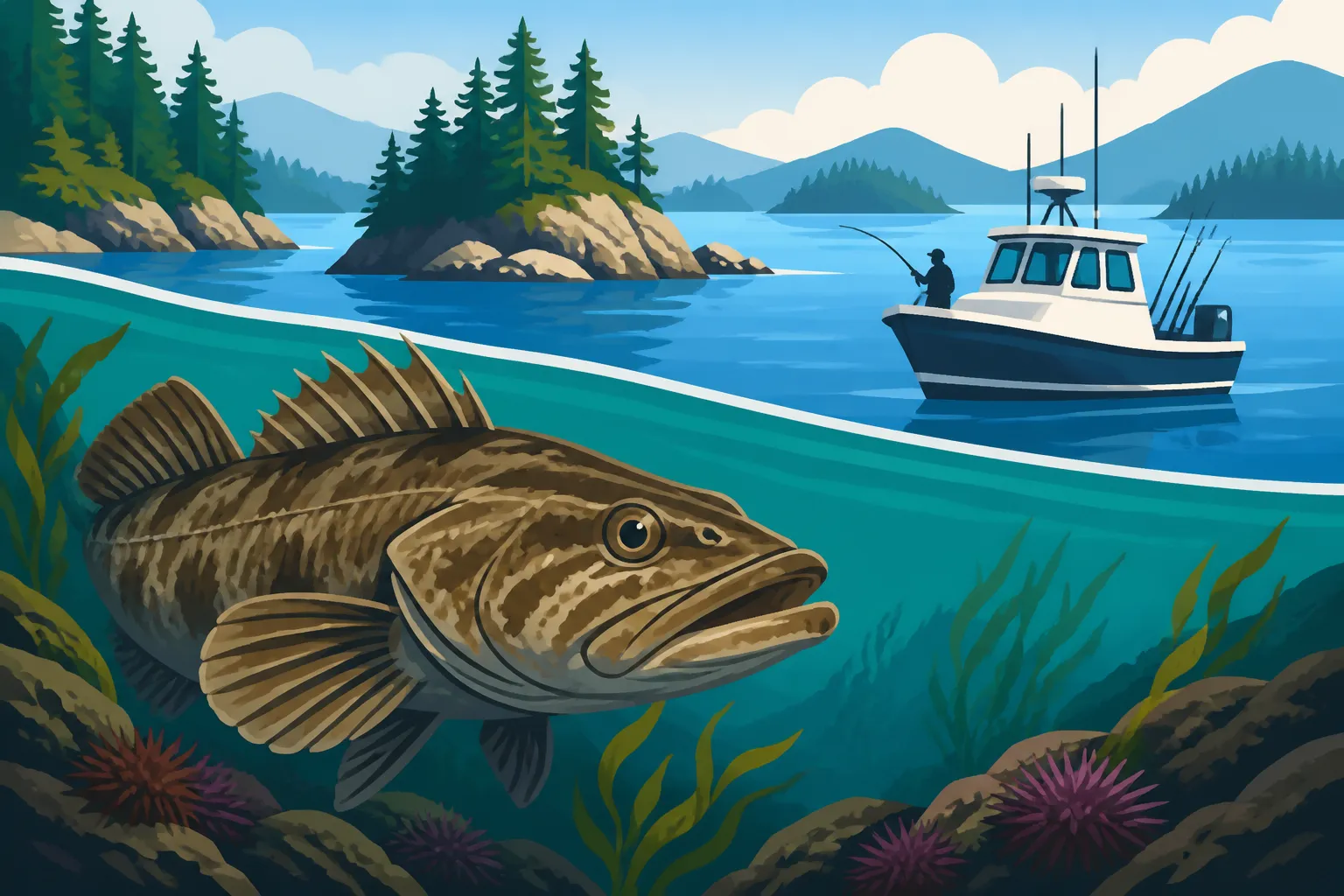
Lingcod are fascinating creatures, known for their aggressive strikes and delicious white meat. But to consistently find them, you need to think like a lingcod. These fish aren't just swimming around aimlessly; they are ambush predators that rely heavily on structure for hunting and hiding. The San Juan Islands, with their complex underwater topography carved by ancient glaciers and strong currents, offer a perfect environment for them.
The Rocky Reefs and Structure Lingcod Love
Lingcod are true rock stars, literally. Their preferred habitat is invariably associated with rugged, rocky bottom structures. Think of areas with dramatic drop-offs, underwater pinnacles, boulder fields, and jagged rock outcroppings. These features provide the perfect ambush points where they can lie in wait for unsuspecting baitfish, crab, or even smaller octopus. It's not uncommon to find them tucked into crevices or right on the edge of a deep rock pile, ready to dart out. This is why when you're scouting for lingcod, your fish finder is your best friend. You're not just looking for fish; you're looking for the habitat that holds fish. If you see a flat, sandy bottom for miles, you're probably in the wrong place. But if your sonar lights up with craggy, broken bottom features, you're on the right track.
Beyond just the rocks themselves, lingcod also thrive around kelp beds and rocky reefs draped in various seaweeds. These underwater forests offer additional cover, attracting smaller baitfish which, in turn, draw in the lingcod. While you might not be able to "see" kelp on your fish finder in deeper water, understanding where these beds typically grow (often on rocky substrates in shallower, current-swept areas) can give you a significant advantage. The presence of strong currents flowing over and around these structures is also a major draw. Lingcod don't like to expend unnecessary energy, so they'll often position themselves in current breaks or behind rocks, letting the tide bring food to them.
Depth Preferences and Seasonal Movements
Lingcod aren't strictly shallow or deep dwellers; their preferred depth can vary quite a bit depending on the season, time of day, and availability of food. Generally, in the San Juan Islands, you'll find them anywhere from 30 to 300 feet of water. However, there are some patterns worth noting. During the spring spawning season, particularly from March through early June, many lingcod move into shallower waters, often in the 30-80 foot range, to lay and guard their eggs. This is a prime time to target them, though regulations often have specific opening dates to protect these vulnerable populations. Always check the latest Washington Fishing Regulations Every Angler Should Know before heading out.
As summer progresses and waters warm, lingcod tend to move a bit deeper, often settling into the 80-200 foot range, following their food sources. They'll still be hugging structure, but you might need to explore deeper pinnacles and drop-offs. Fall can see them become quite aggressive as they feed heavily to prepare for winter, and they might again be found across a wider range of depths. Winter fishing for lingcod can be productive, but it often requires targeting deeper, offshore structures where they might be less active but still present. Understanding these general movements will help you narrow down your search and adjust your techniques.
Prime Lingcod Fishing Spots in the San Juans
The San Juan Islands are a treasure trove of fishing opportunities, and lingcod are no exception. However, some areas consistently produce better than others due to their unique underwater topography and current patterns. Knowing these general zones can significantly cut down your search time.
Northern San Juan Islands Hotspots
The northern reaches of the San Juans, particularly around Orcas and Shaw Islands, offer some truly exceptional lingcod habitat. One of the most famous and productive areas is Obstruction Pass, located between Orcas and Blakely Islands. This narrow passage features strong currents and significant rocky structure, making it a natural ambush point for lingcod. Drifting through Obstruction Pass with jigs or bait, especially during a tide change, can be incredibly effective. Just be mindful of the currents; they can be swift and challenging.
Another excellent area is the Rosario Strait, particularly the eastern side of Orcas Island and the areas around Cypress Island. The deep, broken bottom and numerous rock piles here are magnets for Lingcod: Washington's Toothy Bottomfish. Look for humps and ledges that rise significantly from the surrounding bottom. Places like the waters off Peavine Pass and the deeper sections around Lydia Shoal are also worth exploring. These areas are characterized by robust current flows and an abundance of forage fish, which are key attractants for larger lingcod. Don't be afraid to sound around until you find those distinct rock formations on your electronics.
Central and Southern San Juan Islands Zones
Moving south, the waters surrounding Lopez Island and San Juan Island also hold plenty of lingcod. Lopez Pass, situated between Lopez and Decatur Islands, is another current-swept bottleneck similar to Obstruction Pass, making it an excellent spot for jigging or drift fishing. The rocky shores and submerged structures along the western side of Lopez Island, facing the Strait of Juan de Fuca, also offer fantastic habitat. You'll find a mix of shallower reefs and deeper rock piles here.
Further west, Cattle Pass, between San Juan and Lopez Islands, is another high-current area that can be very productive. While known for salmon, its rocky bottom also holds good numbers of lingcod. The key is to target those areas where the current pushes bait over distinct underwater features. Around the outer islands, such as Stuart Island and Johns Island, you're often looking at more exposed coastline with extensive rocky reefs that drop into deeper water. These can be prime spots, especially during periods of calmer weather. Areas near Turn Island State Park, though popular for recreation, also have surprisingly good rocky habitat for bottom dwellers.
Identifying Productive Structure
Finding lingcod isn't just about dropping a line in a general area; it's about precision. The most successful anglers spend time actively "sounding" for fish and structure. Your best tools for this are a good quality marine chart and a reliable fish finder/sonar unit. Start by studying your charts, looking for areas marked with "rock," "reef," "pinnacle," or steep contour lines indicating dramatic depth changes. These are your starting points.
Once you're in the general vicinity, use your sonar to meticulously scan the bottom. You're looking for clear indications of hard bottom (which often shows up as a thick, intense return on your screen) and irregularities in the bottom contour. Lingcod often hold right on the edge of a drop-off, at the base of a rock pile, or nestled within a cluster of boulders. Pay attention to any baitfish schools you mark; lingcod won't be far away. Modern side-scan sonar can be incredibly effective for identifying these structures away from directly under your boat, giving you a wider view of the terrain. If you're on a guided trip, don't hesitate to ask your captain how they identify these productive zones. Many experienced guides, like those you might find through a platform like FishingBooker, have years of accumulated knowledge about specific spots.
Best Times and Conditions for San Juan Lingcod
Timing is everything when it comes to fishing, and lingcod in the San Juans are no exception. Understanding how tides, seasons, and weather affect their behavior can dramatically improve your success rate. It's not just about being in the right spot, but being there at the right time.
Tidal Influences and Current
The San Juan Islands are renowned for their powerful tidal currents, and these currents play a massive role in lingcod fishing. Lingcod are ambush predators that prefer to let the current bring food to them rather than chasing it down. This means fishing during periods of strong tidal movement is often best, as it dislodges baitfish, crab, and other prey from the bottom, sending them drifting past hungry lingcod.
However, "strong current" doesn't necessarily mean the absolute peak of the tide. Often, the bite is hottest during the slack before the current begins to build, or during the early stages of a strong incoming or outgoing tide. As the current approaches its peak, it can become too fast to effectively fish, making it difficult for your gear to reach the bottom or for a lingcod to even hold its position. Many anglers find the "sweet spot" to be the first two hours of a building tide or the last two hours of a dying tide. Always consult a local tide chart and current tables before you head out. These will tell you not only when high and low tide are, but more importantly, when the strongest current flows are predicted for specific passes and channels.
Seasonal Considerations for Lingcod
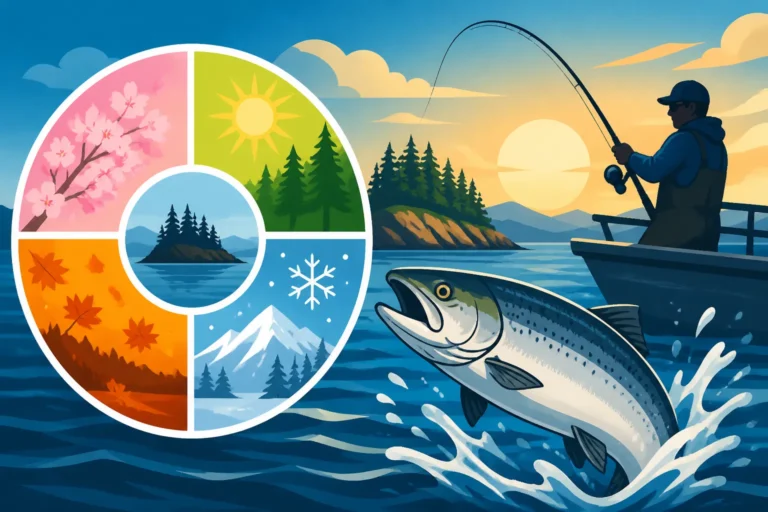
As mentioned earlier, the season significantly impacts where lingcod are found and how aggressively they feed. The spring (typically April through June, depending on specific area openings) is arguably the best time to target lingcod in the San Juans. This is when many fish are moving into shallower water for spawning, making them more accessible and often more aggressive as they guard their nests. The Lingcod Limit in Washington often reflects this, with specific seasons and sometimes different limits than other bottomfish. This period often coincides with good weather windows before the summer crowds and can offer some truly exceptional fishing.
During summer (July-August), lingcod tend to spread out and move into slightly deeper water. They are still actively feeding, but you might need to cover more ground and focus on deeper rockpiles and ledges. This is also a fantastic time for Bottom Fishing for Lingcod and Rockfish off Washington, as other species are abundant. Fall (September-November) can also be very productive as water temperatures begin to cool, and lingcod feed heavily in preparation for winter. They often become quite active, striking at a variety of lures. Winter fishing is possible but generally targets deeper, more isolated structures and can be heavily weather-dependent.
Weather and Water Conditions
Like any fishing, weather plays a critical role in lingcod success. Calm, clear days are always preferred, especially when targeting offshore reefs or navigating the strong currents of the San Juans. Strong winds can make boat control difficult, obscure your sonar readings, and make it challenging to feel subtle bites. Furthermore, rough seas can make for an uncomfortable, and even dangerous, day on the water.
Water clarity can also be a factor. While lingcod are not solely sight feeders, clearer water can sometimes make them more selective. Conversely, slightly turbid water (not muddy, but with reduced visibility) can sometimes make them less wary and more willing to strike. However, the most important "water condition" is simply having good current to stimulate feeding. Always check the marine forecast before planning your trip. If you're looking to book a guided trip, many operators on FishingBooker will reschedule or refund if weather conditions are unsafe, which is a great benefit.
Effective Techniques and Gear for San Juan Lingcod
Once you've found a promising spot and the conditions are right, the next step is to present your offering in a way that lingcod can't resist. There are several proven techniques, each with its own advantages, and having the right gear is non-negotiable for these powerful fish.
Jigging with Artificials
Jigging is one of the most popular and effective methods for catching lingcod in the San Juan Islands. It's an active technique that allows you to cover water and effectively target structure. Heavy metal jigs, often in the 6-16 ounce range (or even heavier in strong currents), are the go-to. Popular styles include knife jigs, diamond jigs, and various lead jigs shaped like baitfish. Color can sometimes make a difference, with chartreuse, glow-in-the-dark, blue/silver, and green often being top producers.
The technique itself involves dropping your jig to the bottom, letting it hit, and then quickly reeling up a few feet before dropping it back down. This "lift and drop" motion mimics a wounded baitfish or squid, enticing a strike. Vary your retrieve speed and jigging action. Sometimes a slow, methodical lift is best, other times a rapid, aggressive rip. Don't be afraid to let the jig hit the bottom and then bounce it a few times; lingcod are often right on the seafloor. Another excellent option is to use soft plastic swimbaits rigged on heavy leadhead jigs, especially those with paddle tails or curl tails that provide a lot of action on the retrieve. These often trigger a more natural response from the fish. If you're looking for more specific tactics, checking out a resource on Jigging Herring for Lingcod in Washington might provide additional insights, even though it focuses on herring, the jigging principles apply broadly.
Fishing with Live Bait and Cut Plugs
While artificials are highly effective, sometimes nothing beats natural bait, especially for finicky or larger lingcod. Live bait, such as small flounder, greenling, sculpin, or even larger herring, can be deadly. The key is to present it naturally near the bottom, often using a mooching or drift-fishing rig with a heavy lead sinker to keep it in the strike zone. A sliding sinker setup allows the fish to pick up the bait without immediately feeling the weight of the lead.
Cut bait, particularly fresh herring, octopus, or squid, is another excellent option. These are typically rigged on a single or double hook setup, often with a large leadhead jig to get it down. Sometimes, simply using a large chunk of octopus draped over a heavy jig can be irresistible. The scent trail created by natural bait can draw lingcod in from a distance, making it particularly effective in areas with less current or when fish are less aggressive. When using bait, allow the lingcod to fully engulf the offering before setting the hook; they often "mouth" the bait before committing.
Essential Gear for Lingcod
Lingcod are strong, powerful fish with tough mouths, so your gear needs to be up to the task.
- Rods: A stout, medium-heavy to heavy action rod, usually 6'6" to 7'6" in length, with a fast taper is ideal. This provides the backbone to horse large fish away from structure and the sensitivity to feel bites in deep water.
- Reels: A conventional (level wind or star drag) reel capable of holding at least 200-300 yards of 50-80 lb braided line is preferred. Brands like Shimano, Daiwa, and Penn make excellent reels for this kind of bottom fishing. Braided line is crucial due to its minimal stretch, which provides superior sensitivity and hook-setting power in deep water.
- Line: As mentioned, 50-80 lb braided mainline is standard. You'll typically use a fluorocarbon or monofilament leader of 40-80 lb test, about 3-6 feet long, connected to your mainline with a strong knot like a FG knot or a braid-to-fluoro knot.
- Terminal Tackle: Heavy-duty swivels, snap swivels, and solid rings are essential to prevent line twist and handle powerful fish. A variety of jigs (as discussed), heavy lead sinkers (4-16 oz depending on current), and strong, sharp hooks (VMC, Gamakatsu, Owner, often 5/0 to 9/0) are also necessary. Always have extra tackle; fishing rocky bottom means snags are a common occurrence.
- Descending Devices: Remember the importance of conservation, especially if you catch Rockfish Species Along the Washington Coast as bycatch, or sub-legal lingcod. Have a descending device on board. Using a device like the Shelton Fish Descender or a simple weighted clamp allows you to return fish to depth without them suffering from barotrauma. This is a crucial practice, and more information can be found in our guide on Descending Devices for Rockfish and How to Use One.
Navigating Regulations and Responsible Fishing
Fishing in Washington means being a responsible angler, and that includes understanding and adhering to the regulations set forth by the Washington Department of Fish and Wildlife (WDFW). These rules are in place to protect the fishery for future generations, and penalties for violations can be stiff.
Washington Lingcod Regulations
Lingcod are managed carefully in Washington waters, and the regulations can vary not only by year but also by specific marine area. Typically, the lingcod season opens in the spring, often around April or May, and runs through the summer, sometimes with specific closures. There are usually minimum size limits (e.g., 26 inches) and daily bag limits (e.g., one or two fish per angler). It's incredibly important to consult the most current WDFW Sport Fishing Rules pamphlet or their website before every trip. Don't rely on last year's rules or what someone told you on the dock. This is especially true for the San Juan Islands, which fall into specific Marine Areas with their own nuances. Our guide on Washington Sport Fishing Seasons and Emergency Closures can also provide a broader understanding of how these regulations are structured.
Beyond simple open/closed seasons, you need to be aware of other specifics. For instance, are barbed hooks allowed, or are barbless hooks required in your specific fishing area? Are there any gear restrictions, such as limits on the number of hooks or the type of bait? Always measure your fish carefully and accurately from the tip of the snout to the tip of the tail. If a fish is undersized, release it immediately and with as little harm as possible.
Descending Devices and Barbless Hooks
Responsible fishing goes beyond just following the law; it's about ethical practice. Lingcod, like many other bottomfish, can suffer from barotrauma when brought up from deep water too quickly. This causes their swim bladder to expand, making it difficult for them to swim back down. This is where descending devices come in. These tools allow you to quickly and safely return fish to depth, greatly increasing their chances of survival. It's not just for protected species or bycatch; even an undersized lingcod that you want to release deserves the best chance at survival.
The use of barbless hooks is another practice that minimizes harm, especially for catch-and-release fishing. Barbless hooks are easier to remove, causing less tissue damage, and can significantly reduce the handling time of the fish. Even if not legally required in a specific area for lingcod, it's a practice that many ethical anglers adopt. You can either buy barbless hooks or simply crimp down the barb on your existing hooks with a pair of pliers.
Finding Local Expertise
If you're new to fishing the San Juan Islands, or just looking to maximize your chances, booking a guided trip is often the best way to gain local knowledge and experience. Local guides spend countless hours on the water, tracking fish movements, understanding current patterns, and knowing exactly where the bite is hot. They provide all the necessary gear, expertise, and often clean your catch at the end of the day.
You can find excellent Washington's San Juan Islands Fishing Charters through various avenues. Online booking platforms like FishingBooker are a great starting point, allowing you to compare different operators, read reviews, and check availability. When researching, don't be afraid to ask potential guides about their experience specifically targeting lingcod, what kind of gear they use, and their commitment to responsible fishing practices. A good guide will be happy to share their knowledge and ensure you have a safe, enjoyable, and productive trip. For more general advice on selecting a guide, our guide on How to Book a Fishing Charter in Washington offers some helpful tips.
San Juan Islands Lingcod Hotspots and Details
Here's a quick reference table to some prime lingcod fishing areas in the San Juan Islands, along with key details to keep in mind.
| Location Name | General Area | Typical Depth (feet) | Key Features | Ideal Conditions | Notes |
|---|---|---|---|---|---|
| Obstruction Pass | Between Orcas & Blakely | 60 – 200 | Narrow passage, strong currents, rocky | Slack tide or early/late current | Drifting with jigs or bait. Watch for strong current. |
| Rosario Strait | East of Orcas Island | 80 – 250 | Deep, broken bottom, humps, ledges | Moderate current, good sonar readings | Look for specific rock piles and drop-offs. |
| Lydia Shoal | East of Orcas Island | 50 – 150 | Submerged reef, strong current | Strong tidal movement (not peak) | Excellent structure, often holds baitfish. |
| Lopez Pass | Between Lopez & Decatur | 50 – 180 | Narrow passage, currents, rocky bottom | Slack tide or early/late current | Similar to Obstruction Pass, great drift spot. |
| Cattle Pass | Between San Juan & Lopez | 70 – 200 | Deep channel, rocky, strong currents | Moderate tidal flow | Productive for both salmon and lingcod on the bottom. |
| Stuart Island Reefs | North of San Juan Island | 80 – 250 | Exposed rocky coastline, deep drop-offs | Calm seas, moderate current | Requires stable weather; target specific reef edges. |
| Turn Island | Near Friday Harbor | 30 – 120 | Rocky shorelines, submerged rocks | Moderate currents, stealthy approach | Closer to population centers, can be popular. |
Disclaimer
Fishing regulations, seasons, and limits can change frequently and without prior notice. Always consult the official Washington Department of Fish and Wildlife (WDFW) regulations for the most current and accurate information before planning any fishing trip. This guide is for informational purposes only and should not be considered a substitute for official WDFW publications.