How to Measure a Legal Dungeness Crab
There's nothing quite like the thrill of pulling up a crab pot, seeing those feisty Dungeness crabs scrambling inside, and imagining a delicious dinner. But that excitement can quickly turn into anxiety if you're not absolutely sure how to tell a legal crab from one that needs to go back. Getting this wrong can lead to serious fines and conservation issues, which nobody wants. This guide is here to walk you through the precise, no-nonsense way to measure a legal Dungeness crab in Washington waters, so you can keep your catch with confidence and stay on the right side of the rules.
The Critical Importance of Correct Dungeness Crab Measurement in Washington
Crabbing in Washington isn't just about the joy of the catch; it's also a deeply rooted tradition that depends entirely on responsible harvesting. This is why understanding and adhering to the specific size and gender regulations for Dungeness crab is more than just following rules – it's actively participating in the sustainability of this incredible resource. It’s easy to get caught up in the moment, but a quick, accurate measurement is your first line of defense against both legal trouble and unintentional harm to crab populations.
Why Size Limits and Gender Rules Exist
When you see those regulations about minimum size and male-only harvest, know that they're not just arbitrary numbers dreamed up by some bureaucrat. These rules are the backbone of sound fisheries management, designed to ensure that we, and future generations, can continue to enjoy the bounty of Washington's waters. The minimum size limit, for instance, ensures that Dungeness crabs have a chance to mature and reproduce at least once, sometimes multiple times, before they're harvested. This is absolutely critical for maintaining healthy, robust crab populations year after year.
Furthermore, the "male-only" rule is perhaps the most vital component of Dungeness crab conservation. Female crabs, often smaller and less meaty than their male counterparts, are the egg-layers, the producers of the next generation. By protecting them, we safeguard the species' reproductive capacity. Keeping a female, even accidentally, directly impacts the future health of the crab fishery. It's a fundamental principle that underlies the sustainable harvesting of Dungeness Crab and Washington Shellfish throughout the region. Every time you release a female, you're investing in tomorrow's crab season.
The Legal Ramifications of an Undersized Crab Mistake
Let's be blunt: keeping an undersized or female Dungeness crab in Washington isn't just a minor oversight. It's a violation of fishing regulations, and the consequences can be much more severe than many anglers realize. You're not just risking a stern look from a Fish and Wildlife enforcement officer; you're looking at potential fines that can quickly add up, easily overshadowing the cost of a few crab. These fines are designed to deter illegal harvesting and protect the resource, and they are enforced rigorously.
Beyond the immediate financial penalty, there's the very real possibility of losing your crabbing privileges. Depending on the severity and frequency of the infraction, a violation could lead to a suspension of your fishing license, effectively benching you from all fishing and crabbing activities for a period. Imagine missing out on prime season because of a preventable mistake! It's not a position any of us want to be in. Then there’s the sheer disappointment of having to release an illegally kept crab, knowing you could have avoided the whole situation with a moment of careful measurement. It’s a frustrating scenario that can easily be avoided by being prepared and meticulous.
Step-by-Step Guide to Accurately Measuring Your Dungeness Crab
Okay, you've pulled your pot, and you've got crabs! Now comes the moment of truth: measurement. This isn't a race; it's a critical step that demands precision. Having the right tools and knowing exactly how to use them will make all the difference, ensuring you're confidently keeping legal crabs and safely releasing those that need more time to grow or are protecting the species.
Equipping Yourself: The Right Tools for the Job
First things first, you need the right tool. Forget about trying to use a tape measure or a standard ruler; those are unreliable for crab measurement. The absolute essential piece of gear is a dedicated crab gauge. These gauges are specifically designed for the task, often made from durable plastic or metal, and clearly marked with the exact minimum legal size for Dungeness crab in Washington. You can pick these up at just about any local sporting goods or tackle shop, and they’re also widely available online through retailers like Amazon. Having one readily accessible, perhaps clipped to your cooler or tackle box, is non-negotiable for any serious crabber.
Why a dedicated gauge? Because it removes all guesswork. Many gauges have a fixed stop or a clear indicator that tells you instantly if the crab's carapace meets the Legal Dungeness Crab Size. Some even have a cutout to help you quickly identify male vs. female. It's a small investment that pays off in peace of mind and compliance. Don't be tempted to "eyeball" a crab's size. What looks big enough might be a hair under, and that small difference can land you in big trouble. Always keep your gauge handy and use it for every crab you consider keeping.
The Measurement Process: From Handling to Reading the Gauge
Now, let's get down to the actual measurement. Safety first, for both you and the crab. Dungeness crabs have powerful claws, and a pinch from even a small one can be painful. The safest way to handle a crab is to grasp it firmly from behind, placing your thumbs over its back, just behind the widest part of its shell, where its legs join its body. This position keeps your fingers away from those formidable pincers.
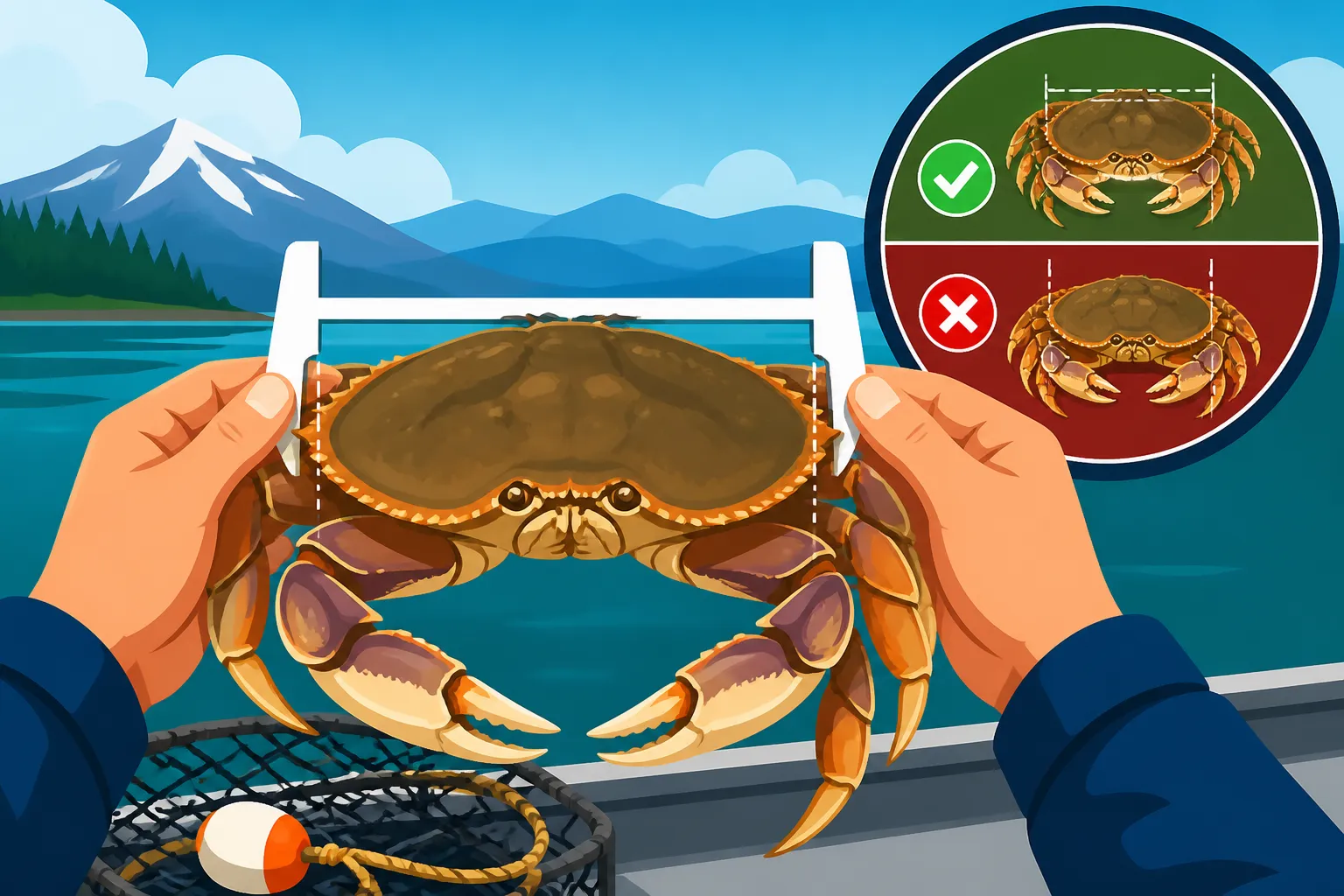
Once you have a secure, safe grip, take your crab gauge. The critical part of the Dungeness crab to measure is the widest part of its carapace, which is the hard upper shell. And here's the crucial detail: you must not include the spines or points that extend out from the sides of the shell in your measurement. These can often add a significant amount to the apparent width, leading to an incorrect reading. The gauge should be placed flat across the back of the crab, from one side of the carapace to the other, at its absolute widest point, ignoring those sharp tips. If the crab fits snugly within the legal marks on your gauge, without forcing it, then you've got a keeper!
If the crab is undersized, or if it's a female (which we'll cover in the next section), it's essential to release it gently and quickly. Avoid dropping it from a height or tossing it aggressively. Place it back into the water, allowing it to reorient itself and swim away. Every crab, especially an undersized one, deserves to be treated with respect and given the best chance of survival. This practice is part of the angler's code and ensures that the fishery remains healthy.
| Feature | Male Dungeness Crab | Female Dungeness Crab |
|---|---|---|
| Apron Shape | Narrow, pointed, or T-shaped on the underside. | Broad, rounded, or U-shaped on the underside. |
| Claw Size | Generally larger, more robust claws. | Comparatively smaller, more delicate claws. |
| Size | Can grow to much larger sizes, often legal keepers. | Generally smaller, rarely reach legal keeper size. |
| Legs | Often longer, more prominent. | Shorter, less prominent. |
| Legality | Only males of legal size can be kept in Washington. | Must be released, regardless of size. |
Common Pitfalls and How to Avoid Them When Crabbing in Washington
Even with the right tools, it's easy to make a mistake when measuring Dungeness crab, especially when you're excited or dealing with a lively crustacean. Knowing the common pitfalls can help you avoid them and keep your crabbing trips enjoyable and compliant with all of Washington's rules for Crabbing and Shellfishing in Washington's Puget Sound.
Misidentifying Male vs. Female: The Apron is Key
This is, without a doubt, one of the most frequent mistakes new crabbers make, and it’s a non-negotiable rule in Washington: only male Dungeness crabs can be kept. Period. Even if a female crab somehow measures out to the legal minimum size (which is incredibly rare, as they typically don't grow that large), she still must be released. The key to telling the difference lies in the crab's "apron" – the flap on its underside.
For male Dungeness crabs, the apron is narrow, often pointed or T-shaped. It's a distinct, almost triangular shape. Females, on the other hand, have a much broader, more rounded, or U-shaped apron. This wide apron is where they carry their eggs, and its shape is unmistakable once you know what to look for. Before you even think about measuring for size, flip that crab over and check its apron. If it's broad and rounded, it's a female, and she goes back in the water, no questions asked. Understanding this difference is crucial, as elaborated in guides like How to Tell a Male From a Female Dungeness Crab, and directly impacts whether Can You Keep Female Dungeness Crab in Washington? is even a question. A quick visual check can save you a lot of hassle.
Incorrect Measurement Technique: Spines, Legs, and Angles
We talked about this briefly, but it bears repeating because it's such a common error. When measuring, you must measure the carapace (the top shell) at its absolute widest point, excluding the pointy spines or tips on either side. These spines can add a deceiving amount to the overall width, leading you to believe an undersized crab is legal. If your gauge has a fixed stop, make sure the flat part of the gauge is pressed firmly against the shell, and the measurement is taken from the hard shell edge to hard shell edge, not including those spines.
Another mistake is measuring at an angle or not pressing the gauge firmly. A slight tilt can result in an inaccurate, often larger, reading. Hold the crab steady, keep the gauge level and firm against the shell. It's also vital to be aware of how excitement can warp your perception. When you're eager to fill your pot, it's easy for your brain to "see" a legal crab, even if it's not quite there. Take a deep breath, double-check, and if there's any doubt, err on the side of caution and release it. Your peace of mind and the health of the fishery are far more important than one borderline crab. You can also refer to Legal Dungeness Crab Size for visual aids if available in the regulations pamphlet.
Rushing the Process and Ignoring Regulations
Crabbing can be a flurry of activity, especially if you're pulling multiple pots or if the crabs are particularly active. The temptation to rush the measurement process is strong, but it's exactly when mistakes happen. A hurried check of the apron, a quick gauge swipe, and suddenly you've got an illegal crab in your cooler. Slow down. Take your time with each crab. It's better to spend a few extra seconds on the boat than to face a fine later.
Beyond individual measurement, it's paramount to remember that crabbing regulations, like all fishing rules, can change. Seasons open and close, limits can be modified, and even specific areas might have different rules. It's your responsibility to check the most current regulations before every crabbing trip. The Washington Department of Fish and Wildlife (WDFW) website is your go-to resource, and they often issue emergency rule changes. Don't rely on what you remember from last year, or what your buddy told you. Always verify. This is especially true given that Emergency Rule Changes: Why Washington's Rules Shift Mid-Season are a real possibility, and being informed is your best defense against unintended violations.
Beyond the Gauge: Responsible Crabbing Practices
Once you've mastered the art of measuring and identifying legal Dungeness crabs, your responsibility as a crabber doesn't end there. How you handle your catch and how you stay informed about the ever-changing regulations are just as crucial to being a truly responsible and ethical participant in Washington's vibrant crabbing scene.
What to Do With Your Legal Catch
So, you've got a handful of legal male Dungeness crabs – congratulations! The next step is to ensure they're handled properly for both humane reasons and to maintain the quality of the meat. If you plan to keep them, the most humane method for dispatching a crab is often to quickly chill them in an ice bath or dispatch them swiftly before cooking. This ensures a quick and respectful end, preserving the quality of the meat for your dinner table.
Once dispatched, proper storage is key. Crabs should be kept cool, ideally on ice in a cooler, out of direct sunlight. This not only keeps them fresh but also prevents spoilage. Never just leave them exposed to the elements. Remember, you're responsible for every crab you keep, from the moment it comes out of the pot until it's on your plate. Avoid wasting any part of your legal catch. If you’re using pots, consider how to optimize your setup, perhaps exploring methods like Crabbing With Pots vs Rings in Puget Sound to increase your chances of a legal haul, and always refer to the specific rules for keeping your catch, including any limits on How Long to Soak a Crab Pot in Puget Sound to ensure maximum freshness and legality.
Staying Current with Washington's Dynamic Regulations
One of the biggest lessons any angler or crabber learns in Washington is that regulations are not static. They can, and do, change. What was legal last season or even last month might be different today. Factors like crab population assessments, environmental conditions, and even specific management goals for certain areas can all influence rules. This is why it's absolutely vital to make checking the current regulations a routine part of your pre-crabbing ritual.
The WDFW website is your most reliable and up-to-date source for all Washington Fishing Regulations Every Angler Should Know, including those for Dungeness crab. They publish detailed pamphlets, often available online and at license vendors, and frequently post emergency rule changes that can open or close seasons, or adjust limits, sometimes with very little notice. There are also apps, like the Fish Washington App, that can help you stay informed on the go. Don't rely on hearsay or old memories. Take a few minutes to confirm the rules for your specific area and the current dates, whether you're planning to crab from a boat or wondering How to Catch Dungeness Crab From a Dock. Being informed isn't just about avoiding a fine; it's about being a knowledgeable, responsible, and successful crabber who contributes to the long-term health of Washington's incredible Dungeness crab fishery. Also, knowing Best Bait for Washington Dungeness Crab can increase your chances within the current rules.
Disclaimer
This article is for general informational purposes only and does not constitute professional advice. Laws, prices and regulations vary by location and change over time. Consult a qualified professional for guidance on your specific situation.