Washington State Record Steelhead
For many Washington anglers, the quest for a trophy steelhead isn't just about catching a fish; it's about connecting with a legend, pushing personal limits, and perhaps, just perhaps, etching their name into the state's angling history books. This guide dives deep into the elusive Washington State Record Steelhead, exploring the fish, the rivers, and the dedication required to chase such a magnificent catch.
The Legend of Washington's State Record Steelhead
There's a special kind of reverence that surrounds the state record for any species, but for steelhead in Washington, it feels almost mythical. These aren't just big fish; they're magnificent, chrome-bright creatures that have defied incredible odds to grow to immense proportions, making their way back from the vast Pacific Ocean to the very rivers where they were born. The current state record isn't just a number; it's a testament to the wildness and richness of Washington's waters.
What is the Current State Record Steelhead?
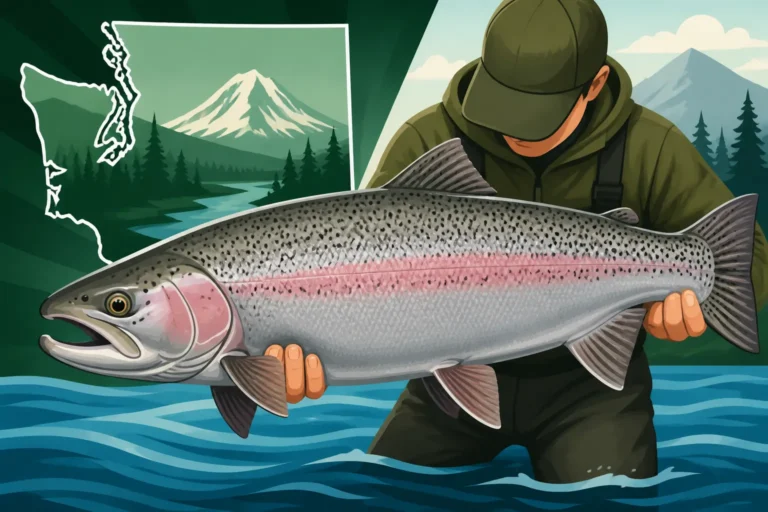
The current Washington State Record Steelhead is an absolute beast, weighing in at an astounding 32 pounds, caught in the Snohomish River in 1974. Just let that sink in for a moment – 32 pounds of pure, chrome power. Imagine the fight, the adrenaline, the sheer disbelief as an angler wrestled such a titan to the bank. It's the kind of story that gets passed down through generations, fueling dreams and inspiring countless hours on the water. While specific details like the exact date and angler's name are part of the historical record, the key takeaway is the sheer magnitude of this fish and the testament it provides to the potential of our rivers.
Achieving a catch of this caliber is not merely a matter of luck; it requires an almost encyclopedic understanding of the fish's habits, the river's moods, and the gear needed to handle such an incredible force of nature. Anglers dedicate years, even decades, to the pursuit of a fish even half this size, making the state record an almost unimaginable accomplishment that stands as a beacon for what's possible in Washington's steelhead rivers.
The Allure of Trophy Steelhead
Why do we, as anglers, obsess over these giant steelhead? It's more than just the bragging rights, though those are certainly a part of it. There's an inherent challenge in pursuing a fish that is famously difficult to catch, a fish that embodies strength, resilience, and wild beauty. Landing a steelhead, especially a large one, is a test of skill, patience, and perseverance. These fish are notorious for their explosive runs, acrobatic jumps, and uncanny ability to find every snag in the river.
The pursuit of a trophy steelhead often takes you to some of the most stunning, pristine environments in Washington, from the rain-soaked Olympic Peninsula rivers to the powerful tributaries of the Columbia. It's an opportunity to immerse yourself in nature, to read the water, to understand the subtle cues that might indicate where one of these giants is holding. Every cast is filled with anticipation, every tug on the line a jolt of hope. For many, it's a deeply spiritual experience, a pilgrimage into the heart of Washington's wild places.
Understanding the Fish: What Makes a Record Steelhead?
Before you can even dream of catching a record-breaker, it helps to understand what makes a steelhead grow to such an incredible size. It's a complex interplay of genetics, environment, and sheer good fortune for the fish itself. Not every steelhead has the potential to become a 30-pound behemoth, but understanding the factors that contribute to their growth can certainly help focus your efforts.
Wild vs. Hatchery Steelhead
One of the most crucial distinctions in the world of Washington steelhead is between wild and hatchery-reared fish. This isn't just a biological difference; it's a regulatory one, too. Generally, wild steelhead have a higher genetic potential for growth and can spend more time in the ocean, feeding and bulking up, whereas hatchery fish are often bred for quicker returns and can have different growth rates. The state record, for example, was a wild fish, a product of natural selection and rich ocean foraging. For more on this, check out Wild Steelhead vs Hatchery Steelhead in Washington.
Regulations often distinguish between wild and hatchery steelhead, typically identifiable by the presence or absence of an adipose fin clip. Hatchery fish usually have their adipose fin clipped, allowing anglers to keep them in certain fisheries, while wild fish are often catch-and-release only. It’s absolutely vital to know these rules, as accidentally keeping a wild steelhead can result in significant penalties. Always consult the current regulations before hitting the water.
Factors Influencing Steelhead Size
Several factors contribute to a steelhead's impressive size. First and foremost are genetics. Some populations of steelhead simply have the genes for larger growth, passing these traits down through generations. These are often found in river systems that historically supported robust, long-lived runs. Second, ocean conditions play a massive role. The longer a steelhead spends in the rich feeding grounds of the Pacific Ocean, and the more abundant their prey (like baitfish and squid), the larger they can grow. A few years of exceptional ocean foraging can turn a strong fish into a giant.
Lastly, the river system itself can influence size. Rivers with ample spawning habitat, good water quality, and healthy invertebrate populations can support strong smolt out-migrations, leading to more robust fish returning. Different river systems are known for producing larger fish due to these combined factors. How Big Washington Steelhead Get delves deeper into the typical size ranges you can expect from these incredible fish.
Where Records Are Made: Prime Waters for Trophy Steelhead
So, if you're chasing that elusive dream of a truly massive steelhead, where do you even start? Washington State is blessed with an incredible network of rivers, but some have a legendary reputation for producing the biggest, baddest chrome missiles. These are the waters where conditions, genetics, and history converge to offer a shot at a fish of a lifetime.
Historical Hotspots
When we talk about trophy steelhead, certain river names immediately come to mind for Washington anglers. The Snohomish River, where the current state record was caught, obviously holds a special place. This powerful river system, with its extensive network of tributaries, has long been known for its strong runs of winter steelhead. However, the Olympic Peninsula rivers—like the Hoh, Bogachiel, Sol Duc, and Quillayute—are also legendary for their wild steelhead runs, some of which are known for their exceptional size. These coastal rivers offer incredible habitat and relatively unimpeded access to the ocean, allowing fish to grow large.
The Columbia River and its major tributaries, such as the Cowlitz, Kalama, and Lewis Rivers, have also produced incredibly large steelhead, particularly during strong returns. While many of these fish are hatchery-reared, wild fish that make it through can be truly enormous. These rivers benefit from the sheer volume of water and the extensive foraging grounds available in the vast Columbia system. For a broader look at prime fishing areas, consider exploring The Best Steelhead Rivers in Washington.
The Role of Specific River Systems
Each river system has its own unique characteristics that contribute to the size potential of its steelhead. Rivers with longer, more arduous migrations often produce larger, stronger fish as only the most robust individuals survive the journey. Furthermore, the productivity of the river's estuary and nearshore ocean environments are critical. If there's abundant forage and favorable conditions in the marine environment, steelhead can pack on significant weight before returning to spawn.
Consider a river like the Hoh on the Olympic Peninsula. Its remote, wild nature and protected status allow for a stable ecosystem that supports healthy fish populations. These fish spend a good portion of their lives in the rich waters of the Pacific, coming back as magnificent specimens. In contrast, rivers closer to urban areas, while still productive, might have different dynamics influencing fish size due to varying environmental factors and fishing pressure. The sheer scale and wildness of a river often correlate with the potential for truly enormous fish.
The Pursuit of a Record: Tactics and Regulations
Chasing a state record steelhead isn't for the faint of heart. It requires specialized gear, refined techniques, an unwavering commitment to regulations, and a deep respect for the fish itself. It's about being prepared for that one, fleeting opportunity.
Gear and Techniques for Big Steelhead
When you're targeting fish with the potential to reach 20, 25, or even 30+ pounds, your gear needs to be up to the task. This isn't the time for ultralight trout rods. You'll want a heavy-duty steelhead rod, typically 9.5 to 11 feet long, with a medium-heavy to heavy action, capable of handling large fish and heavy sinkers. Reels should have a smooth, powerful drag system and sufficient line capacity, often loaded with 15-20 lb monofilament or braid. You can find excellent options for these heavier setups by browsing fishing tackle sections on sites like Amazon, looking for reputable brands known for durability and performance.
Popular techniques for targeting large steelhead often include drift fishing with various presentations like cured roe, shrimp, or artificial baits like Cheaters or Corkies paired with yarn. Back-bouncing heavier lead setups can also get your bait down to deeper holding water where larger fish might be resting. For those who prefer artificials, powerful spinners or spoons, especially in larger sizes, can entice an aggressive take. Fly anglers often opt for heavy Spey or switch rods, casting large, weighted intruder or leeches patterns designed to get deep and trigger a bite. Understanding how to present your offering naturally in strong currents is key, often requiring significant practice and finesse, which you can learn more about in Drift Fishing for Steelhead in Washington Rivers.
Navigating Regulations and Reporting
This is where passion meets procedure. Knowing the rules is non-negotiable, especially when a potential state record is on the line. First, you absolutely need a valid Washington fishing license and, for most steelhead fisheries, a Catch Record Card. For details, refer to The Washington Catch Record Card and What It Requires and Washington Fishing Regulations Every Angler Should Know. These documents are not just bureaucratic hurdles; they're essential tools for managing fisheries and ensuring sustainable angling opportunities. Always carry your license and catch record card, either physically or via the MyWDFW App, so you're ready for any encounter with enforcement.
Should you be so fortunate as to land a potential state record steelhead, the process for official recognition is stringent. You would need to:
- Identify the species: Be absolutely certain it's a steelhead (rainbow trout) and not another salmonid.
- Weigh the fish: It must be weighed on a certified scale, usually found at meat markets, grocery stores, or official weigh stations, in the presence of witnesses. The scale needs to be inspected and certified for accuracy.
- Measure the fish: Record both the length (tip of snout to tip of tail, pinched) and girth.
- Photograph the fish: Clear, well-lit photos showing the entire fish are crucial, along with photos of the weighing process.
- Retain the fish (if legal): If regulations allow you to retain the fish, it should be kept in good condition, preferably on ice, until it can be officially verified. If it’s a wild fish and current rules require release, then a record is effectively impossible unless rules specifically change to allow temporary retention for verification of a record.
- Contact WDFW: Immediately notify the Washington Department of Fish and Wildlife (WDFW) about your catch and follow their specific instructions for submitting an application for a state record. They will guide you through the verification process.
Missing any of these steps could invalidate your claim, which would be an absolute heartbreak after catching such a monumental fish.
Ethical Angling and Conservation
The pursuit of a record should always be balanced with a strong commitment to ethical angling and conservation. Many of Washington's most iconic steelhead runs are fragile, and every fish, especially large, wild broodstock, is incredibly valuable to the population. This means practicing catch-and-release with utmost care for any fish you don't intend to keep or that regulations prohibit retaining. Minimize handling time, keep the fish in the water as much as possible, and use barbless hooks to reduce injury.
For a true record-sized fish, if you are legally allowed to retain it, treat it with respect. If not, consider the incredible gift it is to have encountered such a creature and release it quickly and safely, allowing it to continue its journey and contribute to future generations. The health of Washington's steelhead runs depends on every angler's commitment to responsible fishing practices. Penalties for violations, such as exceeding How Bag and Possession Limits Work in Washington or fishing in closed areas, can be severe, reinforcing the importance of respecting these precious resources.
| Characteristic | Wild Steelhead | Hatchery Steelhead |
|---|---|---|
| Origin | Naturally spawned in rivers | Raised in hatcheries |
| Adipose Fin | Intact (usually) | Clipped (usually for identification) |
| Genetic Diversity | High | Lower, often more uniform |
| Ocean Life | Can spend multiple years in ocean, leading to larger size | Often return sooner, sometimes smaller |
| Regulations | Frequently catch-and-release only | Often allowed for retention within limits |
| Appearance | Often sleeker, more vibrant, intact fins | Sometimes show signs of hatchery rearing (fin wear) |
| Record Potential | Higher potential for state record size | Less common for state record size |
Disclaimer
This article is for general informational purposes only and does not constitute professional advice. Laws, prices and regulations vary by location and change over time. Consult a qualified professional for guidance on your specific situation.