Which Catches More Halibut: Anchoring or Drifting
The age-old question for any serious halibut angler in Washington state often boils down to a simple, yet frustrating, dilemma: should you drop anchor and sit tight, or let the currents and winds carry you along? It’s a debate that can feel overwhelming, especially when you’re out on the water, the clock is ticking, and you’re just trying to put some delicious halibut in the cooler. This comprehensive guide is here to untangle the complexities of both anchoring and drifting techniques for halibut fishing, helping you understand when each method shines brightest so you can make confident, productive choices on your next trip.
Understanding the Anchoring Approach for Washington Halibut
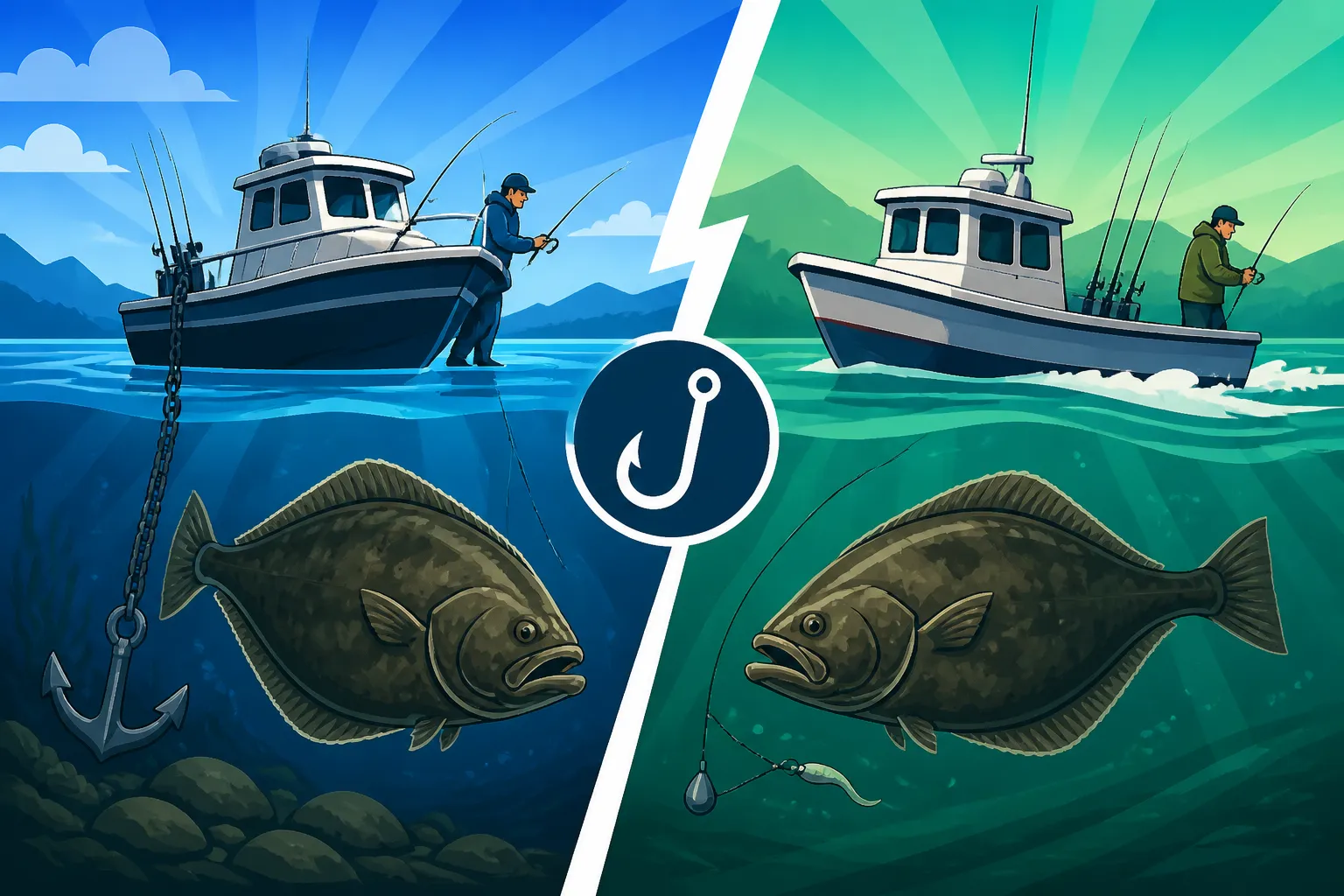
Anchoring for halibut isn't just about dropping a heavy piece of metal to the bottom; it's a calculated strategy, especially effective in certain Washington waters. When you choose to anchor, you're essentially committing to a specific patch of seafloor, believing that the halibut are either holding there or will move through that precise spot.
This method truly excels when you're fishing a known "honey hole" – perhaps a specific pinnacle, a significant drop-off, or a rocky reef structure that consistently holds fish. Think about fishing off the coast of Westport or Neah Bay where charts reveal distinct underwater features. If your fish finder lights up with promising marks over a small, defined area, anchoring allows you to present your bait precisely to those fish. It's like setting up a dinner table for halibut; you're inviting them to come to you.
One of the biggest advantages of anchoring is the stability it provides. Your boat stays put, which means your bait presentation is incredibly consistent. You can run multiple rods, each with a different bait or rig, knowing they'll all be fishing the same productive zone. This stability is also a huge plus on days with strong currents. Instead of your boat being swept away, your lines remain relatively vertical, reducing frustrating tangles and allowing your heavy weights to stay in contact with the bottom. For anglers who prefer a more relaxed fishing style, or for those who might be prone to seasickness, anchoring often provides a much more comfortable experience on the water. It also tends to be more fuel-efficient, as you're not constantly running your motor.
However, anchoring isn't without its challenges. Getting the anchor to set properly in deep water or strong currents can be a real workout. You need enough anchor chain and rope (rode) – typically a 7:1 scope in calm conditions, meaning seven times the depth in rode length – to ensure a good hold. Snagging your anchor on the bottom is another common frustration, leading to lost gear and precious fishing time. If the fish aren't in your exact anchored spot, you're stuck waiting, hoping they eventually arrive, or you have to go through the strenuous process of retrieving the anchor and relocating. This can be particularly time-consuming when you're trying to make the most of Washington's 2026 Halibut Fishing Days. For essential anchoring gear, from robust anchors suitable for varying bottom types to heavy-duty anchor line and chain, checking reliable marine supplies on Amazon can be a good starting point.
Exploring the Drifting Strategy for Washington Halibut
Drifting for halibut is a dynamic approach that involves letting your boat be carried by the wind and current, allowing your bait to cover a much broader swath of the seafloor. This method is often favored when halibut are more scattered, when you're exploring new areas, or when you're trying to locate the edges of larger structures rather than a single, pinpoint spot.
Imagine you're fishing a vast, relatively flat expanse of sandy or muddy bottom in the Pacific Ocean off the Washington coast. Instead of guessing where the fish might be, drifting allows you to systematically sweep across this territory, presenting your bait to any halibut that might be lying in wait. This "search and destroy" tactic can be incredibly effective for finding actively feeding fish. The constant movement of your bait can also be a trigger for strikes, mimicking natural prey movement.
The primary advantage of drifting is its ability to cover ground and find fish that aren't concentrated in one spot. You're essentially casting a wide net, increasing your chances of encountering a hungry halibut. It often requires less effort in terms of boat setup compared to anchoring, as you're not wrestling with heavy anchor gear. This also means you can react quickly if you find a productive zone – mark it on your GPS, and then repeat the drift. Many anglers find drifting to be a more engaging, active style of fishing, requiring constant attention to boat speed, depth, and bait presentation. When mastering Halibut Fishing Techniques for the Washington Coast, drifting is an indispensable skill.
However, drifting comes with its own set of challenges. Maintaining ideal drift speed and direction can be a battle, especially in variable winds or strong, erratic currents. Too fast, and your bait might lift off the bottom or become less appealing; too slow, and you might not cover enough ground. This often requires constant adjustments with your motor or the strategic deployment of a drift sock (also available on Amazon) to slow your pace. Fuel consumption can be higher with drifting, as you're often running your motor to steer or maintain speed. Furthermore, tangles can be more common, particularly if multiple anglers are using different weights or if the drift isn't perfectly coordinated. It also requires more active boat handling, which might be less relaxing for some.
Factors Influencing Your Halibut Fishing Method Choice
Deciding whether to anchor or drift isn't about one method being inherently superior; it's about choosing the right method for the right conditions. Several critical factors play into this decision:
Understanding Tides and Currents
Washington's coastal waters, and even parts of Puget Sound, are heavily influenced by tides and currents. Strong currents can make anchoring challenging but also highly effective if you can set up on a precise piece of structure. Halibut often orient themselves into the current, waiting for food to drift by. If you can position your boat upstream of a halibut holding area, your anchored baits will flow naturally to them.
Conversely, light currents or slack tide periods are often ideal for drifting. Without strong currents, your boat's drift becomes more manageable, allowing your baits to stay near the bottom without needing excessively heavy weights. During these times, halibut might be more spread out, and covering ground with a drift becomes beneficial. Conversely, trying to drift in very strong currents can be a nightmare, making it impossible to keep your bait down or fish effectively.
Assessing Wind Conditions
Wind is another major player. On calm, glassy days, drifting can be a joy, allowing for long, controlled presentations. However, a stiff breeze can turn a planned drift into a chaotic scramble. Strong winds can push your boat much faster than the current, making it difficult to keep your lines vertical and your bait on the bottom. In these situations, anchoring, if possible, provides much-needed stability. If you do choose to drift in windy conditions, a robust drift sock is almost a necessity to slow your boat down and allow for a more controlled presentation.
Bottom Structure and Terrain
The type of seafloor beneath you heavily influences the best approach. If your fish finder shows a distinct pinnacle, a rocky reef, or a sharp drop-off – typical halibut ambush points – anchoring can put your bait right in the strike zone. Halibut often congregate around these structures, offering a concentrated target. However, anchoring near very jagged or heavily structured bottoms carries the risk of snagging your anchor permanently.
For expansive, relatively featureless mud or sand flats, drifting is usually the more productive choice. Halibut can be widely dispersed across these areas, and covering a lot of ground increases your chances of finding them. This is especially true in open ocean environments where distinct structures are fewer and farther between.
Boat Size and Equipment
The capabilities of your vessel and gear also factor in. A smaller boat might find it more challenging and potentially unsafe to anchor in deep, exposed offshore waters with strong currents. The sheer force required to retrieve a heavy anchor in those conditions can be significant. Larger, well-equipped charter boats, like those often seen operating out of Ilwaco or Westport, might have advanced anchor winches and powerful engines, making anchoring or controlled drifting much easier.
Furthermore, having a good quality fish finder and GPS is paramount for both methods. For anchoring, it helps you identify the exact spot to drop. For drifting, a GPS allows you to track your productive drifts and repeat them, or mark specific fish you see. Before any trip, it's always wise to perform What to Check Before a Washington Halibut Trip Offshore to ensure all your equipment is in top shape.
Angler Preference and Experience
Sometimes, it simply comes down to what you enjoy more. Some anglers love the methodical, precise nature of anchoring, setting up their spread and waiting for the bite. Others thrive on the active engagement of drifting, constantly adjusting their boat and trying to feel for that subtle halibut bite. Your level of experience with boat handling and interpreting sonar readings will also play a role in how comfortable and effective you are with each method. If you're new to offshore fishing, starting with a guided trip might be beneficial, as experienced captains will know when to choose anchoring versus drifting based on conditions.
Maximizing Your Catch: Hybrid Approaches and Best Practices
So, which catches more halibut, anchoring or drifting? The honest answer is: it depends entirely on the day, the location, and the conditions. There isn't a single "best" method. However, by understanding each technique, you can often employ hybrid strategies to maximize your success.
The Art of Controlled Drifting (Power Drifting)
This is perhaps the most common and effective hybrid approach. Instead of simply letting the boat go where the wind and current take it, you use your main engine or a kicker motor to control your drift speed and direction. This allows you to slow down a drift that's too fast, steer along a contour line, or even backtroll against the current to maintain a super slow, precise presentation. Controlled drifting combines the coverage of traditional drifting with some of the precision of anchoring, allowing you to thoroughly work a promising area without dropping anchor. Many top guides utilize this method, especially when fishing for Pacific Halibut Identification and Size in Washington.
Short Anchors and Scouting Drifts
Another smart tactic is to start by drifting. Use your electronics and your lines in the water to scout a larger area. If you start getting bites or see a significant concentration of fish on your sounder, you can then quickly drop a "short anchor" – a lighter anchor meant for a temporary hold, or even just using your boat's motor to hold position (spot anchoring) – to thoroughly work that productive zone. Once the bite slows or the fish move, you can easily pull the anchor and resume drifting to find the next hot spot. This approach offers the best of both worlds: scouting power and precise presentation.
The Power of Chumming with Anchoring
If you've chosen to anchor, especially in a consistent current, chumming can be a game-changer. By deploying a chum bag filled with herring, squid, or fish scraps, you create a scent trail that can attract halibut from a wider area to your anchored position. The stable platform of an anchored boat allows the chum slick to develop naturally and consistently, drawing fish directly to your baits. This is a tactic often employed for various bottom fish and can significantly improve your chances when targeting the Halibut Possession Limit in Washington.
The Indispensable Role of Electronics
No matter which method you choose, modern fishing electronics are your best friend. A high-quality fish finder with a strong transducer will show you bottom structure, depth, and most importantly, fish. A good GPS unit is crucial for marking productive spots, tracking your drifts, and navigating safely. Many anglers invest in sophisticated units that combine both, which you can find from brands like Garmin, Lowrance, or Humminbird, often available on Amazon with detailed reviews. Knowing How Deep to Run Downriggers for Washington Halibut (even when not trolling) gives you an idea of the depths halibut prefer, aiding in your bait placement whether anchored or drifting.
Safety First, Always
Halibut fishing often takes you into exposed, offshore waters. Always prioritize safety. Check the marine forecast thoroughly before heading out. Inform someone of your float plan, and ensure all your safety gear – life jackets, flares, VHF radio, first aid kit – is onboard and easily accessible. Being prepared for varying sea conditions, and knowing How to Avoid Seasickness on a Halibut Trip, will ensure your trip is not only productive but also safe and enjoyable. The open ocean off Washington, particularly around areas like the mouth of the Columbia River or the Strait of Juan de Fuca, can change quickly.
Ultimately, the most successful halibut anglers are those who remain flexible. They don't stick rigidly to one method but adapt to the conditions at hand. On one trip, anchoring might be the clear winner; on the next, drifting could produce all the fish. The key is to understand both, practice both, and use your experience and intuition to make the best call when you're out on the vast, beautiful waters of Washington chasing those magnificent halibut.
| Feature | Anchoring for Halibut | Drifting for Halibut |
|---|---|---|
| Ideal Conditions | Known structure, strong currents, stable weather, specific depths | Exploring new areas, scattered fish, light winds/currents, large flats |
| Pros | Precise bait presentation, consistent, fuel-efficient, good for chumming, multiple rods, comfortable in swell | Covers more water, finds scattered fish, less anchor work, dynamic, quick reaction to bites |
| Cons | Difficult to set/retrieve in certain conditions, limited to one spot, risk of snagging anchor, less ground covered | Less precise bait presentation, requires constant boat control, higher fuel consumption, tangles possible, challenging in strong winds |
| Gear Focus | Heavy-duty anchor, ample rode/chain, anchor retrieval system | Drift socks, powerful motor/kicker, GPS for track recording |
| Bait Presentation | Static, precise, allows for long soak times | Dynamic, covers varied depths/areas, mimics natural movement |
| Fuel Usage | Generally lower | Can be higher due to motor use |
Disclaimer
The information provided in this guide is for general informational purposes only and is not a substitute for official Washington Department of Fish and Wildlife (WDFW) regulations. Fishing rules, seasons, and limits can change frequently. Always consult the most current WDFW fishing regulations pamphlet or their official website before heading out on any fishing trip. Adherence to all local, state, and federal laws is the responsibility of the angler.