Walleye Fishing on Washington’s Columbia River
Trying to tackle the vast expanse of the Columbia River in Washington for walleye can feel like searching for a needle in a very, very big haystack. It’s easy to get overwhelmed by the sheer size of the river, the constant current, and the seemingly endless number of spots where a walleye could be. Many anglers spend countless hours dragging baits without a bite, wondering if they're even fishing in the right area or using the right techniques. This comprehensive guide is here to cut through that frustration, offering practical, in-depth advice on finding, targeting, and successfully catching walleye in Washington's iconic Columbia River.
Understanding Walleye in the Columbia River System
Walleye are one of North America's most prized freshwater game fish, and for good reason. They're notoriously challenging, offer a fantastic fight, and are absolutely delicious on the dinner plate. In Washington, the Columbia River system stands out as a premier destination for these toothy predators. But to consistently catch them, you first need to understand them.
What Makes the Columbia Ideal for Walleye?
The Columbia River is a massive, complex ecosystem that flows through varying landscapes, creating a diverse range of habitats perfect for walleye. Unlike many smaller, clearer lakes where walleye might be found, the Columbia's sheer size, depth, and varied bottom structure provide ample opportunities for these fish to thrive and grow to impressive sizes.
Firstly, the river's extensive chain of reservoirs, formed by its numerous dams, creates vast, lake-like environments with deep channels, submerged islands, and expansive flats. These areas offer the perfect blend of still water and current, allowing walleye to ambush prey. The turbines and outflows of these dams also churn up nutrients and forage, drawing in baitfish and, consequently, hungry walleye. Secondly, the Columbia boasts a rich forage base. With abundant populations of various baitfish species, walleye have a consistent food supply, enabling them to reach substantial sizes. The river's slightly turbid waters, especially in certain sections, also provide the low-light conditions walleye prefer, giving them a predatory advantage over their prey.
Finally, the varying bottom compositions – from rocky reefs and gravel bars to silty flats and submerged timber – offer diverse holding patterns for walleye. They can tuck into current breaks behind structure, cruise along deep ledges, or suspend over open water in pursuit of schools of bait. It’s this intricate tapestry of water conditions, food availability, and structural diversity that makes the Columbia River a true walleye haven.
Identifying Columbia River Walleye
While many anglers can easily spot a walleye, sometimes in the heat of the moment or in low light, it's good to be absolutely sure what you've landed. Correct identification is crucial, not just for bragging rights, but for adhering to regulations, especially when other similar-looking species might be present.
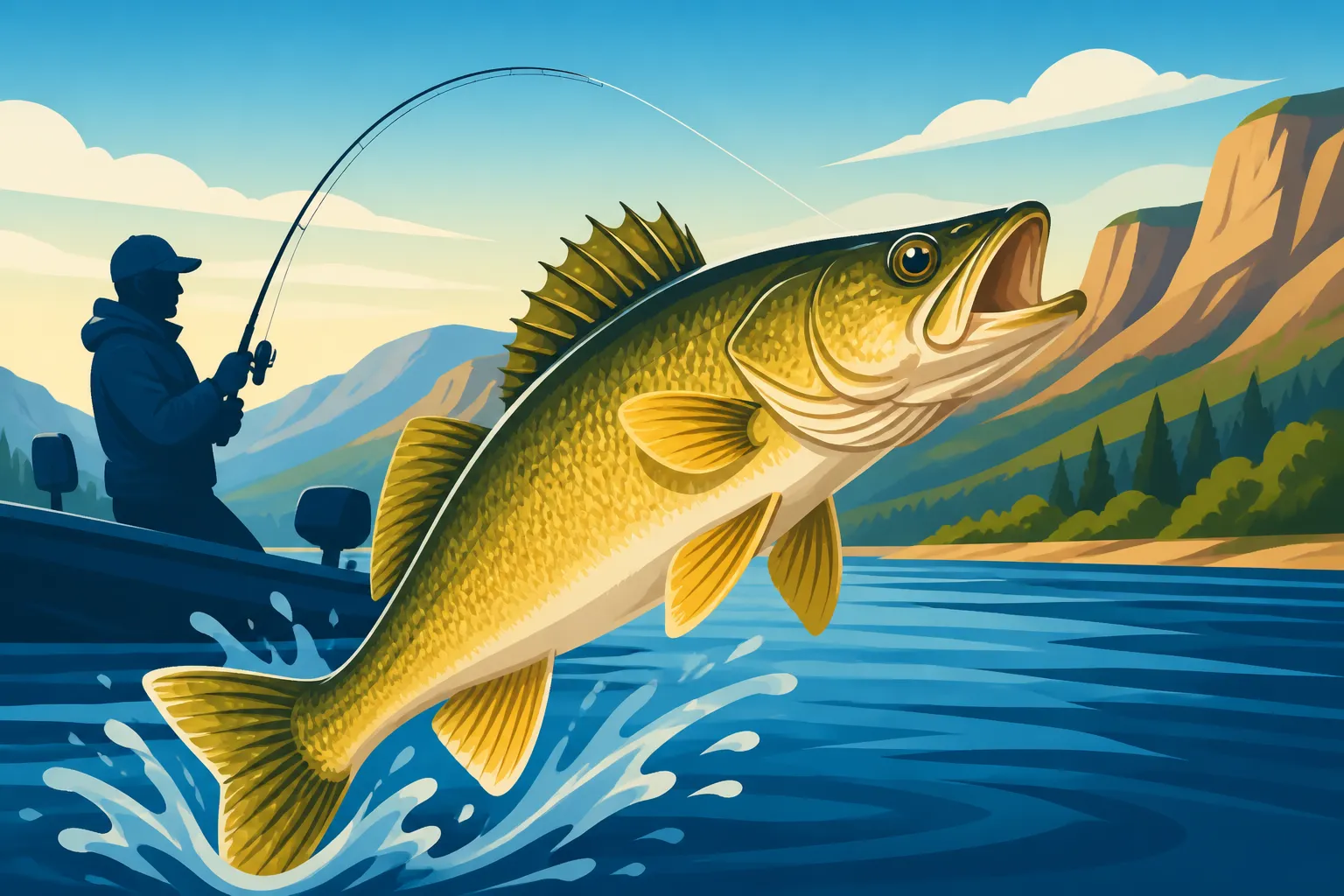
A walleye is typically characterized by its olive-green to golden-brown back, fading to a lighter, often yellowish, belly. They have distinct dark vertical bars or blotches along their sides, which can vary in prominence. The most defining feature is their large, glassy, opaque eyes – hence the name "walleye." These eyes are adapted for low-light conditions, giving them superior vision during dawn, dusk, and in deeper, murkier waters. Their mouth is relatively large, equipped with numerous sharp, canine-like teeth. On their dorsal fins, they have two distinct parts: a spiny, anterior dorsal fin and a soft-rayed posterior dorsal fin. A key identifier is the dark spot at the base of the last few spines on the spiny dorsal fin, though this can sometimes be faint.
It’s important to differentiate walleye from similar species found in Washington. For instance, northern pike can be confused, but pike have a much more elongated, duckbill-shaped snout and different fin structures. Even more commonly, some might mistake a large yellow perch for a small walleye, but perch have a more pronounced humped back and distinct vertical stripes rather than blotches. Knowing Walleye Identification and Where They Live in Washington can save you from any misidentification on the water. Always take a moment to confirm your catch, especially if you're new to walleye fishing, to ensure you're within the legal limits and protecting the species.
Life Cycle and Habits
Understanding the life cycle and habits of walleye is paramount to consistent success on the Columbia River. Their behavior changes dramatically with the seasons, water temperature, and time of day, and knowing these patterns allows you to anticipate their movements and feeding binges.
Walleye typically spawn in early spring, once water temperatures reach around 40-50 degrees Fahrenheit. They prefer rocky or gravelly shoals, often in areas with some current. During this period, they are often congregated and can be aggressive, though targeting them during their spawning ritual can be controversial for conservation reasons. After spawning, they disperse to recuperate, slowly moving into deeper feeding areas. As summer progresses and water temperatures rise, walleye often retreat to cooler, deeper water, becoming more active during low-light hours or on cloudy days. They’ll frequently suspend over structure or open water, feeding on schools of baitfish. Knowing Best Time of Year for Washington's Columbia Walleye is key to planning your trips.
Come fall, as water temperatures begin to drop, walleye enter a major feeding frenzy, bulking up for winter. This is often a fantastic time for trophy fish, as they become more aggressive and less particular about what they eat. They'll move closer to structure and shallower feeding flats during low-light conditions. In winter, activity slows, and they'll often hold in deep holes or channels, conserving energy. While generally slower, winter can still offer productive fishing for those willing to brave the cold, often requiring slower presentations and precise bait placement. Their predatory nature means they are constantly searching for forage, often orienting themselves in current breaks to ambush unsuspecting baitfish.
Where to Find Walleye on the Washington Columbia River
The Columbia River is immense, and simply "fishing the Columbia" isn't a strategy. You need to narrow down your search to specific areas and types of structure where walleye are most likely to hold. It's a vast system, stretching from its headwaters well into British Columbia down to the Pacific Ocean, but the key walleye fisheries in Washington are primarily within the impounded sections.
Key River Sections and Reservoirs
When we talk about walleye fishing on the Washington side of the Columbia, we're mostly talking about the reservoir systems created by the dams. These areas offer predictable structure and current breaks that walleye love.
One of the most famous stretches for walleye is Lake Roosevelt, the massive reservoir behind Grand Coulee Dam. This lake is known for producing not just numbers of walleye, but also some true trophy fish. Its deep, clear waters have abundant kokanee and rainbow trout, which walleye actively prey upon. Further downstream, the various pools like Lake Wallula (behind McNary Dam), Lake Umatilla (behind John Day Dam), and Lake Celilo (behind The Dalles Dam) are prime walleye territory. These pools feature extensive underwater structure, including old river channels, submerged towns, rock piles, and current seams that create perfect ambush points. Areas directly above and below these dams can also be hotspots, as the changing current and turbulence often concentrate baitfish. The tailraces directly below a dam can be particularly productive as fish are often disoriented coming through the turbines or drawn in by the forage.
It's not just the main river either. Some of the larger tributaries that feed into these reservoirs can also hold walleye, especially near their confluence with the Columbia. These areas provide different temperatures and forage, sometimes offering a distinct fishery. Understanding the flow rates and water levels, which can fluctuate with dam operations, is crucial. High flows can push walleye into more protected eddies and slack water, while stable or lower flows might see them spread out more on flats and ledges. Checking real-time flow data from official sources before you head out is always a smart move.
Understanding Walleye Structure
Walleye are masters of structure. They don't just swim around aimlessly; they relate to specific features on the riverbed or in the water column that offer them a strategic advantage for feeding or protection. Finding these specific structural elements is the name of the game.
Look for classic walleye structure like submerged rock piles, humps, and ledges. These features provide current breaks, allowing walleye to expend less energy while waiting for prey to drift by. A subtle drop-off from a shallow flat into a deeper channel can be a highway for walleye moving between feeding and resting areas. Old river channels, often found deep beneath the current reservoir levels, are prime holding spots, especially during colder months or when fish are seeking depth. Current seams, where faster water meets slower water, are also fantastic ambush points. Imagine a walleye sitting just on the edge of the fast water, darting out to grab a passing baitfish. These are the subtle cues you need to be looking for.
Beyond natural features, man-made structures are also crucial. Bridge pilings, old submerged roadbeds, and even the riprap along shorelines can attract baitfish and, in turn, walleye. Don't overlook large areas of submerged timber or brush, which offer cover and ambush points. The key is to think like a walleye: where would you hide to conserve energy, yet still have easy access to a meal? Often, this means a combination of depth, cover, and a current break. Using a good fish finder with side imaging can be incredibly helpful in pinpointing these precise structural elements that might otherwise go unnoticed.
Seasonal Hotspots
The "best" spot for walleye on the Columbia changes with the seasons, largely dictated by water temperature, spawning cycles, and the movement of baitfish. Being adaptable and knowing where to start your search each season is vital.
In spring, as water temperatures climb towards the 40-50 degree range, walleye begin their spawning migrations. This often means they'll be found on rocky or gravelly shoals in shallower sections of the river or in the upper reaches of the reservoirs, often near current. After spawning, they'll gradually move deeper, following baitfish that are also becoming more active. Summer sees walleye moving to deeper, cooler waters, often suspending over main river channels or relating to deep structure like submerged humps and ledges. Low-light conditions, like early mornings, late evenings, and cloudy days, are often most productive as they move shallower to feed. This is when trolling deep-diving crankbaits or bottom bouncers becomes particularly effective, covering vast areas of open water to locate scattered fish.
As fall approaches and water temperatures cool down, walleye enter a pre-winter feeding binge. They'll often move back into shallower sections during feeding windows, sometimes even surprisingly shallow flats, especially during overcast days. They'll also aggressively feed on structure like rock piles and points. This can be one of the most productive times for catching larger fish. In winter, walleye typically retreat to their deepest wintering grounds, congregating in deep holes, channels, and along steep breaks. Success during this period often requires slower, more vertical presentations like jigging. While less active, patient anglers can still find big fish, especially on mild winter days.
Essential Gear for Columbia River Walleye
Getting your hands on the right gear is non-negotiable for serious walleye fishing on the Columbia. This isn't a small pond where any old rod will do. The strong currents, the potential for big fish, and the need for sensitivity demand specific tools to maximize your chances. You don't have to break the bank, but investing wisely in key components will pay dividends.
Rods, Reels, and Line Choices
The ideal rod, reel, and line setup for Columbia River walleye strikes a balance between power, sensitivity, and durability. The conditions here – current, deep water, and often big fish – necessitate specific choices.
For rods, most walleye anglers lean towards medium-heavy to medium-fast action rods, typically in the 6'6" to 7'6" range. This length provides good casting distance while still offering enough control for precise bait presentations. The medium-heavy power gives you the backbone to fight strong fish in current and set the hook effectively, while a fast action tip ensures you feel those subtle walleye bites. A sensitive graphite blank is crucial; those light taps can be all you get. For jigging, some prefer slightly shorter rods for better control, while trolling might call for longer, more moderate action rods that load up well. A reputable brand like AmazonBasics offers some decent entry-level options that can work in a pinch for certain applications, but if you're serious, invest in specialized walleye rods.
When it comes to reels, a spinning reel in the 2500-3000 series is a versatile choice for jigging and casting, offering smooth drag and good line capacity. For trolling or heavy bottom bouncing, a baitcasting reel with a line counter is incredibly valuable, allowing you to replicate successful depths and distances with precision. Line choice is equally important. Many experienced walleye anglers prefer braided line (10-20 lb test) for its incredible sensitivity and zero stretch, which helps detect those light bites in deep water or strong current. However, braid is highly visible, so it's almost always paired with a fluorocarbon leader (8-15 lb test) for its invisibility and abrasion resistance. Some anglers still prefer monofilament for its stretch, especially when trolling crankbaits, as it can be more forgiving.
Baits and Lures That Work
Walleye are opportunistic feeders, but they can also be incredibly finicky. Having a diverse array of baits and lures in your tackle box is crucial for adapting to changing conditions and fish moods on the Columbia.
Jigs are perhaps the most versatile walleye lure. From hair jigs to plastic-tipped jig heads, they can be cast, pitched, or vertically jigged. Pairing them with soft plastics like paddletails, grubs, or minnow imitators can be deadly. Colors vary by water clarity and light, but chartreuse, white, perch patterns, and firetiger are consistent producers. Crankbaits, especially deep-diving models, are essential for trolling. Brands like Rapala, Berkley, and Bandit offer a wide range of colors and dive depths. Matching the hatch (imitating local baitfish) is often key, but flashy colors can also trigger aggressive strikes. For trolling, having a variety of sizes and dive curves is important for reaching different depths.
Bottom bouncers paired with spinner rigs or snells are another Columbia River staple. These allow you to present a bait directly on the bottom while drifting or slowly trolling, keeping your offering in the walleye's strike zone. Tipping these rigs with live bait like nightcrawlers, leeches, or minnows (where legal and available) significantly increases their effectiveness. For those looking to explore a wide range of options without leaving the house, you can find a huge selection of How to Fish for Walleye on the Columbia specific lures and tackle online through retailers like Amazon, often with reviews from other anglers to help guide your choice. Always ensure your hooks are sharp; walleye have tough mouths.
Tackle Box Essentials
Beyond your rods, reels, and primary lures, a well-stocked tackle box with essential odds and ends can make or break a trip, especially on a big river like the Columbia where running back to the boat launch isn't always an option.
First and foremost, a good selection of hooks is vital. You'll need various sizes of jig heads, appropriate for the depth and current you're fishing, as well as octopus hooks or worm hooks for live bait rigs. Weights are another must-have; bell sinkers, pencil weights, and bullet weights in a range of sizes (from 1/4 oz to several ounces) will ensure you can reach the bottom in any current. Don't skimp on swivels and snaps to prevent line twist and allow for quick lure changes. Quality ball-bearing swivels are worth the investment when trolling.
Other critical items include a good pair of pliers or forceps for hook removal (those walleye teeth are no joke!), line cutters or sharp scissors, and a hook sharpener. A few extra spools of leader material (fluorocarbon in various tests) are always a good idea, as are some small beads and clevises if you like to tie your own spinner rigs. Don't forget a measuring device and a fish scale for recording your catches – especially important when dealing with slot limits or trying to best the Washington State Record Walleye. And of course, sunscreen, bug spray, a first-aid kit, and plenty of water should always be in your boat or backpack.
Effective Walleye Fishing Techniques on the Columbia
Catching walleye on the Columbia River isn't just about having the right gear; it's about employing the right techniques for the specific conditions you're facing. The river's unique characteristics, particularly its size and current, demand specialized approaches.
Trolling Strategies
Trolling is arguably the most popular and effective method for covering water and finding walleye on the vast Columbia River reservoirs. It allows you to systematically search large areas, presenting your bait at a consistent depth and speed.
When trolling for walleye on the Columbia, deep-diving crankbaits are king. You'll want a selection that dives to various depths, typically anywhere from 10 to 30+ feet, depending on the area you're fishing and the depth the fish are holding. Pay attention to the lure's bill – the larger the bill, generally the deeper it will dive. Matching the color to local forage or current conditions (e.g., brighter colors in turbid water, natural patterns in clear water) is a good starting point. Trolling speed is critical; typically, 1.5 to 2.5 miles per hour is a good range, but you'll need to experiment. Sometimes a subtle change in speed can trigger bites. Using a line counter reel is invaluable for knowing exactly how much line you have out and replicating successful presentations.
In certain situations, especially when fish are spread out over flats or suspended, planer boards can be incredibly effective. These allow you to run multiple lines out to the sides of the boat, covering a much wider swath of water and presenting baits to fish that might be spooked by the boat. This is particularly useful in clearer water conditions. Always be aware of other boaters and How Many Rods You Can Fish at Once in Washington when deploying multiple lines. Keep an eye on your fish finder to identify preferred depths and structure, then adjust your lure selection and line out accordingly. Trolling is a game of patience and precision, but it's often the key to unlocking consistent walleye success on this big river.
Jigging and Bottom Bouncing
While trolling covers water, jigging and bottom bouncing are fantastic for precisely targeting walleye once you've located them, especially when they're congregated on specific structure or in deeper holes.
Jigging can be done vertically from a boat directly over suspected walleye holding areas, or by casting and retrieving. When vertical jigging, the goal is to keep your jig near the bottom with a rhythmic lift-and-drop motion, mimicking a wounded baitfish. The subtle "thump-thump" of the jig hitting the bottom followed by a pause is often when a walleye will strike. Experiment with jig weights to ensure you're maintaining bottom contact without constantly snagging, which can be a challenge in the Columbia's current. Tipping jigs with a minnow or a piece of nightcrawler can add scent and appeal. This method is particularly effective in current breaks, deep channels, or around submerged structure like rock piles.
Bottom bouncing is a fantastic technique for presenting live bait or spinner rigs close to the riverbed while drifting or slowly trolling. The bottom bouncer itself is designed to drag along the bottom, keeping your leader and bait elevated and free from snags. You rig a snell or spinner rig (often tipped with a nightcrawler, minnow, or leech) behind the bouncer. The key is to use enough weight on the bouncer so that your line is at a 45-degree angle or less, allowing you to maintain constant bottom contact. This method is incredibly effective for exploring contours, ledges, and flats where walleye are actively feeding. You'll often feel a light "tick" or added weight when a walleye picks up the bait. Being able to read your rod tip for these subtle indications is crucial.
Bank Fishing for Walleye
Not every angler has a boat, but that doesn't mean walleye fishing on the Columbia is out of reach. Bank fishing for walleye can be incredibly rewarding, though it often requires a different approach and careful selection of spots. Finding Best Bank Fishing Spots on the Columbia River is often about local knowledge.
The biggest challenge with bank fishing is access and covering water. You're limited to what you can cast to, so finding locations where walleye naturally congregate close to shore is essential. Look for areas with deeper water access, current breaks, or submerged structure within casting distance. Dam tailraces, bridge pilings, and rocky points that jut out into the main current can be prime locations. Often, the riprap banks along many sections of the Columbia provide excellent habitat for baitfish, which in turn attract walleye. These areas offer cover and often create eddies where fish can rest out of the main flow.
Effective bank fishing techniques typically involve casting jigs (tipped with soft plastics or live bait), suspending jerkbaits, or even heavy spoons or spinners. Casting upstream and allowing your lure to drift naturally with the current, while maintaining tension, can be very effective. Slowly retrieving jigs or bottom bouncing rigs (if the current isn't too strong) can also produce. The hours around dawn and dusk are often the most productive for bank anglers, as walleye move closer to shore to feed under low light conditions. Be prepared to move around and explore different spots until you find a concentration of fish. Patience and persistence are your best friends when bank fishing the Columbia for walleye.
Navigating Columbia River Regulations for Walleye
Fishing the Columbia River, especially for popular species like walleye, comes with a set of rules and regulations designed to protect the fishery and ensure sustainable angling for everyone. It can feel like a maze sometimes, but understanding these rules is not just about avoiding fines; it's about being a responsible angler.
License Requirements and Endorsements
Before you even think about wetting a line in the Columbia, you need to make sure you have the proper Washington state fishing license. This isn't just a suggestion; it's the law, and wardens do check licenses on Washington rivers.
Generally, any adult angler (usually 15 and older) needs a valid Washington fishing license. If you're a resident of Washington, you'll purchase a resident license. If you're visiting from out of state, you'll need a Washington Fishing License Guide for Nonresidents. There are various types of licenses: freshwater, saltwater, or a combination. Since the Columbia is freshwater, a freshwater or combination license will cover you. You'll also need to consider the duration – annual, temporary (like a 1-day or 3-day), or a multi-year option.
Beyond the basic license, the Columbia River system has specific endorsements that may apply depending on what you're targeting. While the Columbia River Salmon and Steelhead Endorsement is primarily for those species, always double-check the current regulations to ensure no new endorsements or changes have been added that might impact walleye fishing. The best place to verify all current requirements is by consulting the official Reading the Washington Sport Fishing Regulations Pamphlet or the Washington Department of Fish and Wildlife (WDFW) website directly. This is crucial because rules can change. You can typically carry your license in various ways, from a printed paper copy to showing it on your phone via the MyWDFW app.
Daily and Possession Limits
Understanding daily and possession limits for walleye on the Columbia River is absolutely critical. These limits are in place to manage fish populations and ensure that everyone has a fair chance at catching fish, while also preventing overharvest. Ignoring them can lead to significant penalties.
Walleye regulations can vary by specific river section or reservoir, so it’s not always a single, universal rule for the entire Columbia. For example, some pools might have a different daily limit than others, or even specific size restrictions, like a slot limit where fish within a certain size range must be released. A typical daily limit might allow you to keep a certain number of fish, with a smaller number of those being over a certain size. A slot limit might mean you can only keep fish under a certain size and over another size, with fish in the "slot" needing to be released. This is often done to protect breeding-sized fish.
The "possession limit" refers to the maximum number of fish you can have in your possession at any given time, whether on your person, in your cooler, or in your vehicle, including any fish you've already kept from previous trips. This is usually higher than the daily limit but is still an important rule to adhere to, especially if you're on a multi-day trip. Always check the current Washington Sport Fishing Seasons and Emergency Closures pamphlet for the most up-to-date daily and possession limits for the specific section of the Columbia you plan to fish. Misinterpreting these rules is a common mistake, so always read the fine print!
Responsible Walleye Angling
Beyond just legal compliance, responsible angling practices are vital for maintaining a healthy walleye fishery on the Columbia for generations to come. This includes ethical catch and release, proper fish handling, and a general conservation mindset.
If you intend to practice catch-and-release, especially with larger, older fish that are valuable spawners, handle them with extreme care. Minimize their time out of the water, use wet hands when handling, and support their body weight. If a fish is deeply hooked, it's often better to cut the line as close to the hook as possible rather than trying to remove the hook, which can cause more damage. For fish you intend to keep, dispatch them quickly and humanely, and get them on ice as soon as possible to preserve meat quality. Walleye are fantastic eating, and respecting your catch ensures the best possible table fare.
Be mindful of your impact on the environment. Pack out all your trash, avoid disturbing spawning areas, and be aware of potential invasive species. Clean your boat and gear thoroughly when moving between different bodies of water to prevent the spread of undesirable plants or organisms. Consider participating in or supporting local conservation efforts. The Columbia River is a precious resource, and every angler has a role to play in protecting it. Remember, Do You Need a License for Catch-and-Release Only? is a common question, and the answer is almost always yes – if you're actively fishing, you need a license, regardless of whether you plan to keep fish.
Best Times to Target Columbia River Walleye
Timing is everything when it comes to walleye fishing, and the Columbia River is no exception. While you can find walleye year-round, certain seasons, times of day, and water conditions offer significantly better odds for success. Understanding these rhythms can dramatically improve your catch rates.
Seasonal Considerations
Each season on the Columbia brings unique opportunities and challenges for walleye anglers, largely dictated by the fish's metabolic rate and reproductive cycle.
Spring, particularly late March through May, is a prime time for walleye as they move into pre-spawn and post-spawn patterns. Before the spawn, they're aggressively feeding to build energy. After the spawn, they're recuperating and will once again feed heavily. This is often when you find them congregating in shallower, current-influenced areas like rocky points and gravel bars. The exact timing depends on water temperature. Summer (June through August) can be tougher during the heat of the day, but productive fishing can be found during low-light hours or on overcast days. Walleye will often be in deeper water, suspending over open channels or relating to deep structure. Trolling becomes very effective for covering vast areas to find these scattered fish.
Fall (September through November) is another fantastic season, often considered by many to be the best for trophy walleye. As water temperatures cool, walleye go on a major feeding binge, bulking up for winter. They can be found in a variety of depths, from deep structure to surprisingly shallow flats, especially during overcast periods. Their aggressiveness makes them willing to hit a wider range of lures. Winter (December through February) is the slowest season, but it can still yield big fish for dedicated anglers. Walleye will be holding in deep holes and channels, and a slow, methodical approach with vertical jigging is often the most effective technique. While bites are fewer, the fish caught can often be of impressive size.
Time of Day and Weather Influence
Walleye are famously low-light predators, and understanding how the time of day and weather conditions affect their activity is crucial for maximizing your time on the water.
Generally, the best times to target walleye are during dawn and dusk. These low-light periods give walleye a significant advantage over their prey, making them more active and willing to move into shallower feeding areas. Early morning bites can be incredibly intense, often lasting a few hours after sunrise, while the evening bite can pick up dramatically as the sun dips below the horizon. On the other hand, the midday sun can push walleye into deeper, darker holding patterns, making them less active. However, this isn't a hard-and-fast rule; on certain days, especially with cloudy weather, walleye can bite throughout the day.
Speaking of weather, overcast or cloudy days are often walleye anglers' favorites. The reduced light penetration keeps walleye active for longer periods and can encourage them to move into shallower water even during midday. Windy days, especially with a chop on the water, can also be beneficial. The chop breaks up light penetration and disorients baitfish, creating excellent ambush opportunities for walleye. A light to moderate wind can also help position your boat for drifts while bottom bouncing or jigging. Heavy winds, however, can make boat control difficult and create unsafe conditions. Always check the forecast and consider how Does Weather Affect Washington Salmon Fishing? and walleye activity.
Water Conditions
Beyond season and time of day, paying close attention to water conditions like temperature, clarity, and flow can provide invaluable clues to where walleye are and how they're behaving.
Water temperature is perhaps the single most important factor influencing walleye activity. As discussed, their spawning behavior is directly tied to specific temperature ranges. In general, walleye are most active in temperatures between 55 and 70 degrees Fahrenheit. Understanding the current water temperature of the Columbia (which can vary significantly depending on the section and time of year) will help you determine their metabolic rate and likely feeding patterns. Cooler temperatures mean slower presentations, while warmer temps can mean more aggressive retrieves.
Water clarity also plays a huge role. Walleye prefer somewhat turbid or stained water, which enhances their low-light vision and helps them ambush prey. In very clear water, they tend to be deeper or more active during very low light conditions. Conversely, overly muddy or "blown out" conditions after heavy rains can push them into slack water or make them less active as visibility becomes too poor even for them. The river flow and current from the dam operations are another critical factor. High flows can push walleye into protected eddies and slack water, concentrating them, while stable or lower flows might see them spread out more on flats and ledges. Learning to read the current and identify subtle current breaks is a skill that takes time to develop but is essential for consistent success on the Columbia.
Advanced Tips for Consistent Walleye Success
Once you've mastered the basics, it's time to refine your approach and delve into some advanced strategies that can elevate your walleye game on the Columbia River. These tips often separate the occasional angler from the consistently successful one.
Electronics and Their Role
In the vast and complex Columbia River, modern marine electronics are not just a luxury; they are a vital tool for locating structure, finding fish, and understanding the underwater environment.
A good fish finder is your best friend. Look for units with high-definition sonar, down imaging, and especially side imaging. Side imaging can scan large areas to the sides of your boat, revealing submerged structure, rock piles, ledges, and even schools of baitfish and walleye that you might otherwise troll right over. It’s like having an underwater camera spanning dozens of feet on either side of your boat. Learning to interpret these sonar returns takes practice but is incredibly rewarding. Mark any promising structure or fish schools as waypoints on your GPS to return to them later.
GPS is also invaluable for navigating the large reservoirs, marking successful trolling passes, and staying on specific contours or channels. Many units come pre-loaded with detailed mapping, showing depth contours, old river channels, and other critical underwater features. Some advanced units even allow for "mapping from scratch" by recording sonar data, building highly detailed custom maps of your favorite fishing spots. Using your electronics effectively means not just staring at the screen, but actively interpreting the information to inform your fishing decisions, whether that's changing your lure, depth, or even your location. For a wide range of marine electronics, from basic fish finders to advanced mapping units, you can browse online retailers like Amazon, comparing features and prices to find what fits your needs and budget.
Reading the River
Beyond electronics, developing the skill of "reading the river" with your own eyes and instincts is a hallmark of an experienced walleye angler. The Columbia always tells a story if you know how to listen.
Pay close attention to subtle changes in the water's surface. Current seams are often visible as distinct lines where faster water meets slower water, creating a prime ambush point for walleye. Look for eddies and slack water areas behind points, islands, or even large submerged obstacles – these are natural resting and feeding areas, especially during high flows. Observe the color and clarity of the water; a slight stain is good, but overly muddy water can push fish out. If you see signs of baitfish dimpling the surface or birds diving, that's a clear indication of a food source, and walleye are likely not far behind.
Consider the depth changes and how the current interacts with them. A sharp drop-off or a subtle change in bottom composition often holds fish. Learn how to interpret the presence of debris in the water – it can indicate strong current and potential snagging issues, but also where the current is weakest. Understanding Fishing From Boats vs Banks: Different Rules often comes down to reading the river from a different perspective. This intuitive understanding of the river's dynamics takes time on the water, but it's a skill that will serve you well across all species and locations.
Adaptability and Experimentation
The Columbia River is dynamic, and what worked yesterday might not work today. Consistent walleye success demands adaptability and a willingness to constantly experiment with your approach.
Don't be afraid to change your tactics if the fish aren't biting. If trolling isn't producing, switch to jigging or bottom bouncing in a more concentrated area. If your crankbait color isn't working, try a different one. Experiment with different retrieves, depths, and speeds. Sometimes a slight increase or decrease in speed can be the trigger. Walleye can be incredibly finicky, and solving the puzzle of what they want that day is a crucial part of the game.
Keep a mental log, or even a physical fishing journal, of what worked (and what didn't) under specific conditions: time of year, water temperature, clarity, lure type, color, depth, and presentation. Over time, you'll start to develop patterns and an intuitive sense of what to try next. Don't be afraid to explore new areas, even if they don't look "fishy" at first glance. The Columbia is full of surprises, and those who are willing to push beyond their comfort zone often discover hidden gems. And always make sure to check How to Check for Emergency Rule Changes in Washington before each trip, as regulations can change rapidly and dramatically impacting your plans.
Columbia River Walleye Fishing Challenges and Solutions
Fishing for walleye on a river as massive and diverse as the Columbia presents unique challenges that can frustrate even seasoned anglers. But with understanding and strategic solutions, these obstacles can be overcome, leading to more productive and enjoyable trips.
Dealing with Current and Debris
The constant flow and often strong currents of the Columbia River are perhaps the biggest challenges for walleye anglers, making boat control difficult and increasing the likelihood of snags and lost tackle.
The solution to dealing with current often lies in using heavier weights and having good boat control. When jigging or bottom bouncing, you need enough weight to maintain consistent bottom contact without your line being swept away too quickly. This might mean carrying a range of lead weights, from 1/2 ounce to several ounces, and being willing to switch as conditions change. For boat control, a good trolling motor with GPS-controlled spot-lock capabilities is invaluable. It allows you to hold your position over structure or drift at a controlled speed, even in strong currents, keeping your lure in the strike zone longer. If you don't have a spot-lock, constantly adjusting with your main motor or kicker is necessary.
Debris in the water, such as logs, branches, or weeds, can be a major nuisance, leading to constant snagging and fouled lines. The best defense is to be vigilant. Watch your fish finder for submerged obstacles and adjust your presentation to stay above them. If you're trolling, consider using crankbaits with dive curves that keep them above known snags. When jigging, learn to feel the bottom and lift your jig quickly over potential snags. Sometimes, moving to areas with less current can also reduce the amount of drifting debris. Carrying a good quality snag retriever can also save you a lot of expensive lures.
Finding Fish in a Big River
The sheer size of the Columbia can be daunting. With so much water, pinpointing where the walleye are holding can feel like an insurmountable task, leading to hours of unproductive fishing.
The key to finding fish in a big river is to break it down into manageable sections and to develop a "search pattern." Don't try to fish the entire river. Focus on known productive areas or specific types of structure that are historically good for walleye (as discussed in "Where to Find Walleye"). Use your electronics aggressively to identify humps, ledges, current breaks, and schools of baitfish. Trolling is an excellent search tool, allowing you to cover vast areas quickly while presenting baits at various depths. Once you get a bite or mark fish on your sonar, slow down and thoroughly work that area with jigging or bottom bouncing.
Developing a "milk run" of proven spots and understanding how fish move between them based on conditions will come with experience. Don't be afraid to experiment with depth and presentation. Walleye can suspend at various depths, not always on the bottom. If you're not getting bites on the bottom, try raising your presentation a few feet, or even suspending a crankbait higher in the water column if you see baitfish on your sonar. Being methodical and patient is paramount; success isn't about covering the most water, but about covering the right water effectively. Consider also How Big Columbia River Walleye Get will often mean they're in deeper, less accessible water.
Managing Boat Traffic and Crowds
On popular walleye fishing days and in well-known hotspots, the Columbia River can get crowded, leading to frustration, lost fishing time, and even safety concerns.
One of the simplest solutions is to fish during off-peak times. Weekdays, early mornings, or late evenings will almost always have less boat traffic than peak weekend hours. Consider fishing less popular, but still productive, stretches of the river. While the famous spots are famous for a reason, there are often lesser-known areas that hold just as many fish, but with less competition. This is where your ability to "read the river" and use your electronics to find new structure comes in handy.
When fishing in crowded areas, practice good boating etiquette. Give other anglers plenty of space, especially when trolling or drifting. Don't cut off other boats or troll directly through someone's casting area. Communicate with other anglers if possible; a friendly wave or quick chat can often defuse potential tension. Being patient and respectful goes a long way. If a spot is simply too crowded, be willing to move on and find another opportunity. There's plenty of water in the Columbia, and a peaceful fishing experience is often more rewarding than fighting for a crowded spot.
Comparing Popular Walleye Lures for the Columbia River
| Lure Type | Ideal Use Cases | Depth Range (Approx.) | Action/Presentation | Pros | Cons |
|---|---|---|---|---|---|
| Deep-Diving Crankbaits | Trolling open water, covering large areas, targeting suspended fish, specific depth control | 10-30+ feet | Trolled at consistent speed, dives to specific depths based on line out and lure design. | Excellent for covering water, triggers reaction strikes, precise depth control with line counter. | Can be expensive, susceptible to snags, color/model selection can be overwhelming. |
| Jigs (with soft plastics) | Vertical jigging over structure, casting to current breaks, targeting specific fish. | 5-50+ feet | Lift-and-drop motion, short hops, steady retrieve. Paired with grubs, paddletails, or minnow imitators. | Highly versatile, mimics baitfish, good for precise presentations, relatively inexpensive. | Requires good feel for bites, prone to snagging on bottom, less effective for covering large areas quickly. |
| Bottom Bouncers (with snells/spinners) | Drifting or slow trolling, maintaining bottom contact, live bait presentation. | 10-40+ feet | Dragged along the bottom, keeping bait or spinner elevated. Tipped with live bait (nightcrawlers, minnows, leeches). | Excellent for bottom-hugging walleye, presents live bait naturally, good feel for bottom. | Can be cumbersome with current, requires attention to bottom contact, less aggressive presentation. |
| Blade Baits | Vertical jigging, casting and ripping. | 10-50+ feet | Short, sharp rips followed by pauses, creating vibration and flash. | Strong vibrations attract fish from a distance, good for active fish, effective in cold water. | Prone to snagging on bottom, can be exhausting to fish aggressively, less effective on inactive fish. |
| Jerkbaits (suspending) | Casting to structure, twitching retrieve, targeting active fish. | 5-15 feet | Twitch-twitch-pause retrieve, suspends at a specific depth during pauses, mimicking a stunned baitfish. | Excellent for targeting fish around cover, triggers aggressive strikes, good for colder water. | Limited depth range, best in clearer water, requires specific retrieve technique. |
Disclaimer
This article is for general informational purposes only and does not constitute professional advice. Laws, prices and regulations vary by location and change over time. Consult a qualified professional for guidance on your specific situation.