Difference Between Steelhead and Salmon
One of the most common questions I get from anglers, especially those new to fishing Washington's abundant waters, is how to tell the difference between a steelhead and a salmon. It's a fair question! Both are iconic, powerful anadromous fish that spend time in the ocean and return to freshwater, leading to a lot of understandable mix-ups on the riverbank. This guide is here to untangle that mystery, giving you clear ways to identify these incredible fish so you can fish confidently and within regulations.
The Unique World of Steelhead
When you're out on a Washington river, that flash of silver and distinct spotting might have you wondering, "Is that a steelhead or a salmon?" The truth is, steelhead are essentially ocean-going rainbow trout. They share many characteristics with their freshwater cousins, but their time in the vast expanse of the Pacific Ocean transforms them into incredibly powerful and streamlined fish. Their anadromous journey makes them a truly remarkable catch for any angler. To learn more about these incredible fish, check out Steelhead: Washington's Ocean-Run Rainbow Trout.
Steelhead: Ocean-Going Rainbows
A key visual clue for steelhead is often their more uniform spotting pattern, which typically extends onto their caudal (tail) fin, though this can vary. These spots are usually smaller and more numerous than those you might find on some salmon species, particularly Chinook. Their overall body shape tends to be more torpedo-like, especially when fresh from the ocean, designed for incredible speed and agility. While they can grow quite large, especially the magnificent winter-run fish that can push well into the double digits in pounds, they generally don't reach the sheer bulk of a mature Chinook salmon.
Another helpful tip for identification involves looking at the mouth and head shape. Steelhead often have a more pointed snout and a smaller, more delicate mouth compared to the broader, more robust jaws of a large salmon, particularly a king. The coloration also gives clues; fresh steelhead are famously chrome bright with a pinkish stripe along their lateral line, which can become more pronounced as they spend time in freshwater. This vibrant coloration is part of what makes them such a prized catch for many anglers. If you're wondering how they differ from other trout, read Steelhead vs Rainbow Trout: What's the Difference?.
Perhaps the most defining characteristic, beyond appearance, lies in their unique life cycle. Unlike all Pacific salmon species, steelhead are iteroparous, meaning they have the incredible ability to survive spawning and return to the ocean, potentially to spawn again in future years. This "spawn and run" behavior makes them incredibly resilient, though not all individual steelhead survive the arduous journey. This ability is a major factor in how they are managed and what makes their conservation particularly critical. So, if you catch a bright, energetic fish that looks like a super-sized rainbow, you might just have a steelhead on your hands, a testament to nature's enduring power.
Wild vs. Hatchery Steelhead
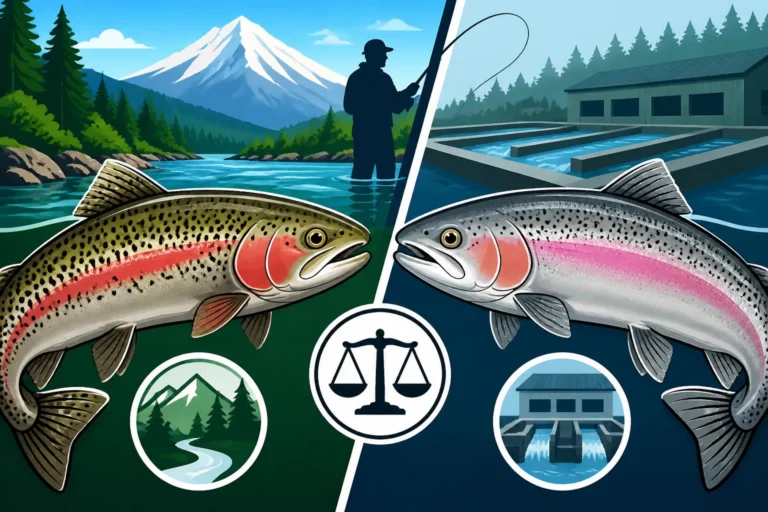
Distinguishing between wild and hatchery steelhead is absolutely critical for Washington anglers, not just for conservation but for legal compliance. Most hatchery-origin steelhead in Washington are identified by a clipped adipose fin – that small, fleshy fin located between the dorsal fin and the tail. This clip is a permanent mark, signaling that the fish was raised in a hatchery environment. Regulations often have different rules for retaining hatchery versus wild steelhead, with wild fish typically protected and required to be released unharmed.
The purpose of clipping the adipose fin is twofold: it allows biologists to differentiate between wild and hatchery populations, and it helps anglers quickly identify which fish they can legally keep. For instance, in many river systems, retaining a wild steelhead is illegal, and violating this rule can lead to significant penalties. Anglers are encouraged to carry a current copy of the Washington Sport Fishing Regulations pamphlet, available on the WDFW website or from most license vendors, to ensure they understand the specific rules for their fishing area. Even a quick search on Amazon for a waterproof field guide could be a smart addition to your gear.
When you hook a steelhead, the first thing to look for, after marveling at its fight, should be that adipose fin. If it's intact, that's a wild fish, and it must be released with care. If it's clipped, it's a hatchery fish, and depending on current regulations for that specific river and season, it might be legal to retain. This distinction is vital for protecting the genetic diversity and strength of wild steelhead runs across the state. Understanding this difference is a cornerstone of responsible fishing in Washington. For more in-depth information, take a look at Wild Steelhead vs Hatchery Steelhead in Washington.
Understanding Washington's Salmon Species
Washington is renowned for its diverse runs of Pacific salmon, with five main species making their way back to freshwater to spawn. While all are incredible game fish, they each have distinct characteristics that differentiate them not only from steelhead but also from each other. Understanding these differences is key to successful and compliant salmon fishing.
General Salmon Characteristics
Unlike steelhead, all Pacific salmon species are semelparous, meaning they complete their ocean-going journey, return to freshwater to spawn, and then die. This "spawn once and die" life cycle is a fundamental difference from steelhead and plays a huge role in the ecology of Washington's rivers, providing vital nutrients to the ecosystem. Salmon tend to have a more robust, often deeper body shape compared to the sleeker steelhead, especially as they mature and develop their spawning colors and kypes (hooked jaws in males).
Their spotting patterns, while present, are often less uniform and can be larger and more diffuse, particularly on the back and caudal fin, depending on the species. The scales of salmon are generally larger and more pronounced than those of a steelhead. When fresh from the ocean, salmon are also incredibly chrome-bright, but as they enter freshwater and get closer to their spawning grounds, their coloration changes dramatically, often turning vibrant reds, greens, and browns, with males developing exaggerated features. This transformation is a marvel to witness but can sometimes make identification a bit trickier for the inexperienced eye.
Key Pacific Salmon in Washington
Let's dive into the common salmon species you'll encounter in Washington and how to tell them apart, especially from steelhead:
-
Chinook Salmon (King Salmon): These are the largest of the Pacific salmon, earning them the "King" moniker. Chinook Salmon: Washington's King of Fish delves deeper into their majesty. Chinook are characterized by irregular, large black spots on their back, dorsal fin, and both lobes of their caudal fin. A definitive ID feature is their black gum line inside the mouth, often described as "black mouth, black gums." Their tails are typically broad and somewhat squared off. When fresh, they are often a steely blue-green on the back, fading to silver on the sides. As they mature, their bodies can turn dark olive, brown, or even purplish. To confidently identify them, check out How to Identify a Washington Chinook Salmon.
-
Coho Salmon (Silver Salmon): Known for their acrobatic fights, Coho are a favorite among many anglers. Coho Salmon Fishing in Washington has more on targeting these beauties. Coho are generally smaller than Chinook but still substantial fish. They typically have spots only on the upper lobe of their caudal fin and on their back. Crucially, their gum line is white or very pale, a clear differentiator from Chinook. Their tails are slightly forked. Fresh Cohos are bright silver with a metallic blue-green back. In freshwater, they often turn a brilliant deep red on their sides, with a darker head and back. How to Identify Coho Salmon in Washington's Puget Sound provides more detailed tips.
-
Chum Salmon (Dog Salmon): Chums are less frequently targeted for table fare but offer a powerful fight. They lack distinct spots on their tails and backs. A key identifier for spawning Chums is the prominent vertical bars of green and purple or red on their sides, giving them a very "tiger-striped" appearance. Their mouths develop impressive canine-like teeth during spawning, hence the "Dog Salmon" nickname.
-
Sockeye Salmon (Red Salmon): Sockeye are famous for their deep red flesh and intense spawning colors. They have virtually no spots on their back or tail. As they approach spawning, their bodies turn a brilliant red, and their heads become green, making them unmistakable. The Baker Lake sockeye run is particularly famous in Washington.
-
Pink Salmon (Humpy Salmon): These are the smallest Pacific salmon and have a distinct two-year life cycle, meaning they typically run in odd-numbered years in Washington. They have large, oval spots on their back and both lobes of their caudal fin. Spawning males develop a very pronounced hump on their back, hence "Humpy."
Beyond Appearance: Behavioral and Life Cycle Differences
While visual cues are incredibly helpful, understanding the fundamental biological distinctions between steelhead and salmon offers deeper insight into these magnificent fish and why they are managed differently. It's not just about what they look like, but how they live their lives.
Spawning Habits and Survival
The most significant life history difference, as touched upon earlier, is their approach to reproduction. Steelhead are iteroparous, a fancy word meaning they can survive spawning and return to the ocean to feed, recover, and potentially spawn again in subsequent years. Imagine the resilience needed for such a feat! A "kelty" steelhead, one that has spawned and is returning to the ocean, might look quite beat up but is a testament to this unique survival strategy. While not every steelhead survives its spawning ordeal, a notable percentage do, contributing to the genetic diversity and strength of the run. This ability contrasts sharply with the life cycle of salmon.
Pacific salmon, conversely, are semelparous. Every single one of them spawns once and then dies shortly thereafter. This dramatic conclusion to their life cycle is not a waste; it's a critical ecological event. Their decaying bodies provide a massive influx of marine-derived nutrients into the freshwater ecosystems, nourishing everything from insects and plants to bears and eagles. This nutrient transfer is vital for the health of the entire watershed. Understanding this fundamental difference, particularly the question Do Steelhead Die After Spawning Like Salmon?, highlights why conservation efforts and fishing regulations often treat these two groups of fish very differently.
Habitat and Migration Patterns
While both steelhead and salmon are anadromous, their specific habitat preferences and migration timing can also vary. Steelhead, as ocean-run rainbow trout, often exhibit a prolonged freshwater residency as juveniles before heading to the sea. They may spend one to three years in their natal streams before smolting and migrating to the ocean. Once they return to spawn, they can also linger in freshwater for extended periods. Washington has both "winter-run" and "summer-run" steelhead, referring to the season they enter freshwater from the ocean. You can dive deeper into this with Winter vs Summer Steelhead Runs in Washington, Explained.
Salmon, on the other hand, typically have a more defined and often shorter freshwater residency as juveniles (though there are exceptions, like some Chinook populations). Their ocean migration patterns can be incredibly vast, covering thousands of miles. When they return, their timing is often remarkably precise, with specific runs hitting specific river systems at predictable times of the year. For instance, When Chinook Salmon Run in Washington's Puget Sound details the specific timing for kings. While both groups need clean, cold water and healthy spawning gravel, the nuances of their life histories drive different habitat needs and conservation strategies.
Why Proper Identification Matters for Anglers
For those of us who love to cast a line in Washington, understanding the distinction between steelhead and salmon isn't just an academic exercise – it's crucial for legal compliance, ethical angling, and ultimately, a more enjoyable and sustainable fishing experience. Getting it wrong can lead to serious consequences, and getting it right enhances your entire approach to the sport.
Regulatory Compliance and Conservation
Washington State has some of the most complex and dynamic fishing regulations in the country, and for very good reason: to protect and conserve its precious fish populations. These regulations frequently differentiate between steelhead and various salmon species, as well as between wild and hatchery-origin fish. Bag limits, size restrictions, open seasons, and even gear restrictions can vary significantly depending on the species you're targeting – or the species you accidentally hook. For a general overview, consider Washington Fishing Regulations Every Angler Should Know.
For example, on many rivers, wild steelhead are strictly catch-and-release, while hatchery steelhead might be legal to retain within specific limits. Similarly, Chinook salmon might have a different daily limit than Coho salmon. Failing to correctly identify your catch could result in unintentional violations, leading to fines, forfeiture of gear, or even loss of fishing privileges. This is where a reliable fishing scale and measuring tape, easily found on Amazon, become invaluable tools. Always consult the latest WDFW regulations for your specific fishing area before heading out. Understanding How Bag and Possession Limits Work in Washington is also critical.
Beyond the legal aspect, proper identification is fundamental to conservation. Knowing what you've caught allows you to handle it appropriately. If it's a protected wild fish or out of season, you can ensure a quick, safe release, minimizing stress and maximizing its chances of survival. This mindful approach contributes directly to the long-term health of Washington's fisheries for future generations. Don't underestimate the importance of keeping Reading the Washington Sport Fishing Regulations Pamphlet handy, even if it feels daunting sometimes!
Enhancing Your Fishing Experience
Beyond just staying out of trouble, being able to confidently distinguish between steelhead and salmon enriches your entire fishing adventure. Each species, and even individual runs, has its own unique characteristics, preferred habitats, and fighting styles. Knowing what you're targeting or what you've caught allows you to:
- Tailor your techniques: Different fish respond to different presentations. Learning that a particular run of Coho prefers a certain lure or that steelhead are more receptive to drift fishing can dramatically improve your success rate. For instance, you might adjust your leader material or hook size based on the specific species you anticipate encountering.
- Understand their behavior: By knowing the species, you can better predict where they might hold in a river, how they might react to a changing tide in Puget Sound, or what their feeding habits are. This knowledge transforms fishing from a guessing game into a more strategic and rewarding pursuit. You start to "read the water" with a clearer understanding of who might be hiding beneath.
- Appreciate the diversity: Washington's waters are incredibly rich with diverse fish populations. Being able to appreciate the subtle differences and unique life histories of each species deepens your connection to the natural world. It turns every catch into a learning experience and every day on the water into an opportunity for discovery. Plus, being the one who can confidently tell friends on the boat exactly what they just landed feels pretty good, too!
Embracing the details of fish identification is truly about becoming a more informed, responsible, and ultimately, a more successful angler in the beautiful state of Washington.
| Feature | Steelhead (Ocean-run Rainbow Trout) | Chinook Salmon (King) | Coho Salmon (Silver) |
|---|---|---|---|
| Species Name | Oncorhynchus mykiss | Oncorhynchus tshawytscha | Oncorhynchus kisutch |
| Life Cycle | Iteroparous (can spawn multiple times) | Semelparous (spawns once, then dies) | Semelparous (spawns once, then dies) |
| Spots | Numerous small spots, extend to tail | Irregular large spots, on back and both tail lobes | Spots primarily on upper tail lobe and back |
| Gum Line | Generally white/pale | Black | White/pale |
| Tail Shape | Slightly forked or squared | Broad, somewhat squared | Slightly forked |
| Adipose Fin | Present (clipped on hatchery fish) | Present (often clipped on hatchery fish) | Present (often clipped on hatchery fish) |
| Max Size (Typical) | Up to 20-30 lbs (can be larger) | Up to 50+ lbs (can be much larger) | Up to 20-25 lbs |
| Body Shape | More torpedo-like, slender | Robust, deeper body, often powerful shoulders | Streamlined, but generally deeper than steelhead |
Disclaimer
This article is for general informational purposes only and does not constitute professional advice. Laws, prices and regulations vary by location and change over time. Consult a qualified professional for guidance on your specific situation.