Is a Solo Trip More Expensive Than a Shared Trip?
The question of whether to book a fishing trip alone or join a group is a common one, and let's be honest, the cost often plays a huge role in that decision. Many anglers dream of a personalized adventure, but the price tag for a solo outing can be a real head-scratcher. This guide is here to break down the financial realities of booking a fishing charter or guide in Washington, helping you understand why a solo trip typically comes with a higher cost than signing up for a shared expedition.
Understanding the Cost Structure of Guided Trips
When you're looking at booking a guided fishing trip in Washington, whether it's for salmon in Puget Sound or steelhead on a coastal river, it's easy to just see the price per person and think that's the whole story. But there's a lot more that goes into that number than meets the eye, especially when you consider the difference between solo and shared experiences.
The Basics of Charter and Guide Pricing
Think about what a fishing guide actually provides: they're not just taking you out on their boat for a few hours. They're offering their expertise honed over years, knowing exactly where the fish are biting and what techniques will work best. Beyond that invaluable knowledge, there are significant operational costs involved. A guide has to maintain their boat, which means fuel, regular engine service, insurance, and all the necessary safety equipment. Then there's the gear: high-quality rods, reels, tackle, bait, and often specialized electronics like fish finders and downriggers. All of this equipment requires constant upkeep and replacement.
On top of these tangible items, guides also have to cover their own licensing, permits, and business expenses. They spend countless hours scouting locations, preparing gear, and cleaning up after trips. These are all fixed costs that the guide incurs for each day they're on the water, regardless of how many people are on the boat. Whether they take one person or six, the cost of launching the boat, buying the bait, and burning the fuel for a full day's outing remains largely the same. This foundational layer of fixed costs is what truly dictates the pricing model.
Why Shared Trips are Often Priced Per Person
With all those fixed costs in mind, it becomes clearer why shared trips are structured with a "per person" price. When a guide advertises a rate for a shared trip, they've calculated their total operating costs for that day and divided it among the expected number of clients. For example, if a guide needs to make a certain amount to cover their expenses and make a living wage for a day, and they typically take four people, they'll divide that total by four to get the per-person rate.
This model is a fantastic way for anglers to experience guided fishing without shouldering the entire financial burden themselves. You're essentially pooling resources with other passionate fishers, sharing the expense of the boat, the guide's time, and all the gear. It opens up opportunities for many more people to get out on the water and enjoy the incredible fishing Washington has to offer, from chasing Chinook Salmon: Washington's King of Fish in the Sound to Drift Fishing for Steelhead in Washington Rivers. While you might share the guide's attention and fishing spots with others, the reduced individual cost makes these trips incredibly popular and accessible.
The Financial Reality of Booking a Solo Trip
The dream of having a guide all to yourself, tailoring the trip to your every whim, is incredibly appealing. However, when it comes to the numbers, that dream typically translates into a higher personal expenditure.
Covering the Full Cost Alone
When you book a solo trip, you're not just paying for your seat; you're paying for the entire "boat rate" for that day. All those fixed costs we just discussed – the boat, the fuel, the tackle, the guide's time, their insurance, their permits – fall squarely on your shoulders. The guide still has to cover their overhead for the day, and since you're the only client, you become responsible for the full cost that would otherwise be spread across several people.
Let's imagine a hypothetical scenario: a guide might charge $250 per person for a shared trip with four anglers, making the total boat rate $1,000 for the day. If you book that same guide for a solo trip, you're likely paying something very close to that $1,000 total. You're essentially buying out all the spots on the boat, even if you're the only one filling them. This is why a solo trip will almost invariably be more expensive per individual than joining a shared trip, often by a significant margin. It's the price you pay for exclusive access and undivided attention, a truly personalized experience chasing Coho Salmon Fishing in Washington or Rainbow Trout Fishing in Washington.
Scenarios Where Solo Might Seem "Cheaper" (but isn't)
Sometimes, the pricing might be presented in a way that seems like a solo trip isn't that much more, but it's important to look at the underlying figures. A guide might offer a slight discount for a solo angler compared to simply multiplying the per-person shared rate by the maximum capacity. For example, if a shared trip is $250 per person for a boat of four ($1,000 total), they might offer a solo trip for, say, $800. While $800 is less than $1,000, it's still significantly higher than the $250 you'd pay on a shared trip.
This isn't a "discount" in the traditional sense for the angler; it's the guide adjusting their profit margin slightly to make the solo option more attractive, while still ensuring they cover their day's expenses and time. It's important to remember that even with such an adjustment, you're still covering the vast majority of the boat's operating cost yourself. So, while the absolute number might feel a little less jarring than simply taking the shared rate times four, you are still bearing almost the full brunt of the guide's daily overhead. It's a common misconception that can lead to sticker shock if you're not prepared for the true cost.
The Unique Benefits (and Drawbacks) of Going Solo
While the price point is a clear factor, a solo fishing trip offers distinct advantages that can make the investment worthwhile for some anglers. It's all about weighing those benefits against the increased cost.
Unmatched Flexibility and Personal Attention
The biggest draw of a solo guided trip is, without a doubt, the complete personalization it offers. You become the sole focus of the guide's expertise and attention. This means:
- Tailored Experience: You can often discuss specific target species, preferred techniques, and even areas you want to fish. Want to spend extra time perfecting your cast for Fly Fishing Washington's Rivers and Lakes or focus entirely on Halibut Fishing Techniques for the Washington Coast? A solo trip makes that possible.
- Flexible Schedule: While guides have their own schedules, a solo booking gives you more leverage in discussing start times, duration, and even last-minute adjustments, within reason.
- Intensive Learning: With the guide's undivided attention, you'll receive real-time instruction, tips, and insights that might be harder to come by on a boat with multiple anglers. It's like a private fishing lesson. You can ask endless questions about Reading Water for Bank-Fishing Salmon or how to best rig for Jigging for Kokanee in Washington Lakes. This accelerated learning can dramatically improve your skills.
- Pace Control: You dictate the pace. Want to linger at a promising spot? Move quickly to the next? It's your call. There's no need to compromise with other anglers' preferences or skill levels.
- Privacy and Solitude: For those who cherish quiet time on the water, a solo trip offers an unparalleled sense of peace and privacy, allowing you to fully immerse yourself in the natural beauty of Washington's fishing grounds.
This level of customization means that every aspect of the trip is designed around your interests and goals, creating a truly memorable and often more productive experience for those seeking dedicated skill development or specific fishing objectives.
The Trade-off: Higher Price for Exclusive Experience
The flip side of these fantastic benefits, as we've already established, is the significantly higher cost. This isn't just about paying more; it's about understanding what that extra money buys you. You're not just paying for a fish; you're investing in an exclusive, customized experience that many consider a premium service.
Think of it like flying first class versus economy. Both get you to the same destination, but the experience along the way is vastly different. A solo fishing trip is the first-class equivalent of guided fishing. You're paying for the luxury of having the entire resource (the guide, the boat, their time) dedicated solely to you. This might mean the difference between a one-off special occasion trip or a regular outing. For many, a shared trip is a practical and enjoyable way to get out on the water, while a solo trip is reserved for a bucket-list species, a specific learning goal, or a much-needed escape from the crowd. It’s a trade-off where personal preference, budget, and desired outcome all play a role in the decision. If you're looking for that intensive, private experience on the Cowlitz River for Steelhead and Salmon in Washington, then the higher price point for a solo trip often feels justified.
Exploring Shared Trip Alternatives for Budget-Conscious Anglers
If the idea of a solo trip's price tag makes your wallet wince, fear not! Shared trips are an excellent and very popular alternative, offering a fantastic fishing experience without breaking the bank.
How Shared Charters Work
Shared charters, also often called "open boat" or "head boat" trips, operate by filling all available spots on a guide's boat with individual anglers who don't necessarily know each other. Most Puget Sound salmon charters, for instance, accommodate anywhere from 4 to 6 anglers, depending on the boat size and specific regulations. Everyone on board pays a per-person rate, which covers their share of the guide's costs for the day.
The key differences from a solo trip are, of course, the company and the focus. You'll be sharing the deck, the fishing space, and the guide's attention with other enthusiastic anglers. The trip agenda is usually set by the guide, focusing on common target species like Chinook Salmon: Washington's King of Fish or Lingcod: Washington's Toothy Bottomfish that are prevalent in the season. While you might not get to dictate every move, the camaraderie can be a huge bonus. You'll often find yourself swapping stories, sharing tips, and celebrating catches with new friends. It's a great way to meet fellow fishing enthusiasts and learn from both the guide and your peers. Many anglers find the social aspect to be as enjoyable as the fishing itself.
Finding Shared Opportunities and Booking Platforms
Locating shared fishing opportunities in Washington is quite straightforward. Many charter operations in popular fishing towns like Westport, Ilwaco, and ports around Puget Sound explicitly offer shared trips. Their websites will usually have clear pricing for both private (full boat) and shared (per person) options.
Online booking platforms have also revolutionized how anglers find and reserve these shared excursions. Websites like FishingBooker are excellent resources for comparing different charters, checking availability, and booking a spot on a shared trip. These platforms allow you to filter by location, species, and whether a trip is private or shared, making it easy to find an opening on an existing group booking. This means you don't have to round up a crew yourself; you can simply sign up as an individual and be placed with other anglers. This convenience is a huge benefit for those looking to fish without the organizational hassle or the higher cost of a solo trip. You can also contact guides directly, especially for river trips targeting Steelhead: Washington's Ocean-Run Rainbow Trout, and ask if they have any "open boat" dates or if they can put you on a waitlist for a shared trip. The more flexible you are with your dates, the better your chances of finding a spot that fits your budget.
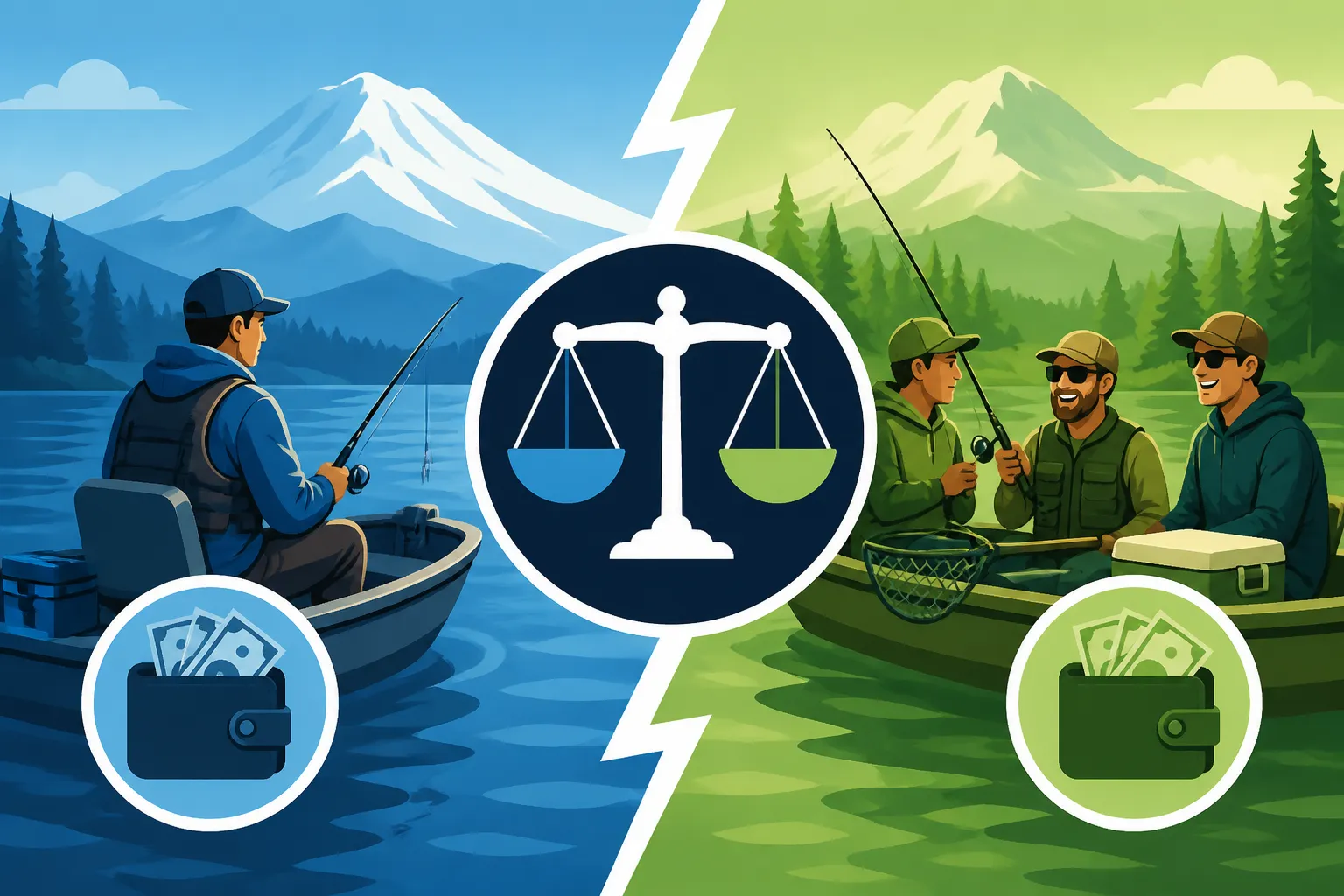
Here’s a quick overview comparing solo and shared trip experiences:
| Feature | Solo Trip | Shared Trip |
|---|---|---|
| Cost Per Person | Significantly Higher (covers entire boat rate) | Lower (costs split among anglers) |
| Guide's Attention | Undivided, personalized instruction | Shared among all anglers |
| Flexibility | High (can often dictate target, pace, timing) | Lower (guide sets agenda, group consensus) |
| Learning Opportunity | Intensive, tailored to individual skill level | Good, but less direct instruction per person |
| Privacy/Social Aspect | High privacy, solitude | Social, chance to meet new people |
| Booking Difficulty | Easier to find specific dates/guides available | May require more flexibility, booking in advance |
| Best For | Skill development, specific targets, exclusive experience, introverts | Budget-conscious, social experience, general fishing |
Whether you choose to go solo for a deep dive into Techniques & Seasons with undivided attention or join a shared trip for a more economical and social adventure, Washington's waters offer incredible opportunities. Just make sure you understand the cost structure upfront so there are no surprises when you're ready to cast your line. Remember to always check current regulations and license requirements, which you can usually find information about in articles like Washington Fishing Regulations Every Angler Should Know or Where and How to Buy a Washington Fishing License. And if you're ever in doubt about what's required, consider what a guide can provide. FishingBooker lists many Washington guides who can explain what's Included in a Washington Puget Sound Salmon Charter.
Disclaimer
This article is for general informational purposes only and does not constitute professional advice. Laws, prices and regulations vary by location and change over time. Consult a qualified professional for guidance on your specific situation.