Trolling Wedding Rings for Kokanee
There’s nothing quite as frustrating as heading out to your favorite Washington lake, knowing it’s teeming with kokanee salmon, and then spending hours staring at a still rod tip. These landlocked sockeye can be notoriously finicky, schooling up in specific depths and often seeming to ignore everything you throw at them. But don’t despair! This guide is all about demystifying one of the most consistently effective techniques for catching kokanee: trolling with Wedding Rings.
Understanding the Allure of Wedding Rings for Kokanee
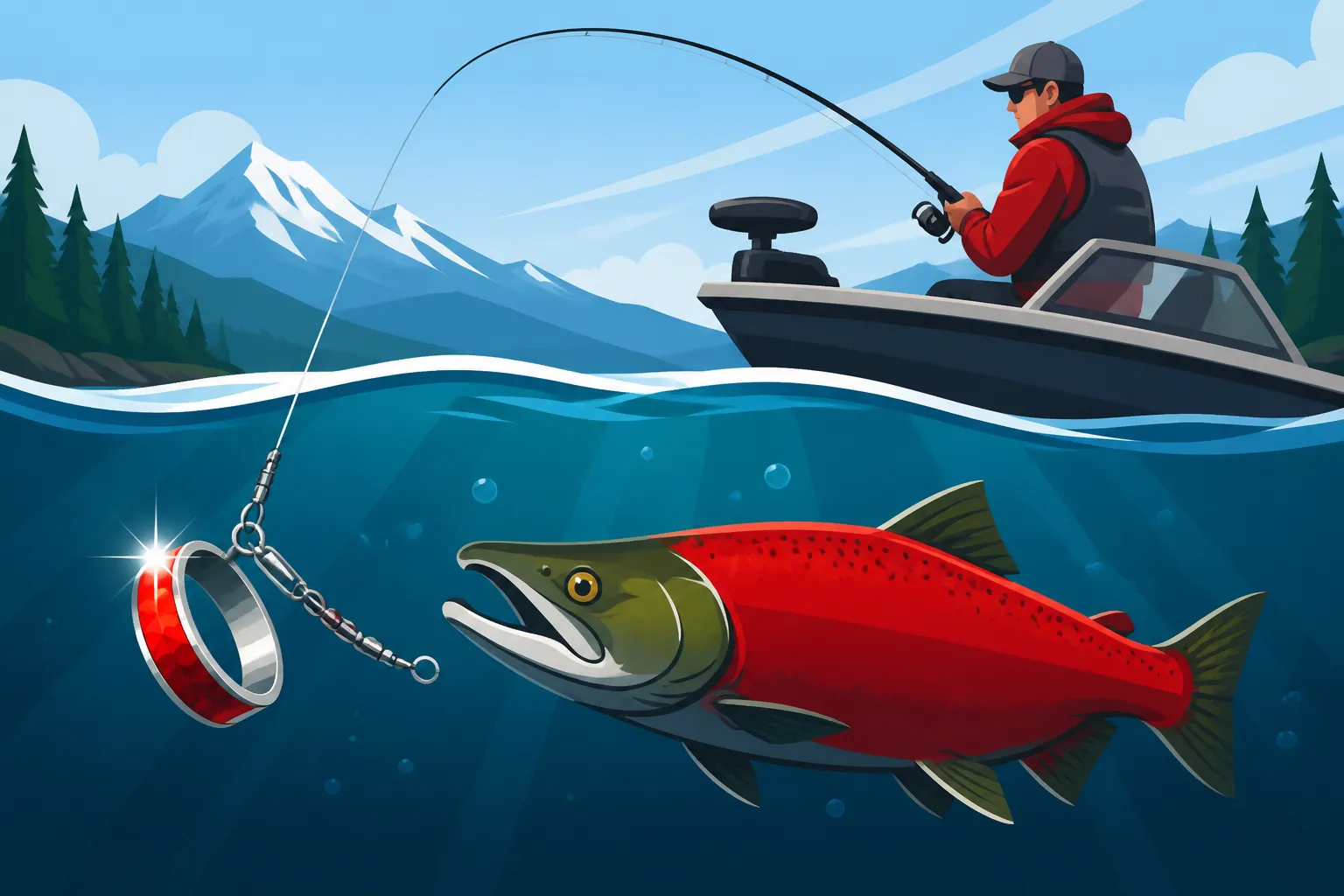
Kokanee salmon are a unique and often challenging fish to target, mostly because their diet and behavior are so specialized. Unlike other salmon species that might strike at large spoons or plugs, kokanee have a preference for smaller, subtler presentations. This is exactly where the Wedding Ring spinner shines, drawing them in with a combination of flash, vibration, and a hint of natural bait.
Why Kokanee Love the Flash and Vibration
Kokanee primarily feed on zooplankton and small invertebrates, which means they aren't typically chasing down large baitfish like a Chinook or a hefty rainbow trout. Their mouths are small, designed for sifting rather than aggressive predation. So, why do they go after a Wedding Ring? It comes down to mimicking their environment and triggering their instincts. The flash from the spinner blade, especially in deeper, dimmer waters, can imitate the shimmer of a dense plankton bloom or a tiny, vulnerable organism. The subtle vibration sent through the water column acts as another sensory trigger, alerting kokanee to something worth investigating.
Think about it from their perspective: they’re cruising in schools, often suspended in the thermocline (the layer where warm surface water meets colder deep water), and suddenly, a small, flashy, vibrating object comes into their field of view. It’s not necessarily a direct imitation of a single plankton, but rather a universal "food signal" that stimulates their curiosity or even a mild predatory response. This is particularly true when paired with a bit of scented corn, which adds an irresistible element they might associate with decaying organic matter or a delicious natural food source. The compact size of the Wedding Ring is also perfect for their smaller mouths, making it an easy target to engulf.
The Anatomy of a Classic Wedding Ring Spinner
A classic Wedding Ring spinner might seem simple at first glance, but each component plays a crucial role in its effectiveness. Understanding these parts helps you choose the right setup for the conditions you're facing.
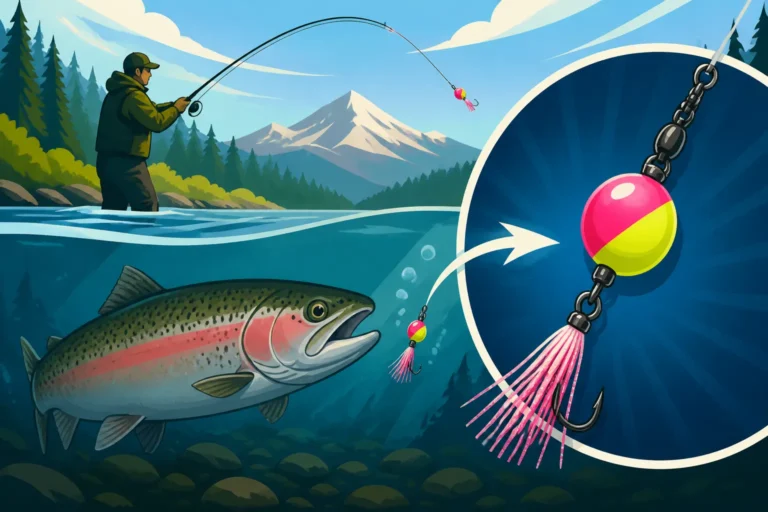
At its core, a Wedding Ring consists of a main line or leader, a small blade, a clevis that attaches the blade to the line, a series of beads, and a single or treble hook at the end. The blade is the heart of the operation, designed to spin and flash as it moves through the water. Common blade shapes include the Colorado blade, which provides a wider wobble and more vibration, and the Willowleaf blade, offering a narrower profile and a faster, tighter spin. The material and finish of the blade are equally important – polished brass, nickel, or painted blades in bright colors like chartreuse, pink, or orange are popular choices, selected based on water clarity and light conditions. For example, in murkier water, a brighter, more reflective blade might be necessary to cut through the haze.
The beads serve multiple purposes. Firstly, they provide additional visual attraction with their vibrant colors, often contrasting with the blade or matching a popular kokanee color. Secondly, and perhaps more subtly, they act as a buffer between the spinning clevis and your knot, protecting your line from abrasion caused by the blade's constant rotation. They also create a small amount of turbulence and noise, contributing to the overall attraction. Finally, the hook, often a small, sharp single hook (sometimes adorned with a bit of flashabou or a glow bead), is where the magic happens. Its size is critical to match the kokanee's delicate bite and smaller mouth, ensuring a solid hookup without tearing out.
Essential Gear for Trolling Wedding Rings
To consistently put kokanee in the cooler with Wedding Rings, you need more than just the lure itself. Having the right rods, reels, line, and especially depth control mechanisms, can make all the difference between a frustrating day and a fantastic one. Kokanee often suspend in precise water columns, sometimes just a few feet thick, so hitting that sweet spot is paramount.
Rods, Reels, and Line Choices
When it comes to rods for kokanee fishing, sensitivity is key. You're often dealing with light bites from fish that have notoriously soft mouths. A light to medium-light action rod, typically between 6 to 8 feet in length, is ideal. Look for a rod with a soft, sensitive tip that can detect the subtlest "tick" of a kokanee mouthing your bait, yet still have enough backbone to handle a feisty fish. Graphite rods are excellent for this, offering superior sensitivity and a lighter feel. Brands like Lamiglas and Berkley offer some great options specifically designed for kokanee and trout.
For reels, a small spinning reel or a low-profile baitcasting reel with a smooth, reliable drag system is crucial. Kokanee are not brutes, but they can make surprising runs, and a sticky drag will quickly lead to lost fish due to those soft mouths. Capacity isn't a major concern, as kokanee typically aren't making long, powerful runs that strip hundreds of yards of line. Just ensure it holds enough line for your typical trolling setup and has a comfortable retrieve ratio.
Line choice is a bit of a debate among kokanee anglers, but generally, lighter is better. Many anglers prefer 6-10 lb test monofilament for its stretch, which acts as a shock absorber against the kokanee's soft mouth. Others opt for braided line for its superior sensitivity, allowing them to feel even the lightest taps. If using braid, a fluorocarbon leader (4-8 lb test) is almost always recommended for its invisibility in clear water, and the lack of stretch in the braid often necessitates a more forgiving rod action. Whatever you choose, ensure your line is fresh and knot-free, as thin lines can be more prone to abrasion.
Downriggers, Dipsy Divers, and Weighting Systems
This is where precise depth control comes into play, and it's absolutely non-negotiable for consistent kokanee success. Kokanee are highly depth-oriented, often holding in schools within specific temperature and light zones. Without the ability to accurately place your lure at their level, you're essentially fishing blind.
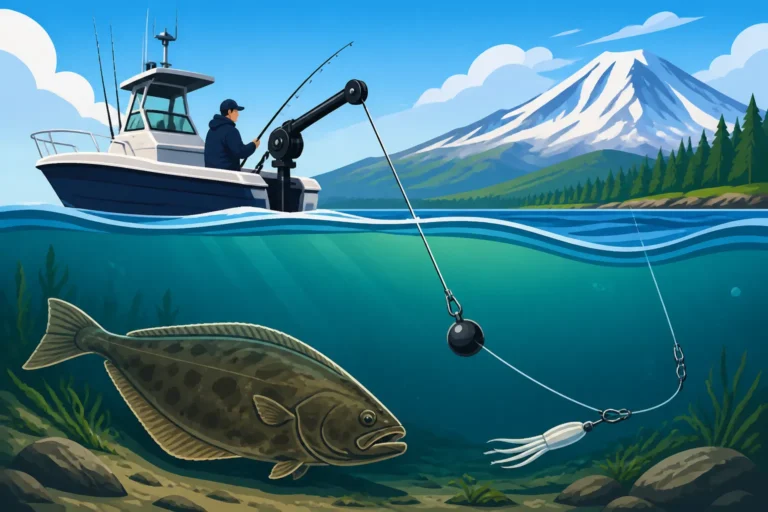
Downriggers are the ultimate tool for this. These devices use a heavy cannonball weight, attached to a strong wire or braid, to carry your fishing line down to a precise depth. Your fishing line is then clipped to a release mechanism on the downrigger wire, allowing your lure to run free behind the cannonball. When a fish strikes, the line pops free from the clip, and you fight the fish directly on your rod. Downriggers allow you to troll multiple lines at different depths, systematically searching for schools of fish. They offer unmatched accuracy, which is paramount when targeting the often suspended kokanee. You can find robust downriggers from brands like Scotty and Cannon, often available through retailers like Amazon. For a deeper dive, check out our guide on Downrigging for Deep Kokanee in Summer.
If downriggers aren't in your budget or you're in a smaller boat, there are alternatives. Dipsy Divers (or similar directional divers) are disc-shaped devices that clip onto your main line and dive when pulled through the water. By adjusting their fin, you can also make them "steer" left or right, spreading out your lines. They offer decent depth control but aren't as precise as downriggers. Another option is lead core line, a specialized line with a lead core that causes it to sink. Each "color" (usually 10 yards) of lead core sinks to a predictable depth at a given speed, allowing you to estimate your lure's depth. However, it requires a larger reel and offers less direct control over depth adjustments compared to downriggers.
For shallower kokanee, or as a supplementary method, simple inline trolling weights can be used. These cylindrical or banana-shaped weights are tied directly into your main line a short distance ahead of your leader. While less precise, they can get your Wedding Ring down a few feet, which might be all you need during early spring or when kokanee are cruising near the surface.
Flashers and Dodgers: The Kokanee Calling Card
Beyond the Wedding Ring itself, attractors like flashers and dodgers are critical components of a successful kokanee trolling spread. These aren't lures to be struck, but rather noisy, flashy devices designed to grab the attention of kokanee from a greater distance and draw them towards your actual bait. Think of them as the noisy marketing campaign for your delicious Wedding Ring offering.
Dodgers are typically rectangular or oval-shaped metal or plastic plates that have a wide, sweeping action. They don't spin but rather "dodge" back and forth, creating a substantial thumping vibration and a broad flash that mimics a wounded baitfish or a school of actively feeding organisms. This aggressive action is particularly effective in attracting kokanee from far away and triggering a chase response. Dodgers are usually run with a shorter leader (8-18 inches) between the dodger and your Wedding Ring, allowing the dodger's action to impart movement to the spinner.
Flashers, on the other hand, often have a more erratic, spinning, or spiraling action. They are designed for maximum flash and a more subtle vibration. Popular flashers for kokanee include inline flashers or rotating blade flashers, which spin on an axis. These are often preferred when kokanee are a bit more finicky or when you want a presentation that doesn't overpower the subtle action of the Wedding Ring. Flashers typically require a longer leader (18-36 inches, sometimes more) behind them to allow the Wedding Ring to achieve its own natural spin and flutter without being too heavily influenced by the flasher's aggressive action.
Choosing between a dodger and a flasher, and selecting the right color, often depends on the water conditions and the mood of the fish. Bright, reflective colors like chrome, silver, or highly fluorescent patterns (chartreuse, pink, orange) are popular choices. In murky water or on overcast days, flashers and dodgers with glow-in-the-dark properties can be incredibly effective. Experimentation is key; sometimes a subtle shift in color or action can make a huge difference in getting those strikes. Remember, the goal is to create enough commotion to get their attention without spooking them.
Rigging Your Wedding Ring for Success
Once you have your gear sorted, the next crucial step is rigging your Wedding Ring spinner correctly. A perfectly rigged setup ensures your lure presents naturally, spins properly, and maximizes its enticing flash and vibration. This isn't just about tying knots; it's about creating a system that fools even the most discerning kokanee.
Assembling the Wedding Ring Rig
The basic assembly for a Wedding Ring rig typically involves a main line coming from your reel, an attractor (flasher or dodger), a leader, and then the Wedding Ring itself. While it might sound complex, it’s quite straightforward once you get the hang of it.
First, you'll attach your main line to one end of your chosen attractor. This is usually done with a strong swivel to prevent line twist, especially important with dodgers that can put a lot of torque on your line. Next, you'll tie a separate leader line to the other end of the attractor. This leader length is crucial and varies depending on whether you’re using a dodger or a flasher. For dodgers, a shorter leader of 8-18 inches is common, as the dodger's wide action is intended to transfer directly to the Wedding Ring. With flashers, a longer leader, often 18-36 inches or more, allows the Wedding Ring to exhibit its own action more independently, behind the flash.
The leader material itself is important. Most kokanee anglers swear by fluorocarbon for its near invisibility underwater, which is a huge advantage in clear lake environments. Choose a lighter test strength for your leader than your main line – typically 4-8 lb test – to ensure a stealthy presentation and to provide a breaking point in case of a snag, protecting your main line and expensive attractor. Finally, tie your Wedding Ring spinner directly to the end of this fluorocarbon leader. Make sure all your knots are strong and secure. Using a quality barrel swivel between your main line and the attractor is an absolute must to prevent line twist, which can ruin your day and your line.
Baiting Your Wedding Ring Spinner
While the flash and vibration of the Wedding Ring are excellent attractors, the addition of bait is often what seals the deal for kokanee. And when we talk about kokanee bait, one item reigns supreme: Shoepeg corn.
Why corn? It’s not just any corn; Shoepeg corn is preferred for its smaller, firmer kernels that stay on the hook better. The bright, unnatural yellow color is a visual draw, contrasting sharply with the deep blues and greens of the lake. More importantly, corn has a unique scent and texture that kokanee seem to find irresistible. It’s believed that the corn mimics a plankton or larva, or perhaps the scent simply triggers a feeding response.
To bait your Wedding Ring, simply thread one or two kernels of Shoepeg corn onto each hook point of your single or treble hook. Ensure the corn is threaded securely so it won't fly off during trolling. Many anglers take this a step further by marinating their corn in a variety of scents. Popular choices include scents infused with krill, garlic, anise, or a combination of these, often available from brands like Pro-Cure or Pautzke's. You can easily find these scent options online through retailers like Amazon. Letting your corn soak in these potent attractants for a few hours, or even overnight, can significantly enhance its appeal. The scent trail it leaves in the water can draw kokanee from a greater distance, making your Wedding Ring even more effective. Don't be afraid to experiment with different scents and colors of corn (some anglers even dye their corn) to see what the fish prefer on any given day.
Optimizing Your Trolling Speed and Depth
Mastering trolling speed and depth is arguably the most critical aspect of consistently catching kokanee with Wedding Rings. These fish are incredibly sensitive to both, and being even a few feet off or a fraction of a mile per hour too fast can mean the difference between a hot bite and a dead zone.
Speed is paramount. Kokanee generally prefer a slower, more deliberate presentation. A typical trolling speed for Wedding Rings ranges from 0.8 to 1.5 miles per hour (mph). This slow speed allows the Wedding Ring blade to spin optimally, creating that enticing flash and vibration without over-spinning or looking unnatural. It also gives the kokanee enough time to react and intercept the lure. Factors like water temperature, light conditions, and the fish's mood can influence the ideal speed. On colder days or when fish are lethargic, you might need to slow down to the lower end of the spectrum. Conversely, if fish are aggressive, a slightly faster speed might trigger more reaction strikes. Using a GPS-enabled fish finder or a dedicated speed indicator on your boat is essential for maintaining consistent speed.
Depth is often even more critical than speed. Kokanee are pelagic, meaning they suspend in the open water column, usually congregating within the thermocline where plankton is most abundant. This can be anywhere from 15 feet deep to over 100 feet deep, depending on the lake and time of year. Your fish finder is your best friend here. It allows you to locate schools of kokanee and then precisely adjust your downriggers or weighting system to put your Wedding Ring right in front of their noses. As discussed earlier in our guide on Can a Fish Finder Help You Locate Kokanee?
A common strategy is to "stagger" your lines at different depths. For example, if you're running two downriggers, you might set one at 30 feet and another at 40 feet. If you get a bite at 40 feet, you can then adjust your other lines to that depth, confidently knowing you've found the strike zone. Don't just pick a depth and stick with it; continuously monitor your fish finder for signs of kokanee and adjust your depth as needed. Trolling along depth contours can also be highly effective, as kokanee often relate to subtle changes in bottom structure even when suspended. Our guide on How Deep to Troll for Summer Kokanee offers more specific insights.
Advanced Wedding Ring Strategies and Considerations
Once you've mastered the basics of rigging and deploying Wedding Rings, it's time to refine your approach with more advanced strategies. The subtle nuances of kokanee fishing often lie in understanding the environment and making precise adjustments to maximize your chances.
Reading the Water and Adjusting to Conditions
Kokanee fishing isn't just about dropping a line; it's about being a detective, constantly observing and adapting to the conditions around you. What works one day might not work the next, and understanding why can elevate your success significantly.
Water temperature is a huge factor. Kokanee thrive in cool, well-oxygenated water, typically congregating in the thermocline, which is the layer where warm surface water meets colder, denser deep water. In spring, they might be shallower, perhaps 15-30 feet, as the lake warms up. As summer progresses, the thermocline deepens, pushing kokanee down to 40, 60, or even 80+ feet in many Washington lakes like Lake Chelan or Lake Roosevelt. Your fish finder with a temperature gauge is invaluable for locating this sweet spot. If you know the preferred temperature range for kokanee (often in the low to mid-50s Fahrenheit), you can actively seek out that band of water.
Light conditions also dictate lure and attractor choices. On bright, sunny days with clear water, more subtle or natural blade colors (silver, polished brass, white) might be effective, as they offer enough flash without being overly aggressive. However, on overcast days or in stained water, brighter, fluorescent, or even glow-in-the-dark blades and beads can be crucial for visibility. Remember that water absorbs light quickly, so colors that appear vibrant on the surface will dull significantly at depth. This is why chartreuse, pink, and orange remain kokanee staples – they retain some visibility even in low light.
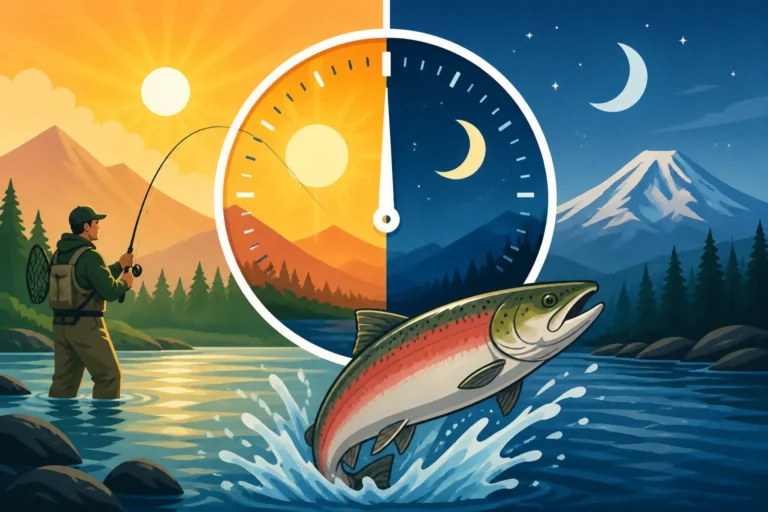
Time of day can also influence the bite. Often, the early morning and late evening hours offer the best kokanee action, as light levels are lower, and fish might be more active. Midday can be slower, especially in summer, when kokanee tend to hunker down in deeper, cooler water. And don't forget seasonal movements; our Washington Fishing Seasons: A Month-by-Month Guide can give you a broad overview, but always check specific lake reports. Kokanee behavior shifts from pre-spawn to spawning to post-spawn, impacting where they hold and how aggressively they feed.
Common Mistakes and How to Avoid Them
Even experienced anglers can make mistakes when targeting kokanee. Being aware of these common pitfalls can help you avoid a slow day and maximize your catch rate.
One of the most frequent errors is trolling too fast or too slow. As mentioned, kokanee have a preferred speed range. Going too fast makes the lure appear unnatural and can cause the blade to spin inefficiently, while going too slow might not generate enough action or cover enough water. Always monitor your speed with a reliable GPS or speed indicator. Another critical mistake is fishing at the wrong depth. If you're not getting bites, the first thing to check (after your speed) should be your depth. Kokanee schools can be incredibly localized, and being even five feet above or below them can result in no strikes. Use your fish finder constantly and adjust your downriggers incrementally until you find them.
Dull hooks are another silent killer of kokanee opportunities. These fish have soft mouths, and a dull hook will often just pull free. Regularly check your hooks for sharpness and either sharpen them or replace them. Don't underestimate the power of scent. Forgetting to bait your Wedding Ring with scented corn, or letting your corn dry out, means you're missing a major attractant. Reapply scent and refresh your corn regularly, especially after catching a fish or if the bite slows.
Ignoring your electronics is like driving blind. Your fish finder isn't just for looking at the bottom; it's your window into the suspended fish world. Pay attention to arches, bait balls, and the thermocline. Finally, a lack of variety in lure presentation can lead to frustration. If one color or blade style isn't working, don't be afraid to switch it up. Experiment with different Wedding Ring colors, blade shapes, bead patterns, and even attractor types (dodger vs. flasher) until you find what the fish want. Our guide on Best Wedding Ring Color for Washington Kokanee offers specific color recommendations to start with.
Top Washington Lakes for Wedding Ring Kokanee Action
Washington State offers a fantastic array of lakes where Wedding Ring trolling for kokanee can be incredibly productive. These waters are managed by the WDFW and often benefit from active stocking programs, ensuring healthy populations.
One of the most renowned kokanee fisheries is Lake Chelan. This massive, deep lake in North Central Washington is famous for its large kokanee, with fish often exceeding 16 inches. The clear, deep waters here make downriggers almost essential for getting your Wedding Rings down to the depths where the kokanee hold, particularly in summer. It’s a stunning place to fish, though it can get windy. For more detailed insights into this majestic fishery, you might explore our article on Lake Chelan, Washington for Mackinaw and Kokanee.
Further east, Lake Roosevelt, the reservoir behind Grand Coulee Dam, is another kokanee powerhouse. While also known for walleye, its kokanee fishery has really taken off in recent years. Roosevelt is vast, so covering water with your Wedding Rings is key. The kokanee here can also grow quite large, offering a thrilling fight. Our specific guide on Lake Roosevelt in Washington for Kokanee and Walleye provides more localized tips.
Other notable kokanee lakes in Washington include Lake Merwin in Southwest Washington, which boasts a very strong kokanee fishery and is often a popular destination for anglers from the Portland/Vancouver area. It's a large, scenic lake that consistently produces good numbers of kokanee. Rimrock Lake in the Cascade Mountains and Cle Elum Lake also offer excellent kokanee opportunities, often requiring a similar approach with downriggers and Wedding Rings. Banks Lake in Eastern Washington, while perhaps more famous for its smallmouth bass and walleye, also holds a respectable population of kokanee, providing another option for anglers looking to expand their kokanee horizons. Regardless of the lake you choose, remember that localized reports from tackle shops or fishing forums can provide invaluable, up-to-the-minute information on where the kokanee are biting and what colors they prefer.
| Blade Type | Action/Vibration | Best Conditions | Leader Length (behind attractor) |
|---|---|---|---|
| Colorado | Wide wobble, strong vibration | Murky water, low light, aggressive fish | Shorter (8-15 inches) |
| Willowleaf | Tighter spin, subtle flash | Clear water, bright light, finicky fish | Longer (15-30 inches) |
| Indiana | Medium wobble, good flash | All-around, versatile | Medium (12-24 inches) |
| Dick Nite (specific Wedding Ring style) | Unique wobble, often incorporates beads | Versatile, a kokanee staple | Varies by size, generally 12-24 inches |
Disclaimer
Fishing regulations in Washington State can change frequently, often due to emergency rule adjustments based on fish run sizes and conservation efforts. Always consult the latest Washington Department of Fish and Wildlife (WDFW) regulations pamphlet or their official website before heading out on any fishing trip. This guide is for informational purposes only and should not be considered a substitute for official WDFW regulations.