Is Willapa Bay in Washington Good for Dungeness Crab?
If you've ever dreamt of pulling up a pot overflowing with big, beautiful Dungeness crabs, then Willapa Bay in Washington state should absolutely be on your radar. Many anglers and shellfish enthusiasts wonder if this expansive estuary lives up to its legendary reputation for Dungeness crab, and let me tell you, it's a resounding yes! This guide will dive deep into why Willapa Bay is a fantastic crabbing destination, how to navigate its specific rules, and the best techniques to ensure a successful and delicious haul.
Willapa Bay: A Haven for Dungeness Crab
Willapa Bay isn't just any body of water; it's a truly special place, renowned across the Pacific Northwest for its incredible shellfish production. When it comes to Dungeness crab, this vast, shallow estuary provides an ideal nursery and feeding ground, leading to consistently strong populations and excellent crabbing opportunities for those who know where to look.
The Unique Ecosystem of Willapa Bay and Dungeness Crab Habitat
Imagine a sprawling, intricate network of muddy tidal flats, meandering channels, and nutrient-rich waters—that's Willapa Bay. Unlike the deep, rocky Puget Sound, Willapa is predominantly shallow, with vast areas exposed at low tide. This unique geography creates a perfect environment for Dungeness crabs to thrive. The extensive mudflats and eelgrass beds provide ample shelter from predators and a constant supply of food, from small invertebrates to decaying organic matter. The relatively calm waters, protected from the full force of the Pacific Ocean, offer a more stable environment for juvenile crabs to grow.
The bay's abundant freshwater inflow from rivers like the Willapa, Naselle, and Palix also plays a crucial role, delivering a steady stream of nutrients that fuel the entire ecosystem. This constant influx of food and optimal habitat conditions mean that Dungeness crabs here often grow to impressive sizes and are known for their sweet, tender meat. It’s a dynamic, productive system that consistently supports a healthy crab population, making it a reliable spot for both recreational and commercial crabbers year after year.
Historical Significance and Abundance
Willapa Bay has long held a storied place in Washington's shellfish history, particularly for oysters and clams, but its Dungeness crab fishery is equally significant, if sometimes less publicized than those in more populated areas. For generations, local families and commercial enterprises have relied on the bounty of this bay, cementing its reputation as a powerhouse for delicious crustaceans. This long history isn't just anecdotal; scientific surveys and catch reports consistently show Willapa Bay as one of the most productive Dungeness crab areas on the Washington coast.
While crab populations naturally fluctuate, the overall health of the Dungeness stock in Willapa Bay remains robust, thanks in part to careful management by the Washington Department of Fish and Wildlife (WDFW) and the bay's natural resilience. The sheer volume of suitable habitat means that there’s usually plenty of room for crabs to grow and reproduce, providing sustained opportunities for recreational crabbers. When you drop a pot in Willapa, you’re not just hoping for a single crab; you’re tapping into a deeply rich and historically significant fishery that continues to yield impressive catches for those who put in the effort.
Navigating Willapa Bay's Crabbing Regulations and Seasons
Before you even think about dropping a crab pot, understanding the rules and regulations for crabbing in Willapa Bay is absolutely critical. Washington's fishing and shellfishing laws are designed to protect the resource and ensure sustainable harvests for everyone, and they can sometimes be quite specific to different areas. Ignoring them can lead to hefty fines and a ruined trip, so let's make sure you're squared away.
Understanding Washington's Crabbing Seasons
The crabbing season in Willapa Bay, like other marine areas in Washington, is carefully managed by the WDFW. Generally, recreational Dungeness crab seasons in coastal areas like Willapa Bay tend to open in late spring or early summer and run through the fall, often with specific dates that can vary slightly year to year. It's not a year-round free-for-all, and understanding the nuances is key. You might find a summer season that's open a few days a week, followed by a fall season with different rules.
The absolute best advice I can give you is to always check the current WDFW Fishing Regulations pamphlet or their official website immediately before your trip. Emergency rule changes or slight adjustments to season dates and times are common, especially for popular fisheries like Dungeness crab, often based on ongoing stock assessments. Don't rely on last year's regulations or what a friend thought they heard. For a broader understanding of how these regulations work, you might want to read our guide on Washington Fishing Regulations Every Angler Should Know. Staying informed is your best defense against inadvertently breaking the rules and losing your valuable catch.
Licensing, Gear, and Limits
To go crabbing in Washington, including Willapa Bay, you absolutely need a valid shellfish license. This is separate from a general fishing license, though you can often purchase a combination license that covers both. Make sure your license is current and on your person (or accessible via the MyWDFW app) whenever you're out crabbing.
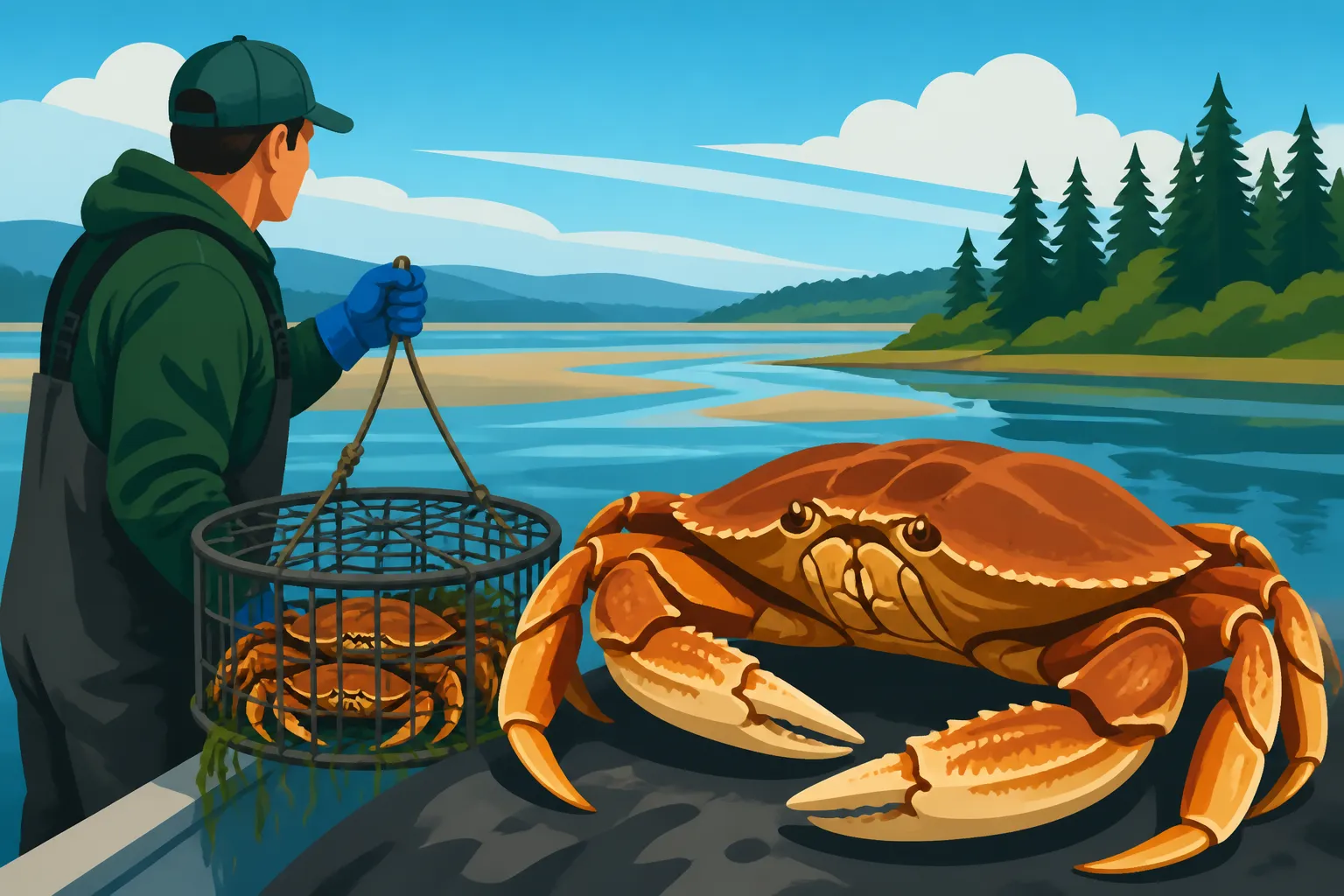
When it comes to gear, you have a couple of primary options: crab pots or crab rings.
- Crab Pots: These are weighted traps that sit on the bottom and have one-way entrances. They're generally more effective as crabs can enter but find it difficult to leave.
- Crab Rings: These are collapsible rings that lie flat on the bottom, allowing crabs to walk over them to get to the bait. You then pull the line, and the sides of the ring come up, trapping the crabs inside. Rings require more active monitoring and pulling, as crabs can easily escape if left unattended.
Washington regulations specify the maximum number of pots or rings you can fish per person, and sometimes per boat, so be sure to verify that. Typically, it’s a maximum of two units (pots or rings) per person. All gear must be clearly marked with your name and address, or your WDFW customer ID number.
Now, for the really critical part: size and sex limits. Only male Dungeness crabs of a certain minimum size can be kept. The current minimum size for Dungeness crab in Washington marine areas is 6¼ inches across the widest part of the shell (carapace), not including the points. Females, regardless of size, must always be released unharmed. This rule is paramount for protecting the breeding stock. Our detailed guide on Dungeness Crab Identification and Legal Size will walk you through exactly how to measure your catch correctly and how to tell males from females. It’s also important to understand Legal Dungeness Crab Size to avoid any penalties. Additionally, if you're curious about the mechanics of different gear types, our article on Crabbing With Pots vs Rings in Puget Sound offers valuable insights that are applicable here in Willapa Bay as well.
Essential Techniques for Successful Crabbing in Willapa Bay
Okay, you've got your license, you know the rules, and you're ready to hit the water. But where do you drop your pots, what bait works best, and how long should you leave them down? Crabbing isn't just about luck; there's a definite art and science to maximizing your chances of a full pot.
Choosing the Right Location and Depths
Willapa Bay is vast, and knowing where to drop your gear can make all the difference. While Dungeness crabs are widespread, they tend to congregate in certain areas. Look for deeper channels, especially those with good tidal flow, as these act like highways for crabs moving with the currents. Areas adjacent to expansive mudflats, particularly where the bottom transitions to a slightly firmer substrate or has some structure (like old pilings or debris), can be very productive. Crabs often stage in these spots, waiting for the tide to bring in food.
Many experienced crabbers target depths between 10 to 50 feet in the main channels or near the mouths of tributary rivers like the Naselle or Willapa River. At high tide, crabs will often move onto shallower flats to feed, but during low tide, they'll retreat to the deeper channels. Dropping your pots along these channel edges or in slightly deeper holes can be highly effective. Pay attention to bathymetric charts if you have them, or use a good quality depth sounder on your boat to identify these promising contours. Keep an eye out for areas with active baitfish or signs of other marine life, as these usually indicate a healthy food chain, which crabs are a part of. Remember that while Crabbing With Pots vs Rings in Puget Sound might describe different waters, the principles of finding structure and suitable depths hold true for Willapa Bay.
Bait Selection and Pot Soaking Strategies
When it comes to bait, Dungeness crabs are not particularly picky eaters, but some options are definitely more effective than others. Oily, smelly baits tend to work best because their scent plume travels further in the water, attracting crabs from a wider area. My personal go-to, and a favorite among many Willapa Bay crabbers, is chicken. Specifically, chicken drumsticks or thighs, slightly aged or even a bit "ripe," can be incredibly potent. The smell just seems to drive crabs wild. Other excellent choices include:
- Fish Carcasses: Salmon heads, rockfish frames, or even herring can be fantastic. Local fish markets might have these available, often for free or a small fee.
- Clam Necks/Guts: If you're also clamming, the discarded parts can make surprisingly effective crab bait.
- Commercial Crab Bait: Many tackle shops sell specially formulated crab baits in scent bags or pellets. While effective, they can be pricier.
For more detailed information on bait, check out our guide on Best Bait for Washington Dungeness Crab. No matter what you choose, ensure your bait is securely fastened in a bait holder or mesh bag inside your pot to prevent crabs from easily stealing it without entering the trap.
Soaking strategy refers to how long you leave your pots or rings down. This can vary depending on tidal conditions, location, and how active the crabs are.
- For Rings: You need to check rings frequently, usually every 15-30 minutes, because crabs can easily walk out once the bait is gone or if they get spooked. This is a more active form of crabbing.
- For Pots: A good starting point is to soak your pots for at least 2-4 hours. In areas with strong currents and lots of crab activity, you might get a good haul sooner. However, if you're not getting much, don't be afraid to leave them overnight (just be sure to check regulations for maximum soak times, as some areas have limits). Overnight soaks can be incredibly productive, especially if you're in a high-traffic area. Just be mindful of other boat traffic and commercial gear. A long soak helps ensure enough crabs find your pot, but don't leave them so long that the bait completely vanishes and the crabs eventually escape, which they can sometimes manage. Our article on How Long to Soak a Crab Pot in Puget Sound offers insights that are quite relevant to Willapa Bay as well.
Measuring, Handling, and Releasing Crabs Responsibly
Once you pull your pot and see those beautiful Dungeness crabs, the excitement is palpable! But don't just start tossing them in a cooler. You need to be methodical and responsible.
- Empty the Pot: Carefully empty the contents of your pot into a large tub or cooler on your boat. This keeps the crabs contained and makes it easier to sort them.
- Sort for Males: The first step is to quickly identify the males. Dungeness males have a narrow, pointed abdomen (the flap on their underside), while females have a broad, rounded abdomen. Our guide on How to Tell a Male From a Female Dungeness Crab provides clear visuals to help you with this. Any females, regardless of size, must be immediately and carefully returned to the water.
- Measure Legal Males: Take each male crab and measure its carapace (shell) width using a caliper or a measuring device. Place the fixed jaw of the caliper against one point of the crab's shell and extend the other jaw to the opposite point. The measurement must be at least 6¼ inches. You can find detailed instructions and illustrations in our article on How to Measure a Legal Dungeness Crab. Any male crab that doesn't meet the minimum size limit must also be immediately released.
- Count Your Limit: Once you've identified and measured your legal male crabs, count them. Be mindful of the daily bag limit, which is typically 5 Dungeness crabs per person in Washington's marine areas. Do not exceed this limit.
- Responsible Release: For any crabs you release (females or undersized males), do so gently. Don't just toss them from a height onto the water. Hold them carefully and lower them back into the bay, allowing them to swim away unharmed. This ensures the health of the crab population for future seasons.
Practicing responsible crabbing ensures you're doing your part to conserve this amazing resource.
Practical Tips and Considerations for Your Willapa Bay Crabbing Trip
A successful crabbing trip to Willapa Bay goes beyond just dropping pots and hoping for the best. Proper planning, attention to safety, and knowing where to find local resources can significantly enhance your experience.
Safety on the Water
Willapa Bay, while generally calmer than the open ocean, is still a large body of saltwater influenced by tides and weather. Safety should always be your top priority:
- Weather: Always check the marine weather forecast before heading out. Conditions can change rapidly, and strong winds can quickly make the bay choppy and unpleasant, even dangerous for smaller boats.
- Tides: The tides in Willapa Bay are significant, with vast areas becoming exposed at low tide. If you're unfamiliar with the area, it's easy to get stranded on a mudflat if you venture out of the main channels at high tide. Plan your movements according to the tide charts, ensuring you have enough water depth to return to the launch.
- Vessel Safety: Ensure your boat is in good working order and you have all required safety equipment: life jackets for everyone on board, a sound-producing device, a fire extinguisher, and navigation lights if you'll be out at dawn or dusk. File a float plan with someone on shore so they know your expected return time and area of operation.
- Visibility: Willapa Bay can get foggy, especially in the mornings. Be prepared with appropriate navigation aids and keep a sharp lookout for other boats, crab pot buoys, and obstructions.
Planning Your Trip and Local Resources
Willapa Bay is located on Washington's southwest coast, with several access points. Towns like Long Beach, Ilwaco (just south of the bay mouth), and Raymond offer services for crabbers.
- Boat Launches: Public boat launches are available at various points around the bay, such as Tokeland, South Bend, and Raymond. Check their accessibility, especially regarding low tide, as some launches might become unusable at certain tidal stages.
- Bait & Tackle: Local sporting goods stores or bait shops in nearby towns can provide essential gear, bait, and invaluable local knowledge. Don't hesitate to ask proprietors for recent crabbing reports or hot spots.
- Accommodations: If you're planning an overnight trip, consider lodging options in Long Beach, Raymond, or South Bend, which offer everything from motels to vacation rentals.
- Guided Trips: If you're new to crabbing or unfamiliar with Willapa Bay, booking a guided trip can be a fantastic way to learn the ropes and experience immediate success. Many local guides operate in the area. Platforms like FishingBooker can be a great resource to connect with experienced local captains who know the bay's intricacies and can put you on the crabs. They often provide all the gear and expertise, making for a hassle-free day on the water. For more on what to expect, check out our guide on Booking a Crabbing Charter in Washington's Puget Sound, as many principles apply universally. Alternatively, if you're fishing from a public pier or dock, our guide on How to Catch Dungeness Crab From a Dock might offer some useful pointers applicable to available public access points.
Preparing Your Catch for the Table
The reward for all your effort is fresh Dungeness crab, one of the most delicious seafoods Washington has to offer. Once you’ve landed your legal limit, you’ll want to prepare them for cooking.
Typically, most crabbers will cook their crabs whole. To do this, you'll need a very large pot and a strong heat source. Bring a large pot of heavily salted water to a rolling boil. Carefully drop the live crabs into the boiling water headfirst. Once the water returns to a boil, cook for approximately 15-20 minutes, depending on the size of the crabs. The shells will turn a vibrant orange-red when they're done.
After cooking, immediately transfer the crabs to an ice bath to stop the cooking process. This helps keep the meat firm and prevents it from sticking to the shell. Once cooled, you can clean them by twisting off the legs, removing the top shell, and cleaning out the gills and internal organs. Crack the legs and claws, and enjoy the sweet, succulent meat! For a broader perspective on this prized crustacean, our piece on Dungeness Crab and Washington Shellfish shares more about this amazing species.
| Crabbing Gear Type | Pros | Cons | Ideal Use Case |
|---|---|---|---|
| Crab Pot | More passive, effective, holds crabs | Heavier, more expensive, larger to store | Longer soaks, deeper water, less active trips |
| Crab Ring | Lighter, cheaper, easier to store | Requires frequent checking, crabs can escape | Active crabbing, shallower water, quick checks |
Disclaimer
Fishing and shellfishing regulations can change frequently. Always consult the latest Washington Department of Fish and Wildlife (WDFW) regulations before heading out. This guide is for informational purposes only and does not supersede official WDFW rules.