What Eastern Brook Trout Are Often Confused With
There’s nothing quite like the thrill of a tug on your line, especially when you’re out chasing trout in Washington’s stunning waterways. But let’s be honest, sometimes the excitement can quickly turn into a head-scratcher when you reel in a fish and think, "Wait, what is this, exactly?" This confusion is particularly common with the Eastern Brook Trout, an introduced species that often gets mistaken for some of our more common native trout and char. This guide is here to untangle that identity crisis, helping you confidently distinguish Eastern Brook Trout from their look-alalikes, so you can fish smarter and stay on the right side of the regulations.
Why Accurate Identification Matters When You're Fishing
It might seem like a small detail, a minor point of academic interest, but correctly identifying the fish you catch, especially trout and char, is incredibly important. It's not just about sounding knowledgeable at the boat launch (though that’s a nice bonus!). There are real, practical implications for every angler, from adhering to local regulations to contributing to conservation efforts. When you're standing knee-deep in a pristine mountain stream, the difference between a brook trout and a bull trout isn't just a color pattern; it can be the difference between a legal catch and a serious violation.
The Pacific Northwest's Trout Tapestry
Washington state boasts an incredibly diverse array of trout and char species, both native and introduced. We have our iconic native cutthroat and rainbow trout, often found in various forms from stream-dwelling residents to sea-run giants. Then there are the char, like the protected bull trout and its close cousin, the Dolly Varden, which share similar habitats but have distinct conservation statuses. Add to this mix the various introduced species, like brown trout and, of course, the Eastern Brook Trout, and you can see why it becomes a veritable "fish identification quiz" every time you get a bite. Each species plays a unique role in our ecosystems, and managing them effectively requires anglers to be able to tell them apart. Understanding this rich tapestry is the first step in appreciating the complexities of our fisheries.
The Eastern Brook Trout's Unique Story in Washington
Unlike many of our native trout, the Eastern Brook Trout (scientific name Salvelinus fontinalis) isn't originally from Washington. As its name suggests, it hails from the eastern parts of North America. It was introduced here many years ago, often stocked in lakes and streams where native fish populations were low or nonexistent, or simply for additional angling opportunities. These beautiful fish have since established self-sustaining populations in many high-mountain lakes and cooler, less competitive streams, particularly in the Cascade and Olympic mountain ranges. They thrive in cold, clear, well-oxygenated waters, often at higher elevations where competition from other trout might be less intense. While they provide fantastic sport, their presence can sometimes impact native species, which is another reason why proper identification is crucial. Knowing their typical stomping grounds can often give you the first clue about what you might have on your line.
The Usual Suspects: Trout Often Mistaken for Eastern Brook Trout
The primary reason anglers get confused is that many trout and char share similar torpedo-shaped bodies and some degree of spotting. But dig a little deeper, and the distinctions become clear. Let's break down the most common look-alikes and how to tell them apart from our Eastern Brook Trout.
Rainbow Trout (and Steelhead): The Most Common Confusion
Rainbow trout (Oncorhynchus mykiss) are probably the most widespread and recognizable trout in Washington, and they are frequently confused with brook trout. This is especially true for stream-resident rainbows that might not have the vibrant colors of their larger, migratory Steelhead vs Rainbow Trout: What's the Difference? counterparts.
The key differences to look for are:
- Spots: Rainbow trout have small, dark, often evenly distributed spots over their entire body, including the tail fin. Eastern Brook Trout, on the other hand, have light-colored spots (yellow, red, or orange) on a darker background, and they also feature distinctive worm-like markings on their back and dorsal fin.
- Coloration: While rainbows can be incredibly colorful, especially when spawning, they typically have a pink or reddish band along their lateral line (which gives them their "rainbow" name). Brook trout lack this band. Instead, they often have striking red or orange lower fins, usually with a white leading edge backed by a black line – a truly classic "brookie" marker.
- Mouth and Jaw: Rainbows typically have a mouth that doesn't extend past the back of the eye. Brook trout often have a slightly larger mouth.
- Overall Shape: While both are streamlined, brook trout tend to have a slightly more robust, chunkier appearance, especially in the head and shoulder area, compared to the often sleeker rainbow.
Remembering these key visual cues can save you a lot of guesswork. Whether you're targeting hatchery-stocked Rainbow Trout Fishing in Washington or wild fish, these distinctions are important for understanding the regulations.
Cutthroat Trout: A Spotted Identity Crisis
Cutthroat trout (Oncorhynchus clarkii) are another native Washington fish that can sometimes be mistaken for brook trout, especially their smaller, stream-resident forms. Like rainbows, they are well-distributed throughout the state.
Here’s what sets them apart:
- The "Cut": The most definitive feature of a cutthroat is the reddish-orange slash mark found in the crease under their jaw on each side. This is where they get their name, and it's a dead giveaway. Eastern Brook Trout do not have this mark.
- Spots: Cutthroat trout generally have more irregular, larger, and darker spots that are concentrated towards the tail. While Eastern Brook Trout have spots, remember they are light spots on a dark body, and less concentrated towards the tail, plus the worm-like markings.
- Coloration: Cutthroat can vary widely in color, from silvery to golden, but they generally lack the vibrant orange and white fin margins and the distinctive vermiculation of brook trout.
- Habitat: While both can inhabit similar cold streams, cutthroat are found in a wider variety of habitats, including coastal rivers and lakes, whereas brook trout are more restricted to specific high-elevation or colder stream environments. Being aware of Cutthroat Trout vs Rainbow Trout in Washington will help you differentiate between these two as well.
Bull Trout (and Dolly Varden): The Char Conundrum
This is perhaps the most critical distinction to make because bull trout (Salvelinus confluentus) are a federally protected species in Washington. Bull Trout and Why You Can't Keep Them is not just a suggestion; it's a strict regulation. While Dolly Varden (Salvelinus malma) are similar and often confused with bull trout (and sometimes legally harvestable in certain areas), both are char, and both can be confused with brook trout because all three belong to the Salvelinus genus.
The crucial identification points between Eastern Brook Trout and Bull Trout/Dolly Varden are:
- Spots on Back: This is the absolute golden rule for char: Char have light spots on a dark background. Eastern Brook Trout fit this definition. However, their spots are typically yellow, red, or orange, with the red/orange spots often having blue halos. Bull Trout and Dolly Varden also have light spots on a dark background, but their spots are typically pale yellow or white, sometimes with a faint orange tint, and they lack the blue halos often seen on brook trout.
- Worm-like Markings (Vermiculation): Eastern Brook Trout have very distinct, wavy, worm-like patterns (vermiculation) on their back and dorsal fin. Bull Trout and Dolly Varden do not have this vermiculation on their backs; their backs are typically uniformly dark or have indistinct mottling.
- Mouth and Head Size: Bull Trout and Dolly Varden are known for their large heads and jaws that extend well past the eye. While brook trout can have a decent-sized mouth, it's generally not as pronounced as a bull trout's.
- White Leading Edges on Fins: While brook trout have white leading edges on their lower fins (pelvic, anal, caudal), followed by a black stripe, Bull Trout and Dolly Varden typically only have a clean white leading edge without the distinct black stripe.
- Conservation Status: This is the most important part: Bull trout are protected. If you suspect you have a bull trout or Dolly Varden, it is best to assume it is a bull trout and release it carefully and immediately. Misidentifying and keeping a bull trout can lead to severe penalties. Knowing How to Tell a Bull Trout From a Dolly Varden is also very helpful for those specific regulations.
By carefully observing these details, you can make a confident identification and ensure you're fishing responsibly.
Key ID Markers for Eastern Brook Trout
Now that we’ve discussed who the brook trout often gets confused with, let’s drill down into the specific, undeniable characteristics that scream "Eastern Brook Trout!" When you pull one of these beauties out of the water, these are the features you want to zero in on.
Spotting the Distinguishing Features
Eastern Brook Trout are, without a doubt, one of the most vividly colored freshwater fish. Their beauty is undeniable, and once you know what to look for, they become relatively easy to identify.
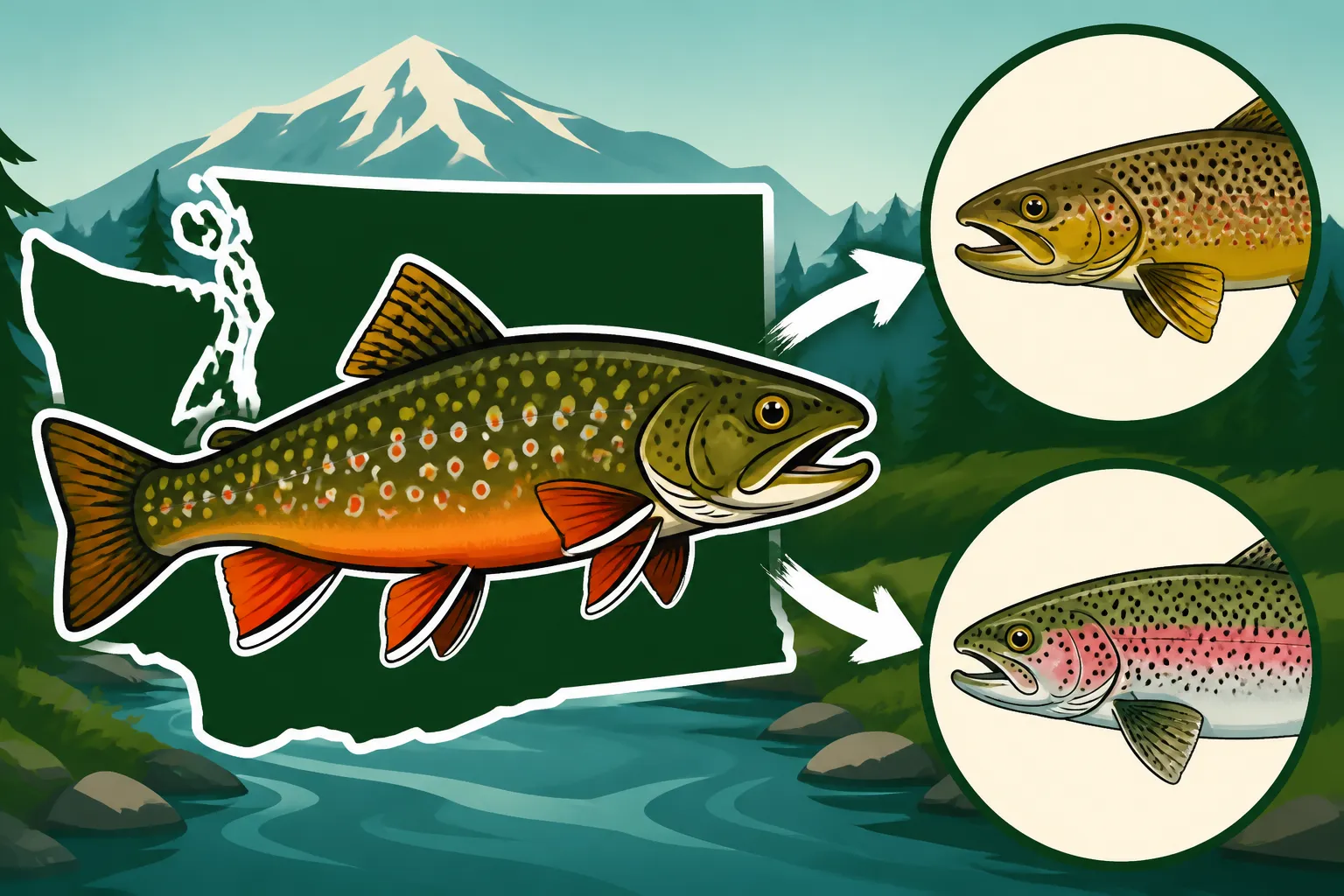
- Vermiculation (Worm-like Markings): This is arguably the most distinct feature. Look closely at the back and the dorsal fin of the fish. Eastern Brook Trout will have intricate, wavy, maze-like patterns that resemble worms. These patterns are typically a darker green or brown against a lighter background. No other common trout or char in Washington has this prominent vermiculation on its back.
- Light Spots on a Dark Background: Like all char, brook trout have light spots. These spots are typically yellow, often with some red or orange spots scattered along their sides. Crucially, many of these red/orange spots will have distinctive blue halos around them, almost like tiny iridescent rings. This combination of yellow, red, and blue-haloed spots is a hallmark of the brook trout. Remember, rainbow and cutthroat trout have dark spots on a lighter background, which is the opposite.
- White Leading Edges on Lower Fins: Check the pelvic (ventral), anal, and sometimes the lower lobe of the caudal (tail) fin. You'll see a bright, crisp white leading edge. Immediately behind this white edge, there will be a distinct, narrow black stripe, followed by the rest of the fin, which is often a vibrant orange or red. This "white-black-orange" fin pattern is a classic brook trout identifier.
- No Red Slash Under Jaw: As mentioned earlier, brook trout do not have the red or orange "cut" mark under their jaw that defines cutthroat trout.
- Tail Shape: While not always perfectly obvious on every fish, brook trout often have a slightly forked or squared tail, as opposed to the more distinctly forked tails of some salmon or the typically square or slightly emarginate tails of many rainbow trout.
Imagine you're out fishing a remote high-mountain lake, and you hook a small, energetic fish. As you bring it in, you notice its back has these incredible, almost artistic, wavy lines. Then you see the scattered yellow and red spots, some with faint blue rings, along its dark green side. Finally, the lower fins flash a brilliant orange with those sharp white and black margins. That, my friend, is an Eastern Brook Trout, and you can be confident in your identification!
Habitat Hints: Where You're Likely to Find Them
Knowing where a fish prefers to live can be a huge clue in identifying it, especially when dealing with similar-looking species. Eastern Brook Trout have specific habitat preferences in Washington that often differ from native trout.
- High-Elevation Lakes and Streams: This is their bread and butter. You'll most commonly encounter brook trout in the colder, pristine waters of high-mountain lakes and the small feeder streams that flow into them. Think remote alpine tarns in the Cascades or Olympic Mountains. These areas often have less competition from larger, native species.
- Cold, Clean Water: Brook trout are very sensitive to water temperature and oxygen levels. They thrive in water that remains consistently cold, even during summer months, and is well-oxygenated. This makes them excellent indicators of water quality. If you're fishing a relatively warm, slow-moving river at lower elevations, you're less likely to find brook trout and more likely to encounter rainbow or cutthroat trout.
- Areas with Limited Native Predation: In some instances, brook trout were introduced into waters where native fish populations were already struggling or were absent, allowing them to thrive without significant natural predators or competition. This is why you might find them in isolated pockets.
- Headwater Streams: Small, spring-fed headwater streams, often with dense riparian vegetation providing shade and cover, are ideal brook trout habitat. They love to hide under undercut banks, submerged logs, and around large rocks, ambushing insects and small minnows.
When you're hiking into a secluded subalpine lake in late summer, with snow still clinging to the peaks and the water crystal clear and frigid, the chances of encountering Eastern Brook Trout are significantly higher. This geographical and ecological context, combined with visual cues, makes identification much easier.
Practical Tips for Anglers in the Field
Even with all the knowledge in the world, identifying fish on the bank, with excitement and possibly shaky hands, can be challenging. Having a few practical tips and resources at your disposal can make all the difference, ensuring you adhere to Washington Fishing Regulations Every Angler Should Know and avoid any accidental violations.
The "Look Before You Keep" Rule
This might sound obvious, but in the heat of the moment, it's easy to rush. Always, always take a moment to closely examine any fish you intend to keep. Don't assume. Many regulations are species-specific, and keeping an illegally identified fish, especially a protected one like a bull trout, can have serious consequences, including fines and even license suspension.
Here’s a quick mental checklist:
- Look for vermiculation: Are there worm-like squiggles on its back and dorsal fin? If yes, you're likely holding a brook trout.
- Check spot color: Are the spots light (yellow/red) on a dark background? Good sign for brook trout. Do any red spots have blue halos? Another brook trout clue.
- Examine lower fins: Does it have the distinct white leading edge, followed by a black stripe, on the pelvic and anal fins? Strong brook trout indicator.
- Jaw check: Is there a red slash under the jaw? If yes, it's a cutthroat. If no, move on.
- Head size: Is the head disproportionately large with a jaw extending far past the eye, and only pale spots without vermiculation? Consider a bull trout or Dolly Varden, and if in doubt, release it immediately.
If you are even remotely unsure, especially if you think it might be a protected species, the safest bet is to gently release the fish. It's better to let a legal fish go than to accidentally keep an illegal one. Understanding How Bag and Possession Limits Work in Washington is also critical here, as limits can vary widely by species. Some waters might even have Slot Limits and Why Some Fish Must Go Back for certain trout species, adding another layer of complexity.
Using Resources on the Go
You don't have to be a ichthyologist to identify fish correctly. There are excellent resources available that can help you in the field.
- WDFW Regulations Pamphlet: This is your bible. Always have the current Washington Department of Fish and Wildlife (WDFW) regulations pamphlet with you. It includes illustrations and descriptions of common fish species, often highlighting key identification features. It's not just for rules; it's a field guide too!
- Smartphone Apps: The WDFW often has information available through their website or specific apps (like the Fish Washington app mentioned in Electronic Catch Record Cards and the Fish Washington App) that can provide identification guides, although always double-check against the physical regulations for any legal harvest decisions. There are also third-party fishing apps and fish identification apps that can be helpful, though their accuracy can vary.
- Field Guides: Many excellent waterproof, laminated field guides specifically for Western North American fish are available. These are compact and can easily slip into a fishing vest pocket. A quick search on "Amazon" will reveal several options from reputable publishers. Having one of these handy for a visual comparison can be invaluable.
- Photos: If you're still uncertain and cannot identify the fish quickly and safely for release, take a clear photo before releasing it. You can review it later or even consult with experienced anglers or WDFW staff. Just be mindful of the fish's stress and release it as quickly as possible. This is particularly useful when completing The Washington Catch Record Card and What It Requires as accuracy is paramount.
Carrying a small camera or having your phone fully charged (and waterproofed!) for quick reference photos can be a game-changer. Even experienced anglers carry these resources because, let's face it, some fish just love to keep us guessing!
Identifying Eastern Brook Trout: A Quick Reference Guide
To make it easy to remember the key differences when you're on the water, here's a quick comparison table:
| Feature | Eastern Brook Trout | Rainbow Trout (and Steelhead) | Cutthroat Trout | Bull Trout (and Dolly Varden) |
|---|---|---|---|---|
| Back/Dorsal Fin | Distinctive worm-like markings (vermiculation) | Small, dark spots, no vermiculation | Irregular dark spots, no vermiculation | No vermiculation, generally plain or mottled dark |
| Body Spots | Light (yellow/red/orange) spots on dark background, red/orange spots often with blue halos | Small, dark spots on lighter background, often uniform | Irregular, larger dark spots, often concentrated near tail | Light (pale yellow/white) spots on dark background, no blue halos |
| Lateral Line Stripe | No distinct stripe | Often a pink or red horizontal band | No distinct stripe, sometimes a yellowish tint | No distinct stripe |
| Lower Fin Edges | White leading edge, then a distinct black line, then orange/red | Usually plain, sometimes faint white margin | Usually plain, sometimes faint yellowish tint | White leading edge only, no distinct black line |
| Jaw/Gill Plate | No red slash | No red slash | Distinct red/orange slash under jaw | No red slash |
| Tail Shape | Slightly forked to square | Typically square or slightly emarginate, sometimes slightly forked | Slightly forked | Slightly forked to square |
| Conservation Status | Introduced, often managed for harvest | Native/Introduced, widely managed for harvest | Native, widely managed for harvest | Federally Protected – Release immediately (mostly) |
| Typical Habitat | Cold, clear, high-elevation lakes/streams | Wide range of cold/cool waters, rivers, lakes, oceans | Wide range of cold/cool waters, rivers, lakes, oceans | Cold, clear, pristine rivers/lakes, usually larger systems |
By keeping this table in mind, or even printing a small version to take with you, you'll be well-equipped to tell your brookies from your rainbows, cutties, and bull trout. Happy fishing, and remember to always respect our amazing Washington fisheries!
Disclaimer
This article is for general informational purposes only and does not constitute professional advice. Laws, prices and regulations vary by location and change over time. Consult a qualified professional for guidance on your specific situation.