Mooching for Salmon in Washington’s Puget Sound
There's nothing quite like the thrill of a big Chinook salmon hammering your bait in the cold, green waters of Puget Sound. However, consistently fooling these powerful fish isn't always easy, especially when they're not aggressively chasing trolled gear. This comprehensive guide will walk you through the subtle yet incredibly effective technique of mooching for salmon, helping you understand the gear, strategies, and nuances needed to put more fish in your boat in Washington's saltwater playground.
What is Mooching for Salmon in Puget Sound?
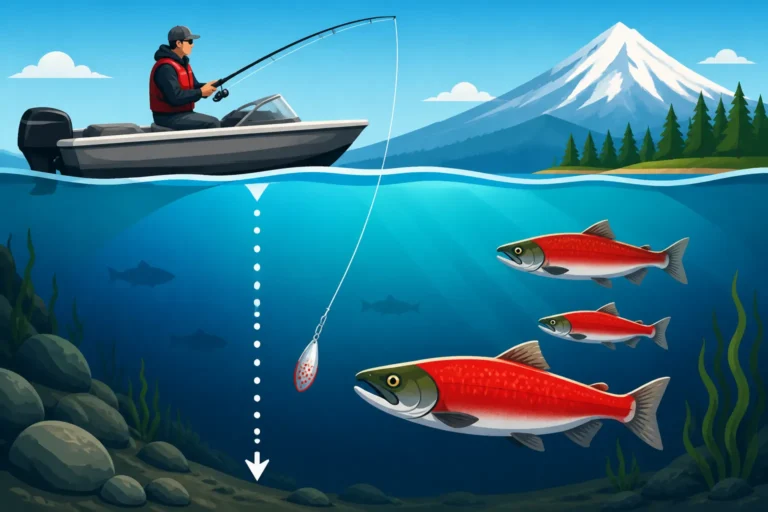
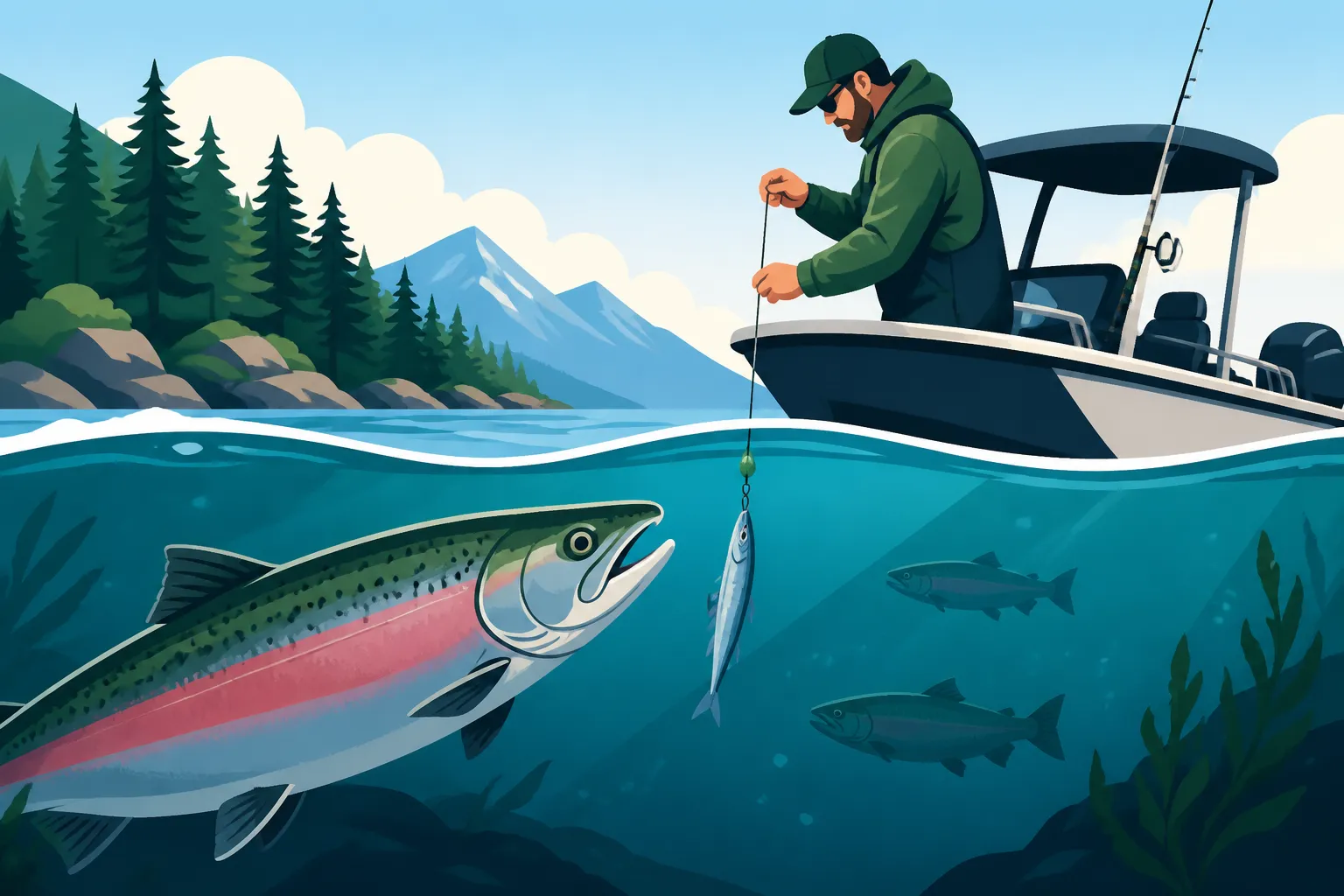
Mooching for salmon is an art form, a dance between angler, rod, and the elusive king of the sea. Unlike the constant forward motion of Trolling for Salmon in Washington's Puget Sound, mooching is a more patient, often subtle approach that relies on mimicking injured baitfish with a slow, vertical presentation. It's about letting your bait do the work, gently fluttering through the water column, drawing in curious and hungry salmon.
The Philosophy Behind Mooching
At its core, mooching is about natural presentation. You're not dragging a flashy lure at high speed; instead, you're presenting a real, authentic baitfish in a way that suggests vulnerability. Imagine a small herring, disoriented and struggling, slowly sinking and then being gently lifted. This erratic, wounded movement is irresistible to predatory salmon like Chinook and Coho. This technique is especially potent when salmon are in a neutral or negative mood, perhaps holding deep or in current seams, not actively chasing fast-moving offerings. It requires a keen sense of touch, attention to detail, and a deep understanding of how salmon feed and react to natural bait. It’s often a more engaging way to fish, as you’re constantly working the rod and feeling for those subtle takes.
Why Mooching Works So Well in Washington Waters
Puget Sound, with its deep, diverse structure, strong tidal currents, and abundant baitfish like herring and candlefish, provides the perfect environment for mooching. Salmon often stage in specific areas – near points, underwater humps, or current edges – waiting for bait to be swept to them. Mooching allows you to hold your bait in these strike zones longer, drifting it naturally with the current, rather than just passing over them quickly. This method is particularly effective when you've located a school of bait or a concentration of salmon on your fish finder. By staying put, or slowly drifting through the fish, you increase the chances of a salmon noticing and striking your offering. The clear, cold waters of the Sound also mean that a natural, unadulterated bait presentation often outperforms more artificial, flashy lures, making mooching a go-to technique for seasoned anglers.
Key Differences from Trolling or Jigging
While all three methods target salmon, their approaches are vastly different. Trolling involves covering large areas, pulling multiple lines with flashers and lures at a consistent speed, often used to locate scattered fish. Jigging, on the other hand, is a more aggressive, vertical presentation, often used when fish are tightly schooled and actively feeding on vertically oriented bait. Mooching sits somewhere in between. It’s vertical like jigging but focuses on a slower, more natural drift and sink, mimicking a stunned or injured baitfish. Trolling is about active searching; jigging is about rapid-fire strikes on active fish; mooching is about finesse and prolonged presence in a specific, productive zone. Mooching lines typically use lighter sinkers than jigging, relying more on the bait's natural action and rod work.
Essential Gear for a Successful Mooching Trip
Having the right equipment is paramount for mooching success. You don't need the most expensive gear, but reliable, well-matched components will significantly increase your effectiveness and enjoyment. Investing in quality gear, much of which can be found on online retailers like Amazon, makes a real difference when that big fish decides to bite.
Rods and Reels for Mooching Mastery
For mooching, you want a rod with a sensitive tip but plenty of backbone to handle a powerful Chinook Salmon: Washington's King of Fish. A typical mooching rod is 9 to 10.5 feet long, often made of graphite or a graphite composite. The longer length helps absorb the shock of a salmon's head shakes, provides better line control, and allows for a wider, smoother "lift and drop" motion during the retrieve. A fast to moderate-fast action tip allows you to feel the subtle nibbles, while the mid-section and butt give you the leverage to fight large fish.
When it comes to reels, a quality single-action "knuckle buster" mooching reel or a robust baitcasting reel is preferred. Single-action reels, often called "knuckle busters" for a reason, offer direct control and exceptional sensitivity, allowing you to feel every subtle movement of the bait and every tentative bite. The direct drive means you're literally fighting the fish with your hand on the spool, which is an exhilarating experience. For those who prefer a more traditional drag system, a quality level-wind baitcasting reel in a 300-400 size class, like a Shimano Tekota or Penn Squall, also works well, providing smooth drag and good line capacity. The key is a strong, reliable drag system that won't give out under pressure.
Line, Leaders, and Terminal Tackle Essentials
Your choice of line and leader is crucial for a stealthy presentation. Many moochers opt for a main line of 20-30 pound monofilament or braid, often with a monofilament top shot for stretch and shock absorption. If you're using braid as your main line, a high-quality, knotless fluorocarbon leader material is a must. Fluorocarbon is nearly invisible underwater, which can be a huge advantage in Puget Sound's clear waters. For leaders, 20-25 pound test is common, but some anglers will go lighter or heavier depending on water clarity and target species. When targeting strong Chinook, a 25-pound test leader often strikes the right balance between strength and stealth.
Terminal tackle includes swivels, lead, and hooks. You'll want good quality barrel swivels to prevent line twist, especially when using cut-plug herring. The weight of your sinker, or "mooching lead," is critical. It needs to be heavy enough to get your bait down to the desired depth quickly and keep it there, but not so heavy that it impedes the natural action of the bait. Typical mooching leads range from 2 to 8 ounces, with 4-6 ounces being very common in moderate currents. Sometimes a torpedo or cannonball lead works best, other times a longer "banana" style sinker allows for a more subtle drift. As for hooks, a tandem hook rig is standard. This usually consists of two sharp, strong octopus-style hooks, such as Gamakatsu or Owner hooks, sized 2/0 to 4/0, depending on the size of your bait. The top hook is snelled to the leader, and the bottom hook is then tied on about 4-6 inches below it.
Bait and Sinker Selection for Puget Sound
The cornerstone of mooching is fresh, high-quality bait. In Puget Sound, herring is king, but candlefish or anchovies can also be effective. Always choose the freshest bait available. Look for herring that are firm, shiny, and have clear eyes. Bait shops around the Sound, like those in Seattle or Everett, often carry excellent local herring. If you're buying online, you're looking for bait that has been properly brined and frozen to maintain its integrity.
The size of your herring should match the salmon you're targeting and the prevalent bait in the area. Smaller "green label" or "blue label" herring (4-6 inches) are great for Coho or smaller Chinook, while "red label" or "purple label" (6-8 inches or larger) are preferred for larger Chinook. Sinker selection, as mentioned, is dictated by depth and current. In shallower, calmer waters, a 2-3 ounce lead might be all you need. When fishing deeper, or in strong rips around places like Deception Pass, you might need to bump up to 6-8 ounces to maintain contact with your bait and prevent it from washing out of the strike zone. Keep a variety of sinker weights on hand; changing lead sizes is a simple adjustment that can make a world of difference.
Mastering the Art of Bait Rigging and Presentation
Mooching isn't just about dropping a piece of herring in the water; it's about making that herring look alive, injured, and irresistible. The way you cut, rig, and present your bait is what separates a good moocher from a great one.
The Perfect Herring Cut: Why it Matters
The classic mooching bait is a "cut-plug" herring. The cut-plug refers to a specific diagonal slice made through the herring, from behind the gills to the belly. This cut, along with the correct hook placement, imparts a unique, rotating or spiraling action to the bait as it sinks and rises through the water. This spin is crucial – it mimics a disoriented baitfish, creating vibrations and flashes that salmon detect and are attracted to.
The angle of the cut is critical. Too steep, and the bait will spin too tightly, appearing unnatural. Too shallow, and it won't spin enough, just wobbling aimlessly. It takes practice to find that sweet spot, usually around a 45-degree angle. Some anglers prefer a head-out cut, while others use a head-in cut. Both can be effective, but the head-out cut often provides a wider, more enticing spin. There are plenty of tutorials, even on platforms like YouTube, demonstrating the Best Way to Rig Herring for Puget Sound Chinook. Experimentation is key, as conditions and even individual salmon preferences can vary. Always use a very sharp knife for a clean, precise cut; a dull knife will tear the bait, ruining its action.
Rigging Techniques for Natural Action
Once you have your perfectly cut herring, the rigging process with your tandem hooks is next. This is where you ensure that beautiful spin comes to life.
The general method involves threading the leader through the cut portion of the herring from the belly side. The top hook of your tandem rig is then inserted just behind the gill plate, usually on the back side of the bait. This hook provides stability and ensures the bait remains upright. The bottom hook, which will often be the hook that catches the fish, is then gently inserted into the belly cavity or along the lateral line, ensuring it’s free to swing and snag the salmon. The exact placement can slightly alter the bait's spin, so experienced moochers often fine-tune this on the water.
The goal is for the two hooks to hold the bait securely while allowing it to spiral freely. You don't want the hooks to be so deep that they impede the bait's movement, but deep enough to prevent it from tearing off during a cast or retrieve. Some anglers use a small O-ring or bait thread to secure the herring's head or tail section, especially if the bait is softer. This attention to detail in rigging ensures that your bait looks as natural and alluring as possible when it hits the water.
Achieving the Right Depth and Drift
Knowing where the salmon are holding and presenting your bait at that exact depth is critical. Salmon, especially Chinook, often relate closely to structure or a specific thermocline. Your fish finder is your best friend here. Look for schools of baitfish, marks that resemble salmon, or prominent underwater features like humps, ledges, or reefs.
Once you’ve identified a promising depth, you need to get your mooching lead and bait down there. The general technique is to drop your bait to the desired depth, let it sink for a few seconds, then slowly lift your rod tip up, reeling in a few cranks as you drop it back down. This creates that enticing "wounded baitfish" action. The amount of line you let out, and the weight of your sinker, will determine how quickly and effectively you reach and maintain that depth. Stronger currents or deeper water will require heavier sinkers. The "drift" component is also vital. You want your boat to drift naturally with the current over the productive area, allowing your bait to cover ground without being actively trolled. This means paying close attention to your boat's speed and direction relative to the current and adjusting your position as needed. A common tactic is to drift over a known salmon holding spot, drop your baits, and work them through the fish.
Reading the Water: Tides, Currents, and Structure
Successful mooching is highly dependent on understanding the marine environment. Salmon don't just swim anywhere; they're influenced by the flow of water, the availability of food, and the cover provided by underwater features. Learning to "read the water" is a skill that takes time, but it's invaluable in Puget Sound.
Understanding Tidal Influence on Salmon Behavior
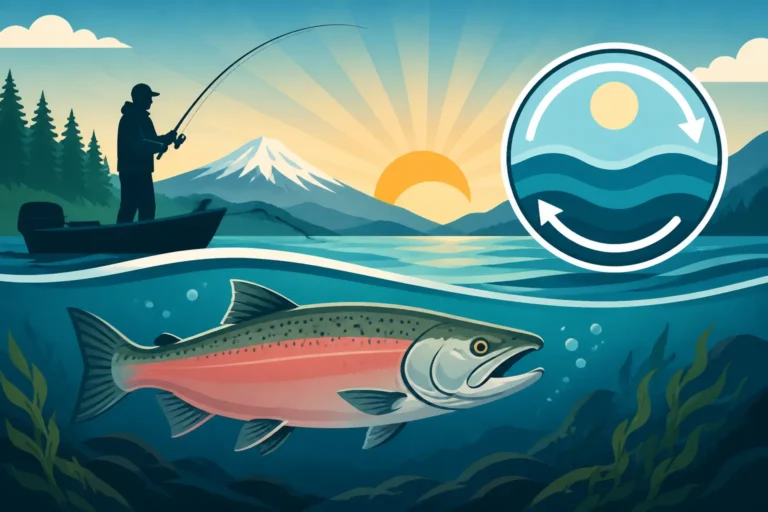
Tides are the lifeblood of Puget Sound, and salmon activity is inextricably linked to their ebb and flow. Salmon often become more active and feed more aggressively during specific tide stages. Generally, moving water, whether an incoming or outgoing tide, is best for salmon fishing. The current concentrates baitfish, pushing them against structure or through pinch points, making them easy targets for salmon.
Incoming tides often bring cooler, clearer, and more oxygenated water into the Sound, which can energize salmon. As the tide floods, baitfish move with the current, and salmon will position themselves to ambush them. Outgoing tides, particularly large ones, can also be productive, as they sweep baitfish out of bays and estuaries. Slack tide, when the water movement is minimal, can sometimes be slow, but it can also be a time when salmon gather in deeper holes, making them easier to target if you know where they are. Monitoring the tide charts and understanding Best Tides for Puget Sound Salmon Fishing in Washington for your specific fishing location is crucial. A fast-moving tide might require heavier lead to stay on the bottom, while a slower tide allows for lighter tackle and a more prolonged drift.
Identifying Productive Structure and Holding Areas
Puget Sound is a complex underwater landscape of rocky reefs, sandy flats, ledges, humps, and current seams. Salmon, being opportunistic predators, will position themselves near these features to conserve energy and ambush prey. Key structural elements to look for include:
- Points and Headlands: As currents flow around these, baitfish often get swept past, making them prime ambush points.
- Underwater Humps and Reefs: These elevated features break the current and attract bait, which in turn attracts salmon.
- Drop-offs and Ledges: Salmon will often hold along these depth transitions, especially where bait is present.
- Current Seams: Areas where fast-moving water meets slower water create a distinct "seam" that baitfish congregate in, and salmon patrol.
- Submerged River Mouths: Freshwater plumes can attract bait and salmon, especially during periods of heavy rain or salmon runs.
Your boat's electronics, specifically a good fish finder and GPS plotter, are indispensable for locating and marking these areas. Spend time studying marine charts of Puget Sound to identify promising structure before you even leave the dock. Many seasoned anglers also rely on local knowledge shared at tackle shops or online fishing forums to pinpoint current hotspots.
Strategies for Different Weather and Water Conditions
Washington weather is famously fickle, and conditions can change rapidly, influencing how and where salmon feed.
- Clear, Calm Days: In clear water and bright sunshine, salmon can be skittish. This is when a subtle presentation, lighter leaders, and fishing deeper can be most effective. Stealth is paramount.
- Overcast or Rainy Days: Lower light conditions often encourage salmon to feed higher in the water column or closer to the surface. They might also be less wary, allowing for a slightly more aggressive presentation.
- Windy/Choppy Conditions: While challenging to fish, choppy water can break up light penetration and make salmon feel more secure. However, maintaining boat control and feeling subtle bites becomes harder. Heavier lead may be necessary to keep your bait down.
- Turbid (Murky) Water: After heavy rains, some areas might become murky. Salmon rely heavily on their lateral line in these conditions. Consider baits with strong scent, and perhaps a slightly faster spin to create more vibration. Sometimes, fishing on the edges of the murky water, where it meets clearer water, can be productive.
Adapting your strategy to the prevailing conditions is a hallmark of a successful moocher. Don't be afraid to change your bait size, leader length, or sinker weight until you find what the fish are responding to.
Effective Mooching Techniques and Best Practices
Once you've got your gear ready and you understand the water, it's time to put it all together. Mooching is all about technique, patience, and knowing how to entice a strike and then successfully land your fish.
The Drop and Drift: Classic Mooching in Action
The core of mooching is the "drop and drift" method. After casting your bait out, usually 30-50 feet behind the boat, you allow your lead and herring to sink to your target depth. This is where your rod comes alive. As the boat drifts along, you slowly raise your rod tip up, then slowly lower it, reeling in a half to full turn of the reel handle on the downstroke. This motion imparts the characteristic "rise and fall" action to your cut-plug herring, making it spiral and flutter like a wounded baitfish.
The speed of your retrieve and the height of your rod lift will vary. Sometimes salmon prefer a slower, more subtle rise and fall; other times, a more aggressive jigging motion can trigger a strike. Pay attention to how the bait feels as it descends – you should feel the lead's weight, but also the subtle pull and wobble of the spinning herring. Many bites occur on the drop, so it's vital to maintain contact with your bait at all times. If you feel anything unusual – a tap, a sudden weightlessness, or just a "mushy" feeling – assume it's a bite and react accordingly.
Working the Rod: Adding Action to Your Bait
While the drop and drift is fundamental, effective mooching often involves a bit more finesse and rod work. Simply letting the boat's drift create the action isn't always enough. You want to actively work your rod to make your bait irresistible.
Imagine your rod tip as an extension of your bait. A gentle, rhythmic pump of the rod, combined with a slow retrieve, can create a varied and more natural presentation. Some anglers prefer long, slow lifts and drops, covering more of the water column. Others will impart quick, short twitches to the rod, making the bait dart and pause.
Don't be afraid to experiment with your retrieve speed and rod action. Sometimes a sudden, quick drop followed by a pause will trigger a reaction strike from a hesitant salmon. Other times, a slow, methodical retrieve will do the trick. The key is to avoid monotonous repetition. Mix it up, observe how your bait is behaving, and adjust based on what feels right and, more importantly, what the fish are telling you. This active rod work can be particularly effective when targeting Coho Salmon Fishing in Washington, which can be very aggressive once enticed.
Hook Set and Fighting Puget Sound Salmon
When a salmon hits, it can range from a light tap to a rod-bending thud. The most crucial thing is not to snatch the rod away too quickly. Salmon often mouth the bait first. Instead of a hard, immediate hook set, try a "loading" technique. When you feel a bite, drop your rod tip slightly towards the fish, let it take the bait, then slowly and firmly sweep the rod back and up, applying steady pressure. You'll often feel the weight of the fish as it turns away. This allows the salmon to fully engulf the bait and the hooks to set properly in its jaw.
Once hooked, be prepared for a fight. Puget Sound Chinook are incredibly powerful and will make blistering runs, often peeling line off your reel at an alarming rate.
- Keep your rod tip up: This provides leverage and acts as a shock absorber against head shakes and runs.
- Maintain steady pressure: Don't crank down on the drag too hard, as this can break your line or pull the hook. Let the fish run, but apply enough pressure to tire it out.
- Pump and Reel: When the fish pauses its run, lower your rod tip, reel down to take up slack, then lift the rod again to gain line. Repeat this "pump and reel" motion.
- Watch for head shakes: When a salmon shakes its head violently, lower your rod tip slightly to absorb the shock and prevent the hook from tearing out.
- Be aware of surroundings: If fishing from a boat, communicate with your crew. Be ready to move the boat or adjust other lines to avoid tangles.
Landing a big salmon is a team effort. Have a large, rubberized net ready and net the fish head-first once it's completely exhausted and on its side. Remember to handle fish with care, especially if you plan to release them, or those that are not legally retainable.
Safety, Etiquette, and Regulations on the Sound
Fishing in Puget Sound is a privilege, and with that comes responsibility. Understanding safety protocols, respecting other anglers, and strictly adhering to Washington fishing regulations are non-negotiable aspects of any successful mooching trip.
Navigating Busy Puget Sound Waters
Puget Sound is a bustling waterway, shared by recreational fishing boats, commercial vessels, ferries, kayaks, and pleasure craft. Safety is paramount.
- Vessel Checks: Before every trip, ensure your boat is in good working order. Check fuel levels, engine, battery, and safety equipment like life jackets (one for every person on board, accessible), flares, horn, fire extinguisher, and a first-aid kit.
- Weather Awareness: Puget Sound weather can change quickly. Always check the marine forecast before heading out and be prepared for sudden winds, chop, or fog. A reliable VHF radio is essential for marine weather updates and distress calls.
- Navigation: Be familiar with local charts, buoys, and potential hazards. Use your GPS plotter and sounder to navigate safely, especially in low light or fog.
- Right of Way: Understand marine rules of the road. Powerboats generally give way to sailboats, and all vessels should maintain a safe distance from ferries and large commercial traffic.
- Fishing with others: Maintain ample space between your boat and other fishing vessels. Avoid cutting off other boats' drifts or anchoring too close to active moochers. Good etiquette ensures everyone has a pleasant and safe experience.
Always inform someone on shore of your float plan – where you're going, when you expect to return, and who is with you. Cell phone service can be spotty in some areas of the Sound, so a reliable communication device like a VHF radio is a must.
Respecting Other Anglers and the Environment
Part of being a responsible angler is showing respect for fellow fishermen and the natural environment. Puget Sound is a finite resource, and preserving it for future generations is everyone's responsibility.
- Noise Levels: Keep noise to a minimum, especially when other boats are actively fishing nearby. Loud music or shouts can spook fish.
- Trash: Pack out everything you pack in. Never litter, and if you see trash, consider picking it up. Keeping our waterways clean benefits everyone.
- Respect Private Property: If fishing from shore, be mindful of private property boundaries.
- Fish Handling: Practice responsible catch-and-release if you're not keeping a fish, or if you accidentally catch a species that must be released (like wild steelhead in some areas). Minimize the time the fish is out of the water, use wet hands, and release it gently. Consider using a descending device for bottom fish caught from deep water.
- Fuel and Oil: Be careful when fueling your boat to avoid spills, which can harm marine life.
By demonstrating good sportsmanship and environmental stewardship, you contribute positively to the angling community and the health of Puget Sound.
Key Washington Fishing Regulations for Salmon Mooching
Washington's fishing regulations are complex and change frequently, especially for salmon. It is absolutely crucial to be familiar with the current rules for the specific marine area you are fishing in. Before every trip, you must check the Washington Fishing Regulations Every Angler Should Know and specifically Puget Sound Salmon Closures: What Washington Anglers Need to Know.
- License and Endorsement: Ensure you have a valid Washington fishing license, and if fishing for salmon and steelhead in the Columbia River system or tributaries, the appropriate Washington's Columbia River Salmon and Steelhead Endorsement, Explained. Always carry your license, whether physical or on the MyWDFW App, while fishing.
- Catch Record Card: If you are targeting salmon, steelhead, or halibut, you will need a The Washington Catch Record Card and What It Requires. This card is a legal document that must be filled out immediately upon retaining a fish. Understanding How to Fill Out a Washington Catch Record Card correctly is crucial to avoid penalties.
- Bag and Possession Limits: Be aware of the daily bag limits and possession limits for each species of salmon. These can vary by marine area, time of year, and even specific run sizes. For instance, the daily limit for Chinook or Coho can change throughout the season.
- Minimum Size Limits: Salmon species often have minimum size limits. Know these limits and measure your fish accurately.
- Retention Rules: Pay close attention to rules regarding fin-clipped vs. wild fish. Many fisheries are "hatchery selective," meaning you can only keep salmon with a clipped adipose fin. You must be able to identify How to Identify a Washington Chinook Salmon and other salmon species accurately.
- Gear Restrictions: While mooching typically involves standard gear, always be aware of any temporary or permanent gear restrictions, such as bait bans or specific hook requirements (e.g., barbless hooks).
Ignorance of the rules is not an excuse, and violating regulations can lead to significant fines, confiscation of gear, and even loss of fishing privileges. Stay informed by checking the WDFW website for emergency rule changes, which can happen mid-season.
| Feature | Mooching | Trolling | Jigging |
|---|---|---|---|
| Primary Bait | Cut-plug herring, anchovy | Plugs, spoons, hootchies, flasher/fly | Metal jigs, soft plastic jigs |
| Boat Motion | Slow drift with current, occasional repositioning | Consistent forward motion | Stationary or slow drift over specific spots |
| Presentation | Slow rise and fall, wounded baitfish spiral | Constant movement, erratic action (flasher) | Vertical up-and-down motion, fast retrieve |
| Target Fish | Chinook, Coho, targeting active or finicky fish | Chinook, Coho, covering large areas | Chinook, Coho, often over schools of bait |
| Rod Type | 9-10.5 ft, moderate-fast action, sensitive tip | 8.5-10 ft, medium-heavy, good backbone | 6-7.5 ft, fast action, powerful butt |
| Reel Type | Single-action (knuckle buster) or level-wind baitcaster | Level-wind baitcaster (e.g., Shimano Tekota) | Spinning or baitcasting, high retrieve ratio |
| Primary Depth | Mid-to-deep water column, near structure | Various depths depending on rigging | Mid-to-deep water column, often on bottom |
| Advantage | Finesse, natural presentation, sensitive | Covers water, efficient search, multi-rod | Fast action, good for schooling fish, simple |
Disclaimer
The information provided in this guide is for general informational purposes only and is not a substitute for official regulations. Fishing rules and seasons in Washington State are subject to change by the Washington Department of Fish and Wildlife (WDFW). Always consult the most current WDFW fishing regulations pamphlet and emergency rule updates before heading out on the water. It is the angler's responsibility to know and adhere to all applicable laws and regulations.