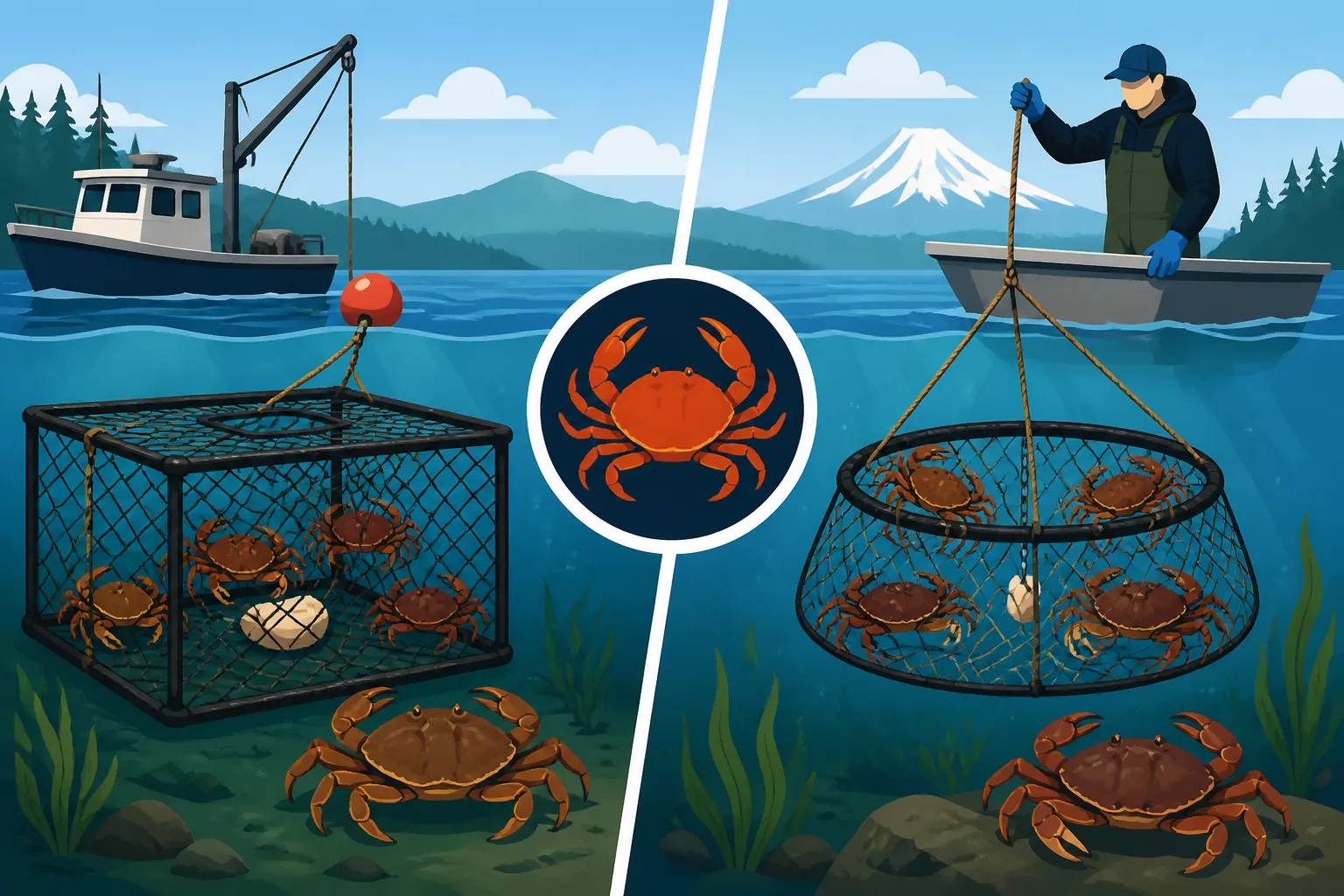
Crabbing With Pots vs Rings in Puget Sound
The world of crabbing in Washington’s Puget Sound can feel a bit overwhelming, especially when you’re staring at all the gear options and trying to figure out what’s best for your particular adventure. Many of us have stood in a tackle shop, or scrolled through endless product pages, wondering if a traditional crab pot is truly better than a more portable crab ring, or vice-versa. It’s a common frustration, and nobody wants to invest in gear that just doesn't quite fit their crabbing style or the local conditions. This guide is here to untangle that confusion, offering a deep dive into the practical realities of crabbing with pots versus rings in Puget Sound, so you can make an informed choice and spend less time worrying and more time catching delicious Dungeness.
Understanding the Basics: Crab Pots vs. Crab Rings
Before we dive into the nitty-gritty of advantages and disadvantages, let’s get a clear picture of what we're actually talking about. Crab pots and crab rings both serve the same ultimate goal—luring in those tasty Dungeness and Red Rock crabs—but they go about it in fundamentally different ways. The choice often comes down to your personal crabbing philosophy, the specific waters you’re fishing, and how much active involvement you want in the process. It's not just about what catches crabs, but how it fits into your overall Puget Sound crabbing experience.
What Exactly is a Crab Pot?
A crab pot, in its most common form, is a rigid, enclosed trap designed to hold crabs for an extended period. Think of it as a small, underwater cage. They are typically made from heavy-gauge wire mesh, sometimes coated with plastic for durability, and often have a solid steel frame to give them weight and stability on the seafloor. The design usually incorporates one or more one-way entrances—often funnel-shaped or spring-loaded doors—that allow crabs to easily enter but make it difficult for them to escape. The pot is designed to be baited, dropped to the bottom, and left to "soak" for several hours, or even overnight, before being retrieved.
The substantial weight of a crab pot is a key feature. This weight, combined with its sturdy construction, allows it to remain stable on the seabed, resisting currents, tides, and even being nudged by larger marine life. This stability is crucial in the dynamic waters of Puget Sound, where strong currents can easily move lighter gear. Modern crab pots also feature biodegradable escape cord, a legal requirement in Washington, ensuring that if a pot is lost, it will eventually degrade and allow trapped crabs to escape, preventing ghost fishing. You'll find a wide variety of sizes and shapes, from square to round, with different entry mechanisms, but the core principle of a passive, soak-and-wait trap remains the same. Many anglers find durable, well-designed pots on sites like Amazon, ready to be deployed.
Deciphering the Crab Ring
A crab ring, sometimes referred to as a crab net or hoop net, is a much simpler, more active piece of gear. It typically consists of two or more concentric hoops, usually made of steel or aluminum, with netting stretched between them. The most common design has a larger hoop at the bottom and a smaller hoop at the top, connected by netting that forms a conical or basket shape when deployed. When resting on the bottom, the netting lies flat, forming a sort of plate or shallow dish. When retrieved, lines connected to the top hoop are pulled, drawing the smaller top hoop upwards and creating a "basket" that traps any crabs that were on the flat netting.
Unlike pots, crab rings are not designed to hold crabs for long periods unattended. They rely on active participation from the angler. You bait them, drop them down, and then actively pull them up every 15-30 minutes, or even more frequently, to check for crabs. This makes for a much more hands-on crabbing experience. They are considerably lighter and more portable than pots, often folding flat for easy storage. While less secure for long soaks, their simplicity and responsiveness make them incredibly popular, especially for those crabbing from a dock, pier, or kayak where frequent checking is convenient. They're a fantastic option if you enjoy the constant engagement of checking your gear rather than the anticipation of a long soak.
The Advantages of Using Crab Pots in Puget Sound
For many serious crabbers in Washington, the crab pot reigns supreme, and for good reason. These sturdy devices offer a set of benefits that are particularly well-suited to the diverse and often challenging conditions found in Puget Sound. If you're looking for efficiency, security, and the ability to cover more ground, a properly deployed crab pot is often the way to go.
Superior Soaking Time and Catch Security
One of the most significant advantages of crab pots is their ability to "soak" for extended periods without requiring constant attention. Once you've baited your pot with something irresistible like fish carcasses, chicken, or specialized crab bait, you can drop it to the seabed and leave it for several hours, even overnight. The one-way entry points are engineered to allow crabs to enter easily but make escaping a real challenge. This design means that once a crab is in, it's generally staying put, giving you confidence that your efforts won't be in vain due to an escape artist.
This long soak time translates directly into greater potential catch numbers. Crabs, being scavengers, will eventually find your bait if it's left out long enough. You don't have to be right on top of your gear the whole time, constantly checking and resetting. This passive approach is incredibly valuable, especially for anglers operating from a boat where moving around to check multiple pieces of gear can be time-consuming. Imagine setting your pots in the evening, enjoying a calm night on the water, and returning at dawn to haul up a pot brimming with legal-sized Dungeness. It’s a truly satisfying experience that rings simply can’t offer due to their design. For advice on how long you should actually leave your gear down, you might want to read our article on How Long to Soak a Crab Pot in Puget Sound.
Ideal for Deeper Waters and Stronger Currents
Puget Sound is renowned for its deep waters and sometimes powerful tidal currents, especially in areas like Admiralty Inlet or near narrows. This is where the inherent design of a crab pot truly shines. Their heavy construction ensures they stay put on the bottom, resisting the force of moving water that would easily drag lighter crab rings across the seabed or even sweep them away. This stability is critical because if your gear isn't stationary, crabs are less likely to find it, and even if they do, the current might prevent them from entering.
Furthermore, pots are ideal for deeper water applications, which are common when targeting Dungeness crab in many parts of the Sound. Deploying and retrieving a heavy pot from depths of 50, 100, or even more feet is a straightforward process, aided by a reliable pot puller if you're on a boat. The weight ensures a quick descent, reducing the chance of your bait being picked apart by surface-feeding birds or smaller fish before it even reaches the bottom. This robustness also means less gear loss due to currents, saving you the frustration and cost of replacing lost traps. It's a pragmatic choice for serious anglers who spend time in the main channels and deeper bays of Puget Sound.
Navigating WDFW Pot Regulations
Crabbing in Washington, especially with pots, comes with a specific set of rules and regulations designed to ensure sustainable harvesting and reduce gear conflicts. It's not just about tossing a pot over; it's about doing it legally and responsibly. The Washington Department of Fish and Wildlife (WDFW) has clear guidelines regarding crab pots, including limits on the number of pots per person, minimum mesh size, escape rings, and the crucial requirement for a biodegradable escape cord. This cord ensures that if a pot is lost, it won't continue to "ghost fish" indefinitely, trapping crabs that will never be harvested. You can often find WDFW-compliant escape cord kits on Amazon, making it easy to ensure your pots meet the requirements.
Each pot must also be clearly marked with the owner's name and address or phone number. Buoys attached to the pot line must also be properly marked, and the main buoy itself must be fluorescent red or orange with contrasting numbers. These regulations are in place for a reason: to identify gear, prevent poaching, and ensure that if a pot is lost, its owner can be identified, and the gear can potentially be returned. Understanding these rules is fundamental to a successful and legal crabbing trip. You'll find a full rundown of Washington Fishing Regulations Every Angler Should Know which includes these crabbing specifics, and it's always wise to check the latest WDFW pamphlet.
The Benefits of Crabbing with Rings in Washington Waters
While crab pots have their undeniable strengths, crab rings offer a different, equally enjoyable, and often more accessible crabbing experience, particularly in specific situations and for certain types of anglers. They cater to those who prefer a more active approach, value portability, or are working within certain logistical constraints.
Simplicity, Portability, and Cost-Effectiveness
Crab rings win hands down when it comes to simplicity, portability, and initial cost. They are generally much less expensive than robust crab pots, making them a great entry point for new crabbers or those on a tighter budget. You can often pick up a decent crab ring for a fraction of the cost of a quality pot. Their design is inherently straightforward: drop, wait a short while, and pull. There are no complex escape mechanisms or heavy frames to worry about, though you still need to know How to Tell a Male From a Female Dungeness Crab when sorting your catch.
The portability factor is huge. Many crab rings fold flat or collapse, making them incredibly easy to transport in a small car, kayak, or even on public transit. If you're planning on How to Catch Dungeness Crab From a Dock or a public pier, carrying a few lightweight rings is far more practical than lugging heavy pots. Storage at home is also a breeze. This ease of use and transport makes them perfect for spontaneous crabbing trips, family outings, or for those who simply don't have the space or need for bulkier gear. It truly lowers the barrier to entry for enjoying Washington's fantastic crab fishery.
Perfect for Shorter Soaks and Active Crabbing
As mentioned, crab rings are designed for active crabbing. This means you drop them down, and after a relatively short soak time—typically 15 to 30 minutes, sometimes even less—you pull them up to check. This constant engagement is a huge draw for many crabbers. It’s a dynamic, hands-on activity, perfect for families with kids who love the excitement of checking the trap frequently. There’s no long wait, just continuous action.
This active approach is particularly effective in shallower waters, calmer bays, or when crabbing from a stationary platform like a dock or anchored boat. The lighter weight of the ring allows for easy deployment and retrieval, even by hand. While they don't offer the long-term holding power of a pot, their quick turnaround means you can often catch several crabs in a short session if you're in a productive area and diligent about checking. It's a great way to introduce beginners to the thrill of crabbing, keeping them engaged and entertained without the patience required for pot fishing. For tips on sorting your catch, understanding Dungeness Crab Identification and Legal Size is key.
Understanding Ring-Specific Rules
Just like pots, crab rings are subject to WDFW regulations, though some aspects differ due to their design. While they don't typically require escape cords like pots (because crabs aren't left in them to potentially ghost fish), daily bag limits and size restrictions apply equally. It’s crucial to know How Bag and Possession Limits Work in Washington for Dungeness and other crab species. For instance, you generally need to release all female Dungeness crabs, regardless of size, and male crabs must meet a specific minimum carapace width to be legal. You can learn more about these specifics by reading our article on Can You Keep Female Dungeness Crab in Washington?.
Ring buoys still need to be marked with your identifying information, similar to pots, and you must still carry your valid Washington fishing license and shellfish endorsement. The number of rings you can fish at one time is also regulated, usually aligning with the pot limit per person. It's all part of ensuring a healthy crab population for future seasons. Always double-check the current WDFW pamphlet for the specific marine area you're crabbing in, as rules can sometimes have subtle variations or emergency changes. Being informed means you're crabbing responsibly and legally.
Factors to Consider When Choosing Your Gear
Deciding between crab pots and crab rings isn't a one-size-fits-all situation. Your ideal choice hinges on several personal and environmental factors. It's about aligning the gear with your crabbing aspirations, the specific locations you frequent, and your personal preferences for how you want to spend your time on the water. Nobody wants to find themselves in a situation where their gear is ill-suited to the task at hand.
Assessing Your Location and Water Conditions
The physical characteristics of your chosen crabbing spot in Puget Sound are perhaps the most critical determinant. Are you planning to crab from a boat in the deep, often current-swept waters of Saratoga Passage or near the Tacoma Narrows? Or are you sticking to calmer, shallower bays closer to shore, perhaps from a public pier in Seattle or Everett?
For deeper water and areas with strong tidal currents, heavy crab pots are almost always the superior choice. Their weight anchors them, preventing them from being swept away or tumbled by the current, which would reduce their effectiveness and increase the risk of loss. Imagine dropping a lightweight ring into a ripping tide; it would simply be dragged along the bottom, making it impossible for crabs to find, let alone enter. If you plan to explore Washington's Puget Sound Fishing Spots for Salmon and Bottomfish for crabs, chances are pots will be a better bet for many areas.
Conversely, if your crabbing is primarily from a stationary dock, pier, or a very calmly anchored boat in shallow, protected water, crab rings become highly practical. Here, strong currents aren't an issue, and the ease of deploying and retrieving rings frequently makes them incredibly efficient. They're also less likely to get snagged in shallower, rockier bottoms if you're constantly monitoring them. Consider if your usual spot is influenced by swift tides or if it's a placid, sheltered cove. This honest assessment will steer you towards the right gear.
Your Crabbing Style and Time Commitment
Your personal crabbing style and how much active involvement you desire will also heavily influence your gear choice. Do you prefer a relaxed, more passive approach, setting your gear and then focusing on other activities, or perhaps just enjoying the scenery while you wait for a substantial haul? If so, crab pots are your match. They require an initial effort for deployment and baiting, and then you largely leave them alone until retrieval. This "set it and forget it" mentality (within legal soak times, of course) appeals to many who enjoy the anticipation of a big pull after a good soak.
On the other hand, if you thrive on constant engagement, enjoy the rapid-fire excitement of checking traps frequently, and prefer a more hands-on experience, crab rings will likely bring you more joy. This active style is almost meditative for some, a constant rhythm of dropping, waiting, and pulling. It’s also fantastic for keeping younger crabbers entertained, as the wait time between checks is minimal, reducing boredom. Think about how you envision your ideal crabbing day: long periods of patient waiting with big payoffs, or short, frequent bursts of action?
Budget and Storage Considerations
Let's be realistic about the practicalities. Budget constraints and storage space are often overlooked but important factors. Quality crab pots, especially those built to withstand the rigors of Puget Sound, can be a significant investment. They are heavier, bulkier, and require more space in your vehicle for transport and in your garage or shed for storage. If you're outfitting a boat with multiple pots, the costs can add up quickly, not to mention the need for a pot puller on board. However, this upfront investment often translates to durability and effectiveness for years to come. While searching for gear, you might find a good selection of durable crab pots on sites like Amazon, making it easier to compare prices and features.
Crab rings, by contrast, are generally much more affordable. Their lighter weight and often collapsible design mean they take up minimal space. You can easily store several rings in a small corner, or even under a boat seat. This makes them a more appealing option for casual crabbers, apartment dwellers with limited storage, or those who simply don't want to dedicate a large portion of their budget to crabbing gear. While they may not be as robust for heavy-duty, deep-water applications, their cost-effectiveness and compact nature make them an excellent choice for accessible crabbing experiences. Don’t forget to factor in the cost of Best Bait for Washington Dungeness Crab and other accessories for either option.
Rigging and Deploying Your Crab Gear Effectively
Once you’ve chosen between a pot or a ring, the real fun begins: getting your gear ready and into the water. Proper rigging and deployment are just as crucial as choosing the right gear itself. A well-prepared pot or ring, correctly baited and deployed, significantly increases your chances of a successful outing in Puget Sound. It’s more than just dropping it over the side; it’s about understanding the nuances that lead to a full cooker.
Baiting Strategies for Pots and Rings
Bait selection and placement are paramount for attracting crabs, whether you’re using a pot or a ring. Crabs are primarily scavengers, so strong-smelling, oily baits tend to be the most effective. Popular choices include salmon carcasses (often available at fish cleaning stations or local fish markets), chicken necks or legs, mink or cat food (often canned, punctured, and placed inside a bait cage), and even specialized commercial crab baits. Freshness and potency are key; old, stale bait won't attract nearly as many crabs.
For crab pots, you want your bait secured in a robust bait cage or mesh bag that prevents crabs from easily devouring it too quickly. The goal is to make the bait last for the entire soak, slowly dispersing scent to draw crabs in. Placing the bait in the center of the pot often works best, away from the immediate entry points, encouraging crabs to fully enter the trap rather than just reaching in. Some crabbers use multiple bait containers for maximum scent dispersal. For crab rings, where the soak time is shorter, you can be a bit more flexible. Bait in a mesh bag tied to the center of the ring, or even a punctured can, works well. Since you’re pulling it up frequently, the bait doesn't need to last as long, but it still needs to be potent to quickly draw crabs to the flat netting.
Essential Accessories and Buoy Systems
Regardless of whether you choose a pot or a ring, certain accessories are non-negotiable for safe and legal crabbing in Washington. First and foremost, you need a strong, rot-resistant line (often weighted to prevent entanglement with propellers) long enough to reach the bottom and still have plenty of slack at the surface, especially accounting for tides. For deep-water pots, you might need hundreds of feet of line.
Next, a clearly marked buoy system is crucial. The primary buoy must be fluorescent red or orange with contrasting identifying marks (your WDFW customer ID, name, or phone number). Many crabbers also use a secondary, smaller buoy for added visibility and to help locate their gear in chop or crowds. If you're using pots, a durable pot puller (manual or electric) will save your back, especially when hauling up multiple heavy pots from depth. For those crabbing from shore or a dock, a sturdy gaff hook can be invaluable for reaching and securing your line. Don’t forget a measuring device to ensure your crabs meet the Legal Dungeness Crab Size before you ever consider putting them in your cooler. You can often find comprehensive crabbing kits, including line and buoys, at sporting goods stores or online retailers like Amazon.
Safe and Responsible Deployment Practices
Deploying your crab gear safely and responsibly is vital for both your success and the health of the marine environment. Before dropping your gear, always scan the area for other boat traffic, divers, or known navigation channels. Avoid deploying pots or rings in shipping lanes or areas where they might become a hazard. If you're in a boat, make sure your line is clear of propellers and any other potential snags before letting go.
When dropping a pot, ensure it lands flat on the bottom. If it lands on its side, the escape rings or entry funnels might not function correctly, hindering your catch. For rings, a smooth, controlled descent is also best. Always keep an eye on your buoy as you deploy, making sure it surfaces cleanly and doesn't get tangled in your line or pulled under by strong currents. Knowing your specific marine area's boundaries and any temporary closures is also critical. The WDFW website provides up-to-date information on fishing seasons, and for general guidelines, check out our article on Crabbing and Shellfishing in Washington's Puget Sound. Responsible deployment means not just catching crabs, but also being a good steward of our precious waterways.
Troubleshooting Common Crabbing Challenges
Even with the right gear and knowledge, crabbing in Puget Sound can throw a few curveballs. Lost gear, low catches, and even dealing with escape artists are common frustrations. But don't worry, many of these challenges have practical solutions and preventative measures. A little foresight and understanding can turn a potentially frustrating day into a successful one.
Dealing with Lost Gear and Entanglements
One of the most disheartening experiences for a crabber is losing gear, whether it's a valuable pot or a simple ring. Strong currents, accidental cutting by boat propellers, or even theft can lead to lost traps. To minimize this, ensure your buoy system is highly visible and clearly marked. Using a longer line than necessary, accounting for the highest tides and currents, helps prevent your buoy from being pulled under. Many experienced crabbers use two buoys per pot line for extra visibility and redundancy.
Entanglements with boat propellers are a significant concern, both for your gear and for other boaters. Using weighted line (sinking line) can help keep the main line on the bottom and out of the path of propellers. If you spot your buoy getting pulled under by a strong current, you might consider moving your gear to a calmer area. If you do lose a pot, report it to WDFW. They have programs to retrieve derelict gear, which not only helps clean up the Sound but also reduces ghost fishing. Investing in a quality buoy and line from a reputable brand (you can find these components on Amazon, for example) can prevent premature failures.
Maximizing Your Catch and Minimizing Escapes
Sometimes, despite your best efforts, you pull up a pot or ring only to find a meager catch, or worse, signs that crabs have entered but then escaped. Maximizing your catch involves more than just good bait; it's also about timing and location. Researching prime crabbing areas, checking tide charts for optimal feeding times (slack tide is often great), and understanding seasonal crab movements are crucial. While you can't always control the crabs, you can control your strategy. Knowing When Chinook Salmon Run in Washington's Puget Sound might also help identify areas where predators are less likely to steal your bait, although this is more relevant for salmon fishing than crabbing.
To minimize escapes from pots, ensure the one-way funnels are intact and properly oriented. Crabs are incredibly resourceful, and a damaged or incorrectly installed escape mechanism can be their ticket out. For crab rings, the key is quick retrieval. If you let the ring sit too long, crabs can and will walk off. A slow, steady pull is also important for rings; a sudden jerk can launch crabs out of the collapsing net. Another factor is bait preservation. If your bait is being devoured too quickly by crabs or other marine life, they might not stay in the pot or on the ring long enough. Consider using bait cages with smaller mesh or tougher baits to prolong their attraction. And remember, always check your crabs against the How to Measure a Legal Dungeness Crab guidelines before putting them in your keeper bucket!
Disclaimer
The information provided in this guide is for general informational purposes only and is not intended as legal advice regarding fishing regulations. Washington fishing regulations, including those for crabbing, are subject to change by the Washington Department of Fish and Wildlife (WDFW). It is the individual angler's responsibility to consult the most current WDFW fishing regulations pamphlet and any emergency rule changes before engaging in any fishing or crabbing activity. Failure to comply with regulations can result in fines and penalties.