Do Wardens Check Licenses on Washington Rivers?
There's nothing quite like the feeling of being out on a Washington river, casting a line, and just enjoying the peace and quiet. But for many anglers, especially newer ones or those visiting from out of state, that serene moment can be interrupted by a nagging question: "What if a game warden shows up?" That sudden jolt of worry about whether your license is in order, or if you've accidentally missed some obscure regulation, is a completely normal and common anxiety. This guide is here to address that directly, explaining if, why, and how wardens check licenses on Washington's rivers, and what you need to know to ensure your fishing trip stays smooth, legal, and stress-free.
Why Wardens Are Out There and What They're Looking For
It's easy to see a game warden as just someone looking to hand out fines, and trust me, I've had my share of nervous moments when seeing their truck pull up to a boat launch. But their role is far more significant than just being the "rule police." Washington Department of Fish and Wildlife (WDFW) enforcement officers are primarily guardians of our state's precious natural resources. They're out there to protect fish and wildlife populations, ensure fair chase, and uphold the regulations that make sustainable fishing possible for everyone, for generations to come.
Think about it: without enforcement, our rivers and lakes would quickly be depleted. The limits and seasons we have in place aren't arbitrary; they're scientifically determined to ensure fish populations can thrive. When a warden asks to see your license, they're not just trying to spoil your day. They're ensuring you're contributing to the system that pays for hatcheries, habitat restoration, and the very management that keeps those fish in the water for you to catch. This funding mostly comes from license sales. So, by carrying a valid license, you're doing your part. They're also checking for adherence to other critical rules, like proper gear use, bait restrictions, and ensuring you're not exceeding bag limits, all of which are covered in the detailed Washington Fishing Regulations Every Angler Should Know.
They are specifically trained to look for a few key things. First and foremost, is your fishing license valid for the waters you're in and the species you're targeting? Are you a resident claiming a resident license, or an out-of-state angler with the correct Washington Fishing License Guide for Nonresidents? Beyond the license itself, they'll often observe your fishing practices. Are you using barbless hooks where required, especially for sensitive species like wild steelhead? Are you fishing with the correct number of rods? If you have a two-pole endorsement, for instance, they'll verify that. They’ll also be looking at your catch – are the fish of legal size, and have you properly recorded them on your The Washington Catch Record Card and What It Requires if it's a species that requires it, such as salmon or steelhead? It's a comprehensive check to make sure everyone is playing by the rules designed to preserve our angling opportunities.
Where and When Wardens Conduct Checks
The notion that wardens only check at popular spots or during peak seasons is a myth that can get anglers into trouble. The reality is, WDFW enforcement officers can and do conduct checks almost anywhere and anytime fishing activity is occurring on Washington's rivers. They are specifically deployed based on reports, known problem areas, and general patrol patterns to maximize their effectiveness in protecting resources.
You're most likely to encounter a warden at common access points like boat launches, public fishing piers, popular bank fishing locations, or even just along the side of the road where anglers park to access the river. For example, on a busy river like the Cowlitz during a salmon run, it's almost guaranteed you'll see wardens patrolling various sections, from the hatchery to downriver boat launches. They might even pull alongside your boat while you're actively fishing to initiate a check. It’s not about finding fault; it’s about maintaining a visible presence to deter violations and educate anglers. Don't be surprised to see them at less obvious spots too; they know the hidden trails and remote stretches just as well as the locals do, so thinking you can "hide" from checks is a risky game to play.
Beyond the physical location, the timing of checks is also highly variable. Wardens don't just work 9 to 5. They're out there at dawn when the bite is best, at dusk as anglers are leaving, and sometimes even in the dead of night, especially if there's suspicion of illegal activity like poaching. They respond to peak seasons for specific fisheries, such as the When Chinook Salmon Run in Washington's Puget Sound or the When Coho Salmon Run in Washington on various rivers. During these intense periods, their presence is significantly heightened. They also perform targeted checks during emergency closures or rule changes, ensuring anglers are aware of and complying with Emergency Rule Changes: Why Washington's Rules Shift Mid-Season. It’s a dynamic, unpredictable schedule, designed to cover all bases and ensure compliance across the board, not just in the most obvious places.
What Happens During a License Check and What You Need to Do
So, you're out on the Skagit River, enjoying a beautiful morning, and then you see it: a WDFW vehicle approaching, or an officer wading towards you. Your heart might do a little flutter, but there's no need to panic if you're prepared. The key to a smooth encounter is courtesy, cooperation, and having your documents ready.
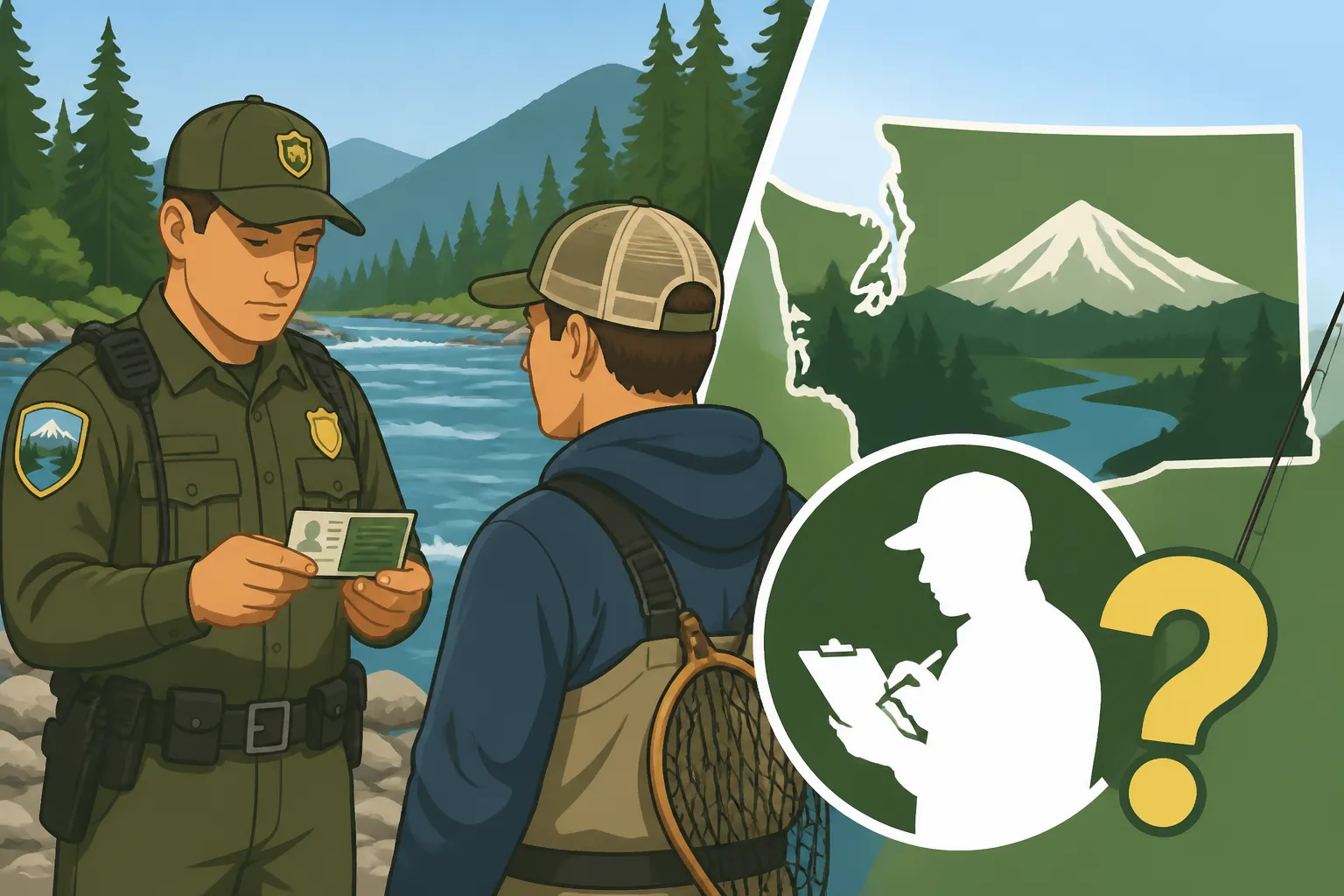
When a warden approaches, they will identify themselves as a WDFW enforcement officer. They'll typically ask to see your fishing license and often your Catch Record Card, if applicable. They might also ask to inspect your fishing gear and any fish you have in your possession. Your best course of action is to respond politely and cooperatively. Answer their questions truthfully and provide the requested documentation without hesitation. This isn't the time to be argumentative or evasive; it will only make the situation more difficult for everyone involved. If you've been careful to keep your Carrying Your Washington Fishing License: Paper, Phone or the MyWDFW App handy, perhaps in a waterproof pouch that you can easily grab from your tackle bag – sometimes even found on Amazon – then this part of the check will be a breeze.
Having your license readily accessible is paramount. While many anglers now rely on digital versions, it's wise to understand the rules for Can You Show Your License on Your Phone in Washington? and Do You Need to Print Your Washington Fishing License?. The What the MyWDFW App Is Used For is incredibly helpful for displaying your license and even reporting catch electronically. However, technical issues can happen – dead phone batteries, poor signal – so having a physical copy as a backup, or at least a screenshot saved to your phone, can prevent a lot of hassle. The warden isn't going to wait around while you try to troubleshoot your phone or remember your login details. They appreciate efficiency, as it allows them to continue their patrols and cover more ground.
During the inspection, the officer might also ask about your fishing methods, what you've caught, or where you plan to fish next. This is a normal part of their duties to gather information and ensure compliance. If you have any questions about specific regulations, this is actually a great opportunity to ask a knowledgeable professional. Many wardens are happy to clarify rules or offer advice, turning a potentially stressful encounter into a helpful learning experience. Remember, they are there to enforce regulations, but also to educate the public and protect the resource. A friendly, respectful exchange benefits everyone, and you might even pick up a useful tip or two about Where to Find Current Washington Fishing Rules.
The Consequences of Not Having a Valid License
Let's be realistic: fishing without a valid license in Washington isn't just a minor oversight; it's a violation of state law, and the consequences can range from a hefty fine to more severe penalties. Ignorance of the law is generally not considered an excuse, so understanding the potential repercussions is crucial for every angler. It's a scenario that every angler hopes to avoid, but one that’s easily preventable with a little preparation.
The most common penalty for fishing without a license is a monetary fine. The exact amount can vary depending on the specific circumstances, such as whether you had no license at all, the wrong type of license (e.g., freshwater when fishing saltwater without the proper endorsement), or if you were simply unable to produce it when requested. These fines can quickly add up, often costing significantly more than the annual license itself. For instance, a basic Fine for Fishing Without a License in Washington can be hundreds of dollars, far more than the minimal cost of a Washington Combination License Cost. It's a stark reminder that trying to save a few bucks by skipping the license is a truly false economy. Plus, if you're caught fishing for a specific species without the required endorsement, like a Washington's Columbia River Salmon and Steelhead Endorsement, Explained, that could also lead to additional fines.
Beyond the immediate financial penalty, there can be other, more serious repercussions. Depending on the severity of the violation or if it's a repeat offense, you could face the suspension or revocation of your fishing privileges, meaning you wouldn't be allowed to purchase a license for a set period. In some cases, especially involving poaching or egregious violations of How Bag and Possession Limits Work in Washington, equipment could even be seized. For example, if you're found to be way over the Salmon Possession Limit in Washington on the Columbia River, a warden might confiscate your catch, and potentially your gear, as evidence. These are not just inconveniences; they can significantly impact your ability to enjoy fishing in the future. Imagine having your prized fishing rod, perhaps a high-quality one you diligently saved for and bought from Amazon or a local tackle shop, confiscated due to a preventable mistake.
It's also worth noting that if you're fishing with family or friends, and you're the only one without a valid license, it can reflect poorly on the entire group and potentially put them in an awkward situation. Ensuring everyone in your party, including any kids over the minimum age who need one, has their Washington Fishing License Guide for Nonresidents or resident equivalent, is just good practice and part of being a responsible angler. Taking the time to properly fill out How to Fill Out a Washington Catch Record Card is also critical, as failure to do so can lead to fines too. Don't let a simple oversight turn a relaxing day on the river into a costly and frustrating ordeal.
Essential Documentation for River Anglers
Being prepared for a warden check on Washington rivers means having all your ducks (or rather, fish) in a row. It's not just about the license itself, but often other critical documents and permits that prove you're fishing legally and responsibly. Thinking ahead about what you'll need will make any encounter with WDFW enforcement a breeze.
At a minimum, you absolutely must have your valid Washington fishing license. This includes the correct type of license for the waters you're in (freshwater, saltwater, or a combination). Remember that a Washington Annual Fishing License Validity Period typically runs from April 1st to March 31st of the following year, so always double-check the expiration date. It's easy to forget to renew, especially if you only fish occasionally! Beyond the basic license, if you're targeting specific species or using particular gear, you'll need the appropriate endorsements. For instance, if you plan to fish for salmon or steelhead in the Columbia River system, the Columbia River Salmon and Steelhead Endorsement Cost is mandatory. And if you’re using two fishing rods where permitted, you'll need the Washington's Two-Pole Endorsement and Who Needs One. These endorsements aren't optional; they're integral parts of legal compliance.
Another absolutely crucial piece of documentation for many popular river fisheries, especially for salmon and steelhead, is your Catch Record Card. This paper card is more than just a formality; it's a vital tool for WDFW to monitor fish populations and manage seasons. You're required to possess it when fishing for certain species, and you must immediately record any kept salmon, steelhead, halibut, or sturgeon. Not having a Catch Record Card when one is required, or failing to fill it out correctly, can lead to its own set of Fines and Penalties for Common Fishing Violations. While there's talk of Electronic Catch Record Cards and the Fish Washington App, the paper card is still the standard for many species. Make sure you understand When a Catch Record Card Is Required in Washington for your target species and river.
Finally, always carry a valid form of personal identification, such as your driver's license. This is necessary for the warden to verify that the person holding the fishing license is indeed the rightful owner. If you're using a digital license on your phone, your ID helps confirm your identity. For non-residents, an out-of-state ID is sufficient. Keeping all these documents in a single, easily accessible, waterproof location – like a dedicated fishing wallet or a small dry bag you might have sourced from Amazon – will save you a lot of fumbling and stress should a warden ask to see your papers. Being prepared and organized shows respect for the rules and makes the warden's job, and your fishing experience, much smoother.
| Document Type | Required For | Purpose | Where to Get It |
|---|---|---|---|
| Fishing License | All anglers 15+ | Basic permission to fish in Washington | WDFW website, authorized dealers (Where and How to Buy a Washington Fishing License) |
| Columbia River Endorsement | Salmon/Steelhead in Columbia Basin | Specific permit for these fisheries on the Columbia River | WDFW website, authorized dealers |
| Two-Pole Endorsement | Using two rods | Allows use of a second fishing rod where permitted | WDFW website, authorized dealers |
| Catch Record Card | Salmon, Steelhead, Halibut, Sturgeon | Record kept fish for conservation tracking | WDFW website, authorized dealers, often comes with license |
| Personal ID | All anglers | Verify identity against license | Driver's License, State ID Card |
Disclaimer
Please remember that fishing regulations in Washington can change frequently due to emergency rule changes, especially for salmon and steelhead. While this guide provides general information, it is always your responsibility to consult the latest WDFW regulations pamphlet and emergency rule updates before heading out on any fishing trip.