The Nisqually River in Washington for Fall Salmon
The Nisqually River, often shrouded in a mystique born from its unique glacial origins and intricate tribal management, presents a captivating challenge for anglers. Many of us dream of tangling with a powerful fall salmon, but the reality of navigating changing regulations, finding viable access, and understanding which techniques truly work on this dynamic river can feel overwhelming. This comprehensive guide aims to demystify fall salmon fishing on the Nisqually, offering practical advice and deep insights to help you connect with these incredible fish.
Understanding the Nisqually River's Unique Charm for Fall Salmon
The Nisqually River isn't just another waterway in Washington; it's a living, breathing ecosystem with a rich history and a profound connection to the land and its people. For anglers, understanding these foundational elements is key to appreciating and respecting this incredible fishery.
A River Rich in History and Ecology
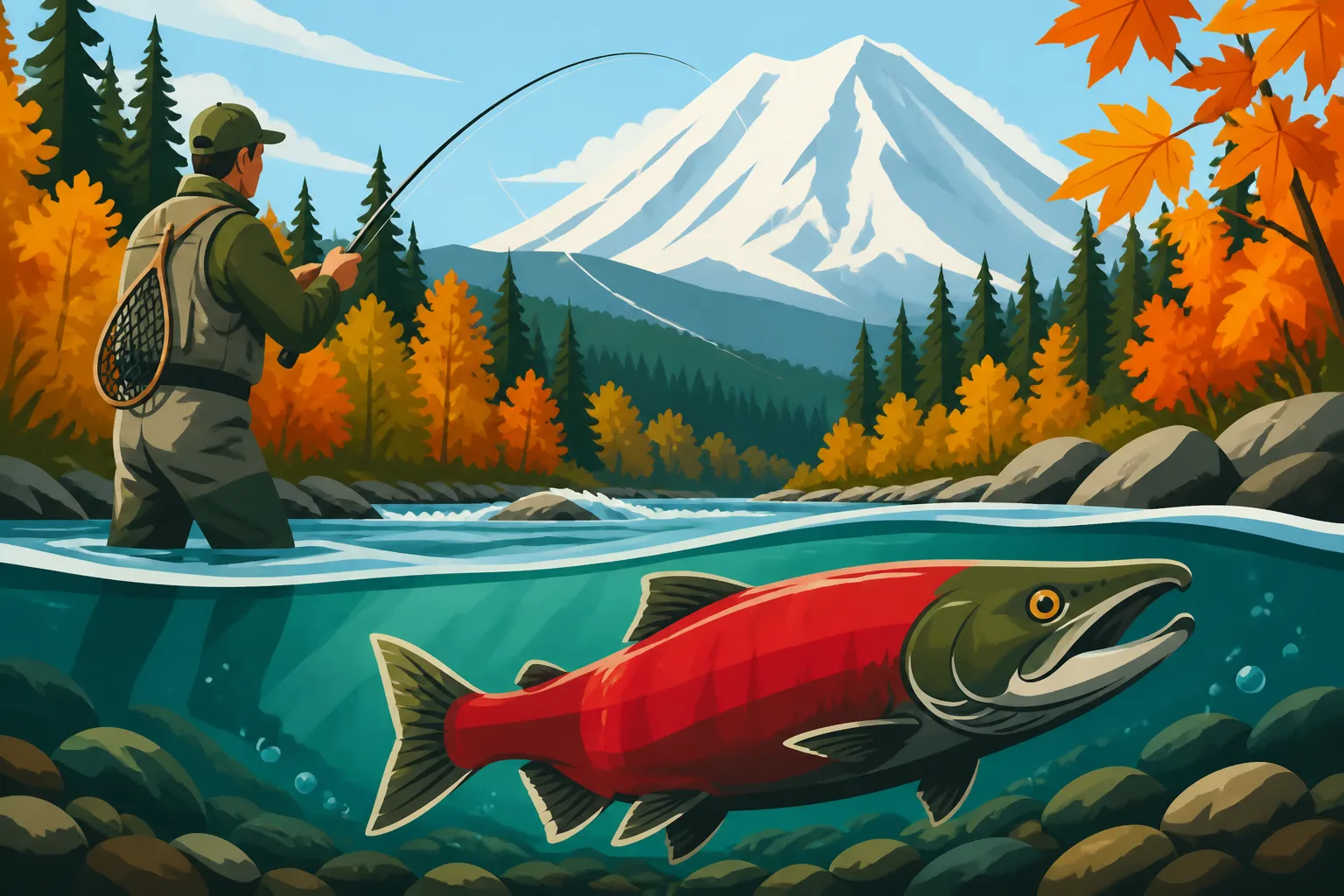
Flowing from the glaciers of Mount Rainier, the Nisqually River carves a path through diverse landscapes before emptying into Puget Sound. Its glacial origins mean it often carries a distinctive silty, turquoise hue, especially during warmer months or heavy rain. This unique water quality, while sometimes challenging for visibility, is a hallmark of the Nisqually and contributes to its incredible biological productivity. Historically, the river has been a lifeblood for its salmon runs, supporting not just the ecosystem but also the Nisqually Tribe for thousands of years. The river system, including its mainstem and tributaries like Mashel River, provides critical spawning and rearing habitat, making it a true salmon stronghold.
Anglers often get frustrated when they hear "glacial river" because it often implies low visibility, making sight fishing nearly impossible and demanding different approaches to bait and lure presentation. But don't let that deter you; the fish are there, and they've adapted to these conditions, meaning you just need to adapt your strategy too. It's a place where patience and understanding of river currents and subtle holding water really pay off, rather than relying solely on visual cues. The river's ecological health has also seen significant efforts in restoration over the years, particularly in areas like the Nisqually Delta, further enhancing its appeal as a vibrant salmon habitat.
The Nisqually Tribe's Enduring Connection
The Nisqually River runs directly through the heart of the Nisqually Indian Tribe's ancestral lands, and their connection to this river is profound, culturally and spiritually. The Nisqually Tribe holds treaty-reserved fishing rights, which means they co-manage the fishery with the Washington Department of Fish and Wildlife (WDFW). This co-management often leads to specific fishing seasons and regulations that can differ between tribal and non-tribal areas, or even change rapidly based on run forecasts and escapement goals.
This dynamic can be a source of confusion and frustration for many anglers. It's not uncommon to hear, "Why are the rules so complicated on the Nisqually?" or "I don't understand why tribal members can fish when I can't." The reality is that respecting these rights and understanding the co-management framework is paramount. It ensures the long-term sustainability of the salmon runs for everyone, recognizing the tribe's inherent rights and stewardship. Always check the current WDFW regulations and any specific tribal notices before heading out, especially around areas near the reservation boundaries. A bit of research upfront can save you a lot of headaches and ensure you're fishing legally and respectfully.
Why the Nisqually is a Fall Salmon Magnet
So, with all these complexities, why do anglers flock to the Nisqually for fall salmon? Simply put, the river boasts strong, consistent returns of multiple salmon species, offering a diverse and often thrilling fishing experience. Its proximity to Olympia and easy access points make it a convenient destination for many Puget Sound anglers, yet it retains a wild, untamed feel in many sections. The river's length and varied terrain, from its tidally influenced lower sections to the faster-flowing upper stretches, offer a wide range of fishing opportunities and challenges.
Imagine the excitement of hooking into a chrome-bright Chinook fresh from the saltwater, or the aggressive fight of a Nisqually Coho. The anticipation builds with every cast, knowing that a powerful fish could be just around the bend. While the river can get busy, especially during peak runs, there are still plenty of opportunities for solitude if you know where to look or are willing to hike a bit. The sheer volume and variety of salmon returning in the fall make the Nisqually a top-tier destination, and it’s why anglers brave the early mornings and fickle weather—because the reward is often a memory that lasts a lifetime.
Prime Fall Salmon Species on the Nisqually
When the leaves start to turn and the air gets that crisp autumn bite, the Nisqually River transforms into a bustling highway for returning salmon. Knowing which species are running, and when, is crucial for tailoring your approach and maximizing your chances of success.
Majestic Fall Chinook
Ah, the Fall Chinook, often referred to as "Kings" for a reason! These are the giants of the salmon world, and the Nisqually sees a respectable return each autumn. Typically, the Chinook begin to show up in the lower river in late August, with the run building through September and into early October. Anglers target them for their sheer size and incredible power; hooking a fresh Chinook can feel like wrestling a submerged log that suddenly decides to spool your reel.
While their numbers aren't always as high as some other species, the quality of a Nisqually Chinook makes the effort worthwhile. These fish are often caught in the lower, tidally influenced sections, as well as in the deeper pools and runs of the mid-river. Many anglers prefer to target them with large cured egg clusters, Brad's KillerFish plugs, or even heavy spinners and spoons, presented near the bottom where these big fish tend to hold. You’ll often hear folks talking about getting "chinned" by a big Chinook, referring to the powerful headshakes that can feel like they’re trying to rip the rod from your hands. For more details on these magnificent fish, check out our guide on Chinook Salmon: Washington's King of Fish.
Aggressive Coho Salmon
If Chinook are the powerful kings, then Coho salmon are the acrobatic princes of the Nisqually. Known for their energetic fights, aerial displays, and willingness to strike a variety of lures, Coho are a favorite among many anglers. The Nisqually's Coho run typically starts strong in September and continues well into October, sometimes even November, overlapping nicely with the Chinook. These "silvers" are highly prized for their vibrant flesh and fighting spirit.
Coho are often found throughout the river system, from the brackish waters of the delta all the way up into the middle sections. They tend to be more aggressive than Chinook and will readily chase spinners, spoons, twitching jigs, and small plugs. Many anglers also find great success drift fishing with small clusters of cured eggs or even just a pink worm under a float. The challenge with Coho is sometimes locating the schools, but once you do, the action can be fast and furious. You’ll frequently encounter discussions about whether to use bright, flashy colors or more subdued natural tones for Coho, and the truth is, it can change day to day based on water conditions and fish mood. Our article on Coho Salmon Fishing in Washington dives deeper into targeting these feisty fish.
The Mighty Chum Salmon
Often the unsung heroes of the fall salmon runs, Chum salmon—or "dog salmon"—are an incredibly important species ecologically and can provide some fantastic fishing action, especially later in the fall. While perhaps not as renowned for their table fare as Chinook or Coho, fresh Chum are surprisingly good, and their sheer power on the line is undeniable. The Nisqually sees a strong Chum run, typically peaking in October and extending into November, often becoming the primary target once the main Coho push has tapered off.
These fish are absolute tanks, known for their broad shoulders and powerful surges. When hooked, they'll pull like freight trains, testing your gear and your muscles. They respond well to jigs, large pink or purple worms, and often bright colored fly patterns. Many anglers overlook Chum, but those who specifically target them are often rewarded with intense battles. They tend to hold in deeper pools and slower runs, where they can be effectively targeted by drift fishing or jigging. Don't let their reputation as "dog salmon" fool you; a fresh Nisqually Chum is a worthy adversary and an excellent way to extend your fall fishing season. To understand their runs better, you might want to look at When Chum Salmon Run in Washington Rivers.
Essential Gear and Techniques for Nisqually Fall Salmon
Fishing the Nisqually effectively requires a thoughtful approach to gear and techniques, given the river's unique characteristics. What works on one river might not be ideal here, so let's break down the essentials.
Rod, Reel, and Line for River Salmon
When you're chasing powerful fall salmon in a river like the Nisqually, your gear needs to be up to the task. You're not going to want to show up with a flimsy trout rod, that's for sure! For bank fishing or from a drift boat, a medium-heavy to heavy action casting or spinning rod, typically 9 to 10.5 feet long, is a solid choice. This length provides the leverage needed for long casts, controlling your drift, and most importantly, fighting strong fish in current. Brands like Lamiglas, Shimano, and G. Loomis are popular choices among serious Washington salmon anglers, known for their durability and sensitivity.
Pair that rod with a robust baitcasting or spinning reel capable of holding at least 200 yards of 15-25 pound monofilament or fluorocarbon main line, or 30-50 pound braided line. If you go with braid, which many do for its sensitivity and strength, remember to use a fluorocarbon or monofilament leader of 20-30 pound test. This leader material is less visible to fish and provides some shock absorption. The biggest frustration here is often finding a setup that's powerful enough for big salmon but still sensitive enough to detect subtle bites in challenging river conditions. Don't skimp on your reel's drag system; a smooth, reliable drag is your best friend when a Nisqually King decides to bolt.
Popular Baits and Lures That Get Bites
The Nisqually's glacial tint and varying water levels mean that sometimes bright, flashy presentations grab attention, while other times a subtle, natural offering is key. It's a bit of a guessing game until you figure out what the fish are keyed into on a given day.
- Cured Salmon Roe: This is often the undisputed king of salmon baits on many Washington rivers, and the Nisqually is no exception. Freshly cured roe, presented in a small mesh bag (roe bag) or on a cluster, drifted naturally along the bottom, can be incredibly effective for all salmon species. The scent trail it puts out is irresistible.
- Spinners and Spoons: For Coho and even aggressive Chinook, hardware can be deadly. Sizes 3-5 in classic patterns like Dick Nites (especially the "Nisqually Dream" pattern if you can find one!), or larger spoons like a 3.5-5 oz Koho or Candlefish, can elicit strikes. Colors like chartreuse, pink, blue/silver, and brass/orange are perennial favorites.
- Plugs: For back-trolling from a boat or even casting from the bank into deeper holes, dive-and-rise plugs such as the Brad's KillerFish or Kwikfish can be very productive for Chinook. They vibrate intensely, mimicking an injured baitfish, which can trigger an aggressive bite.
- Jigs and Soft Plastics: Twitching jigs (1/2 to 1 oz in pink, black, or chartreuse) are fantastic for Coho and Chum, especially in slower-moving water or when fishing structure. Pink worms or soft plastic baits under a float can also be very effective, offering a more subtle presentation.
It's wise to bring a variety of options because what worked yesterday or even an hour ago might not work now. The key is natural presentation and getting your offering in front of the fish.
Effective Fishing Techniques
Understanding the local nuances of how to present your bait or lure is just as important as the gear itself. On the Nisqually, several techniques consistently produce fish.
- Drift Fishing: This is perhaps the most popular and versatile technique. It involves using enough weight (pencil lead, slinkies, or cannonball sinkers) to get your bait or lure to "drift" naturally along the bottom, just slightly slower than the current, without dragging. You want it to tumble and bounce subtly, mimicking something natural dislodged by the current. This technique is effective for all salmon species and is often done with cured roe, yarn eggs, or even small plugs. You're effectively presenting your offering directly to salmon holding in runs and pools. If you're looking to hone your drift fishing skills, our guide on Drift Fishing for Steelhead in Washington Rivers offers excellent foundational knowledge that translates well to salmon.
- Bobber Dogging / Float Fishing: A fantastic technique for Coho and Chum, and sometimes Chinook, particularly when fish are suspended or in slower, deeper water. This involves using a large float (often a fixed float or a sliding float like a Thill Wobble Bobber) to suspend your bait (roe bag, pink worm, or jig) at a specific depth, allowing it to drift naturally downstream. The trick is to match the current speed of your float to the speed of your bait, which can be achieved by carefully adjusting your weight. When that bobber disappears, it’s game on!
- Plunking (from the bank): While more commonly associated with larger rivers like the Columbia, plunking can be effective in certain sections of the Nisqually, particularly in the lower river or in areas with strong, consistent current and known travel lanes for salmon. This technique involves anchoring a heavy weight (like a pyramid sinker or a large cannonball) on the bottom, with your lure (often a Brad's KillerFish or a Spin-N-Glo with bait) attached via a leader a short distance upstream. The lure then "wobbles" in the current, attracting passing salmon. It's a very stationary method, but effective when fish are moving through predictable channels.
- Twitching Jigs: For Coho and Chum, especially in areas with moderate current or deeper slack water, twitching jigs can be incredibly exciting. Cast a 1/2 to 1 oz jig (often in pink, black, or chartreuse) out, let it sink to the desired depth, then retrieve it with a series of short, sharp "twitches" of the rod tip, allowing it to fall between twitches. This erratic action often triggers an aggressive reaction strike.
Regardless of the technique, presentation is king. Make sure your line is free of twists, your bait is fresh, and your knots are solid. The Nisqually's fall salmon are strong, and they'll quickly expose any weaknesses in your setup or technique.
Navigating Nisqually River Access and Regulations
Fishing the Nisqually can feel like navigating a minefield of regulations and access restrictions, which is a common source of frustration for many anglers. It's not just about knowing where to cast; it's about knowing where you can cast and what you can legally keep.
Public Access Points for Bank and Boat Anglers
While the Nisqually River has many private properties and tribal lands bordering its banks, there are still several key public access points that anglers utilize. Knowing these spots is essential for planning your trip.
- Nisqually Delta / Billy Frank Jr. Nisqually National Wildlife Refuge: This area offers limited but strategic access, primarily for boat anglers at the mouth of the river, especially during tidal changes. Bank access here is mostly for wildlife viewing, not active fishing. This is where you might intercept fresh-from-the-salt salmon. However, navigating the delta can be tricky with tides and shallow areas, so caution is advised for boaters.
- Nisqually River Park (located near Yelm): This park offers some bank access, particularly for those targeting salmon further upstream. It's a popular spot, so expect company, especially on weekends during peak season. The park provides trails along the river, but specific fishing spots can be limited or require walking. It's a good place to start for understanding the river's character in its mid-section.
- Clear Creek Hatchery (WDFW): While primarily a hatchery, there is sometimes public access to the river near the hatchery facilities, particularly downstream from the raceways. This area often sees concentrated fish due to the hatchery returns. Always check WDFW signs posted on-site for specific rules and boundaries, as these can change to protect spawning fish or hatchery operations.
- River Bend Campground: Located further upriver, this area can offer access, though it might be more focused on camping with incidental fishing opportunities. Public land along the river is often fragmented, so always look for WDFW access points or designated public easements. Private land should always be respected; trespassing is not only illegal but can jeopardize future public access.
It’s a common frustration to drive for hours only to find limited or confusing access. Always use online maps and check WDFW resources for updated access information before you leave. Google Maps, combined with satellite view, can give you a good idea of potential bank access points, but verifying them on the ground or through WDFW maps is always best.
Understanding Tribal and Non-Tribal Waters
This is arguably the most critical and often misunderstood aspect of fishing the Nisqually. As mentioned earlier, the Nisqually Tribe co-manages the fishery with WDFW, leading to distinct regulations and boundaries. Non-tribal fishing regulations often differ significantly from tribal regulations, and fishing in tribal-only waters without tribal membership is a serious violation.
The key is to always know your exact location on the river. Generally, tribal lands encompass a significant portion of the lower and middle river, particularly around the reservation boundaries. The WDFW fishing pamphlet contains detailed maps and legal descriptions of boundaries where non-tribal fishing is permitted. Areas like the Nisqually Delta and sections near the Clear Creek Hatchery often have very specific regulations regarding gear, seasons, and species. You might find a section of river closed to non-tribal fishing, while tribal members are actively fishing just yards away. This isn't unfair; it's a matter of treaty rights and fishery management. Always carry your Washington Sport Fishing Regulations Pamphlet and refer to its maps. When in doubt, err on the side of caution or move to a clearly marked public access point outside of tribal areas. Ignorance of the law is not a defense, and fines can be steep.
Key Washington Fishing Regulations
Beyond the tribal/non-tribal complexities, the Nisqually River is subject to standard WDFW sportfishing regulations, which can be found in the annual fishing pamphlet and through emergency rule changes. It's absolutely vital to check these right before your trip, as emergency rules can change closures, limits, or gear restrictions overnight.
Key regulations to pay attention to include:
- Season Dates: Fall salmon runs have specific opening and closing dates for each species. These can vary yearly based on run forecasts. Check Washington Sport Fishing Seasons and Emergency Closures to stay informed.
- Bag and Possession Limits: There will be daily limits (how many you can keep per day) and possession limits (how many you can have in your possession at any time). For salmon, these often distinguish between hatchery-marked (adipose fin-clipped) and wild (unclipped) fish, with wild fish often required to be released. Learn more about How Bag and Possession Limits Work in Washington.
- Gear Restrictions: The Nisqually often has specific gear restrictions, such as single-point barbless hooks only, or bait restrictions. This is especially common in areas with sensitive wild salmon or steelhead populations. Always check if bait is allowed, if trebles are prohibited, or if a specific hook gap applies. For a broad overview of regulations, see Washington Fishing Regulations Every Angler Should Know.
- Catch Record Card: If you're keeping salmon or steelhead, a Washington Catch Record Card is mandatory. You must immediately record your catch upon retention. Failure to do so is a common violation.
Emergency rule changes are particularly challenging. A river might be open one day and closed the next due to low returns or conservation concerns. Always check the WDFW website for Where to Find Current Washington Fishing Rules before you head out, and even consider checking it on your phone at the launch, as rules can literally change overnight. It’s frustrating when plans change, but it’s all part of ensuring these runs continue for future generations.
Timing Your Nisqually Fall Salmon Adventure
Timing is everything when it comes to fall salmon fishing on the Nisqually. Showing up on the wrong week or during unfavorable river conditions can lead to a frustrating, fishless day.
Peak Run Times for Each Species
While salmon runs can vary slightly year to year based on water conditions and ocean survival, there are general windows when each species is most abundant in the Nisqually. Knowing these peaks helps you decide when to target specific fish.
Here's a general guide for the Nisqually:
| Salmon Species | General Run Timing | Peak Activity | Notes |
|---|---|---|---|
| Fall Chinook | Late August – Early October | Mid-September | Large, powerful fish. Target lower/mid-river. |
| Coho Salmon | September – Mid-November | Late September – October | Aggressive fighters. Good throughout the river. |
| Chum Salmon | October – November | Late October – Early November | Strong, hard-fighting fish. Often overlooked. |
Disclaimer: These are general guidelines. Always check current WDFW season forecasts and emergency rules for specific dates, as these can fluctuate significantly.
Many anglers experience the frustration of showing up a week too early or too late, missing the main push of fish. This table gives you a starting point. For deeper insights into specific runs, consider reading our detailed articles on When Chinook Salmon Run in Washington's Puget Sound, When Coho Salmon Run in Washington, and When Chum Salmon Run in Washington Rivers. Remember, early in the run, fish are often more aggressive and chrome-bright, while later in the run, they might be more colored up and focused on spawning, making them harder to entice.
Reading River Conditions
The Nisqually River is highly influenced by weather and upstream conditions, particularly glacial melt and rainfall. The clarity, height, and temperature of the water can dramatically affect fishing success.
- Water Clarity: The Nisqually, being glacially fed, can often have a cloudy or milky green tint. This isn't necessarily bad; fish are accustomed to it. However, after heavy rains, the river can "blow out," becoming very high and muddy, making fishing extremely difficult. Conversely, too low and clear water can make fish spooky and harder to approach, especially in sunny conditions. Aim for stable or slightly rising water after a period of light rain. The general rule of thumb is: if you can see your boots in knee-deep water, it's probably fishable. If it looks like chocolate milk, you might be better off rescheduling.
- Water Height (Flow): WDFW and USGS often provide real-time streamflow data for the Nisqually. Anglers learn over time what "levels" are ideal for their chosen technique and access points. Too high, and fish might be pushed to the banks or difficult to hold in the current. Too low, and they might be concentrated in fewer holes, making them spooky, or struggling to migrate upstream. Fluctuations can change fish behavior, moving them into different holding lies or making them less willing to bite.
- Water Temperature: Salmon prefer specific temperature ranges. Extremely warm water can stress fish, and extremely cold water can make them lethargic. Fall temperatures are generally favorable, but sudden cold snaps can slow things down, while unseasonably warm spells can prolong migrations or make fish less active.
Learning to read the river takes time and experience. Many experienced anglers will check online river gauges and local fishing reports (often found on online forums or local tackle shop websites) before heading out. It's a frustrating but essential part of river fishing; you can have the perfect gear and technique, but if the river isn't cooperating, your chances diminish significantly.
The Impact of Tides on Lower River Fishing
For anglers focusing on the lower reaches of the Nisqually, particularly near the delta and where it meets Puget Sound, the tide cycle is a critical factor. Salmon entering the river from the saltwater often "stage" in the lower river or estuary, waiting for favorable tides to push them upstream.
- Incoming Tide: As the tide pushes in, especially during a strong high tide, it brings fresh, often chrome-bright salmon into the river mouth. This can be a prime time to fish the lower sections, as fish are actively moving and often more aggressive. Many successful trips are timed around the last hour of the incoming tide and the first hour of the outgoing tide.
- Outgoing Tide: As the tide recedes, fish may drop back into deeper channels or hold in pools, waiting for the next push. Fishing can still be productive, but the activity might shift to different holding areas.
- Slack Tide: The period of minimal current during a high or low tide can sometimes be slower, as fish movement often pauses. However, it can also be a good time to target fish holding in specific structures without fighting strong currents.
Understanding tide tables and how they influence the lower Nisqually is a skill in itself. A strong tide can create powerful currents that make drift fishing challenging, while a weaker tide might not bring in as many fresh fish. Many anglers find the "change of tide" to be a magic window, as it often signals active fish movement. Ignoring the tides in the lower Nisqually is like ignoring the weather; it's a huge factor in your success!
Beyond the Hook: Enhancing Your Nisqually Experience
Fishing is more than just catching fish; it's about the entire experience, from respecting the environment to connecting with local communities and even deciding if professional guidance is right for you.
Conservation and Responsible Angling
The Nisqually River is a precious resource, and responsible angling is vital to ensure its health and the future of its salmon runs. This means going beyond just following regulations; it's about ethical practices and stewardship.
- Practice Catch and Release Properly: If you're releasing fish (especially wild, unclipped salmon or those outside the legal bag limit), minimize their time out of the water. Use barbless hooks for easier release, handle fish gently with wet hands, and support them in the water until they can swim away strongly. Avoid dragging fish onto dry ground or handling them by the gills.
- Pack It In, Pack It Out: Leave no trace. Any trash you bring, take it with you. This includes discarded fishing line, bait containers, and food wrappers. Litter not only degrades the natural beauty but can also harm wildlife.
- Respect Spawning Fish: Once salmon turn dark and begin actively spawning in shallow gravel beds, it's generally considered unethical to target them. These fish are focused on reproduction, and disturbing them can impact future generations. Avoid walking on redds (salmon nests) in the riverbed.
- Report Violations: If you witness poaching or other illegal fishing activities, report them to WDFW enforcement. Protecting the resource is a collective responsibility.
Responsible angling ensures that the Nisqually remains a vibrant fishery for years to come. It’s a common frustration to see others disregarding rules or leaving trash, so being a good example helps set the standard.
Local Amenities and Nearby Attractions
A fishing trip to the Nisqually doesn't have to be just about the river. The surrounding areas offer a variety of amenities and attractions that can enhance your experience, turning a day trip into a mini-getaway.
- Yelm: Located just a short drive from many Nisqually access points, Yelm offers gas stations, tackle shops, grocery stores, and various dining options. It's a convenient hub for stocking up on supplies or grabbing a meal after a long day on the water. You'll find local restaurants serving everything from classic American fare to Mexican and Asian cuisine.
- Olympia: As the state capital, Olympia is a larger city with a wider range of accommodations, fine dining, cultural attractions, and shopping. If you're looking for a more comfortable stay or want to explore beyond fishing, Olympia is a great base. The Farmers Market, Capitol Building tours, and various parks offer non-fishing diversions.
- Camping and Lodging: Beyond hotels in Olympia, there are several campgrounds and smaller lodges in the general vicinity for those who prefer a more rustic experience. Check state parks or private campgrounds for availability, especially during peak fall fishing season.
- Other Outdoor Activities: The region is rich in outdoor opportunities. Hiking trails, bird watching (especially at the Nisqually National Wildlife Refuge), and exploring nearby Mount Rainier National Park are all viable options if you want to diversify your trip.
Making your trip more than just fishing helps round out the experience. It can be a great way to introduce family members who aren't as keen on fishing to the beauty of Washington, or simply to relax after a challenging day on the river.
Considering a Guided Trip for First-Timers
For those new to the Nisqually River, or even experienced anglers looking to learn the local nuances, a guided fishing trip can be an invaluable investment. Navigating the complex regulations, understanding prime fishing spots, and mastering effective techniques on a new river can be daunting.
A local guide brings years of experience directly to your trip. They know where the fish are holding based on current conditions, what baits and lures are working, and how to present them effectively. More importantly, they understand the tribal boundaries and specific WDFW rules, ensuring you stay legal and compliant. Imagine the frustration of spending a whole day casting in the wrong spots or using the wrong gear; a guide eliminates much of that guesswork. You can often find reputable guides through local tackle shops or online platforms.
Platforms like FishingBooker can connect you with experienced Nisqually River guides who specialize in fall salmon. A quick search on FishingBooker for "Nisqually River salmon guides" will usually bring up several options, allowing you to compare prices, read reviews, and see what's included in the trip, such as rods, tackle, and bait. Guides often provide all necessary gear, bait, and even clean your catch, making the experience hassle-free. This can be especially beneficial for beginners or those who are short on time and want to maximize their chances of success without a steep learning curve. While there's a cost involved, the knowledge gained and the increased likelihood of a successful and stress-free trip often make it well worth it. You can explore options for How to Book a Fishing Charter in Washington and understand What a Washington Guided Fishing Trip Costs to see if it's the right choice for you.
Disclaimer
Fishing regulations, seasons, and access can change frequently. Always consult the latest Washington Department of Fish and Wildlife (WDFW) regulations pamphlet and check for emergency rule changes on their official website before heading out. This guide is for informational purposes only and does not supersede official WDFW regulations. Ensure you have the appropriate licenses and endorsements for your chosen fishing activity.