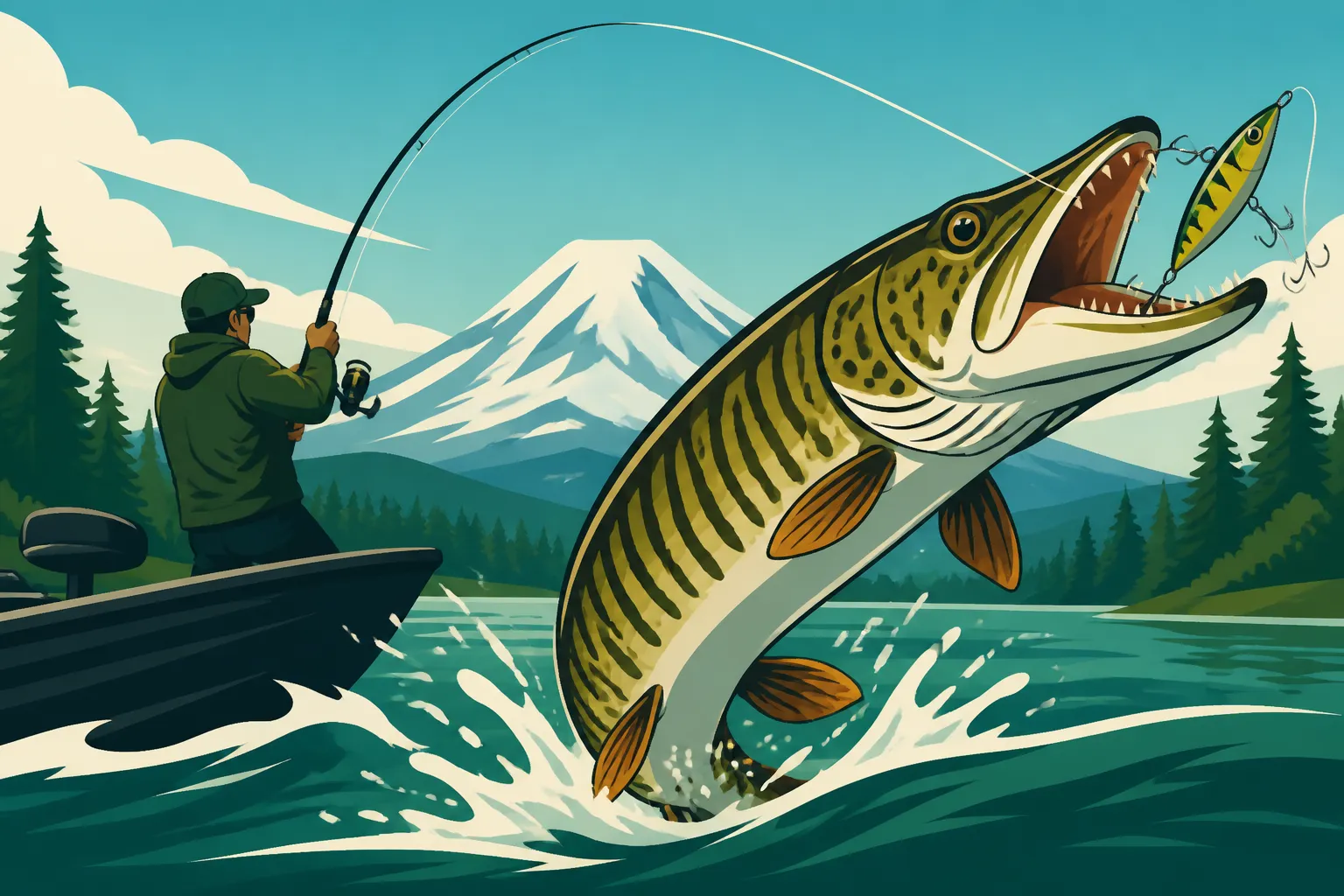
How to Fish for Tiger Muskie in Washington
Chasing tiger muskie in Washington is a unique angling adventure, one that often tests your patience and dedication to the absolute limit. These elusive, hybrid predators are notoriously difficult to entice, leading many anglers to experience the "fish of 10,000 casts" firsthand, with nothing but follows and near misses to show for their efforts. This guide aims to demystify the pursuit, providing you with the essential knowledge, specialized gear insights, and tried-and-true techniques to increase your chances of successfully hooking one of Washington's most exciting freshwater trophy fish.
Understanding Washington's Tiger Muskie
Before you even think about casting a line, it's crucial to understand what makes tiger muskie tick. These fish are not your average trout or bass; they are a distinct challenge requiring a specific approach.
What is a Tiger Muskie?
A tiger muskie isn't a naturally occurring species in most waters; it's a sterile hybrid created by crossing a northern pike ( Esox lucius) and a muskellunge (Esox masquinongy). This intentional crossbreeding results in a fish that often inherits the aggressive feeding traits of both parents, making them formidable predators. In Washington, the Department of Fish and Wildlife (WDFW) has strategically stocked these fish in certain lakes for a couple of key reasons. Primarily, they're used as a biological control to help manage burgeoning populations of undesirable non-native species like northern pike, which can decimate local salmon and trout populations. Secondly, they create an exciting, large-game trophy fishery for anglers.
Visually, tiger muskie are striking. They possess the elongated, torpedo-shaped body typical of pike and muskellunge, but their most distinctive feature is their beautiful, mottled pattern of dark, irregular vertical bars or spots on a lighter background, resembling tiger stripes. This pattern is often more pronounced and irregular than the distinct spots or solid patterns found on pure pike or muskies. Their duck-bill shaped snout is armed with rows of razor-sharp teeth, making proper handling paramount. Understanding Tiger Muskie in Washington and Whether It's Native helps put their presence in our waters into perspective – they are an introduced species, but for a beneficial purpose.
Why They're a Challenge
The moniker "fish of 10,000 casts" isn't an exaggeration for many muskie anglers. Tiger muskie are known for their incredibly temperamental nature and sparse populations in the lakes where they reside. Unlike some other species that might bite readily, muskie often require persistent effort and a bit of luck to even get a strike. They frequently follow lures right up to the boat, inspecting them with unnerving intensity before turning away at the last second, leaving anglers with a racing heart and an empty net. These "follows" are a common frustration but also an indication that you're on the right track; it means the fish are interested, even if they're not committing.
Their sheer size and power once hooked also present a significant challenge. Tiger muskie in Washington can grow to impressive lengths, often exceeding 40 inches and occasionally approaching or surpassing 50 inches. A fish of that size, with its powerful tail and head-shaking ability, can easily spool lighter tackle or straighten hooks. Learning How Big Washington Tiger Muskie Get will give you a healthy respect for the battle ahead and why heavy-duty gear is non-negotiable. Their cunning and strength demand a strategic approach to both presentation and the fight, ensuring your gear can withstand the explosive power of these freshwater giants.
Gearing Up for Tiger Muskie in Washington
Successfully targeting tiger muskie requires specialized equipment that can handle large lures and powerful fish. Skimping on tackle here is a recipe for broken lines and lost fish.
Rods, Reels, and Line
When it comes to tiger muskie, "heavy-duty" is the operative phrase for your setup. You'll want a casting rod, not a spinning rod, typically ranging from 7'6" to 9 feet in length. Look for rods with a heavy power rating and a fast to extra-fast action. This combination provides the backbone necessary to cast heavy lures (often several ounces) and the sensitivity to detect subtle takes, along with the power to drive large hooks into a muskie's bony mouth. A longer rod also offers better line control, especially during the crucial figure-eight maneuver at the boat, which we'll discuss later.
For reels, a robust baitcasting reel is essential. You'll want one with a low gear ratio (e.g., 5.1:1 or 4.2:1) to provide the torque needed to retrieve large, water-resistant lures all day long without fatiguing the reel's gears. A powerful, smooth drag system is equally critical for taming a hard-fighting muskie. Reels like the Abu Garcia Revo Toro Beast (while I can't specifically recommend brands, this type of reel is common) or similar heavy-duty models are designed for this kind of abuse. You can find a vast selection of appropriate rods and reels for muskie fishing on platforms like Amazon, often with detailed reviews to help guide your choice.
Line choice is straightforward: heavy braided line is the standard. Most muskie anglers opt for 65-pound test or heavier, with some going up to 100-pound test, especially when fishing around heavy cover. The zero-stretch nature of braid ensures solid hook sets and excellent sensitivity. Crucially, this must be paired with a heavy-duty leader. Fluorocarbon leaders in the 80-130 pound test range, or even steel leaders, are vital to prevent the muskie's sharp teeth from severing your line. These leaders should be at least 12-18 inches long to protect against abrasion.
Lures of Choice
Tiger muskie are primarily sight feeders, and they respond to large, aggressive presentations. Your tackle box should be stocked with a variety of oversized lures designed to grab their attention.
- Bucktails: These are probably the most iconic muskie lures. They consist of a large spinner blade (or multiple blades) attached to a skirt of bucktail hair. They create a tremendous amount of flash and vibration in the water. Sizes range, but you'll be looking at lures that are 8-12 inches long, sometimes more. Retrieve them with a fast, steady crank.
- Swimbaits: Large soft plastic or hard-bodied swimbaits, often jointed, mimic natural baitfish with incredible realism. These are effective when fish are less aggressive or in clearer water. Slow, methodical retrieves are often best.
- Jerkbaits and Glide Baits: These lures are designed to be worked by the angler, creating an erratic, wounded baitfish action. Jerkbaits are typically long, slender baits that dart side-to-side when twitched. Glide baits offer a smoother, wider side-to-side swimming action. They can be incredibly effective at triggering strikes from hesitant fish.
- Topwater Lures: For explosive, heart-stopping strikes, topwater lures are unmatched. Large "walk-the-dog" baits, prop baits, or even large poppers can draw muskie to the surface, especially during low-light conditions or when fish are shallow.
Experiment with colors. Natural patterns (perch, trout, suckers) are often a good starting point, but don't shy away from bright, obnoxious colors like chartreuse or fire tiger, especially in stained water. The key is to present something big, bold, and irresistible. As with rods and reels, a wide array of muskie lures are available on Amazon, allowing you to build a diverse collection.
Essential Safety and Handling Tools
Tiger muskie are powerful fish with incredibly sharp teeth. Proper handling is not just about protecting yourself, but also ensuring the fish's survival for a healthy release. Every muskie angler should carry a dedicated set of tools.
- Large, Rubberized Landing Net: A net with a large hoop (at least 30-40 inches wide) and a deep, rubberized mesh is critical. The rubberized mesh protects the fish's slime coat and fins, while the large size allows you to safely contain the fish.
- Long-Nose Pliers or Forceps: Essential for reaching deep-set hooks in a muskie's mouth without putting your fingers at risk.
- Bolt Cutters or Large Side Cutters: An absolute must-have. If a hook is deeply embedded or too difficult to remove, cutting the hook will save the fish's life and prevent undue stress. Never try to rip a hook out.
- Hook Removers: Specialized tools like jaw spreaders (used with extreme caution) and long-handled hook removers can be invaluable.
- Measuring Board: To quickly and accurately measure your catch for bragging rights, rather than wrestling it on a tape measure.
- Heavy-Duty Release Gloves: Thick gloves offer protection against teeth and gill rakers if you need to handle the fish directly.
- Camera: For a quick photo, but keep the fish in the water as much as possible.
Remember, tiger muskie are a fragile resource, and careful Can You Keep a Fish With a Damaged Fin? considerations apply to any fish you intend to release. The goal is a quick, efficient release to ensure the fish swims away strong.
Mastering Tiger Muskie Fishing Techniques
Catching a tiger muskie is less about luck and more about precision, persistence, and knowing how to trigger a predatory response.
Casting and Retrieve Strategies
Tiger muskie are ambush predators, often holding tight to structure like weed lines, submerged timber, or sharp drop-offs. Your casting strategy should focus on thoroughly covering these potential ambush points. Don't just cast randomly; imagine where a muskie might be hiding and make accurate casts that land your lure precisely in that strike zone. Fan casting, where you cast in a wide arc to cover an entire area from a single boat position, is a great way to efficiently search for active fish.
Varying your retrieve speed and adding pauses is crucial. Rarely will a muskie respond to a monotonous retrieve. Instead, experiment:
- Fast and Steady: For bucktails, a brisk, consistent crank is often best, creating maximum flash and vibration.
- Stop-and-Go: For jerkbaits or swimbaits, a retrieve with sudden twitches, long pauses, and changes in speed can mimic a wounded baitfish, often provoking a strike.
- Rip and Pause: In heavy cover, ripping a soft plastic bait through weeds, then letting it fall, can trigger an aggressive reaction strike.
Pay attention to what the fish are telling you. If you get a follow, try to replicate that retrieve next time. Water clarity, time of day, and even atmospheric pressure can influence a muskie's mood, so being adaptable is key.
The Art of the Figure-Eight
This is arguably the most critical technique in muskie fishing, converting countless follows into actual hook-ups. Many muskie will follow a lure right to the boat, staring at it just out of reach. If you simply lift your lure out of the water, that fish will likely swim away. The figure-eight capitalizes on their predatory instinct by making them believe their prey is escaping into the boat's shadow, trapping them.
Here's how to execute it:
- Don't Stop: As your lure approaches the boat, don't stop your retrieve. Keep it in the water.
- Wide Arc: With your rod tip in the water, trace a wide figure-eight pattern alongside the boat, keeping the lure moving in continuous, smooth curves. Make the loops as large as your rod length and boat space allow, typically 3-5 feet in diameter.
- Vary Depth: Occasionally, dip the rod tip deeper on one side of the figure-eight to change the lure's depth and action, adding another dimension of enticement.
- Watch the Fish: Keep your eyes glued to the muskie. They might suddenly accelerate, open their mouth, and engulf the lure right at the boat.
- Be Ready: Maintain constant tension and be prepared for an immediate, explosive strike. As soon as you see the fish commit, sweep your rod sideways to set the hook hard.
This technique demands constant vigilance and practice, but it's an absolute game-changer for frustrating follows.
Hook Set and Fight
When a muskie finally commits, the hook set is paramount. Due to their bony mouths and large, powerful jaws, a wimpy hook set will often result in a lost fish.
- The Sweep Set: Forget the trout-style upward snap. Instead, when you feel the strike, reel down quickly to remove any slack, and then perform a powerful, sweeping side-set with your rod. Drive the hook with authority. Often, two or three solid sweep sets are recommended to ensure good penetration.
- Keep Pressure: Once hooked, keep constant, heavy pressure on the fish. Muskie are notorious for powerful head shakes and explosive runs. Avoid giving them any slack, as they can easily throw the hook.
- Manage the Fight: Try to keep the muskie's head up as much as possible, especially near the boat. This makes it harder for them to dive under the boat or wrap around obstacles. Be prepared for strong, unpredictable surges, particularly in the moments before netting. Guide the fish into your net headfirst for the cleanest capture.
The fight is often short but incredibly intense. The faster you can land, unhook, and release the fish, the better its chances of survival.
Where and When to Target Washington Tiger Muskie
Knowing the right places and times to cast your line significantly boosts your chances of encountering one of these apex predators.
Top Washington Tiger Muskie Lakes
Washington State is fortunate to have several lakes managed by the WDFW that are specifically stocked with tiger muskie. While populations are never dense, these waters offer your best opportunities. The primary lakes known for tiger muskie are:
- Silver Lake (Cowlitz County): Located near Castle Rock, this lake is one of the most popular and consistent tiger muskie fisheries. It features extensive weed beds and submerged structures, providing excellent ambush points.
- Mayfield Lake (Lewis County): Downstream from Riffe Lake on the Cowlitz River system, Mayfield is a large reservoir with diverse habitat, including deep channels, rocky points, and some weed beds.
- Curlew Lake (Ferry County): Situated in northeastern Washington, Curlew Lake is a relatively shallow, fertile lake with abundant aquatic vegetation, making it prime muskie territory.
- Evergreen Reservoir (Grant County): Found in central Washington, this reservoir offers a different kind of habitat, often with more open water and distinct drop-offs.
These lakes are carefully managed, and it's worth checking the WDFW site for specific regulations for each water body. For a broader view of potential fisheries, our guide on The Best Places to Fish in Washington State offers additional context, but for muskie, these specific lakes are your bread and butter. You can also explore Lakes That Hold Tiger Muskie in Washington for more in-depth information on these specific locations.
Reading the Water and Structure
Tiger muskie are creatures of habit, often associating with specific types of structure where they can ambush prey.
- Weed Lines: These are classic muskie holding areas. Look for the edges where healthy submerged vegetation meets open water or deeper channels. Muskie will patrol these edges, darting out to strike at unsuspecting baitfish.
- Submerged Timber and Rock Piles: Fallen trees, stumps, and rocky outcroppings provide cover and ambush points. Cast your lures carefully around these areas, being mindful of potential snags.
- Drop-offs and Points: Areas where shallow water quickly transitions to deeper water, or prominent points extending into the lake, are natural highways for baitfish and, consequently, muskie.
- Wind-Blown Banks: Wind can push baitfish into specific areas. Targeting the wind-blown side of a lake or a point where baitfish are congregating can be highly productive.
Using good electronics, like a fish finder, can be incredibly helpful for identifying submerged structure, depth changes, and even baitfish schools. While perhaps more commonly discussed in saltwater, the principles in Electronics That Help You Find Lingcod Structure can be adapted to identifying promising muskie habitats in freshwater.
Seasonal and Environmental Factors
The time of year and prevailing conditions play a huge role in tiger muskie activity.
- Spring (Post-Spawn): As water temperatures rise into the low to mid-50s Fahrenheit, muskie move into shallower areas to spawn. After spawning, they'll often be found in transitional areas, recovering and beginning to feed actively. This can be a great time for shallower presentations.
- Summer: As waters warm further (mid-60s to 70s), muskie may move to deeper, cooler water, often near thermoclines or deep structure during the heat of the day. Early mornings and late evenings, when they might cruise shallower areas, are often the best times. Topwater lures can shine during these low-light periods.
- Fall (The "Fall Feed"): This is often considered the prime time for trophy muskie. As water temperatures cool (mid-60s down to the 40s), muskie enter a pre-winter feeding frenzy, aggressively packing on calories. They can be found in a variety of depths and are often more willing to chase larger baits. Our Washington Fishing Seasons: A Month-by-Month Guide offers a broader look at seasonal shifts, but fall is definitely a highlight for muskie. Fishing during this period, especially as the last leaves fall, can be incredibly rewarding.
- Water Temperature: Pay close attention to water temperature, as it dictates muskie metabolism and activity levels. Ideal temperatures are typically in the 55-70°F range, but they will feed outside of this. Understanding how fish react to temperature changes is as important as knowing How to Fish a Lake After Ice-Out for early season trout.
Conservation and Responsible Angling
Tiger muskie are a limited and valuable resource in Washington. Practicing responsible angling ensures these magnificent fish continue to thrive for future generations.
Catch and Release Best Practices
Almost all tiger muskie fishing in Washington is focused on catch and release. These are trophy fish, and their populations are carefully managed. Proper handling is absolutely critical for their survival.
- Minimize Out-of-Water Time: This is the golden rule. Oxygen deprivation is one of the biggest killers of released fish. Keep the fish in the net, in the water, as much as possible while preparing for photos and hook removal.
- Safe Hook Removal: Use your long-nose pliers or bolt cutters. If a hook is deeply set, cut the hook rather than tearing at the fish's mouth. Remove hooks gently and efficiently.
- Proper Support: If you must lift the fish for a quick photo, support its body horizontally with both hands—one hand under the head/gill plate (being careful of the sharp gill rakers) and the other under the tail. Never hang a large muskie vertically by its jaw, as this can cause internal damage.
- Revive the Fish: Before releasing, hold the fish gently in the water, supporting its belly, and allow it to revive itself. It will often "pump" its gills and gain strength. Only release it when it swims away under its own power.
Responsible anglers understand that the thrill is in the chase and the brief encounter, not necessarily in bringing the fish home.
Adhering to Regulations
Like all fishing in Washington, targeting tiger muskie comes with specific rules and regulations designed to protect the fishery. It is your responsibility to know and follow these rules.
- Current Regulations: Always check the latest WDFW Sport Fishing Rules pamphlet or their website before heading out. Regulations, especially for specific species like muskie, can change. Our guide on Where to Find Current Washington Fishing Rules and Washington Sport Fishing Seasons and Emergency Closures can help you navigate these updates.
- Fishing License: A valid Washington freshwater fishing license is required. Make sure you understand Washington Fishing Regulations Every Angler Should Know before your trip.
- Bag and Size Limits: Tiger muskie often have very specific, restrictive bag and size limits (e.g., one fish per day, minimum 30 or 36 inches). In some cases, there may be special endorsements or reporting requirements. Always confirm these details. While not specifically for muskie, understanding The Washington Catch Record Card and What It Requires is good general practice for any Washington angler.
By understanding and respecting these incredible predators and the rules that protect them, you contribute to a sustainable and exciting tiger muskie fishery in Washington for years to come.
Disclaimer
Please note: Fishing regulations, seasons, and access can change frequently. Always consult the latest Washington Department of Fish and Wildlife (WDFW) regulations before planning any fishing trip.