Marine Area 9 for Salmon Fishing, Explained
For many anglers, the thought of fishing Puget Sound for salmon can be incredibly exciting, but also a little intimidating. The sheer number of marine areas, combined with constantly shifting regulations, can make it feel like you need a law degree just to wet a line. This guide is here to break down everything you need to know about salmon fishing in Marine Area 9, making sense of its unique waters, prime seasons, and the critical rules that will lead you to a successful and compliant day on the water.
Understanding Marine Area 9's Unique Geography and Importance
Marine Area 9 is a truly special place within Puget Sound, often referred to as "Admiralty Inlet" or the "Admiralty Area." It's a migratory highway and a feeding ground for various salmon species, drawing anglers from all over Washington. But before you can cast a line, you need to understand exactly where it is and why it holds such significance for salmon.
Defining the Boundaries of Marine Area 9
The official boundaries of Marine Area 9 can sometimes feel a bit like a geographical riddle, but they are crucial to understand. Marine Area 9 encompasses the waters of Puget Sound south of a line from the Partridge Bank buoy to Point Patos on Lopez Island, then southeast to the buoy at the north end of Strawberry Island, and then to Point Frances; AND north of a line from Point No Point to the Foulweather Bluff light. It includes the waters around Port Townsend, the eastern shores of Whidbey Island, and the mainland from Edmonds up to roughly Hansville on the Kitsap Peninsula side.
Practically speaking, if you’re launching your boat from popular ramps like Edmonds, Kingston, or Port Townsend, you’re almost certainly heading into or starting in Marine Area 9. Knowing these lines isn't just academic; it's essential because regulations can vary wildly from one marine area to the next, sometimes just a few hundred yards apart. For instance, crossing into Marine Area 8-1 (Deception Pass) or Marine Area 10 (Seattle/Bremerton) without realizing it could put you in violation of totally different rules. It's not uncommon for anglers, especially those new to Puget Sound, to mistakenly drift into a closed area or an area with different limits, leading to avoidable citations. Always double-check your charts or GPS to confirm your position within Area 9's defined lines.
Why Marine Area 9 is a Salmon Hotspot
So, why do so many anglers flock to Marine Area 9? The answer lies in its unique underwater geography and the incredible abundance of baitfish. This area acts as a crucial bottleneck for salmon migrating from the Pacific Ocean into the various rivers that feed Puget Sound, including those important salmon-bearing rivers further south. As salmon travel through the Strait of Juan de Fuca and into Puget Sound, many of them funnel directly through Admiralty Inlet.
Beyond being a transit zone, Marine Area 9 also boasts incredible feeding grounds. The strong tidal currents that rip through Admiralty Inlet churn up nutrients, attracting vast schools of baitfish like herring, candlefish, and juvenile salmon. These baitfish are the primary food source for hungry Chinook (King) and Coho (Silver) salmon. Imagine vast underwater pastures teeming with food, and you start to understand why salmon choose to linger and feed here before continuing their arduous journey upstream to spawn. The deeper water, combined with rocky structures and swift currents, provides ideal ambush points for salmon, making it a prime location for anglers targeting these powerful fish. The sheer concentration of both predators and prey makes Marine Area 9 one of Washington's most consistent and productive salmon fishing grounds when seasons are open. For a broader overview of the best Puget Sound spots, check out our guide on Washington's Puget Sound Fishing Spots for Salmon and Bottomfish.
Prime Salmon Species and Seasons in Marine Area 9
Marine Area 9 is a year-round potential salmon fishery, though the species you're targeting and the regulations surrounding them will shift dramatically with the seasons. Understanding these patterns is key to planning a successful trip and not ending up empty-handed.
Chasing Chinook Salmon in Area 9
Chinook salmon, often affectionately called "Kings" or "Blackmouth," are the prized catch in Marine Area 9. Anglers often target two distinct groups of Chinook: the resident "blackmouth" and the transient migratory fish.
The "blackmouth" fishery typically heats up in the winter months, from late fall through early spring, when these non-migratory Chinook are actively feeding in Puget Sound. These fish are known for their firm, red meat and are highly sought after. They spend their entire lives in the Sound, gorging on baitfish, and can grow to impressive sizes. Targeting blackmouth often involves trolling with downriggers in deeper waters, mimicking the baitfish they pursue. Understanding the subtle nuances of their feeding behavior and preferred depths during these colder months is crucial.
As summer approaches, the migratory Chinook salmon begin their push through Marine Area 9, heading towards rivers like the Skagit, Stillaguamish, and Nisqually. These are the larger, ocean-bright fish making their final journey. This summer/fall fishery can be incredibly exciting, with these powerful fish putting up spectacular fights. However, seasons for these transient Chinook are often much shorter and heavily regulated due to conservation concerns. Knowing When Chinook Salmon Run in Washington's Puget Sound is vital, as is understanding the specific Daily Limit for Chinook in Puget Sound which can change year to year, or even mid-season. These magnificent fish truly earn their title as Chinook Salmon: Washington's King of Fish.
The Thrill of Coho Salmon Fishing
Coho salmon, or "Silvers," offer a completely different, yet equally thrilling, fishing experience in Marine Area 9. Known for their acrobatic jumps and aggressive strikes, Coho are a favorite among many Puget Sound anglers.
The primary Coho runs in Marine Area 9 typically occur from mid-summer through early fall. These fish are often found higher in the water column than Chinook, making them accessible to a wider range of fishing techniques. When the Coho are in, you might see them jumping and splashing on the surface, a clear sign that it's time to get your lines in the water. Techniques like bucktailing (trolling with bucktail jigs) or mooching (drift fishing with cut plug herring) can be incredibly effective for these energetic fish. They are very responsive to fast-moving lures and bait, and their willingness to chase can make for non-stop action.
The Coho fishery is often more consistent and has longer seasons than the Chinook fishery, offering more opportunities for anglers. However, like all salmon, their numbers and fishing opportunities are closely monitored. It's crucial to be aware of When Coho Salmon Run in Washington to maximize your chances, and always check the Daily Limit for Coho in Puget Sound before heading out. For more in-depth information on targeting these dynamic fish, our Coho Salmon Fishing in Washington guide covers everything you need to know.
Other Salmon Species: Chum and Pink
While Chinook and Coho tend to be the primary targets for sport anglers in Marine Area 9, other salmon species like Chum and Pink salmon also make their presence known, primarily during their spawning migrations.
Chum salmon, often called "dog salmon" due to their impressive canine-like teeth when spawning, typically enter Puget Sound in late fall. While they can be caught in Marine Area 9, they are generally less sought after for their table quality than Chinook or Coho, especially as they get closer to spawning. They can still put up a fantastic fight, and some anglers specifically target them for the sport, often using twitching jigs or brightly colored lures. Often, if you catch a bright, ocean-fresh chum in Area 9, it can still be decent eating, but as they progress towards the rivers, their flesh quality declines rapidly.
Pink salmon, or "humpies," are distinctive for their large hump on the back of the males during spawning and are unique in that they primarily run in odd-numbered years (e.g., 2023, 2025). When a strong Pink salmon run occurs, Marine Area 9 can be absolutely thick with them in late summer. They are smaller than Chinook and Coho but are incredibly numerous. They readily strike small, flashy lures, spoons, and jigs. While they might not be the largest, they offer fast action and can be excellent fun, especially for families or beginners. While not the focus, it's good to be aware of their presence and the occasional opportunities they present.
Navigating Key Regulations for Marine Area 9
Fishing in Washington's Marine Area 9 isn't just about knowing where the fish are; it's equally, if not more, about understanding and adhering to the complex web of regulations set forth by the Washington Department of Fish and Wildlife (WDFW). Ignorance of the rules is never an excuse, and violations can lead to hefty fines and loss of fishing privileges.
Understanding Seasons, Bag, and Possession Limits
The most critical regulations you'll encounter in Marine Area 9 revolve around open seasons, daily bag limits, and possession limits. These are not static; they change frequently, sometimes annually, and often mid-season, based on salmon run forecasts, in-season returns, and conservation needs. A general rule of thumb for Puget Sound salmon fishing is to expect strict management and short seasons, particularly for Chinook.
The daily bag limit dictates how many fish of a specific species you can legally keep within a 24-hour period. For example, you might be allowed to retain one Chinook and two Coho in a given day. The possession limit, on the other hand, refers to the maximum number of fish you can have in your possession at any time, whether fresh, frozen, or processed. This means if you caught your daily limit today and want to fish tomorrow, you need to account for the fish from your previous trip. For instance, if the daily limit is one Chinook and the possession limit is two, you could catch one today and one tomorrow, but not two today and two tomorrow, unless the first fish was consumed or processed in a way that falls outside the possession rules. Our detailed guide on How Bag and Possession Limits Work in Washington explains these nuances further. Before any trip, you must consult the official WDFW regulations pamphlet for Washington Sport Fishing Seasons and Emergency Closures to know exactly what's open and what the limits are. Remember, closures, like those occasionally seen in Puget Sound Salmon Closures: What Washington Anglers Need to Know, can happen quickly, so real-time information is essential. A thorough reading of the Reading the Washington Sport Fishing Regulations Pamphlet is non-negotiable for any serious angler.
Gear Restrictions and Hook Rules
Beyond limits, specific gear restrictions and hook rules are strictly enforced in Marine Area 9, primarily to protect wild salmon stocks and minimize incidental mortality. The most common and frequently violated rule pertains to hooks. For salmon fishing in Puget Sound, single-point barbless hooks are almost universally required. This means no treble hooks, and if your single hook has a barb, it must be crimped down. This rule is designed to facilitate easy and safe release of non-target or wild salmon, which are often protected.
Failure to use barbless hooks can result in immediate citation and forfeiture of your catch, even if you planned to release the fish. It’s not enough to intend to clip the barb; it must be done before you start fishing. This also applies to any lures or baits that might entice a salmon. If you're using a plug or spoon, ensure it has been modified with single-point barbless hooks. If you just bought a new lure set on Amazon with treble hooks, make sure you swap them out or crimp them before heading out. Understanding Barbless Hook Requirements on Washington Rivers (and similarly, marine areas) is paramount. Other gear considerations might include restrictions on certain types of bait or methods, so always check the specific regulations for Marine Area 9.
Checking for Emergency Rule Changes
Perhaps the most frustrating, yet critically important, aspect of fishing in Marine Area 9 (and all of Puget Sound) is the constant possibility of emergency rule changes. Unlike freshwater trout fisheries that might have seasons set for an entire year, salmon regulations in Puget Sound are highly dynamic. They can change overnight, sometimes even in the middle of a weekend, based on in-season run updates, escapement goals, or other biological factors.
It's not unusual for a fishery to be open one day and closed the next, or for limits to be modified with little advance notice. This makes it absolutely essential to check for updates before every single fishing trip. Relying on last week's pamphlet or hearsay from the dock is a recipe for a violation. The WDFW website is the official source for these updates, and they usually issue emergency rule change notifications. Imagine planning an expensive charter trip weeks in advance, only to find out the night before that the season has closed due to an emergency rule. It's incredibly frustrating, but it happens. Being prepared means staying informed. Our guide on Emergency Rule Changes: Why Washington's Rules Shift Mid-Season provides deeper insight into why these changes occur and how to track them.
Effective Strategies for Fishing Marine Area 9
Now that you understand the geography and regulations, let's talk about strategies to actually catch some salmon in Marine Area 9. Success here often boils down to a combination of technique, knowing the hot spots, and understanding the environmental factors at play.
Top Techniques for Salmon in Area 9
Marine Area 9 anglers employ a variety of techniques, each suited to different conditions, salmon species, and depths. The most popular and effective methods include trolling, mooching, and jigging.
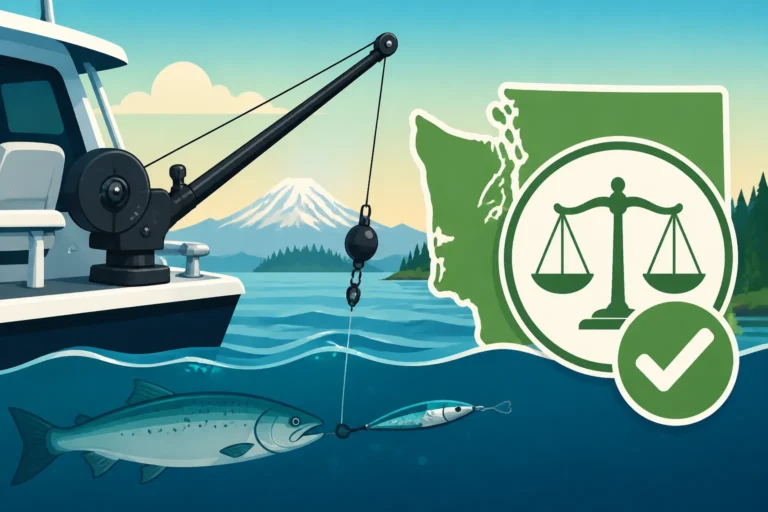
Trolling is arguably the most common technique for salmon in Area 9, especially for Chinook and Coho. This involves dragging lures or bait behind a boat, often using downriggers to get your gear to the precise depth where fish are holding. For Chinook, deep trolling with cut plug herring, large spoons, or plastic hoochies behind flashers is highly effective. You're trying to cover a lot of water and present your offering to fish that might be scattered. Speed and depth are critical here. For Coho, trolling can be done higher in the water column, often with smaller spoons, Coho killers, or bucktail jigs. Experimentation with color and presentation is key. Our guide on Trolling for Salmon in Washington's Puget Sound offers an extensive look at rigging and techniques. For example, a rigged cut-plug herring trolled behind a dodger or flasher is a classic and highly effective setup for Chinook, mimicking their natural prey. You might even find some pre-rigged options or essential components for your trolling setup on Amazon.
Mooching is a more active, hands-on approach that excels when salmon are concentrated in certain areas or during slack tides. This involves drift fishing with cut plug herring, allowing it to sink and rise naturally with the boat's movement or by slowly reeling up and dropping. It's a very subtle presentation that can entice finicky fish. Mooching is particularly popular for Chinook but can also be effective for Coho. The art of mooching lies in imparting a realistic action to your bait while maintaining constant contact with your gear to detect the often-light bites. When the bite is slow for trollers, moochers can sometimes out-fish them by working specific depths and currents more thoroughly. Learn more about this traditional technique in our article, Mooching for Salmon in Washington's Puget Sound.
Jigging can be deadly for salmon, especially Coho and Chum, when they are aggressive and feeding or when you locate schools on your fish finder. Heavy metal jigs, often brightly colored, are dropped to the desired depth and then retrieved with a sharp "jigging" motion to mimic a wounded baitfish. This technique is often used when fish are suspended in the water column or when trying to provoke a reaction strike. Jigging requires a good fish finder to locate the fish and a bit of arm strength, but the strikes can be incredibly violent and rewarding. For any of these methods, particularly for Chinook, getting your herring rigged correctly, as described in Trolling Herring for Puget Sound Chinook in Washington, is paramount.
Key Fishing Spots and Structures
Marine Area 9 is vast, but certain areas consistently produce salmon due to their unique bathymetry, current, and bait concentration. Knowing these spots can significantly increase your chances of success.
Possession Bar, located off the south end of Whidbey Island, is a legendary salmon fishing spot. The underwater bar creates strong current breaks and eddies where baitfish congregate, attracting both resident blackmouth and migratory Chinook and Coho. The currents here can be fierce, so understanding how to position your boat and present your gear is crucial. The depths around Possession Bar drop off quickly, offering diverse fishing opportunities.
Point No Point, on the Kitsap Peninsula side, is another hotspot known for its consistent salmon returns. Similar to Possession Bar, the point creates current lines and upwellings that concentrate bait. It's a favorite for both trollers and moochers, and anglers often fish the various depths and current seams around the point.
Other productive areas include the waters off Kingston, Edmonds, and the "shipping lanes" in the main body of Admiralty Inlet. These areas often hold baitfish and, consequently, salmon that are either feeding or migrating through. Fishing around known structures, ledges, and drop-offs is always a good strategy, as salmon will often hold near these features, waiting to ambush bait. Don't be afraid to explore new territory, but starting with these proven locations can provide a solid foundation for your Marine Area 9 adventures. For a broader understanding of how structure influences fishing, even if it's a different area, refer to Fishing Deception Pass, Washington for Salmon and Lingcod. Before your trip, a quick search on Amazon for local fishing charts or guidebooks can also provide invaluable insights into these specific spots.
The Role of Tides and Weather
In Marine Area 9, as with most saltwater fishing, tides are not just a factor; they are the factor. Tidal currents play a monumental role in salmon feeding behavior and where you'll find them. Strong tidal exchanges, particularly around tide changes, create current rips and upwellings that bring baitfish to the surface or concentrate them in specific areas, which in turn attracts salmon.
Many experienced anglers swear by fishing the "slack before the flood" or the "first few hours of the outgoing tide." Understanding Best Tides for Puget Sound Salmon Fishing in Washington is critical. A strong outgoing tide can sweep baitfish out of bays and estuaries, funneling them into the waiting mouths of salmon in the main channel. Conversely, an incoming tide might push bait into shallower feeding grounds. The key is to pay attention to the tidal charts and plan your fishing around these periods of peak activity.
Weather also plays a significant role. Calm days are generally more pleasant for fishing and allow for better boat control, but sometimes a bit of chop can actually trigger a bite by disorienting baitfish. Heavy winds, however, can make fishing difficult, if not dangerous, especially in the exposed waters of Admiralty Inlet. Always check the marine weather forecast before heading out, and be prepared to adjust your plans if conditions become unsafe. Having appropriate gear, including good rainwear and layers, is essential for any Washington fishing trip, regardless of the forecast.
| Salmon Species | Primary Season (Approx.) | Key Techniques | Daily Limit (General) | Notes |
|---|---|---|---|---|
| Chinook (King) | Winter (Blackmouth), Summer/Fall | Trolling, Mooching | Varies, often 1-2 | Resident & migratory, highly regulated |
| Coho (Silver) | Summer, Early Fall | Trolling, Mooching, Jigging | 2 | Very aggressive, acrobatic fights |
| Chum (Dog) | Late Fall | Jigging, Twitching | 2 | Primarily for sport; quality varies |
| Pink (Humpy) | Odd Years (Summer) | Trolling, Casting, Jigging | 2 | Runs every two years, smaller but numerous |
Disclaimer: Fishing regulations are subject to change. Always consult the latest Washington Department of Fish and Wildlife (WDFW) regulations before your trip.